How to Store Beef Tallow: Long-Term Storage Made Easy
To store beef tallow safely, first cool and strain it thoroughly to remove all moisture.
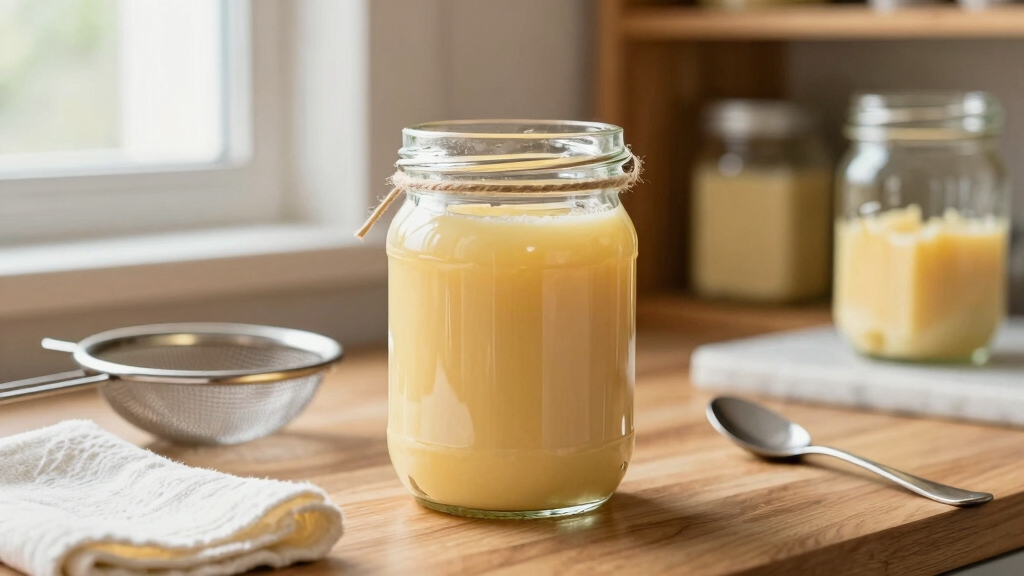
Use clean, airtight, dark glass or stainless steel containers to prevent spoilage and oxidation.
At room temperature, keep tallow sealed away from heat and sunlight for up to three months.
Refrigerate at 35–40°F to extend its life to a year or freeze at 0°F for up to three years in portioned, freezer-safe containers.
Proper techniques guarantee long-lasting quality and freshness. Discover how to optimize each method for your needs.
Key Takeaways
- Store beef tallow in airtight, clean, and dry glass jars or stainless steel containers to prevent contamination and oxidation.
- Keep tallow at room temperature (60–70°F) for 1–3 months, avoiding sunlight, heat, and moisture to maintain quality.
- Refrigerate tallow at 35–40°F to extend shelf life to 6–12 months, using vacuum-sealing for up to 18 months or longer.
- Freeze tallow at 0°F (-18°C) or below in freezer-safe containers with headspace for 12–18 months to 2–3 years.
- Label containers with rendering date and portion size, and use clean utensils to avoid introducing contaminants.
Preparing Beef Tallow for Safe Storage

Before storing beef tallow, you need to cool it completely after rendering to prevent condensation and spoilage.
Once cooled, strain the tallow through multiple layers of cheesecloth, paper towels, or coffee filters to remove impurities and suspended solids.
Strain cooled tallow through several layers of cheesecloth or filters to eliminate impurities and solids.
Make certain all moisture is fully removed, as any residual water promotes bacterial growth and mold formation.
Check the strained tallow under bright light for floating particles; if present, repeat straining until clear.
Avoid introducing contaminants by using clean, dry utensils throughout handling.
Finally, label your tallow with the rendering date and portion size to monitor freshness.
These steps optimize shelf stability by minimizing microbial risks and oxidation, ensuring your beef tallow remains safe and high quality for storage.
Using a vacuum sealer can further extend shelf life by removing air and preserving flavor and texture.
Choosing Containers for Beef Tallow Storage
Selecting the right container plays a crucial role in preserving the quality and extending the shelf life of your beef tallow. Choose airtight glass jars or stainless steel containers to prevent oxidation and contamination.
Dark glass jars are preferable since they block light, further protecting nutrients and flavor. Avoid plastic containers as they risk chemical leaching and compromise purity.
When freezing, leave adequate headspace to accommodate expansion and prevent cracking. Vacuum-sealed bags or jars markedly extend shelf life by eliminating air exposure.
Always make certain containers are clean and completely dry before filling to maintain an airtight seal and inhibit bacterial growth. Proper container selection combined with cleanliness maximizes the longevity and integrity of your beef tallow for all storage methods.
Using vacuum sealing technology ensures a true airtight environment that helps prevent spoilage and maintains quality over time.
Room Temperature Storage: Shelf Life and Tips
Typically, when storing beef tallow at room temperature, you can expect a shelf life of one to three months if kept in an airtight glass jar or tin.
Beef tallow stored airtight at room temperature lasts one to three months.
To maximize stability, maintain storage temperature between 60-70°F. Avoid direct sunlight, heat, and moisture, which accelerate oxidation.
Store the container in a dark cupboard or pantry, ideally below 72°F to prevent melting. Always use clean, dry utensils to prevent contamination and bacterial growth.
Make sure the tallow is fully strained and free from water before storing, as moisture promotes spoilage.
Monitor for discoloration, off odors, or texture changes, and discard if any appear. By controlling environmental factors and maintaining airtight conditions, you’ll keep your tallow fresh and safe for regular use within this timeframe.
For best results with fatty or greasy items like tallow, wrapping in freezer paper helps preserve quality during longer storage periods.
Refrigeration Storage to Extend Shelf Life
While refrigeration slows oxidation and rancidity, storing beef tallow at 35-40°F can extend its shelf life to 6-12 months or even up to 1-2 years. At these temperatures, tallow solidifies into a firm white block, reducing exposure to air and microbial growth.
Vacuum-sealing further prolongs freshness, lasting up to 18 months. Before use, allow the tallow to warm slightly for easier handling.
Proper storage and handling practices, including maintaining consistent refrigeration temperatures, are essential to maximize shelf life and prevent spoilage risks associated with oxidative stability.
| Storage Aspect | Details |
|---|---|
| Temperature Range | 35-40°F (1.7-4.4°C) |
| Shelf Life | 6-12 months (sealed), 1-2 years (vacuum) |
| Physical State | Solid, firm white block |
| Handling Tip | Warm before use to soften |
Refrigeration is practical for medium-term storage and regular cooking needs.
Freezing Beef Tallow for Long-Term Use
For long-term preservation, freezing beef tallow offers the most extended shelf life, maintaining quality for 12-18 months and up to 2-3 years at 0°F or below.
To freeze effectively, use freezer-safe containers such as mason jars with a 1-inch headspace to accommodate expansion or silicone molds for portioning.
Portioning into cubes or pucks allows you to thaw only what you need, minimizing waste.
Make certain containers are airtight to prevent freezer burn and store away from strong odors to avoid flavor contamination.
Before freezing, cool and strain the tallow thoroughly to remove moisture and impurities, preventing spoilage.
Label containers with the date and portion size for inventory management.
Proper freezing preserves tallow’s texture, flavor, and nutritional properties for efficient long-term use.
Maintain a consistent freezer temperature at or below 0°F (-18°C) to ensure quality preservation during storage.
Frequently Asked Questions
Can Beef Tallow Be Used for Skincare Applications?
Yes, you can use beef tallow for skincare applications. It’s rich in fatty acids that closely mimic human skin, promoting moisture retention and barrier repair.
To use, make sure your tallow is rendered and strained thoroughly to remove impurities. Apply small amounts to clean skin or mix with essential oils for enhanced benefits.
Store your tallow properly to maintain its efficacy and prevent rancidity, ensuring it stays safe and effective for topical use.
How Does Beef Tallow Compare Nutritionally to Other Cooking Fats?
Picture a golden block of beef tallow, rich and dense.
Nutritionally, it offers a balanced profile of saturated, monounsaturated, and small amounts of polyunsaturated fats, giving you stable energy and oxidative resistance.
Compared to vegetable oils, tallow contains fat-soluble vitamins A, D, E, and K, plus conjugated linoleic acid, which supports metabolism.
It’s less processed, making it a practical, nutrient-dense choice over highly refined cooking fats.
Is It Safe to Mix Beef Tallow With Other Fats for Storage?
Yes, you can mix beef tallow with other fats for storage, but you must consider their melting points and oxidation rates.
Combining fats with different stability profiles may reduce overall shelf life. Use airtight, clean containers to prevent contamination.
Label the blend clearly with date and fat types. Store in cool, dark conditions to minimize rancidity.
For best results, mix fats with similar characteristics and avoid introducing moisture or impurities.
What Are the Best Methods to Render Beef Tallow at Home?
You’ll want to channel patience like a craftsman melting gold. Start by cutting suet or fat into small chunks.
Then slowly render it in a heavy pot over low heat to avoid burning. Stir occasionally to release the pure fat, straining through cheesecloth to remove impurities.
Alternatively, use a slow cooker on low for several hours. Cool completely before storing. This method preserves the clarity and quality of your tallow efficiently.
Can Beef Tallow Be Composted or Recycled After Use?
You can compost beef tallow, but only in small amounts and with caution.
Too much fat can disrupt microbial activity and create odors.
Mixing it thoroughly with carbon-rich materials like leaves or paper helps balance moisture and prevent pests.
Alternatively, recycle used tallow by rendering it down again or donating it to facilities that convert fats into biodiesel.
Avoid pouring it down drains, as it clogs plumbing and harms wastewater systems.
Smart Storage Methods to Preserve Beef Tallow Perfectly
Storing beef tallow properly preserves its quality and safety. Curiously, rendered beef tallow can last up to 1 year in the freezer, compared to just 3 months in the fridge.
To maximize its shelf life, choose airtight containers and avoid contamination during handling.
Whether you store it at room temperature, refrigerate, or freeze, following these precise methods guarantees your tallow stays fresh and ready for cooking whenever you need it.