Frozen Ribs Vs Fresh Ribs: Which Tastes Better?
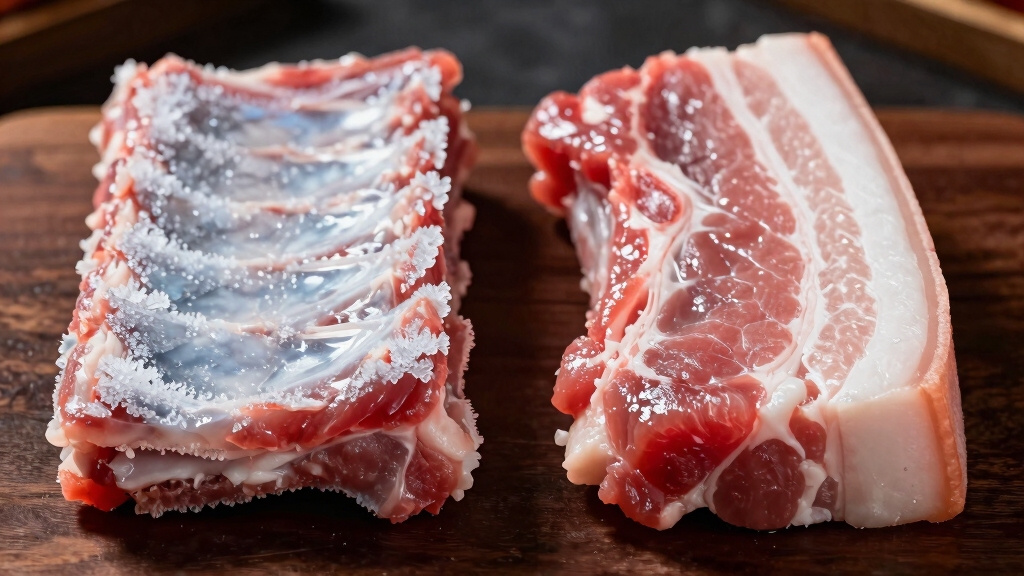
You can expect frozen ribs, when flash-frozen and vacuum-sealed at peak freshness, to match fresh ribs in flavor and tenderness.
Rapid freezing minimizes ice crystal damage, preserving texture and moisture. Proper thawing or even cooking straight from frozen with adjusted times guarantees excellent results.
Frozen ribs offer cost savings, convenience, and longer shelf life without compromising quality. If you want to master freezing, thawing, cooking, and cost benefits, keep exploring these best practices.
Key Takeaways
- Flash freezing locks in flavor and moisture, preserving ribs’ taste and tenderness comparable to fresh cuts when properly thawed and cooked.
- Rapid freezing forms small ice crystals, minimizing cellular damage and maintaining texture, often resulting in ribs as tender as fresh ones.
- Proper vacuum sealing and slow refrigerator thawing prevent freezer burn and moisture loss, ensuring quality similar to fresh ribs.
- Cooking ribs straight from frozen requires about 25% longer cook time but still yields excellent bark and tenderness when done right.
- Frozen ribs offer cost savings, longer storage, and convenient bulk purchasing, making them ideal for large gatherings without sacrificing quality.
Frozen and Fresh Ribs Compared: Which Is Better?
| Feature | Frozen Ribs | Fresh Ribs |
|---|---|---|
| Flavor | Flash freezing preserves flavor very well | Naturally fresh taste |
| Texture | Nearly identical when properly thawed | Slightly softer immediately after purchase |
| Tenderness | Excellent if cooked correctly | Naturally tender |
| Storage Life | Long shelf life (months) | Short shelf life (few days) |
| Convenience | Easy bulk storage and flexible cooking time | Needs quick cooking after purchase |
| Cost | Usually more budget-friendly | Often more expensive |
| Meal Planning | Ideal for advance preparation | Better for immediate cooking |
| Cooking Time | Requires longer cooking if frozen | Standard cooking time |
| Risk of Waste | Low due to long preservation | Higher if unused quickly |
| Best For | Large events and meal prep | Same-day BBQ or quick cooking |
Why Frozen Ribs Taste Just Like Fresh?
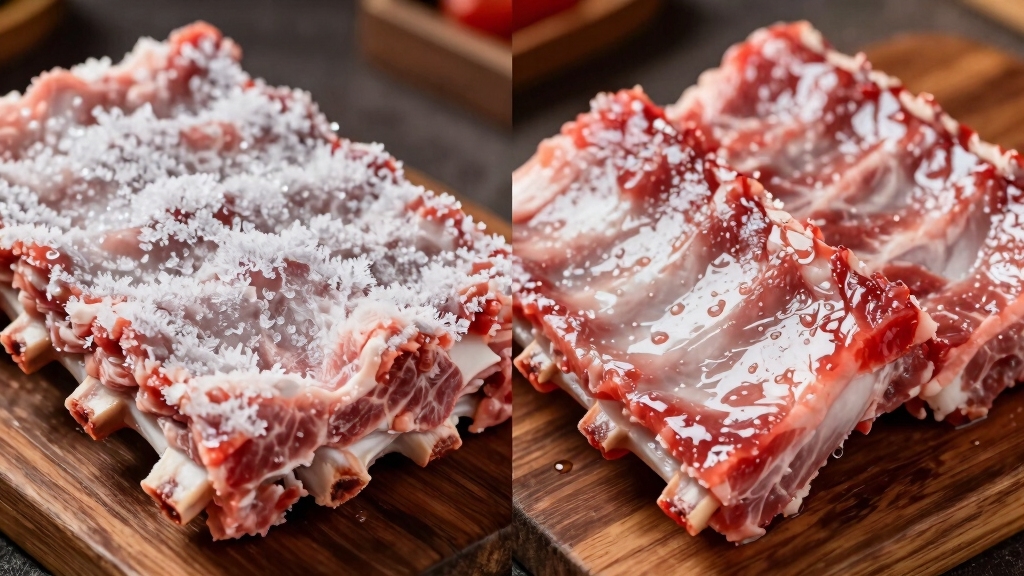
When you freeze prime ribs using modern flash freezing methods at peak freshness, you lock in the meat’s natural flavors almost perfectly.
Freezing prime ribs with flash freezing locks in their natural flavors with remarkable precision.
This rapid freezing process, typically conducted at sub-zero temperatures immediately after butchering, prevents ice crystals from forming large enough to damage cell structures.
As a result, the beef’s juices and flavor compounds remain intact.
Meat scientists at Texas A&M confirm that flash frozen beef exhibits negligible taste differences compared to fresh cuts when thawed properly.
In fact, flash freezing preserves the meat at its peak quality, often outperforming fresh beef held for extended periods.
Even smoking ribs directly from frozen yields no noticeable flavor degradation.
You can trust that the precise timing and technique of flash freezing make certain your frozen ribs taste just as vibrant and rich as fresh ones.
Proper packaging and vacuum sealing during freezing help maintain this high quality by preventing moisture loss and freezer burn.
How Freezing Preserves Rib Texture and Tenderness?
Although freezing might seem like it could compromise meat quality, properly frozen ribs maintain texture and tenderness nearly identical to fresh cuts.
When ribs are flash frozen at peak freshness, ice crystals form rapidly, minimizing cellular damage and preserving muscle fiber integrity.
This rapid freezing limits moisture loss, preventing the dry, tough texture often associated with poor freezing.
Additionally, freezing can aid tenderness by breaking down connective tissues through ice crystal expansion, softening the meat’s structure without sacrificing firmness.
Scientific tests confirm that ribs cooked from frozen exhibit the same probe softness and bark texture as fresh counterparts.
For optimal preservation, ribs should be cooled to room temperature on a wire rack before freezing to prevent ice crystal formation that damages texture.
Best Freezing and Thawing Methods for Frozen Ribs
To achieve peak quality in frozen ribs, focus on rapid freezing and controlled thawing processes. Flash freezing at sub-zero temperatures locks in moisture and flavor, preventing ice crystal damage.
Vacuum sealing before freezing eliminates air exposure, reducing freezer burn. When thawing, slow methods in the refrigerator preserve texture and minimize moisture loss, ensuring tenderness matches fresh ribs.
It is important to freeze ribs promptly at 0°F (-18°C) to minimize ice crystal formation and maintain overall quality, as explained in the freezing temperature guidelines.
| Freezing Method | Benefit |
|---|---|
| Flash Freezing | Preserves peak freshness |
| Vacuum Sealing | Prevents freezer burn |
| Slow Thawing | Maintains moisture and texture |
| Avoid Room Temp | Limits bacterial growth |
Cooking Frozen Ribs: Tips for Perfect Results
Mastering the cooking process for frozen ribs builds directly on effective freezing and thawing techniques.
When you cook ribs from frozen, expect longer cook times; plan for at least 25% more than fresh. Use a heavier mustard binder to improve rub adhesion, as frozen surfaces repel seasoning more.
Maintain low, consistent temperatures (225–250°F) to allow even heat penetration and collagen breakdown, ensuring tenderness. You can smoke ribs directly from frozen, but slow, controlled cooking is key to avoid toughness.
Use a probe thermometer to monitor internal temperature, aiming for 195–203°F for perfect tenderness. Removing the membrane is easier post-thaw, so if possible, partially thaw before prepping.
For best results, consider wrapping ribs tightly in heavy-duty aluminum foil with added moisture to lock in flavor and enhance tenderness during cooking.
Cost and Convenience Benefits of Frozen Ribs
You know, frozen ribs can really save you a ton of cash compared to fresh cuts. If you’re trying to stick to a budget, they’re definitely worth considering.
Plus, since they’ve a long shelf life, you can buy in bulk without stressing about them going bad. This makes meal prep for big gatherings a breeze!
And let’s not forget about the freezing techniques. They’ve come a long way, so you don’t have to worry about sacrificing quality.
You get all the flavor and texture you want, making it super convenient to whip up delicious meals whenever you need.
Proper vacuum sealing helps preserve quality and prevents freezer burn, extending the ribs’ usability.
Budget-Friendly Meat Options
Frequently, choosing frozen ribs presents a cost-effective solution without sacrificing quality, especially when feeding large groups.
Frozen ribs generally cost less than fresh cuts due to extended shelf life and reduced spoilage risk.
You benefit from purchasing premium cuts like flash-frozen American Wagyu at prices often lower than fresh counterparts.
Freezing locks in moisture and flavor through rapid sub-zero techniques, ensuring quality remains intact until thawing.
This preservation lets you plan meals without urgency, avoiding last-minute fresh meat expenses.
Additionally, frozen ribs simplify inventory management by reducing waste and spoilage costs.
Proper thawing retains tenderness and flavor, meaning you won’t compromise taste.
To maintain peak quality, it is important to freeze promptly after purchase and thaw safely before use.
Easy Bulk Purchase Solutions
Many buyers find that purchasing frozen ribs in bulk offers significant cost and convenience advantages.
By buying large quantities, you lower the unit price and secure consistent quality without the pressure to cook immediately.
Frozen ribs, especially when flash frozen and vacuum sealed, maintain peak freshness and flavor. This allows you to plan meals flexibly.
You get access to premium cuts like American Wagyu that are often cost-prohibitive fresh.
Reduced price per pound compared to fresh ribs is ideal for events or meal prepping.
You have an extended timeframe to thaw and cook, reducing spoilage risks.
Simplified logistics come with long shelf life and easy portioning for varied serving sizes.
This streamlined approach helps you manage budgets and schedules efficiently while ensuring high-quality ribs every time.
Proper vacuum sealing before freezing prevents freezer burn and preserves texture and flavor.
Long-Term Storage Advantages
Maximize your meat inventory by leveraging the long-term storage benefits of frozen ribs, which deliver both cost savings and convenience.
Freezing allows you to purchase high-quality ribs in bulk at lower prices, reducing the per-pound cost compared to fresh cuts.
With proper vacuum sealing and flash freezing, you preserve peak freshness, locking in flavor and texture for months without degradation.
This means you can stockpile premium ribs without worrying about spoilage, optimizing your budget and meal planning.
Additionally, frozen ribs offer unmatched flexibility. You thaw only what you need, minimizing waste.
They remain safe and stable over extended periods, unlike fresh ribs that require prompt use.
Ultimately, frozen ribs streamline storage logistics and enhance cost-efficiency without compromising quality or taste.
Maintaining a consistent subzero temperature during storage is essential to keep frozen ribs safe and preserve their quality over time.
Should You Choose Fresh or Frozen Ribs for Your Event?
When you’re trying to decide between fresh or frozen ribs for your event, it’s worth noting that properly flash-frozen ribs can actually keep their flavor and tenderness on par with fresh cuts. Pretty impressive, right?
Plus, frozen ribs can be a real value saver. They give you the flexibility to plan your cooking schedule without sacrificing quality. As long as you thaw and cook them the right way, you won’t notice a difference in taste or texture.
And if you’re looking for something convenient and scalable, frozen ribs are a dependable choice. They make it easy to serve up delicious meals without any compromise. So, what do you think? Fresh or frozen?
Remember that freezing halts bacterial growth, allowing ribs to remain safe and tasty for months when stored properly in airtight packaging.
Flavor And Texture
How does the choice between fresh and frozen ribs affect flavor and texture at your event? When properly flash frozen and thawed, ribs maintain flavor indistinguishable from fresh.
Freezing at peak freshness locks in taste and moisture, while slow thawing preserves texture, ensuring tenderness equal to fresh cuts. Cooking ribs straight from frozen, with adequate time, also yields excellent bark and softness.
Flash freezing breaks down connective tissue, potentially enhancing tenderness. Vacuum sealing and rapid freezing prevent quality loss and freezer burn.
Membrane removal is easier on frozen ribs, aiding preparation. Additionally, heavier racks require longer cooking times, so planning your cooking schedule accordingly is essential for optimal results.
Cost And Convenience
Weighing cost and convenience can help you decide whether fresh or frozen ribs best suit your event needs.
Frozen ribs generally cost less, making them ideal for feeding larger groups efficiently without compromising quality.
Advances in flash freezing preserve peak freshness, allowing you to store premium cuts like American Wagyu long-term with minimal flavor or texture loss.
You can thaw frozen ribs slowly to maintain tenderness or smoke them directly, accepting longer cook times.
Fresh ribs offer convenience when you need same-day preparation, eliminating thawing time and reducing planning complexity.
However, they require immediate cooking to prevent quality degradation.
Ultimately, frozen ribs provide budget-friendly flexibility and storage longevity, while fresh ribs streamline immediate cooking.
Your choice hinges on event size, timing, and preparation preferences.
Frequently Asked Questions
Can Frozen Ribs Be Grilled Directly Without Thawing?
Yes, you can grill frozen ribs directly without thawing, but expect longer cooking times. The ribs will require more heat exposure to reach safe internal temperatures, so adjust your grill accordingly.
Using a heavier mustard binder helps rubs adhere better on frozen surfaces. While the texture and flavor remain excellent, slow and even cooking is vital to break down connective tissues and achieve tenderness equivalent to thawed ribs.
How Long Can Ribs Be Stored Frozen Without Quality Loss?
You can store ribs frozen for up to 6 to 12 months without significant quality loss if you use proper freezing techniques like vacuum sealing and flash freezing.
Beyond a year, texture and flavor may start to degrade due to freezer burn or moisture loss.
To maintain peak quality, freeze ribs at sub-zero temperatures promptly and thaw them slowly before cooking.
This preserves tenderness, juiciness, and flavor effectively.
Do Frozen Ribs Require Different Seasoning Than Fresh Ribs?
Seasoning frozen ribs doesn’t demand a drastically different approach, but you should tweak your technique.
Since frozen ribs hold moisture better, you can apply a heavier mustard binder to help rubs stick firmly.
This slight adjustment guarantees the spices adhere during longer cooking times.
Otherwise, your favorite rubs work just as well.
Think of it as giving your seasoning a sturdy anchor for a flavor voyage, no matter the rib’s state.
Is There a Difference in Nutritional Value Between Fresh and Frozen Ribs?
You won’t see a significant difference in nutritional value between fresh and properly frozen ribs.
Flash freezing locks in nutrients effectively, preventing degradation.
Vitamins, proteins, and fats remain stable if freezing and thawing are done correctly.
Minor nutrient loss can occur with prolonged storage or improper thawing, but it’s negligible.
Can Freezing Ribs Affect the Safety or Risk of Foodborne Illness?
Freezing ribs markedly reduces the risk of foodborne illness by halting bacterial growth.
When you freeze meat at proper temperatures, pathogens become inactive, not killed, so safe thawing is essential.
You should thaw ribs slowly in the refrigerator, avoiding room temperature to prevent bacterial multiplication.
Proper handling, storage, and cooking to recommended internal temperatures guarantee safety.
Frozen Ribs, Fresh Results: The Smart Cook’s Secret
So, if you’re debating fresh versus frozen ribs, remember: freezing is basically a science-backed time machine that locks in flavor and texture without demanding your kitchen become a cryogenic lab.
Thaw smart, cook like a pro, and you’ll get tender ribs that might just fool your taste buds and your guests into thinking you’re a BBQ wizard.
Save cash, save effort, and let frozen ribs prove that freshness is sometimes just a state of mind.