How to Lower Temp on Charcoal Grill: Best Ways to Cool It
To lower temperature on your charcoal grill, partially close both intake and exhaust vents to reduce oxygen flow. Keep them about one-quarter open for steady low heat.
Use fewer coals, spread them out, or shift to one side for indirect heat. Raising the grate increases distance from the fire.
Adding water pans or heat deflectors helps absorb and diffuse radiant heat.
Make small, gradual adjustments and wait 5–10 minutes to stabilize before tweaking further.
Explore these techniques for more precise control and safer grilling.
Key Takeaways
- Partially close the intake and exhaust vents to reduce airflow and lower grill temperature gradually without abrupt fluctuations.
- Use fewer coals and spread them out or position to one side to create indirect heat and reduce overall heat intensity.
- Raise the cooking grate to increase distance from coals, decreasing radiant heat and helping maintain lower temperatures.
- Place a water pan beneath the cooking grate to absorb heat, add moisture, and stabilize grill temperature.
- Keep the grill lid closed and make small, incremental vent or coal adjustments, waiting 5–10 minutes to monitor temperature changes.
How to Use Vents to Lower Charcoal Grill Temperature?

How exactly do vents control the temperature of your charcoal grill? They regulate airflow, which directly influences combustion intensity.
By closing the intake damper halfway, you reduce oxygen supply, causing the fire to burn cooler and lowering heat gradually.
Similarly, partially closing the exhaust vent limits airflow escape, further controlling temperature.
Small, incremental adjustments on both vents allow precise heat tuning. Large swings can cause unstable temperature fluctuations.
For low-heat cooking, aim for vents about one-quarter open to maintain steady, cooler conditions.
Remember, airflow control is your primary tool for temperature management; you won’t need to alter charcoal quantity or placement here.
Make one vent adjustment, wait five to ten minutes, then monitor your grill thermometer for accurate temperature feedback before tweaking again.
To maintain ideal combustion efficiency, be sure to scrape ash away from vents regularly to prevent airflow blockage.
Managing Charcoal Quantity and Placement for Cooler Cooking
Adjusting the amount and arrangement of charcoal directly influences your grill’s heat output and burn intensity.
To lower temperature, start by using fewer coals; a smaller baseline reduces overall heat. Next, spread the lit coals farther apart to decrease localized intensity, creating a cooler burn zone.
Use fewer coals and space them out to create a cooler, more controlled cooking environment.
Positioning coals to one side establishes indirect heat, minimizing direct exposure to high temperatures beneath the cooking grate. Maintain a low charcoal layer instead of a deep pile to avoid excessive heat buildup.
Avoid stacking coals too densely, which traps heat and accelerates burn rate. By controlling coal quantity and placement precisely, you can achieve steady, lower temperatures vital for slow cooking.
Combine these adjustments with vent management for peak temperature control without sacrificing fire stability or cooking consistency. Using briquettes for steady heat can also help maintain consistent lower temperatures during extended cooking sessions.
Safely Removing Hot Coals to Quickly Reduce Heat
When you need to bring down your grill’s temperature quickly, removing some hot coals can be an effective method.
Always use heat-resistant gloves and long-handled metal tongs or a scoop to handle the coals safely. Avoid using bare hands or flammable tools.
Carefully lift and relocate the desired amount of burning coals to a heatproof container placed on a non-flammable surface, away from the grill. This reduces the fuel source, lowering the temperature faster than vent adjustments alone.
Do not discard hot coals directly into trash or combustible materials. After removal, close the lid to limit oxygen and monitor the temperature with your grill thermometer.
Make incremental adjustments in coal quantity to avoid drastic temperature drops and maintain controlled cooking conditions.
For longer-lasting heat, consider the oxygen-restricted environments that can extend charcoal burn time significantly.
Raising the Cooking Grate on Your Charcoal Grill to Lower Heat
Although it might seem subtle, raising the cooking grate increases the distance between your food and the heat source, effectively lowering the cooking temperature. This simple adjustment reduces radiant heat intensity, helping you maintain lower, steadier cooking temps without altering coals or vents.
To optimize grate height for temperature control:
- Adjust the grate to the highest available setting to maximize distance from coals.
- Use a reliable grill thermometer to monitor temperature changes after raising the grate.
- Combine grate elevation with vent adjustments for finer control.
- Avoid over-raising, which can slow cooking excessively or cause uneven heat distribution.
Raising the grate is a practical, mechanical method to reduce heat quickly while preserving charcoal burn quality. This technique is particularly useful on grills like the Original Kettle that provide steady, sustained heat for longer cooking sessions.
Creating Indirect Heat Zones for Steady Low-Temperature Cooking
By arranging your coals to one side of the grill, you create distinct direct and indirect heat zones. This allows you to maintain steady, low temperatures ideal for slow cooking.
This setup reduces the hottest cooking area while giving you a cooler zone where food cooks gently without flare-ups. Spread the coals evenly on one side, leaving the other side free. Then place your food over the cooler zone.
Maintain airflow by adjusting the intake and exhaust vents to about one-quarter open. This supports a consistent low temperature between 250–350°F. Use a reliable grill thermometer to monitor heat accurately.
Avoid opening the lid frequently to prevent oxygen surges that spike temperatures. This indirect heat method offers precise temperature control suited for slow, even cooking. For optimal moisture and temperature stability, consider placing a water pan between the charcoal piles during cooking.
Using Heat Deflectors and Water Pans to Manage Charcoal Grill Heat
You can really lower your grill’s temperature effectively by using heat deflectors. They work by blocking and absorbing radiant heat, which helps create a more consistent cooking environment. Pretty neat, right?
Now, don’t forget about water pans! If you position them strategically beneath the cooking grate, they can help stabilize the temperature and add moisture, which actually slows down heat transfer. It’s kind of like having a built-in humidifier for your grill!
Just remember, the proper placement of these tools is essential. It’ll help you maintain steady low heat without sacrificing fuel efficiency. So, get those deflectors and water pans set up, and you’re good to go!
Also, regular cleaning and maintenance of your grates can improve heat retention and ensure even cooking over low temperatures, which is essential when managing a charcoal grill. heat retention
Benefits of Heat Deflectors
Several key benefits make heat deflectors and water pans essential tools for managing charcoal grill temperature effectively.
Heat deflectors act as barriers that block and absorb radiant heat from the coals, enabling you to maintain steady, indirect cooking temperatures.
They reduce flare-ups and prevent hot spots, giving you more precise control over the grill’s cooking environment.
When you use heat deflectors, you:
- Lower direct heat exposure to food, avoiding burning or uneven cooking.
- Create consistent heat distribution across the cooking surface.
- Protect delicate foods by moderating temperature spikes.
- Enhance the ability to sustain low, stable temperatures ideal for slow cooking.
Integrating heat deflectors is a technical, reliable method to optimize temperature control on your charcoal grill. Using medium-sized lump charcoal can also help achieve steady heat when managing your grill’s temperature.
Using Water Pans Effectively
Although heat deflectors primarily block radiant heat, water pans serve a complementary role by absorbing and regulating heat through moisture evaporation. This helps stabilize charcoal grill temperatures.
You place a water pan between the coals and cooking grate to create a buffer zone, reducing temperature spikes. The evaporating water adds humidity, preventing food from drying out and promoting even heat distribution.
Maintain water levels to guarantee consistent cooling.
| Benefit | Effect |
|---|---|
| Heat absorption | Lowers direct heat |
| Moisture release | Prevents food dryness |
| Temperature buffer | Stabilizes grill heat |
| Even heat spread | Reduces hot spots |
| Easy adjustment | Simple to refill water |
Using water pans effectively enhances control and food quality during low-temp grilling. Be sure to remove moisture promptly after use to prevent odors, mold, and mildew formation in the grill.
Placement Tips for Cooling
When positioning heat deflectors and water pans, strategic placement between the charcoal and cooking grate maximizes their cooling effect by interrupting direct radiant heat and promoting even heat distribution.
You want to create a barrier that absorbs and diffuses intense heat, helping maintain lower, steady temperatures.
Follow these key placement tips:
- Place heat deflectors directly above the charcoal pile to block and redirect radiant heat away from food.
- Position water pans beneath or slightly offset from the deflectors to absorb heat and add moisture.
- Make certain pans are large enough to cover most of the grill’s hot zone for uniform cooling.
- Avoid contact between pans and charcoal to prevent flare-ups and uneven heating.
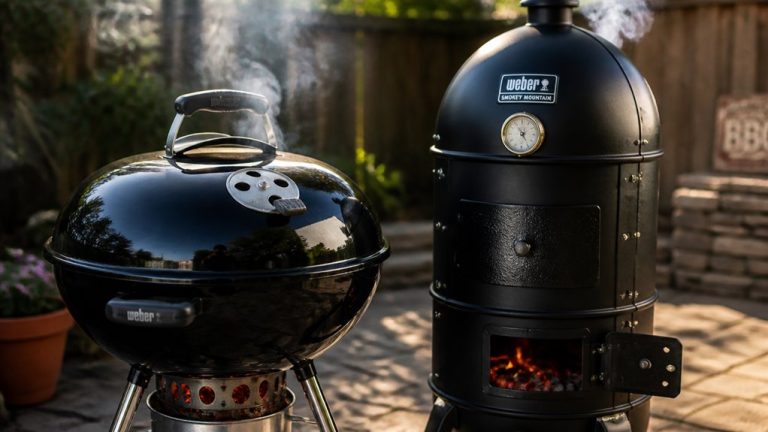
These steps enhance indirect cooking efficiency and provide consistent, manageable grill temperatures. For larger grills like the 22.5-inch Weber Smokey Mountain, careful management of heat deflectors and water pans is especially important due to its greater thermal mass and heat output.
Fine-Tuning Vent Settings for Precise Temperature Control
Mastering vent adjustments lets you achieve precise temperature control on your charcoal grill.
Start by partially closing the intake damper, about halfway or less, to reduce oxygen flow and lower the heat gradually.
Adjust the exhaust vent similarly to limit airflow further, but avoid shutting it completely during cooking.
Make small, incremental changes to both vents rather than large swings.
This prevents temperature spikes and allows the fire to stabilize.
Keep in mind that vents set roughly one-quarter open typically maintain low heat around 250–350°F.
Always wait five to ten minutes after each adjustment before evaluating the temperature to let the charcoal respond.
Proper airflow management is crucial to balance the faster burn of lump charcoal with the steady heat of briquettes.
Monitoring Your Charcoal Grill Temperature and Timing Adjustments
Monitoring your charcoal grill temperature closely and timing adjustments carefully guarantees consistent cooking results. Use your grill thermometer for accurate readings instead of guessing by sight.
After making any vent or coal adjustments, wait 5 to 10 minutes before checking the temperature again to allow the grill to stabilize. Follow these steps for precise control:
- Adjust bottom and top vents in small increments to fine-tune airflow.
- Keep the lid closed to prevent oxygen spikes that raise temperature abruptly.
- Note temperature trends to decide whether further adjustments are needed.
- Combine vent tweaks with coal repositioning only after airflow changes have taken effect.
Practical Tips for Safe and Effective Charcoal Grill Heat Management
To manage charcoal grill heat safely and effectively, you’ll need to prioritize controlled airflow and careful coal handling.
Begin by adjusting the intake and exhaust vents in small increments. Closing the intake halfway reduces oxygen and lowers heat gradually.
Avoid abrupt changes; wait 5 to 10 minutes after adjustments to gauge impact. Spread coals to reduce intensity or move them to one side to create indirect heat zones.
Use fewer coals initially and maintain a low charcoal layer to prevent excessive temperatures. Always keep the lid closed during cooking to limit oxygen influx.
Use heat-resistant gloves and long-handled tools for safe vent and coal adjustments. Only close vents fully when extinguishing the fire.
Never handle hot coals without proper protection to avoid burns.
Frequently Asked Questions
Can Weather Affect How I Control My Charcoal Grill Temperature?
Yes, weather greatly affects your charcoal grill temperature control.
Wind increases airflow, raising heat, so you’ll need to partially close vents to compensate.
Cold ambient temperatures cool your grill faster, requiring you to open vents more or add coals to maintain heat.
High humidity can also impact combustion efficiency.
Always monitor your grill thermometer closely and adjust vents gradually.
Account for weather changes to keep your cooking temperature steady and precise.
What Type of Charcoal Burns Cooler for Low-Heat Grilling?
You should choose lump charcoal for cooler, low-heat grilling because it burns hotter.
You can control it better by using less and spacing it out.
Briquettes burn more consistently but at a higher, steadier temperature, making them less suitable for very low heat.
Using fewer lump coals and spreading them apart helps create a cooler burn zone.
This is ideal for slow cooking or delicate grilling where temperature control is essential.
How Does Grill Size Impact Temperature Management Techniques?
Grill size directly affects your temperature control strategies.
Larger grills require more coals and airflow adjustments to maintain even heat. Smaller grills respond more quickly to vent changes due to reduced air volume.
You’ll need to fine-tune damper positions more gradually on big grills to avoid temperature spikes.
Also, bigger grills benefit from creating distinct heat zones, allowing you to manage both direct and indirect heat effectively for precise temperature control.
Are There Specific Foods Better Suited for Low-Temperature Charcoal Cooking?
Low-temperature charcoal cooking is like a gentle whisper to your food, perfect for delicate cuts such as ribs, brisket, and poultry.
You’ll want to slow-cook fatty or tough meats to break down connective tissue without drying them out. Fish, vegetables, and smoked cheeses also thrive at 250–350°F.
This controlled heat guarantees even cooking and enhances flavor. Use indirect heat and airflow adjustments to maintain steady low temps for these foods.
How Do I Prevent Flare-Ups While Maintaining Low Grill Temperatures?
To prevent flare-ups while maintaining low temperatures, control airflow precisely by partially closing intake vents to limit oxygen without extinguishing coals.
Arrange coals in an indirect heat zone away from drip points. Use a water pan or heat deflector to absorb fat drippings.
Keep the grill lid closed to reduce oxygen spikes. Trim excess fat from meats to minimize flare-up fuel.
Adjust vents gradually, monitoring temperature with a reliable thermometer.
Charcoal Grill Temperature Control: The Final Verdict
Mastering your charcoal grill’s temperature is like conducting a symphony. Each vent adjustment, charcoal shift, and grate movement plays a crucial note.
By controlling airflow, managing coal placement, and using indirect heat techniques, you command steady, precise heat for perfect cooking.
Keep a close eye on your grill’s thermometer and make timely tweaks to maintain balance.
With these strategies, you’ll transform raw heat into a controlled flame, ensuring consistently great results every time.