Stall Temp of Brisket: Why It Happens & How to Beat It
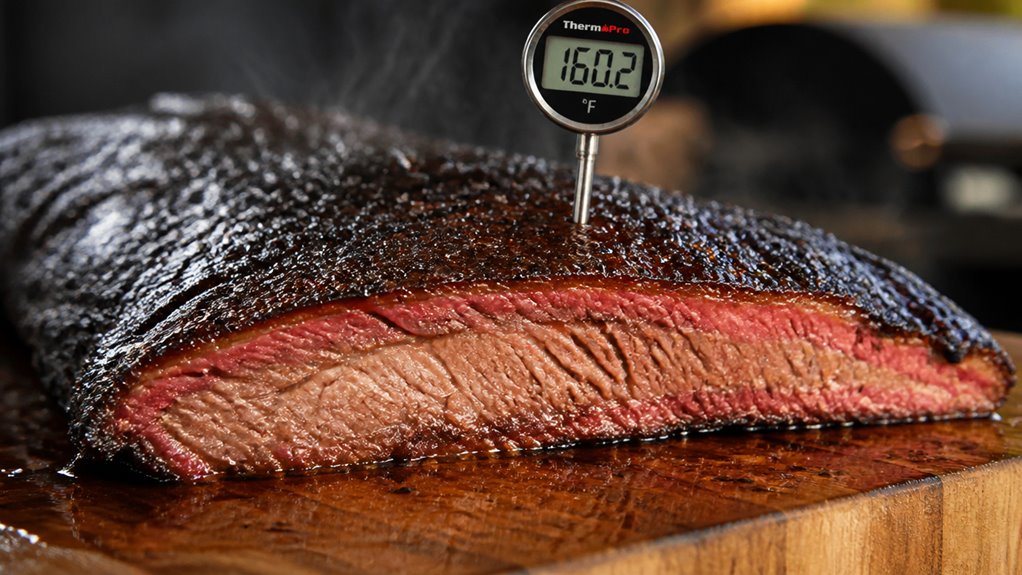
You’ll hit the brisket stall when your meat’s internal temp holds steady between 150°F and 170°F, most often near 160°F–165°F. This happens because evaporative cooling pulls heat away, slowing temperature rise despite constant smoker heat.
The stall can last from one to five hours depending on size and smoker temp. Wrapping around 165°F or raising heat to 275°F–300°F helps push through faster. Keep a reliable thermometer handy. You’ll find strategies to manage and finish the cook smoothly ahead.
Key Takeaways
- The brisket stall typically occurs between 150°F and 170°F during low-and-slow cooking.
- The stall is most pronounced and recognizable around 160°F to 170°F internal temperature.
- Evaporative cooling causes the internal temperature to plateau despite continuous external heat.
- Wrapping the brisket near 160°F–165°F helps reduce stall duration by trapping moisture.
- Monitoring temperature closely between 150°F and 170°F helps identify and manage the stall effectively.
The Brisket Stall: Definition and When It Happens

Although it can be frustrating, the brisket stall is a natural phase during low-and-slow cooking when the internal temperature of the meat stops rising for several hours.
You’ll notice this plateau typically starts once the brisket reaches between 150°F and 170°F. It happens because moisture evaporates from the meat, cooling its surface and slowing heat absorption.
This evaporative cooling effect is most pronounced at around 160°F to 170°F, where the stall usually peaks. Expect the stall to last anywhere from one to five hours, depending on factors like cut size and cooking conditions.
Recognizing this phase helps you manage your cook better, so you don’t rush the process or mistakenly think something’s wrong with your smoker or meat.
Using techniques like the Texas crutch can help you manage and speed through the stall by reducing evaporative cooling.
Temperature Ranges of the Brisket Stall
When your brisket’s internal temperature reaches between 150°F and 170°F, you’ll encounter the stall, a critical phase where the temperature rise slows or pauses. Understanding the specific temperature ranges helps you manage this phase effectively:
As your brisket hits 150°F to 170°F, expect the stall—a key moment where temperature rise slows or pauses.
Choice grade briskets often stall starting at 150°F, giving you an early warning to adjust your cooking strategy.
Prime grade cuts typically stall between 160°F and 170°F, requiring patience during this plateau.
The most common stall window is 160°F to 170°F, where the temperature may hold steady for hours.
Maintaining a steady smoker temperature during the stall is crucial to break down collagen and achieve optimal tenderness.
Why the Brisket Stall Happens During Cooking?
Understanding the temperature ranges where the brisket stall occurs sets the stage for grasping why it happens.
As your brisket’s internal temperature climbs between 150°F and 170°F, moisture within the meat starts evaporating from its surface. This evaporation cools the brisket, slowing the rise in internal temperature despite continuous heat application.
Fundamentally, the brisket sweats, and that evaporation removes heat energy, creating a plateau commonly known as the stall. This phenomenon is especially pronounced during low-and-slow cooking methods, where prolonged exposure to moderate heat encourages sustained evaporative cooling.
Recognizing this natural cooling effect helps you manage and anticipate the stall. This ensures you adjust your cooking strategy effectively to maintain control over your brisket’s temperature progression. The stall typically occurs before the brisket reaches the critical collagen breakdown temperature, which is essential for tenderizing the meat.
Duration of the Brisket Stall and Influencing Factors
The duration of the brisket stall can really vary. It usually lasts anywhere from one to five hours, and it largely depends on the size of your brisket and the cooking conditions.
Now, let’s talk about what influences that stall. Cooking temperature plays a big role, and wrapping your brisket can really help too. If you cook at higher temps or choose to wrap it, you might find that the stall doesn’t last as long.
Wrapping traps moisture and halts the stall by creating an insulating environment that accelerates cooking, a technique often called the Texas Crutch.
Stall Time Variability
Although the brisket stall commonly lasts between one and five hours, its exact duration depends heavily on factors like the cut size, cooking temperature, and whether the meat is wrapped.
Understanding these variables helps you manage cooking time effectively.
- Cut size: Larger briskets hold more moisture, extending the stall due to prolonged evaporative cooling.
- Cooking temperature: Lower temperatures slow heat penetration, lengthening the stall phase as the meat’s surface cools through evaporation.
- Wrappage: While wrapping influences stall time, its specific effects are nuanced and will be detailed in the next section.
Additionally, maintaining a consistent smoker temperature around 300°F is crucial to balancing stall duration and moisture retention for optimal brisket results.
Temperature and Wrapping Effects
When you adjust cooking temperature and wrapping methods, you directly influence the brisket stall’s duration and intensity. Cooking at lower temps like 225°F extends the stall to 5–6 hours unwrapped, while raising the temp or wrapping shortens it markedly.
Wrapping traps moisture, reducing evaporative cooling and speeding the stall phase. Higher smoker temps (275°F–300°F) push the brisket through the stall faster without sacrificing tenderness.
| Cooking Temp (°F) | Wrapping Method | Stall Duration |
|---|---|---|
| 225 | Unwrapped | 5–6 hours |
| 225 | Wrapped | 3–4 hours |
| 250 | Unwrapped | 4–5 hours |
| 250 | Wrapped | ~2 hours |
| 275–300 | Wrapped/Unwrapped | 1–2 hours |
Using foil to wrap brisket pushes it through the stall fastest by creating a steaming environment that accelerates the cook.
How Smoker Heat Affects Stall Duration?
Adjusting your smoker’s heat directly influences how long the brisket stall lasts, making it a critical factor in managing cook times.
Lower smoker temperatures, like 225°F, prolong the stall due to slower heat penetration and greater evaporative cooling.
Conversely, higher temperatures reduce stall duration by pushing internal temps through the 160°F–170°F plateau faster.
Here’s how smoker heat affects stall duration:
- Cooking at 225°F–250°F often results in stalls lasting 4 to 6 hours, extending your overall cook time.
- Raising the smoker temperature to 275°F–300°F shortens the stall to around 2 hours by reducing moisture evaporation.
- Maintaining consistent, stable heat prevents temperature fluctuations that can prolong the stall phase.
Properly timing the wrap at 165–170°F can help speed cooking through the stall while retaining moisture.
Methods to Beat the Brisket Stall Quickly
Speed up your brisket cook by employing proven techniques to beat the stall quickly.
Wrapping your brisket in foil or butcher paper once it hits 165°F to 170°F markedly reduces evaporative cooling and cuts stall time.
Alternatively, raising your smoker temperature to 275°F–300°F provides consistent heat that pushes through the stall faster.
For even quicker results, start cooking at higher temperatures (350°F–400°F), which can bypass the stall entirely.
| Method | Description |
|---|---|
| Wrapping | Seals moisture, reduces evaporative cooling |
| Increase Smoker Temp | Boosts heat to overcome stall plateau |
| High-Temp Start | Prevents stall by speeding early cook phase |
| Oven Finish After Wrap | Guarantees even heat penetration post-wrap |
Choose the method that fits your timeline and equipment for peak results.
Optimal Smoker Temperatures to Prevent a Long Stall
Choosing the right smoker temperature plays a pivotal role in preventing a prolonged brisket stall. When you maintain an optimal heat range, you reduce the evaporative cooling effect that causes the stall. This speeds up the cooking process without sacrificing tenderness.
Here are three key temperature guidelines to prevent a long stall:
- Keep your smoker between 275°F and 300°F to safely accelerate the cook and minimize stall duration.
- Avoid low temperatures (225°F–250°F) as they often prolong the stall phase considerably.
- If you start hotter, around 350°F–400°F, you can sometimes bypass the stall entirely. Watch carefully to prevent drying out.
Consistent heat guarantees steady internal temperature rise. This helps you push through the stall efficiently while preserving brisket quality. Wrapping timing and choice of materials also significantly impact how brisket navigates the stall and retains moisture, especially at lower temperatures like 200°F or 225°F (Wrapping Strategy).
Finishing and Resting Your Brisket After the Stall
Once your brisket has pushed through the stall, you’ll want to focus on finishing and resting it properly to guarantee peak tenderness and moisture retention.
After the stall, raise your smoker temperature to around 275°F–300°F to efficiently reach the brisket’s final internal temperature of 195°F–200°F.
Wrapping the brisket in foil or butcher paper at this point locks in moisture and accelerates heat penetration.
When the target temperature is achieved, remove the brisket and let it rest, preferably wrapped, for at least one hour.
During resting, the internal temperature can rise about 10°F, and juices redistribute evenly throughout the meat, enhancing flavor and texture.
Avoid cutting too soon; resting is critical to prevent dry, tough brisket and to maximize your cooking efforts.
Proper wrapping and resting techniques help seal in smoky juices and improve final texture.
Using a Meat Thermometer During the Brisket Stall
When you’re cooking brisket, it’s super important to keep an eye on that internal temperature. A reliable meat thermometer is your best friend here!
It helps you track the stall accurately, so you know exactly when to act.
Timing your wrap just right based on those precise readings is key. You don’t want to extend the stall longer than necessary, and keeping moisture in is crucial for that perfect bite.
Oh, and don’t forget to make sure your thermometer probe is properly placed. A little misplacement can lead to false readings, which could throw off your whole cook.
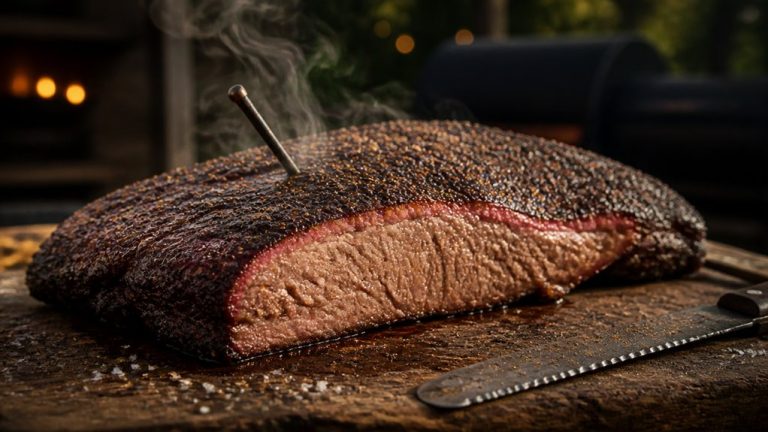
Keeping everything on target will definitely pay off in the end! For best results, insert the probe horizontally into the thickest part of the flat muscle, avoiding fat pockets and edges to ensure accurate core temperature readings.
Monitoring Internal Temperature
Regularly monitoring the brisket’s internal temperature with a reliable meat thermometer is essential during the stall to track its progress accurately.
Since the stall typically occurs between 150°F and 170°F, precise readings help you decide when to adjust your cooking strategy.
Here’s how to monitor effectively:
- Insert the probe into the thickest part of the brisket, avoiding fat or bone for accurate temperature measurement.
- Check the temperature every 30 minutes to spot the plateau phase that signals the stall between 160°F and 170°F.
- Use a digital thermometer with continuous readout or alerts to prevent opening the smoker too often, preserving heat and smoke.
Timing Wraps Effectively
Although the brisket stall can test your patience, timing your wraps precisely with a meat thermometer can markedly shorten this phase and improve your final result.
You want to wrap once the internal temperature nears 160°F to 165°F, just as the stall begins. This traps moisture, reduces evaporative cooling, and accelerates the temperature rise.
Using the thermometer allows you to avoid wrapping too early, which can soften bark, or too late, prolonging stall time.
| Internal Temp (°F) | Wrap Timing Advice | Expected Stall Duration |
|---|---|---|
| 150 – 155 | Prepare to wrap soon | 4-5 hours |
| 160 – 165 | Ideal wrapping point | 1-2 hours |
| 170+ | Wrap immediately | Under 1 hour |
| Post-wrap 180+ | Monitor for doneness | Final cooking phase |
Ensuring Accurate Readings
When monitoring your brisket during the stall, ensuring accurate thermometer readings is essential to making informed decisions about wrapping and cooking adjustments.
To get precise data, you need to position the probe correctly and maintain consistent checking methods.
- Insert the thermometer probe into the thickest part of the brisket, avoiding fat pockets and bone to prevent skewed readings.
- Keep the probe steady in the same spot throughout the stall to track temperature trends accurately rather than isolated spikes.
- Use a high-quality digital thermometer with a quick response time and reliable calibration to guarantee consistent results.
Frequently Asked Questions
Can the Brisket Stall Affect Food Safety or Cause Undercooking?
The brisket stall itself won’t compromise food safety if you keep the internal temperature rising steadily and eventually hit 195°F–200°F.
You might worry about undercooking during the stall, but as long as you monitor with a reliable thermometer and don’t rush the process, harmful bacteria won’t survive.
Just be patient, wrap the brisket if needed, and avoid cutting corners to guarantee it’s both safe and delicious.
How Does the Brisket Stall Impact the Flavor Profile of the Meat?
The brisket stall actually enhances your meat’s flavor by allowing collagen to break down slowly, creating tender, juicy bites.
During the stall, moisture evaporates, concentrating flavors and developing a rich bark.
If you rush through it, you risk drying out the brisket or missing that deep smoky taste.
Are There Specific Wood Types That Influence the Brisket Stall?
You won’t find specific wood types that directly influence the brisket stall itself, since the stall depends on moisture evaporation and temperature.
However, you can choose woods like oak, hickory, or mesquite to impact flavor while maintaining steady heat. Avoid woods that create excessive smoke or inconsistent temperatures, as that might prolong the stall indirectly.
Focus on controlling smoker temperature and wrapping techniques to manage the stall efficiently.
Does Altitude or Weather Affect the Duration of the Brisket Stall?
Yes, altitude and weather definitely affect the brisket stall duration. At higher altitudes, lower air pressure can reduce boiling points, increasing evaporation and potentially lengthening the stall.
Humidity plays a big role too. Drier air speeds moisture loss, intensifying evaporative cooling and extending the stall. You’ll want to adjust your cooking time and temperature accordingly, perhaps wrapping earlier or raising smoker heat to counteract these environmental factors and keep your brisket cooking smoothly.
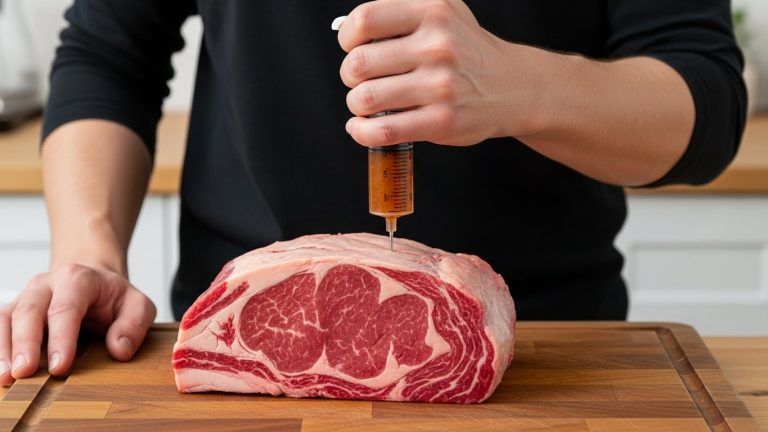
Can Injecting or Marinating Brisket Alter the Stall Temperature or Timing?
Imagine a brisket soaking up a flavorful marinade or having juices injected deep within its fibers.
When you inject or marinate brisket, you introduce extra moisture and sometimes salts that can slightly shift the stall’s timing by increasing internal humidity.
This often prolongs the stall a bit. However, these methods don’t drastically change the stall temperature range.
You’ll still need to monitor carefully and adjust cooking times accordingly to maintain tenderness and flavor.
Turn the Brisket Stall Into Barbecue Success
You might be surprised to learn that the brisket stall can last anywhere from 1 to 3 hours, testing your patience like no other part of the cook.
But understanding this natural temperature plateau around 150–170°F empowers you to manage your smoker effectively.
By controlling heat and using smart techniques, you can shorten the stall and achieve that tender, juicy brisket you crave.
Keep your thermometer close; it’s your best tool for mastering the stall.