Big Green Egg vs Traeger: Pros, Cons & Real-World Performance
If you want intense, smoky flavor and exceptional heat retention, Big Green Egg’s thick ceramic and lump charcoal give you precise, analog control up to 750°F.
Traeger’s steel pellet grills, with automated temperature management and WiFIRE connectivity, offer consistent, hassle-free low-and-slow cooking around 500°F.
Big Green Egg excels in durability and flavor complexity, while Traeger shines in convenience and batch cooking.
Exploring their design and features will reveal which suits your grilling style best.
Key Takeaways
- Big Green Egg uses thick ceramic for superior heat retention and durability, while Traeger relies on steel with painted finishes requiring more maintenance.
- The Egg uses lump charcoal for intense smoke and manual vent control, whereas Traeger uses automated wood pellets for consistent, milder smoke profiles.
- Big Green Egg reaches higher temperatures (up to 750°F) ideal for searing; Traeger maxes near 500°F for steady low-and-slow cooking.
- Traeger offers digital controls, app connectivity, and automated feeding for convenience; the Egg demands manual venting and more active temperature management.
- Traeger generally provides larger cooking areas suitable for batch cooking, while Big Green Egg sizes range smaller, enhancing portability and compact space use.
Big Green Egg or Traeger: Complete Side-by-Side Comparison
| Feature | Big Green Egg | Traeger |
|---|---|---|
| Grill Type | Ceramic kamado charcoal grill | Wood pellet grill |
| Fuel Type | Lump charcoal | Wood pellets |
| Construction | Thick ceramic | Powder-coated steel |
| Maximum Temperature | Up to 750°F | Up to 500°F |
| Heat Retention | Excellent | Very Good |
| Temperature Control | Manual vent adjustments | Digital controller with automatic pellet feed |
| Smoke Flavor | Bold and intense | Mild and consistent |
| Cooking Style | Grilling, searing, smoking, baking | Smoking, roasting, baking, grilling |
| Cooking Capacity | 79–672 sq. in. (depending on model) | 184–924 sq. in. (depending on model) |
| Ease of Use | Moderate learning curve | Beginner-friendly |
| Smart Features | None | WiFIRE app, digital controls, meat probes |
| Electricity Required | No | Yes |
| Fuel Efficiency | Excellent | Very Good |
| Portability | Smaller models are easier to move | Generally heavier but wheeled |
| Maintenance | Low | Moderate (auger and electronics) |
| Warranty | Lifetime on ceramic components | Typically 3-year limited warranty |
| Best For | BBQ enthusiasts who enjoy hands-on cooking | Users who want convenience and automation |
| Main Advantage | Superior heat retention and authentic charcoal flavor | Consistent cooking with smart technology |
| Main Drawback | Manual temperature management | Lower maximum heat and requires electricity |
Design and Construction: Big Green Egg Vs. Traeger

While both Big Green Egg and Traeger deliver robust grilling solutions, their design and construction philosophies diverge markedly. This shapes your experience and the grill’s longevity.
You’ll find Big Green Egg built with thick ceramic, creating exceptional heat retention and durability. It doesn’t rely on painted metal, which means it resists rust and corrosion over time. Its iconic egg shape and tight lid enhance moisture retention and efficiency.
Traeger, on the other hand, uses steel construction with painted or powder-coated finishes. This can require more maintenance to avoid wear.
The Traeger’s pellet system introduces complex electronics and added weight. It enables automation but adds potential points of failure.
Ultimately, Big Green Egg offers timeless, low-maintenance durability. Traeger emphasizes functional, tech-driven design with more upkeep. Due to its horizontal smoker design, Traeger provides greater versatility for grilling and higher-temperature cooking compared to the more focused smoking efficiency of the Big Green Egg.
Fuel Types and Their Impact on Cooking Style
Because fuel type directly shapes both flavor and cooking method, choosing between the Big Green Egg and Traeger means understanding their distinct fuel sources.
The Big Green Egg uses lump charcoal, made from hardwood, delivering intense, rich smoke and allowing you full analog control via vents. In contrast, Traeger relies on wood pellets, compressed hardwood sawdust, fed automatically, giving you consistent, milder smoke with digital temperature management.
Here’s what you should consider:
- Flavor Profile: Lump charcoal offers a bold, traditional smoke; pellets yield smoother, subtler notes.
- Control Style: Manual venting on the Egg lets you fine-tune heat. Traeger’s automation suits hands-off cooking.
- Power Needs: The Egg runs independently of electricity. Traeger requires power for its auger and controls.
Additionally, the Big Green Egg’s ceramic construction provides superior heat retention and temperature stability, making it ideal for long cooking sessions.
Your choice hinges on whether you prefer hands-on versatility or convenient consistency.
Heat Performance and Flavor: Big Green Egg Vs. Traeger
Now that you understand how fuel types influence flavor and cooking style, it’s important to compare how the Big Green Egg and Traeger perform in heat output and taste.
The Big Green Egg’s thick ceramic chamber and lump charcoal allow it to reach scorching temperatures up to 750°F. This is ideal for searing and achieving rich, intense smoke flavors.
In contrast, Traeger’s pellet system maxes out near 500°F, delivering a smoother, consistent smoke profile perfect for low-and-slow smoking.
You’ll notice the Egg excels in developing deep, complex flavors thanks to its analog vent control. Traeger offers steadier temperature maintenance through digital automation.
Both produce moist, tender results, but if you prioritize high heat and bold smokiness, the Big Green Egg gives you more control and flavor intensity.
In comparison, Traeger focuses on convenience and consistency.
Additionally, the Big Green Egg’s ceramic insulation provides superior heat retention that enhances temperature stability and fuel efficiency.
Cooking Space and Capacity: Choosing the Right Size
Selecting the right cooking space is essential when deciding between the Big Green Egg and Traeger. It directly impacts how much food you can prepare at once and the grill’s overall versatility. You’ll want to take into account:
- Size Range: Big Green Egg offers cooking areas from 79 square inches (Mini) to 672 square inches (2XL). Traeger starts larger at 184 square inches and goes up to about 924 square inches on midsize models.
- Batch Cooking: Traeger’s larger surface area suits big gatherings. It lets you cook multiple racks or large poultry simultaneously.
- Portability vs Capacity: Big Green Egg’s smaller sizes are great for compact spaces and portability. Traeger caters to those needing maximum cooking volume.
Choosing your grill size depends on your typical cooking volume and space constraints. Weigh these factors carefully. Larger grills provide more flexibility for two-zone cooking and batch preparation, which is ideal for entertaining bigger groups.
Ease of Use and Technology Features Compared
While both the Big Green Egg and Traeger deliver excellent cooking results, they differ markedly in ease of use and technology.
Traeger excels with digital controllers, set-and-forget temperature settings, and WiFIRE app connectivity. This allows you to monitor and adjust your cook remotely.
Built-in meat probes and automated pellet feeding simplify grilling, making Traeger ideal if you want convenience and consistency.
In contrast, the Big Green Egg demands manual vent adjustments and constant monitoring. This gives you hands-on control but requires a steeper learning curve.
Its analog operation appeals if you prefer traditional grilling without electronics, valuing precision and direct interaction.
Ultimately, Traeger suits casual users seeking automation, while the Big Green Egg attracts enthusiasts who appreciate classic Kamado craftsmanship and nuanced temperature management.
Additionally, Traeger’s ability to reach a broader temperature range makes it more versatile for grilling and searing beyond low-and-slow smoking.
Frequently Asked Questions
How Long Does Each Grill Take to Preheat?
You can expect a Big Green Egg to take about 20 to 30 minutes to preheat, depending on the size and how hot you want it.
It heats slower because it relies on charcoal and manual vent adjustments.
In contrast, a Traeger grill usually preheats faster, around 10 to 15 minutes, thanks to its electric auger system and digital controls that quickly raise and maintain temperature automatically.
Are Replacement Parts Readily Available for Both Brands?
Just like a well-oiled machine, both brands keep you covered with replacement parts, but availability varies.
You’ll find Big Green Egg parts, like ceramic pieces and gaskets, through authorized dealers and their website, reflecting their premium, durable design.
Traeger offers a broader range of parts, including electronics and augers, thanks to more models and tech complexity.
You’ll generally experience easier and quicker parts access with Traeger’s extensive support network.
Can I Use My Own Wood Pellets or Charcoal With These Grills?
You can absolutely use your own charcoal with the Big Green Egg since it’s designed for lump charcoal only.
Just avoid briquettes or additives for best results.
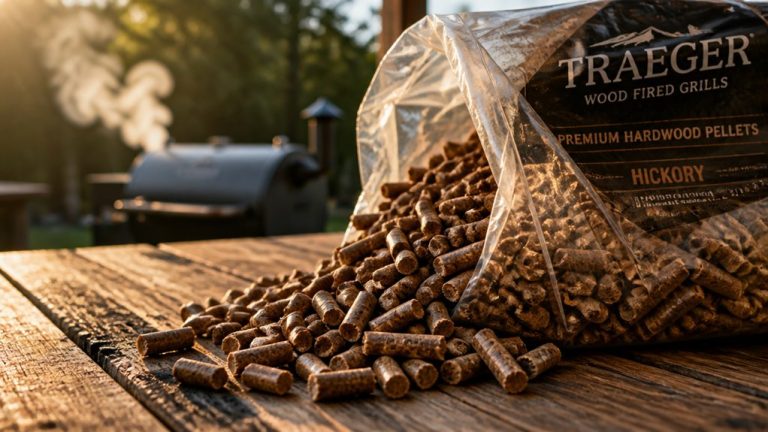
For Traeger grills, you should use wood pellets specifically made for pellet grills.
Using other pellets or charcoal can damage the auger and electronics.
Traeger pellets come in various wood types, letting you customize flavor.
Stick to recommended pellets to keep your grill running smoothly.
What Warranty Coverage Do Big Green Egg and Traeger Offer?
When it comes to warranty coverage, you’ll find that Big Green Egg offers a lifetime warranty on its ceramic parts, promising durability that stands the test of time.
Traeger, on the other hand, usually provides a 3-year limited warranty, covering grills and electronic components.
So, if you want peace of mind for the long haul, Big Green Egg has you covered.
Traeger’s shorter warranty fits those who prefer newer tech and quicker replacements.
Which Grill Is Better for Outdoor Portability and Travel?
For outdoor portability and travel, you’ll find Traeger grills generally better suited.
They’re designed with steel construction and often feature built-in handles and mobility kits, making them easier to move around.
Big Green Egg’s ceramic build is heavy and fragile, less ideal for frequent transport.
While the Egg delivers superior heat retention, Traeger’s lighter weight and simpler setup fit travel needs better.
This is especially true if you want convenient, reliable grilling on the go.
Big Green Egg or Traeger: Which Grill Fits Your Lifestyle?
When deciding between the Big Green Egg and Traeger, consider your cooking style and tech preferences.
If you love traditional smoky flavors and hands-on control, the Big Green Egg’s ceramic design excels.
But if convenience and smart features matter, Traeger’s pellet system offers consistent heat with app integration.
Both deliver great results, so choose based on whether you prioritize classic craftsmanship or modern ease for your grilling adventures.