London Broil vs Tri Tip: Taste, Tenderness & Value Compared
When choosing between London broil and tri-tip, know that tri-tip comes from the bottom sirloin. It offers natural tenderness, moderate marbling, and a richer flavor ideal for whole roasting or grilling.
London broil isn’t a cut but a preparation method using leaner, tougher flank or round muscles. These need marinating and thin slicing for tenderness.
Both benefit from slicing against the grain and precise cooking. However, tri-tip shines for juicy, robust steaks while London broil suits budget-friendly, thinly sliced dishes.
Explore further to understand their textures, cooking techniques, and best uses.
Key Takeaways
- Tri-tip is a triangular, naturally tender cut from the bottom sirloin with moderate marbling and richer flavor.
- London broil refers to a cooking method using leaner, tougher cuts like flank or round steak.
- Tri-tip cooks best whole over high heat to medium-rare and is sliced against the grain into thicker pieces.
- London broil requires marinating and thin slicing across the grain to improve tenderness and flavor.
- Tri-tip is pricier and suited for roast dinners, while London broil is budget-friendly for steak sandwiches.
London Broil vs Tri-Tip: Complete Side-by-Side Comparison
| Feature | London Broil | Tri-Tip |
|---|---|---|
| Type | Cooking method using flank or round cuts | Specific cut from the bottom sirloin |
| Origin | Flank steak, top round, or bottom round | Bottom sirloin |
| Shape | Long and relatively flat | Triangular roast |
| Tenderness | Tougher, requires marinating | Naturally more tender |
| Marbling | Lean with minimal fat | Moderate marbling |
| Flavor | Mild beef flavor | Richer, beefier flavor |
| Typical Weight | Larger and thinner cut | Usually 2–3 pounds |
| Best Cooking Method | Grilling, broiling, marinating | Grilling, roasting, smoking |
| Preparation Required | Usually needs marinating | Can be cooked with simple seasoning |
| Slicing Method | Very thin slices against the grain | Moderate slices against the grain |
| Risk of Toughness | Higher if overcooked | Lower when cooked properly |
| Juiciness | Moderate | Higher |
| Best For | Sandwiches, salads, budget meals | Roast dinners, BBQ, steak-style meals |
| Cooking Difficulty | Moderate | Easy to moderate |
| Price | More affordable | Slightly more expensive |
| Value for Money | Excellent budget option | Better premium value |
| Main Advantage | Affordable and versatile | Tender texture and rich flavor |
| Main Drawback | Requires extra preparation | Higher cost |
Key Differences Between London Broil and Tri Tip
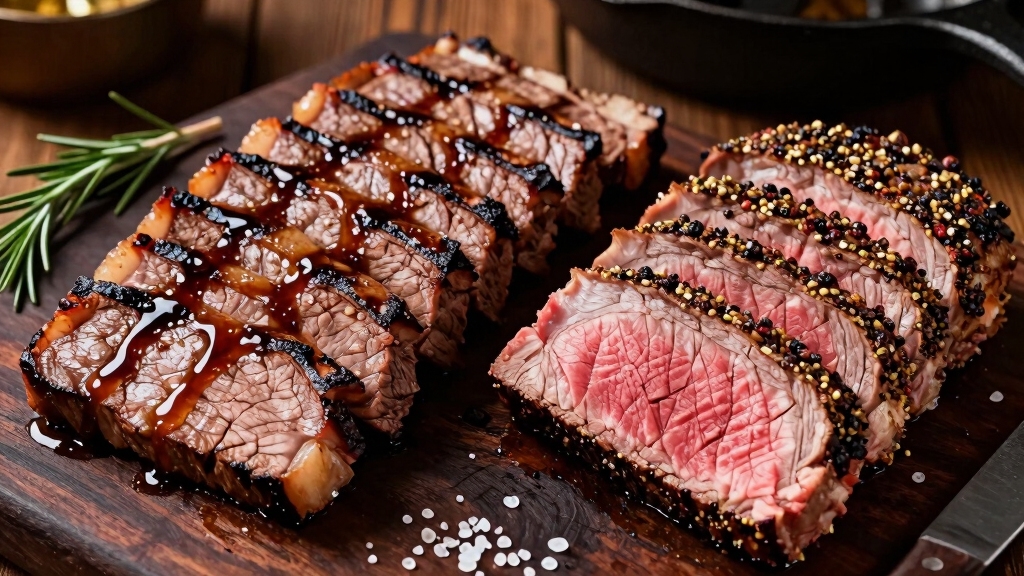
Understanding the key differences between London broil and tri-tip starts with recognizing that tri-tip is a specific cut from the bottom sirloin.
Tri-tip is a distinct cut from the bottom sirloin, unlike London broil which is a cooking method.
London broil refers primarily to a cooking method applied to various cuts like flank or round steak.
Tri-tip is triangular, moderately tender, and best cooked whole with high heat before slicing against the grain.
London broil emphasizes marinating, broiling or grilling, and thin slicing across the grain to counteract its typically tougher texture.
Tri-tip offers a richer flavor profile and cooks similarly to a steak, whereas London broil relies on preparation technique to enhance tenderness.
You’ll also note tri-tip generally weighs 2–3 pounds, suitable for gatherings.
London broil tends to be larger, thinner, and more budget-friendly due to its leaner, tougher nature.
For optimal flavor, tri-tip benefits from applying a dry rub with kosher salt and spices at least 30 minutes before cooking.
Where London Broil and Tri Tip Come From?
You know, tri-tip actually comes from the bottom sirloin. It’s this unique triangular muscle that really strikes a nice balance between tenderness and flavor.
Pretty great, right?
On the other hand, when we talk about London broil, we’re usually looking at flank steak or cuts from the round, like top or bottom round.
These come from different muscle groups and have denser fibers.
So, understanding where each cut comes from really helps us get a better grasp on the textural and cooking differences between the two.
Makes a difference when you’re in the kitchen!
Additionally, knowing the muscle composition of each cut can guide your cooking method to maximize tenderness and flavor.
Beef Cut Origins
Although both London broil and tri-tip are popular beef options, they originate from distinct parts of the cow that influence their texture and cooking requirements.
Understanding these origins helps you choose the right cut for your cooking method and desired tenderness.
- Tri-tip comes from the bottom sirloin, a triangular, lean muscle known for moderate tenderness requiring careful slicing.
- London broil usually refers to flank steak or round cuts (top or bottom round), which are tougher and benefit from marinating and thin slicing.
- While tri-tip is a specific cut prized for its balance of flavor and tenderness, London broil describes a preparation style involving broiling or grilling leaner, fibrous muscles.
Knowing these origins guides your cooking techniques and guarantees peak results. Both cuts benefit from high heat and quick timing to preserve flavors and textures during cooking.
Muscle Location Differences
Because the muscle location directly affects meat texture and cooking techniques, it’s important to distinguish where tri-tip and London broil come from on the cow.
Tri-tip originates from the bottom sirloin, a triangular, lean muscle with moderate chewiness. It requires precise cooking to maintain tenderness.
In contrast, London broil typically refers to cuts like flank steak or round cuts such as top or bottom round.
Flank steak is drawn from the cow’s underbelly, featuring long, dense muscle fibers. Round cuts are sourced from the rear leg, known for their toughness.
These muscle differences explain why tri-tip benefits from direct, high-heat cooking and careful slicing. London broil demands marinating and thin slicing to counteract its naturally firmer texture and muscle density.
Because of its sirloin origin, tri-tip shares a leaner, firmer texture similar to sirloin cuts, requiring attention to cooking temperature to avoid dryness.
Common Source Cuts
Understanding the common source cuts of tri-tip and London broil clarifies why their textures and cooking methods differ markedly.
Tri-tip originates from the bottom sirloin, a triangular, relatively tender muscle with moderate chewiness.
London broil, on the other hand, typically refers to a cooking style applied to various tougher cuts, most often flank steak or round cuts like top or bottom round.
Here’s what you need to know:
- Tri-tip is a distinct muscle from the bottom sirloin, prized for flavor and tenderness.
- London broil usually involves flank or round cuts, which are leaner and require marinating or tenderizing.
- The muscle structure affects cooking: tri-tip suits high-heat grilling or roasting.
London broil demands careful marinating and slicing against the grain.
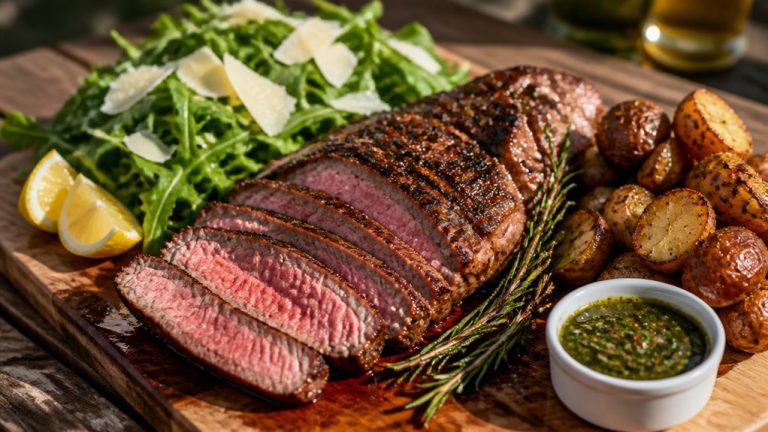
Recognizing these origins guides your cooking approach and expected texture. For an ideal meal, tri-tip is best served with roasted potatoes seasoned with garlic and herbs to complement its rich flavor.
How Muscle Structure Affects Flavor and Tenderness?
You know, muscle fiber orientation really influences flavor and tenderness, especially when you compare cuts like tri-tip and London broil.
For instance, the tri-tip comes from the bottom sirloin, which means it has shorter fibers. This gives it a more tender texture, making it pretty enjoyable to eat.
On the other hand, London broil is typically cut from the flank or round, which have longer, denser fibers. Because of this, it requires a bit more care in preparation to ensure it turns out tender.
Understanding these differences in muscle structure can really help you optimize your cooking and slicing techniques. It’s all about getting the best eating experience, right?
Additionally, knowing the connective tissue composition of each cut can guide you to select the ideal slow cooking method to maximize tenderness and flavor.
Muscle Fiber Orientation
Muscle fiber orientation plays a critical role in determining both the flavor and tenderness of beef cuts like tri-tip and London broil. The direction and density of fibers affect how the meat responds to cooking and slicing, impacting your eating experience.
Tri-tip features relatively short, coarse fibers that run in varying directions. This allows it to stay tender when sliced properly against the grain.
London broil, often from flank or round, has long, dense muscle fibers aligned uniformly. This contributes to a chewier texture without careful slicing.
Because muscle fibers contract and toughen with heat, cutting across the grain in both cuts breaks up fibers. This maximizes tenderness and enhances perceived juiciness and flavor.
Understanding these orientations helps you optimize cooking and slicing for the best results. Additionally, recognizing the importance of grain direction is essential to avoid tough, chewy slices and ensure optimal tenderness.
Cut Location Impact
Because tri-tip comes from the bottom sirloin, a less frequently used muscle, its structure is lean yet firm. This influences both its flavor intensity and the need for precise cooking to maintain tenderness.
This cut’s muscle fibers are relatively fine and arranged in a way that supports robust beef flavor without excessive toughness. In contrast, London broil typically originates from flank steak or round cuts, which have denser, longer muscle fibers and greater connective tissue.
These characteristics demand more aggressive tenderizing techniques, such as marinating, to offset inherent chewiness. Understanding each cut’s anatomical origin helps you tailor cooking methods and slicing to optimize eating quality.
The bottom sirloin’s moderate muscle use results in a distinct balance of flavor and texture compared to the more exercised muscles used for London broil. Selecting appropriate USDA quality grades can further enhance tenderness and flavor based on the muscle’s marbling and fat content.
Tenderness And Flavor
Unfastening the nuances of tenderness and flavor in beef starts with understanding how the structure of each cut influences the eating experience.
Tri-tip, from the bottom sirloin, features a denser but more tender muscle composition than the typical London broil cuts. These often come from flank or round muscles with longer, tougher fibers. This structural difference directly impacts both texture and flavor intensity.
- Tri-tip’s relatively finer grain allows for a more tender bite and absorbs robust seasonings well. This makes it ideal for dry or wet rubs.
- London broil’s coarser muscle fibers demand marinating and precise slicing against the grain. This helps mitigate toughness and enhance flavor release.
- Overcooking either cut risks toughness, but London broil is especially prone to dryness due to its leaner, firmer muscle structure.
Additionally, choosing cuts with the appropriate fat content can significantly influence juiciness and flavor development in both tri-tip and London broil.
Why Tri Tip Is More Tender Than London Broil?
Understanding why tri-tip offers greater tenderness than London broil requires examining the specific muscle groups and fiber composition of each cut.
Tri-tip comes from the bottom sirloin, a less exercised muscle with shorter, finer fibers, resulting in a more tender texture.
London broil typically uses flank or round cuts, which have longer, denser muscle fibers that make it tougher.
The connective tissue content also differs, with tri-tip containing less collagen, contributing to its softness when cooked properly.
The teres major muscle is an example of a shoulder cut with fine, delicate fibers and low connective tissue that can rival the tenderness of tri-tip when prepared correctly.
| Attribute | Tri-Tip |
|---|---|
| Origin | Bottom sirloin |
| Muscle fiber | Shorter, finer fibers |
| Connective tissue | Lower collagen content |
| Typical texture | Tender, moderately lean |
| Tenderness factor | Intrinsic muscle structure |
You’ll find tri-tip naturally more tender due to these structural differences.
Best Cooking Methods for Tri Tip and London Broil
Mastering the ideal cooking methods for tri-tip and London broil hinges on controlling heat and timing to optimize their distinct textures. Tri-tip responds best to high-heat techniques that develop a seared crust while preserving a medium-rare interior.
London broil, often marinated, requires careful grilling or broiling to avoid toughness. Focus on internal temperature and resting for both.
- Tri-tip: Sear over direct heat, then move to indirect heat to reach 130–135°F (medium-rare). Rest before slicing against the grain.
- London broil: Marinate, grill or broil quickly over high heat to medium-rare, avoiding overcooking. Rest and slice thinly across the grain.
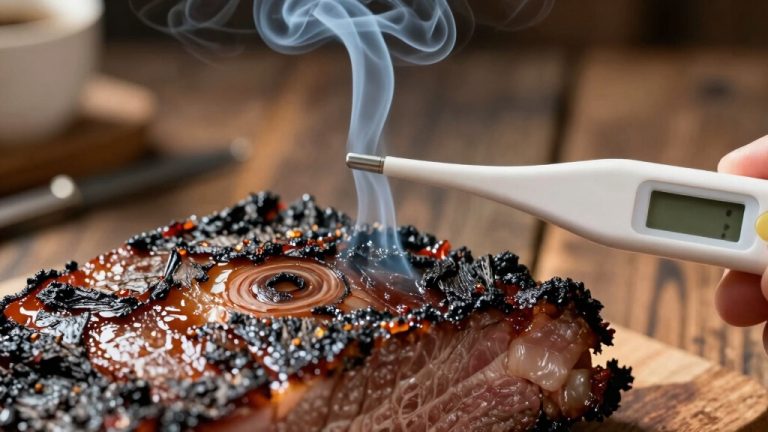
- Temperature control: Use a meat thermometer to prevent overcooking, preserving juiciness and tenderness in both cuts.
How to Marinate London Broil for Maximum Tenderness?
To get the most tenderness out of your London broil, you’ll want to choose a marinade that includes some acidic ingredients. Things like vinegar or citrus juices work wonders because they help break down those muscle fibers.
Now, when it comes to marinating time, aim for about 4 to 6 hours. This gives the marinade just enough time to soak in without ruining the meat’s texture.
Oh, and don’t forget about a couple of handy techniques! Scoring the meat or even giving it a gentle massage with the marinade can really help enhance that tenderization. Trust me, it makes a difference!
Choosing The Right Marinade
When marinating London broil, selecting the right combination of acidic and enzymatic ingredients is crucial to break down its dense muscle fibers and enhance tenderness. You want a marinade that both disrupts connective tissue and initiates protein breakdown without over-tenderizing.
Focus on these key components:
- Acidic agents like vinegar, lemon juice, or drink lower pH, denaturing proteins and softening muscle fibers.
- Enzymatic ingredients such as pineapple or papaya contain proteolytic enzymes (bromelain, papain) that cleave peptide bonds in tough meat.
- Oil and seasoning stabilize the marinade and promote flavor penetration while keeping the meat moist.
Optimal Marinating Duration
Selecting the right marinade ingredients sets the stage, but timing plays an equally significant role in tenderizing London broil. You want to marinate it long enough to break down the dense muscle fibers characteristic of flank or round cuts.
Avoid over-marinating, which can lead to a mushy texture. Aim for a duration between 4 to 12 hours in the refrigerator. This window allows acidic or enzymatic components in the marinade to penetrate effectively without compromising the meat’s structural integrity.
If your marinade is highly acidic, lean toward the shorter end to prevent protein denaturation. Conversely, milder marinades with enzymatic agents like papain or bromelain can extend closer to 12 hours.
Always marinate under refrigeration to inhibit bacterial growth and safeguard safety.
Marinating Techniques For Tenderness
Although marinating is essential for tenderizing London broil, applying the marinade correctly guarantees maximum penetration and effectiveness. To optimize tenderness, you need to focus on technique as much as marinade composition.
- Score the meat lightly: Use a sharp knife to make shallow cuts perpendicular to the grain. This increases surface area for marinade absorption without compromising structure.
- Use an acidic base: Incorporate ingredients like vinegar, citrus juice, or drink to break down muscle fibers chemically. Avoid overexposure to prevent mushiness.
- Vacuum-seal or use a zip-top bag: Ensure the marinade envelops the meat fully. Remove excess air to enhance contact and penetration during refrigeration.
Apply these steps for 4 to 6 hours to maximize London broil’s tenderness without degrading texture.
How to Slice Tri Tip and London Broil for Best Texture?
Master slicing both tri-tip and London broil properly guarantees you maximize tenderness and enhance the eating experience.
For tri-tip, cut against the grain in moderately thick slices to preserve juiciness and structural integrity. London broil requires thinner slices, strictly across the grain, to break its dense muscle fibers and improve chewability.
| Cut Type | Slicing Direction |
|---|---|
| Tri-tip | Against the grain |
| London Broil | Thin slices across grain |
| Thickness | Tri-tip: ~½ inch |
| London Broil: very thin |
This method respects each cut’s muscle fiber orientation, ensuring you retain ideal texture and tenderness in every bite.
Serving Sizes and Meal Ideas With London Broil and Tri Tip
Once you’ve sliced tri-tip and London broil properly, consider how their typical serving sizes influence meal planning. Tri-tip, weighing 2 to 3 pounds, suits family meals or medium gatherings, delivering tender, flavorful portions. London broil, often larger and thinner, works well for budget-conscious diners, especially when sliced thinly for sandwiches or plated meals.
Here are three meal ideas to match serving sizes:
- Tri-tip roast dinner: Serve 6–8 ounces per person with roasted vegetables and potatoes.
- London broil steak sandwiches: Use thin slices, about 4–5 ounces, paired with fresh greens and condiments.
- Mixed grill platter: Combine tri-tip and London broil slices for varied textures and flavors, allocating 5–6 ounces per serving.
These considerations guarantee efficient portioning and optimal dining experiences.
Comparing Value: Price and Quality of London Broil vs Tri Tip
Both London broil and tri-tip offer distinct advantages in value, balancing price and quality to suit different budgets and preferences.
Tri-tip generally commands a slightly higher price due to its tender texture and flavorful profile. This positions it as a cost-effective alternative to premium steak cuts. It’s ideal when you want a tender, juicy roast suitable for grilling or roasting.
London broil, often sourced from flank or round cuts, tends to be more affordable. This reflects its leaner, tougher nature that demands marinating and precise slicing for peak tenderness. If budget constraints are a priority, London broil provides substantial volume and versatility.
When evaluating quality, you’ll find tri-tip’s natural tenderness and richer flavor justify its price. London broil offers value through preparation techniques that enhance its comparatively leaner, firmer muscle structure.
When to Choose London Broil Over Tri Tip and Vice Versa?
Although tri-tip and London broil can both satisfy different culinary needs, you should choose tri-tip when you want a tender, flavorful roast that holds up well to high-heat grilling or roasting.
Tri-tip’s natural marbling and muscle structure make it ideal for medium-rare cooking with a robust crust.
Conversely, leaner London broil cuts require marinating and careful slicing for tenderness.
Consider these points when deciding:
- Opt for tri-tip if you want a juicy centerpiece roast with moderate chew and bold flavor.
- Choose London broil when you need an economical, thinly sliced beef option for sandwiches or salads.
- Use London broil if you’re prepared to marinate and cook to medium-rare to avoid toughness.
Your choice depends on texture preference and cooking method.
Frequently Asked Questions
Can London Broil Be Made From Cuts Other Than Flank or Round Steak?
Yes, you can make London broil from cuts beyond flank or round steak.
While flank and round are typical choices due to their texture, other lean cuts like top sirloin or even certain chuck cuts can work if you marinate them properly.
The key is using a tougher, lean piece of meat that benefits from marinating, high-heat cooking, and thin slicing against the grain to maximize tenderness and flavor.
What Are Common Seasoning Blends for Tri-Tip Besides Rubs and Marinades?
Imagine your tri-tip as a canvas craving a symphony of flavors.
Beyond rubs and marinades, you can elevate it with compound butters infused with garlic, rosemary, and thyme, melting into juicy perfection.
Finishing salts like smoked sea salt or a splash of balsamic reduction adds complexity.
A brush of chimichurri or a sprinkle of freshly ground black pepper and coarse kosher salt sharpens its natural beefiness without masking it.
How Long Can Cooked Tri-Tip or London Broil Be Safely Stored?
You can safely store cooked tri-tip or London broil in the refrigerator for 3 to 4 days.
Keep it in an airtight container to prevent contamination and moisture loss.
If you want to extend storage, freeze the cooked meat; it remains safe for 2 to 3 months when properly wrapped.
Always cool leftovers quickly and reheat them to at least 165°F (74°C) before eating to guarantee food safety.
Is Tri-Tip Suitable for Slow Cooking or Smoking Methods?
Imagine a slow dance of heat and smoke coaxing flavors from every fiber. You can absolutely slow cook or smoke tri-tip.
Though it’s traditionally grilled or seared, tri-tip’s triangular muscle and moderate fat content respond well to low-and-slow methods. This breaks down connective tissue for tenderness without drying out.
Just maintain a steady temperature around 225-250°F, use a meat thermometer, and finish with a sear to lock in juices and enhance crust formation.
Can London Broil Be Used in Recipes Calling for Ground Beef?
Yes, you can use London broil in recipes calling for ground beef, but keep in mind it’s leaner and tougher than typical ground beef cuts.
You’ll want to grind it finely to improve texture and possibly add some fat to maintain juiciness and flavor.
Because London broil has a dense muscle structure, blending it with fattier cuts or adding binders can enhance the final dish’s tenderness and mouthfeel.
London Broil and Tri Tip Offer Distinct Textures, Flavors, and Uses
When deciding between London Broil and Tri Tip, remember: each cut tells a different story of flavor and texture.
London Broil, tougher but budget-friendly, suits slow cooking and marinating. Tri Tip’s tender, well-marbled profile shines with quick, high-heat methods.
Like two sides of the same culinary coin, your choice hinges on cooking style, desired tenderness, and meal occasion.
Making informed decisions is key to mastering these distinctive beef cuts.