Dried Sausage Recipe: Average Size and Weight Guide
To make delicious dried sausage, start with quality meat butt or venison, trimming away sinew and keeping fat chilled for juiciness.
Grind meat cold, season with fennel, garlic, and curing salts including Insta Cure No. 2, then mix well.
Stuff natural hog casings gently and ferment at 55–60°F to develop tangy flavors.
Dry slowly at controlled humidity to build perfect texture.
Want to master each step for mouthwatering results? Keep exploring how to perfect your craft.
Key Takeaways
- Use high-quality meat butt or venison, trimming sinew and silverskin for optimal texture in dried sausage.
- Maintain meat temperature at 28–32°F during grinding to prevent smearing and ensure consistent texture.
- Soak and rinse natural hog casings thoroughly, keeping them cool and moist to prevent tearing during stuffing.
- Ferment sausages at 55–60°F and 65–80% humidity for about 24 hours to develop flavor and safety.
- Dry sausages steadily at 55–60°F with 60–80% humidity, monitoring weight loss of 30–35% for doneness.
Ultimate Dried Sausage Recipe Chart for Perfect Texture & Flavor
| Recipe Element | Details |
|---|---|
| Main Term | Dried Sausage Recipe |
| Recipe Type | Dry-Cured Meat / Sausage |
| Cuisine | European / Artisan Cured Meat |
| Difficulty Level | Advanced |
| Prep Time | 2–3 hours |
| Fermentation Time | 24 hours |
| Drying Time | 2–6 weeks |
| Total Time | Approximately 3–6 weeks |
| Main Meat Options | Pork butt, venison, beef, lamb |
| Recommended Fat Ratio | 20–30% chilled fat |
| Grinding Temperature | 28–32°F |
| Fermentation Temperature | 55–60°F |
| Fermentation Humidity | 65–80% |
| Drying Temperature | 55–60°F |
| Drying Humidity | 60–80% |
| Target Weight Loss | 30–35% |
| Casing Type | Natural hog casings |
| Recommended Casing Size | 35–38 mm |
| Key Seasonings | Fennel, garlic, coriander, cayenne |
| Curing Salt | Insta Cure No. 2 |
| Texture Goal | Firm, sliceable, slightly chewy |
| Flavor Profile | Tangy, savory, rich, fermented |
| Starter Culture Needed | Yes |
| Best Storage Method | Cool dry pantry or refrigerator |
| Shelf Life | Several months when properly stored |
| Common Spoilage Signs | Green/black mold, sour smell, slimy texture |
| Best Serving Ideas | Charcuterie boards, sandwiches, wine pairing |
| Essential Equipment | Meat grinder, sausage stuffer, hygrometer |
| Pro Tip | Keep meat and fat extremely cold during grinding for best texture |
| Doneness Indicator | Firm texture with consistent color and 30–35% weight reduction |
Selecting and Preparing Meat and Ingredients for Dried Sausage

When you start selecting and preparing meat for dried sausage, choosing high-quality meat butt or venison is essential. Trimming away sinew and silverskin will give your sausage the perfect texture.
Start with high-quality meat butt or venison, trimming sinew and silverskin for ideal sausage texture.
You want clean cuts to avoid tough, chewy bits. Keep your fat separate and chilled since incorporating cold fat guarantees the sausage stays juicy and binds well.
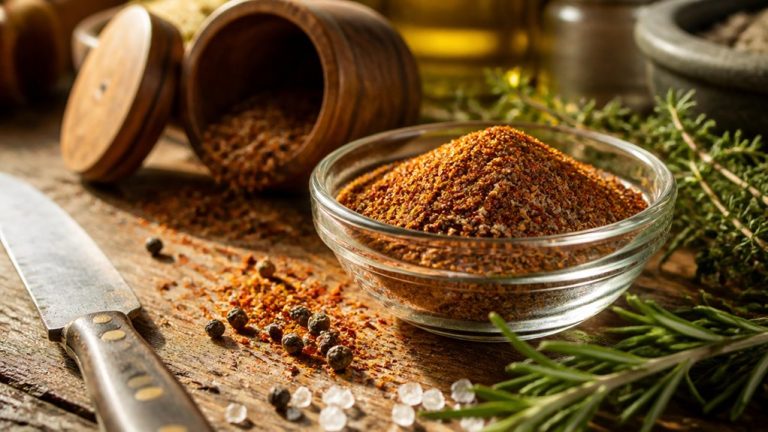
For curing, blend kosher salt with Insta Cure No. 2. This combo keeps your sausage safe and flavorful. Don’t forget your spices! Fennel seed, cayenne, garlic, and coriander add that classic punch.
Adding a touch of dextrose or corn syrup solids helps fermentation along, especially if your starter culture is aged. Each ingredient plays a vital role, so prep thoughtfully for the best dried sausage outcome! Ensuring all meat and fat are chilled before grinding helps prevent smearing and results in a better texture.
Grinding and Mixing Meat for Optimal Texture
Start by keeping your meat icy cold, ideally between 28 and 32°F, to lock in that perfect texture and prevent smearing during grinding.
Trim sinew and silverskin from your meat or venison, and keep fat chilled separately to maintain temperature.
Begin grinding with a coarse 10 mm plate. Then pass the meat through a finer 4.5 mm plate for that ideal bite. Dissolve your starter culture in distilled water, never chlorinated, to evenly spread beneficial bacteria.
After mixing in your spices and curing salts, knead the meat by hand for about two minutes to emulsify and distribute flavors evenly.
Finally, chill your mixture at 38-40°F for 48 hours to develop myosin, ensuring your sausage binds beautifully and achieves that signature firm, satisfying texture.
Maintaining proper temperature control during mixing is essential for both texture and food safety.
Choosing, Preparing, and Stuffing Sausage Casings
When you’re picking out sausage casings, aim for high-quality hog casings that are about 35-38 mm. This size really helps achieve that classic dry sausage texture we all love.
Now, when it comes to stuffing, a manual stuffer is your best friend. It really helps keep the meat’s texture intact, so you won’t end up with torn casings.
And don’t forget about those pesky air pockets! Just grab a sterile needle and gently prick the sausages. This little step is key to ensuring a tight, even fill, which is super important for consistent drying. Happy stuffing!
For snack sticks and smaller sausages, selecting the right casing size that matches your stuffing tube is crucial for optimal stuffing effort and product quality.
Casing Selection Criteria
Although selecting the right casing might seem straightforward, choosing and preparing sausage casings demands careful attention to detail to guarantee your dried sausage develops the perfect texture and flavor.
You’ll want to pick natural hog casings sized between 35-38 mm, ideal for traditional dry-cured sausages.
Before stuffing, soak them thoroughly in warm water to remove excess salt and make them pliable.
Rinse the casings inside and out, then keep them cool and moist to prevent tearing during filling.
Handling casings gently secures they won’t burst, preserving the meat’s texture and particle definition.
Properly prepared casings form a breathable barrier that supports fermentation and drying, making your homemade dried sausage a true culinary triumph.
Maintain cold conditions throughout stuffing to avoid damaging the casings and ensure an even fill with no air pockets for optimal sausage texture.
Stuffing Techniques Overview
When you choose the right casing and prepare it carefully, stuffing your sausage becomes a smooth, rewarding process that preserves every bit of flavor and texture you’ve crafted.
Start with 35-38 mm hog casings, soak and rinse them thoroughly to remove excess salt. Use a manual stuffer to gently fill the casing, keeping meat cold to maintain texture. Secure ends with tight knots or zip ties to prevent leaks.
It is important to maintain proper refrigeration of your stuffed sausages to ensure safety and quality after preparation.
Here’s a quick guide to get you started:
| Step | Tips |
|---|---|
| Choose casing | Fresh hog casings, 35-38 mm |
| Prepare casing | Soak 30 min, rinse well |
| Stuffing tool | Manual stuffer preserves texture |
| Filling technique | Keep meat cold, fill slowly |
| Seal ends | Double knots or zip ties |
With these steps, you’re set for perfect stuffing every time!
Air Pocket Removal
Pinching out air pockets during sausage stuffing is a vital step that guarantees your links dry evenly and develop the perfect texture. When you remove trapped air, you avoid uneven fermentation and potential spoilage.
After stuffing, gently squeeze the sausages to locate air pockets. Then use a sterile needle or sausage pricket to puncture them carefully. This lets trapped air escape without damaging the casing.
Here’s how to master air pocket removal:
Use hog casings around 35-38 mm for easy handling. Stuff meat evenly to prevent large air gaps. Work slowly with a manual stuffer to maintain texture.
Puncture small bubbles right away with a sterile tool. Secure ends tightly with double knots or zip ties.
Additionally, controlling moisture and maintaining proper airflow during drying helps prevent casing damage and ensures a consistent smoking and curing process.
This attention to detail guarantees flawless drying and mouthwatering results every time!
Fermenting and Incubating Dry-Cured Sausage
Since fermentation sets the foundation for flavor and safety in dry-cured sausage, you’ll want to create the perfect environment to activate your starter cultures.
Fermentation is key to flavor and safety, so create the ideal environment to activate your starter cultures.
Keep your sausages in a chamber set between 55-60°F with 65-80% humidity to encourage bacterial growth without drying out the casing.
Before mixing, let your starter culture sit at room temperature as per instructions to jumpstart activity.
Incubate the sausages for about 24 hours, monitoring for signs like casing hydration and slight color changes, which signal successful fermentation.
This phase is vital; your bacteria will acidify the meat, developing tangy flavors while inhibiting harmful microbes.
Nail this step, and you’re setting up your sausage for safe curing and mouthwatering taste!
Proper moisture control and temperature during fermentation are crucial for inhibiting harmful bacteria and ensuring product safety.
Drying Sausage: Timeline and Environmental Controls
Now that fermentation is done, let’s shift our focus to drying.
It’s crucial to control the environment carefully, aiming for steady temperatures around 55-60°F and humidity levels between 60-80%. Keeping an eye on these conditions will really make a difference.
You’ll want to monitor your sausages closely for any signs of mold growth. If you spot any unusual discoloration, catching it early can help keep your batch safe and tasty.
Maintaining moderate room humidity and steady airflow is essential to prevent excessive drying or surface wetness and promote proper moisture control during drying.
Drying Phase Conditions
Typically, you’ll want to kick off the drying phase by placing your sausages in an environment held steady at around 60°F with 65-70% humidity for the first 48 hours. This balance jumpstarts moisture reduction without stressing the casing or meat.
Afterward, maintain a steady 55-60°F temperature and slightly adjust humidity to 60-80% to encourage even drying and prevent case hardening.
Keep these pointers in mind:
Avoid sudden temperature or humidity shifts to prevent surface cracks. Make certain good air circulation for consistent drying.
Monitor humidity closely; too low dries too fast, too high invites spoilage. Use a hygrometer and thermometer for precise control.
Rotate or reposition sausages occasionally for uniform drying.
Mastering these conditions guarantees your sausages dry perfectly, setting the stage for rich flavor and ideal texture!
For best results, always monitor temperature closely to prevent spoilage and ensure proper drying conditions.
Monitoring Mold Growth
Regularly checking your sausages for mold growth is a crucial step in the drying process that you can’t afford to overlook.
Keep a close eye on the casing’s surface for any unusual colors or textures.
White, powdery mold is normal and even beneficial, helping develop flavor and protecting the sausage.
However, green, black, or fuzzy molds signal trouble.
If you spot these, gently wipe them off with a cloth dipped in a mild vinegar solution to keep harmful spores at bay.
Maintaining consistent humidity between 60-80% and temperatures around 55-60°F helps control mold growth.
Remember, good airflow supports even drying, minimizing unwanted mold.
Cold smoking can also enhance preservation by depositing flavor compounds such as phenols and organic acids without cooking the sausage.
Checking Doneness of Dried Sausage
Because dried sausage undergoes a slow transformation during curing and drying, you’ll want to carefully check for doneness to guarantee it’s perfectly balanced in texture and flavor.
Dried sausage transforms slowly during curing, so careful doneness checks ensure perfect texture and flavor balance.
Checking doneness makes certain you get that ideal firmness and rich taste without drying out or under-curing your sausage.
Here’s what you should look for:
- Confirm the sausage has lost about 30-35% of its original weight.
- Feel for a firm, but not brittle, texture; too hard means overdone.
- Check that the casing isn’t excessively wrinkled or cracked.
- Slice a piece to observe consistent color and absence of raw spots.
- Smell for a clean, tangy aroma without off or sour notes.
Trust these cues to enjoy your perfectly dried sausage every time!
Storing Finished Dried Sausage for Long-Term Quality
Once your dried sausage reaches that perfect balance of flavor and texture, storing it properly is key to preserving its quality for months to come. You want to keep it in a cool, dry, and well-ventilated space, ideally between 50-60°F with moderate humidity.
Wrapping sausages in breathable paper or cloth prevents moisture buildup that invites spoilage. Avoid plastic wrap unless freezing.
Here’s a quick guide:
| Storage Method | Ideal Conditions |
|---|---|
| Hanging in pantry | 50-60°F, 60-70% humidity |
| Refrigerator | 35-40°F, wrapped loosely |
| Freezer | Below 0°F, vacuum sealed |
| Paper wrapping | Breathable, dry, cool spot |
Stick to these tips, and your dried sausage will stay delicious and safe to enjoy for months!
Frequently Asked Questions
Can I Use Alternative Meats Like Beef or Lamb for Dried Sausage?
Absolutely, you can use beef or lamb for dried sausage! Just remember to trim sinew and silver skin for the best texture.
Keep your meat and fat cold during grinding to maintain quality. Adjust spice blends to complement the unique flavors of beef or lamb; maybe add rosemary or thyme for lamb.
Also, monitor fermentation and drying carefully since different meats have varying moisture and fat content. It’s a fun way to personalize your sausage!
How Do I Troubleshoot Off-Flavors During Fermentation?
If you notice off-flavors during fermentation, first check your starter culture’s freshness and proper activation. Old or improperly dissolved cultures can cause funky tastes.
Keep your temperature steady at 55-60°F. Fluctuations stress bacteria and produce unwanted flavors.
Also, make sure humidity stays within 65-80% to prevent spoilage.
Finally, use clean equipment and fresh ingredients because contamination or poor-quality meat can ruin your batch’s flavor profile.
Keep experimenting; you’ll nail it!
What Are Common Signs of Spoilage in Dried Sausages?
If you spot your sausage looking like a science experiment gone wrong, think fuzzy mold that’s not white or powdery, slimy textures, or an overpowering rotten smell.
You’re dealing with spoilage!
Off-colors like green, black, or pink patches scream danger.
Also, if your sausage feels mushy or overly sticky, toss it.
Don’t risk your health; spoiled sausage isn’t just unpleasant, it’s outright unsafe.
Always trust your senses; they’re your best defense!
Can Dried Sausages Be Frozen Without Affecting Quality?
You can freeze dried sausages, but it might affect their texture and flavor a bit.
Freezing can cause moisture crystals to form, which may lead to slight dryness or a change in mouthfeel once thawed.
To keep quality as high as possible, wrap them tightly in airtight packaging and thaw slowly in the fridge.
This way, you’ll preserve their delicious taste and prevent any funky freezer odors from sneaking in!
How to Safely Transport Dried Sausages Without Damage?
To safely transport dried sausages, you’ll want to wrap them tightly in parchment paper or butcher paper to protect the casing while allowing airflow.
Then, pack them in a sturdy box with cushioning like bubble wrap or crumpled paper to prevent bruising.
Keep them cool and dry during transit; using insulated bags or coolers is smart.
Avoid stacking heavy items on top to maintain their shape and texture.
You’re all set for damage-free delivery!
Craft Delicious, Long-Lasting Sausage with Confidence
Now that you’ve mastered drying sausage, you’re part of a centuries-old tradition. Did you know traditional dry sausages can last up to a year when stored properly? That’s a whole year of enjoying your homemade, flavorful creations!
With your careful selection, fermentation, and drying, you’ve crafted a delicious, long-lasting snack. Keep experimenting with spices and techniques; each batch gets better. Happy curing, and enjoy every savory bite of your hard-earned dried sausage!