Wrap or No Wrap Brisket: Master the Art of Brisket
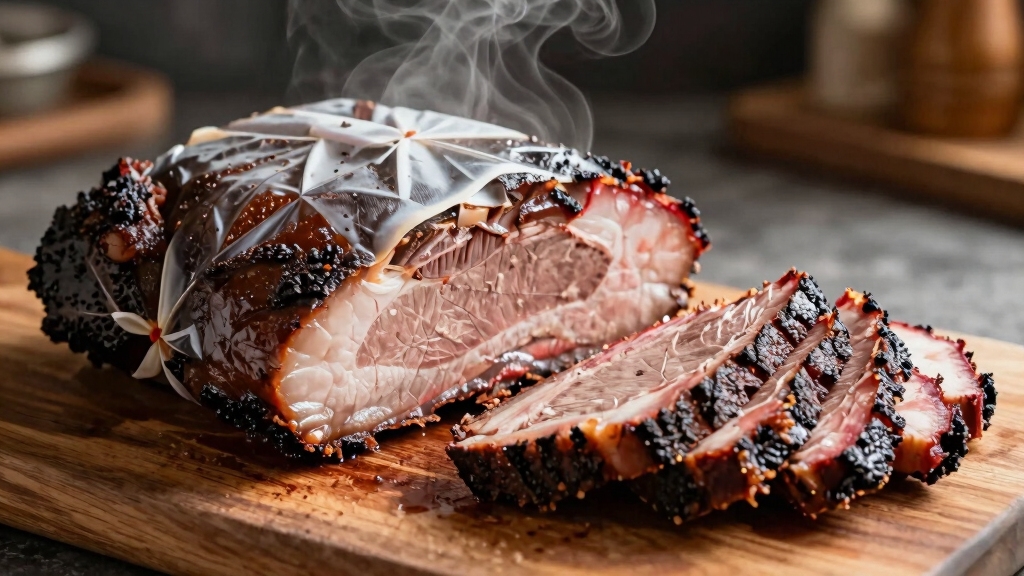
You control your brisket’s texture and juiciness by wrapping or not. Wrapping with foil locks in moisture, speeds cooking, and yields tender meat but softens bark.
Butcher paper balances moisture retention and bark texture, offering nuanced control. No wrap delivers the crispiest, most flavorful bark but takes longer, risking dryness.
You’ll want to time your wrap at the stall for best results and master resting techniques to maximize tenderness and bark interplay.
Explore these choices deeply to optimize your brisket every cook.
Key Takeaways
- Wrapping brisket at the stall (160–170°F) speeds cooking and enhances moisture retention by trapping steam and juices.
- Foil wrap finishes fastest but softens bark, while butcher paper balances moisture and preserves a crispier bark.
- No wrap yields the thickest, crunchiest bark but extends cook time by over two hours and risks drying the lean flat.
- Unwrapping wrapped brisket during the last 15 minutes can restore bark crispness before serving.
- Rest wrapped briskets 1–2 hours for juiciness; naked briskets need shorter rests (30–45 minutes) to preserve bark texture.
Should You Wrap Your Brisket? Pros and Cons
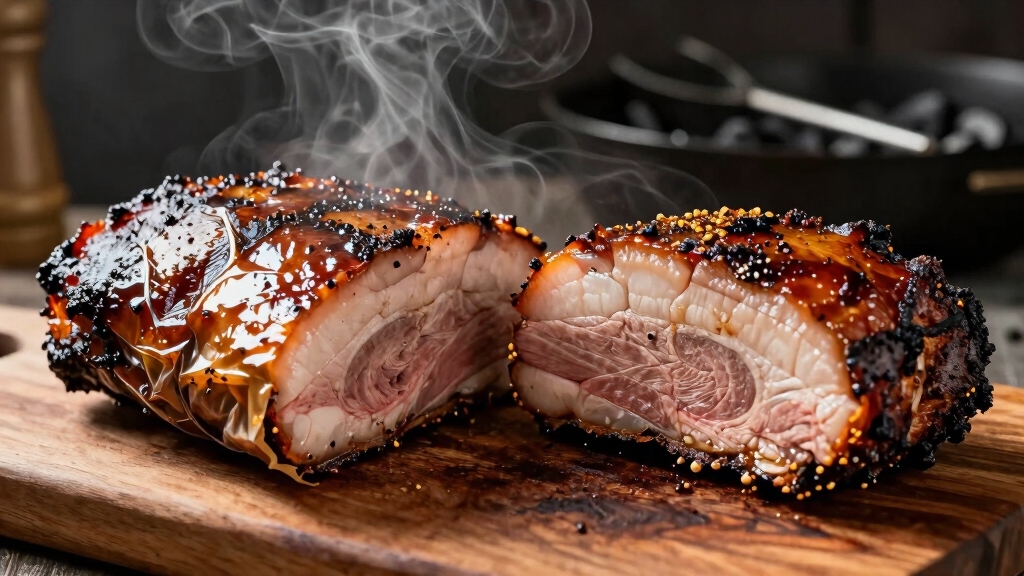
While wrapping your brisket can materially speed up the cooking process and enhance moisture retention, it also impacts bark development and texture in ways you need to contemplate.
Wrapping brisket speeds cooking and locks in moisture but changes bark texture and flavor.
Wrapping with foil traps juices, steaming the meat for extra tenderness but softening the bark and sometimes even making it soggy.
Butcher paper allows moisture to escape, preserving a crustier bark while still speeding the cook moderately.
If you go naked, you get the thickest, crunchiest bark with a bold salty-peppery contrast but risk drying out the flat and extending your cook time by over two hours.
Wrapping pushes through the stall faster, retaining juiciness and preventing bottom drying or burning.
Your choice hinges on whether you prioritize bark texture or ultimate tenderness and moisture.
It’s best to wrap when the brisket hits the stall temperature range to balance moisture retention and bark quality.
When to Wrap Your Brisket?
Choosing whether to wrap your brisket naturally leads to the question of timing—when exactly should you introduce the wrap during the cook?
The ideal moment is at the stall, typically when the internal temperature hovers between 160-170°F. This is when evaporation slows the cook, and wrapping helps push through by trapping heat and moisture.
If you wait too long, the brisket risks drying out or burning on the bottom. Wrapping here accelerates cooking: foil wraps fastest, butcher paper moderate, while no wrap extends the process.
You’ll want to unwrap it during the last 15 minutes to restore bark crispness if needed. By understanding and acting at this precise temperature window, you’ll optimize tenderness, moisture retention, and bark quality, tailoring your brisket’s final character exactly as you want.
Using the Texas crutch technique at this point traps steam and reduces evaporative cooling, which helps overcome the temperature plateau and shortens overall cook time.
Comparing Butcher Paper and Foil Brisket Wraps
Because butcher paper and foil wraps interact differently with heat and moisture, selecting between them profoundly affects your brisket’s texture and flavor profile.
Choosing between butcher paper and foil significantly impacts your brisket’s texture and flavor development.
Butcher paper breathes, allowing moisture to escape and promoting roasting over steaming. This preserves a crispier, more textured bark while retaining good juiciness, especially in the flat.
Foil, in contrast, traps all juices, creating a steaming environment that accelerates cooking and yields ultra-tender meat but softens the bark markedly.
You’ll notice foil pushes through the stall faster, shortening cook time, but at the cost of bark integrity.
Butcher paper offers a balanced approach, maintaining bark quality with moderate tenderness and moisture retention.
Your choice hinges on whether you prioritize bark texture or maximum tenderness and cooking speed. Both deliver exceptional results when timed correctly at the stall.
Wrapping at the right internal temperature, typically around 150–160°F, ensures optimal moisture retention and tenderness development.
How Wrapping Changes Brisket Bark Texture and Flavor?
Wrapping your brisket can really change up the bark texture and flavor, you know? When you wrap it in foil, for instance, you’ll find that the bark becomes softer and less crunchy.
On the other hand, using butcher paper or skipping the wrap altogether keeps that crispy crust intact.
What’s happening here is all about moisture. When you wrap the brisket, you’re trapping steam and juices, which affects the Maillard reaction.
This can tone down that bold, smoky flavor and the hearty texture of the bark. So, if you’re aiming for that perfect balance between tenderness and that signature crunchy bite, it’s good to understand how these different wrapping methods play into the game!
Additionally, monitoring the internal temperature with a leave-in probe during the cook helps maintain the ideal tenderness and moisture balance.
Bark Crispiness Comparison
Frequently, the choice of wrapping method dramatically alters the brisket’s bark texture and flavor profile.
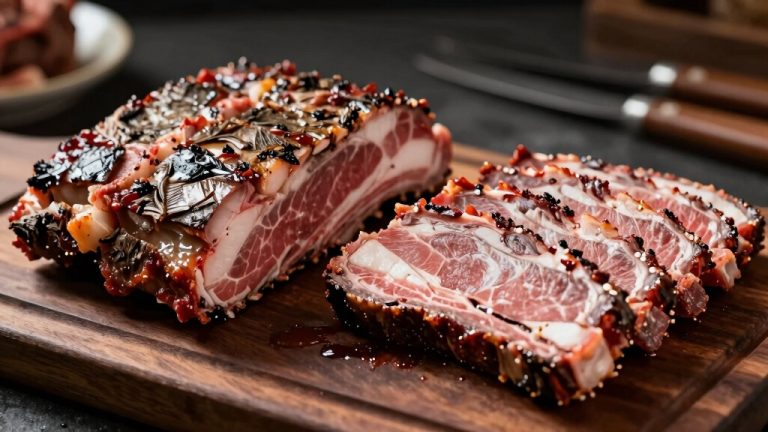
When you cook without wrapping, you get the thickest, crunchiest bark, rich with deep caramelization and a pronounced salty-peppery crust.
Butcher paper wrap retains much of that crispiness by allowing moisture to escape, preserving a crustier bark than foil.
Foil, however, traps steam, softening the bark markedly and sometimes making it soggy, sacrificing crunch for tenderness.
If you want a bark with robust texture and crisp edges, no wrap or butcher paper is your go-to.
Wrapping during the stall softens the bark by reducing caramelization, so you must decide if you prioritize a crunchy crust or quicker cook times with softer bark.
Maintaining a consistent smoker temperature between 300–325°F is essential to achieving the desired bark development regardless of wrapping choice.
Flavor Impact of Wrapping
The choice of wrapping method directly shapes the brisket’s flavor profile by influencing bark texture and moisture levels.
When you wrap in foil, steam softens the bark, diminishing its crunch but boosting tenderness and juiciness.
Butcher paper strikes a balance, maintaining a firmer bark while locking in moisture.
No wrap delivers the crunchiest, most pronounced bark with intense smoky notes but risks drying the flat.
| Wrapping Method | Flavor & Bark Impact |
|---|---|
| Foil | Softened bark, enhanced juiciness |
| Butcher Paper | Crisp bark, balanced moisture |
| No Wrap | Crunchy bark, drier, smoky intensity |
| Wrap Timing | Wrap at stall (160-170°F) to optimize |
Proper wrapping and resting techniques also help maintain the brisket’s internal temperature above 140°F to ensure safe holding and optimal moisture retention.
Choose wrapping based on whether you favor bark texture or moist tenderness.
Bark Softening Factors
Wrapping brisket directly alters the bark’s texture by introducing moisture and heat dynamics that soften its once-crisp surface.
When you wrap in foil, trapped steam saturates the bark, reducing caramelization and creating a softer, sometimes soggy crust.
Butcher paper lets some moisture escape, preserving more crunch while still softening the bark compared to no wrap.
This moisture exchange interrupts the Maillard reaction on the surface, diminishing the bold salty-peppery contrast you get from a naked bark.
The timing also matters; wrapping at the stall (160-170°F) halts further drying, locking in juiciness but compromising bark crunch.
If you want that thick, crunchy bark, avoid wrapping or unwrap during the last 15 minutes to dry it out.
Note this trades off tenderness and cook time.
For best results, wrapping combined with resting in a preheated cooler helps maintain moisture while balancing bark texture.
How Wrapping Makes Your Brisket Juicy and Tender
Even though unwrapped brisket develops a robust bark, you’ll find that wrapping, especially with foil, locks in moisture and markedly boosts tenderness.
Wrapping traps escaping steam and juices, effectively braising the meat and breaking down collagen faster. This results in a tender, juicy brisket that resists drying out, especially in the lean flat.
You’ll notice the fat rendering into the meat more fully, enhancing mouthfeel. Wrapping also pushes you through the stall more efficiently, preserving that critical juiciness.
Foil creates a near-airtight environment, maximizing moisture retention.
Butcher paper balances moisture escape, keeping some bark texture.
Wrapping prevents bottom burning and drying during extended cooks. The trapped steam accelerates collagen breakdown, yielding melt-in-your-mouth tenderness.
Master this technique to elevate your brisket’s succulence and texture.
For longer holding periods, consider double-layer wrapping to stabilize temperature and moisture while maintaining bark integrity.
Cooking Time Differences: Wrapped vs. Naked Brisket
You’ll notice that wrapping your brisket can really cut down on cooking time. When you use foil, it helps push through the stall way quicker than butcher paper does.
Why? Well, foil traps moisture, which makes the internal temperature rise faster. On the other hand, if you go with butcher paper, it lets some steam escape, so the cooking process is a bit more moderate.
Now, if you decide to go naked—no wrapping at all—be prepared for a longer cook. You might find that your cooking time extends by over two hours. Without that thermal boost from wrapping, the brisket takes its sweet time climbing up to temperature.
So, think about how you want to approach it! Additionally, combining wrapping with spritzing techniques can help maintain surface moisture and enhance bark development during cooking.
Wrap Impact On Timing
When you choose to wrap your brisket, you speed up the cooking process markedly compared to leaving it naked.
Wrapping at the stall (160-170°F internal) traps heat and moisture, pushing through this plateau faster than unwrapped brisket.
This can extend cook times by over two hours.
Foil wrap finishes the quickest, butcher paper takes a bit longer, and naked brisket is slowest, relying solely on dry heat.
Wrapping prevents bottom burning and drying out.
Foil wrap accelerates cooking more than paper.
Naked brisket maintains a dry environment, slowing heat transfer.
Unwrapping near the end helps restore bark crispness.
This timing difference lets you balance tenderness and bark quality based on your cooking goals.
Maintaining a steady smoker temperature between 225°F and 250°F is essential to maximize the benefits of wrapping and achieve optimal tenderness through temperature consistency.
Foil Versus Paper Speed
Understanding how foil and butcher paper wrapping impact cooking speed sharpens your control over brisket timing.
Foil wrap traps moisture tightly, creating a steaming environment that accelerates the cook by pushing through the stall quickly.
You’ll notice foil finishes fastest, often shaving an hour or more off your total cook time compared to paper.
Butcher paper, being porous, allows some moisture to escape, moderating heat transfer and slowing the cook relative to foil.
It strikes a balance—faster than naked but slower than foil—preserving bark integrity while still reducing stall duration.
If you want to optimize tenderness without sacrificing bark too much, paper wrapping offers precise speed control.
Choosing between these wraps lets you dial in timing and bark quality, tailoring your brisket’s final texture and juiciness exactly how you want it.
Naked Cook Time Extension
Although wrapping brisket accelerates cooking by pushing through the stall, choosing to cook your brisket naked markedly extends the total cook time. This often adds more than two hours. Without a wrap, you rely solely on dry heat to render fat and break down connective tissue. This slows the internal temperature rise substantially.
This extended cook time can challenge your patience but rewards you with a distinct bark texture and flavor complexity.
Consider these key points when going naked:
- Cook time extends 2+ hours versus foil or butcher paper wraps.
- Smoker set at 275°F indirect, naked brisket lingers longer in stall.
- No moisture retention from wrapping means slower fat rendering.
- Risk of drying out flat increases without wrap’s protective barrier.
Mastering naked brisket demands precise temperature control and timing.
Expert Opinions on Brisket Wrapping for Home and Competition
Because brisket wrapping directly affects texture and cooking time, experts often draw a clear line between home cooks and competition pitmasters.
You’ll find home cooks favor the naked method, valuing the thick, crunchy bark and traditional Central Texas dry cook despite longer time.
Competition pros lean toward wrapping, usually butcher paper or foil, to speed cooking and lock in moisture. This pushes brisket through the stall faster without sacrificing tenderness.
Paper wrapping strikes a balance, preserving bark crispness better than foil while maintaining juiciness.
Foil wrap, though fastest, softens bark more but guarantees melt-in-your-mouth texture.
Video tests confirm wrapped briskets win on tenderness; naked ones excel in bark complexity.
Ultimately, your choice hinges on priorities: bark integrity and time investment versus cooking efficiency and moist, tender results.
Finishing and Resting Wrapped vs. Naked Brisket
When you finish cooking your brisket, how you rest it can dramatically impact the final texture and flavor, especially depending on whether you wrapped it or left it naked.
Wrapped briskets, particularly in foil or butcher paper, benefit from resting in a cooler or Cambro. This allows juices to redistribute and the meat to tenderize without losing moisture.
Naked briskets demand a careful, shorter rest to preserve their crisp bark and prevent drying.
Consider these vital points:
Wrapped briskets retain heat longer, enhancing tenderness but softening bark.
Naked briskets cool faster, preserving a crunchy bark but risking moisture loss.
Unwrapping wrapped briskets during the last 15 minutes can revive bark texture.
Rest time varies: wrapped briskets need 1-2 hours; naked ones, about 30-45 minutes.
Master resting to balance juiciness and bark perfection.
Frequently Asked Questions
Can I Reuse Butcher Paper or Foil for Multiple Briskets?
You shouldn’t reuse butcher paper or foil for multiple briskets.
Butcher paper absorbs moisture and fat, compromising its breathability and risking steamy bark on the next cook.
Foil, once crumpled and soaked with juices, loses its sealing effectiveness and cleanliness. This increases contamination risk.
For peak bark quality and food safety, always use fresh paper or foil per brisket.
This guarantees consistent moisture control and prevents off-flavors or bacterial issues.
Does Wrapping Affect the Flavor of the Smoke Absorbed?
Wrapping does affect smoke absorption. When you wrap brisket, especially in foil, you trap moisture and reduce smoke exposure, decreasing smoky flavor intensity.
Studies show foil wrapping cuts smoke penetration markedly compared to no wrap. Using butcher paper lets some smoke through, preserving more flavor than foil but less than naked.
What Type of Wood Pairs Best With Wrapped Brisket?
You’ll want to choose woods with subtle, complementary smoke profiles that won’t overpower wrapped brisket’s tender, moist texture.
Fruitwoods like apple or cherry add mild sweetness and delicate fruitiness, enhancing the meat without masking its natural flavor.
Hickory works too but in moderation, providing a balanced, robust smoke.
Avoid heavy woods like mesquite, which can dominate.
These selections harmonize perfectly with the gentle moisture retention wrapping delivers.
How Does Altitude Impact Brisket Wrapping Results?
At higher altitudes, the lower atmospheric pressure reduces boiling point, slowing moisture evaporation from your brisket.
This means when you wrap, the steaming effect intensifies, potentially softening bark more than at sea level.
You’ll notice foil wrap accelerates cooking even further up high, cutting time more dramatically.
To maintain bark integrity, consider butcher paper or partial unwrapping late in the cook.
This balances moisture retention with crust development effectively.
Can Wrapping Techniques Be Used for Other Smoked Meats?
Yes, you can definitely use wrapping techniques for other smoked meats like pork shoulder or ribs.
Wrapping in foil or butcher paper helps accelerate cooking during the stall, retaining moisture and tenderness.
Butcher paper allows some moisture to escape, preserving bark crispness, while foil traps juices, making the meat more steamed and tender.
You’ll want to adjust timing and temperature based on the meat’s size and fat content to get ideal bark and juiciness.
From Bark to Bliss: Mastering Brisket Texture
Wrapping your brisket is like choosing the perfect lens for your masterpiece. It sharpens juiciness and tenderness while softening bark texture.
If you want a moist, tender bite and can manage slightly shorter cook times, wrapping is your go-to. But if a bold, crispy bark is your goal, leaving it naked lets the crust build unfiltered.
Ultimately, mastering both techniques empowers you to tailor every brisket to your exact flavor and texture vision.