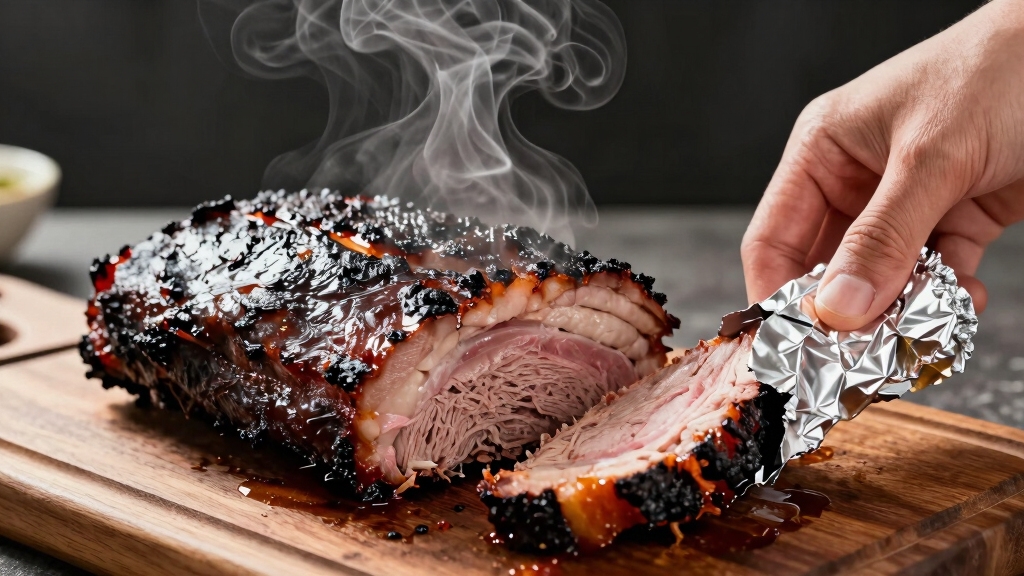
When Do You Wrap a Brisket? Get Tender, Flavorful Meat
You wrap a brisket when it hits the stall, usually between 150°F and 170°F, where the internal temperature plateaus due to evaporative cooling.
Wrapping then traps moisture, halts the stall, and accelerates cooking.
Choose foil for faster cook times and juiciness or butcher paper to preserve bark and smoke flavor.
Timing your wrap right balances tenderness with texture. Mastering this opens deeper control over your brisket’s ultimate flavor and finish.
Key Takeaways
- Wrap the brisket when it hits the stall, typically between 150°F and 170°F, to overcome the temperature plateau and speed cooking.
- Wait until the bark is firm, dark mahogany, and no longer soft or spongy before wrapping to preserve texture.
- Most pitmasters start wrapping around 165–170°F for the best balance between moisture retention and bark quality.
- Wrapping traps moisture and heat, pushing the brisket through the stall and shortening overall cook time by 1.5–2 hours.
- Choose wrap material based on desired bark: butcher paper for a firmer bark and continued smoke flavor, foil for maximum moisture and tenderness.
Understanding the Brisket Stall
Although it can frustrate even experienced pitmasters, the brisket stall is a critical phase in low-and-slow cooking where the internal temperature plateaus between roughly 150°F and 170°F.
The brisket stall—a temperature plateau around 150°F to 170°F—is a key phase in low-and-slow cooking.
This temperature plateau happens because evaporative cooling from moisture leaving the meat surface absorbs heat, balancing out the heat input from your cooker.
The stall duration can last for hours, especially with larger, thicker cuts that contain more internal moisture.
In fact, larger cuts stall at lower temperatures due to their higher surface-to-volume ratio and moisture content.
Factors like low ambient humidity, high airflow, frequent spritzing, and surface texture all influence the stall’s length and temperature.
Understanding these mechanics helps you anticipate longer cooking times and the formation of bark and smoke flavor.
Managing airflow and moisture is key to controlling this phase without compromising your brisket’s texture and flavor. Using techniques such as spritzing during cooking can help maintain surface moisture and enhance bark development during the stall.
Ideal Internal Temperature for Wrapping
Once your brisket hits the stall and the internal temperature holds steady between 150°F and 170°F, deciding when to wrap becomes a key control point in the cooking process.
Most pitmasters agree on wrapping between 165°F and 170°F, while grill masters suggest starting as low as 150°F, depending on your smoker’s humidity and wrap tightness.
Wrapping insulates the brisket, pushing it through the stall by trapping heat and moisture. This technique also helps maintain a more consistent smoker temperature during the cook.
Consider these key points:
- Wrap around 165-170°F for optimal juice retention.
- Aluminum foil maximizes moisture but can soften bark.
- Butcher paper breathes, preserving bark texture with faster cooking.
- Wrapping enables higher smoker temps without drying the brisket.
Mastering this temperature window guarantees tender, juicy brisket with controlled bark development. Wrapping also slightly reduces smoke flavor since the wrap limits smoke contact with the meat, balancing flavor and moisture retention effects of wrapping.
Signs Your Brisket Is Ready to Be Wrapped
You’ll frequently notice distinct visual and tactile cues signaling when your brisket is primed for wrapping.
The bark should have formed a dark mahogany crust, crispy and set, no longer soft or spongy. Maintaining this bark requires proper temperature control to prevent it from becoming soggy.
Look for a dark mahogany crust on your brisket—crispy, firm, and no longer soft or spongy.
The fat cap shifts to a translucent sheen, glistening with rendered fat but without excess moisture pooling.
Internally, the brisket enters the stall phase, with temperatures plateauing between 150-170°F and cooking progress noticeably slowing. Wrapping at this stage speeds up cooking and helps move through the stall more quickly.
You’ll also observe the surface drying further, exposing more meat beneath the bark.
Perform the probe tenderness test: the probe should slide into the thickest part like softened butter, offering minimal resistance without gritty texture.
These combined signs, bark set, stall onset, fat rendering, and probe softness, indicate it’s time to wrap, preserving bark crispness while pushing through the stall efficiently.
Choosing Between Butcher Paper and Foil
When you’re trying to decide between butcher paper and foil, there are a couple of things to keep in mind.
On one hand, you’ve got breathability with butcher paper. It lets that beautiful bark on your meat stay nice and firm, crispy even. This is because butcher paper’s porous nature allows moisture to escape, maintaining the perfect bark texture.
On the flip side, foil is a whole different ballgame. It locks in all those delicious juices, but it can also soften that crust you’re working so hard to achieve.
Now, let’s talk about cooking time. Foil really speeds things up. It traps heat and moisture, which can cut down on stall time significantly. If you’re in a hurry, foil might be your best bet. But if you want to take it slow and maintain that texture, butcher paper is the way to go.
Wrapping is often done when the brisket bark reaches desired firmness, which helps ensure the best balance between tenderness and bark texture.
Breathability and Bark Preservation
Frequently, the choice between butcher paper and foil hinges on their fundamentally different breathability and effects on bark preservation.
Butcher paper’s porous nature lets smoke penetrate and moisture escape, preserving a firm, crunchy bark. Foil seals tightly, trapping steam and softening the bark. Many pitmasters prefer butcher paper because it helps push through the stall phase more naturally.
This breathability also helps control humidity around the brisket, preventing the bark from becoming soggy.
When wrapping brisket, consider these key points:
- Butcher paper allows continuous smoke infusion, enriching flavor and maintaining bark texture.
- Foil blocks smoke and traps moisture, resulting in mushy bark needing re-smoking to firm.
- Uncoated butcher paper breathes, preventing sogginess by absorbing excess fat, unlike foil’s moisture lock.
- Paper’s breathability supports bark firming post-wrap; foil requires unwrapping for bark restoration.
Choosing butcher paper means embracing breathability for superior bark preservation and deeper smoke flavor.
Moisture Retention Impact
Moisture retention plays a pivotal role in how your brisket finishes, and choosing between butcher paper and foil directly affects this outcome.
Foil creates an almost airtight seal that traps steam and juices, fostering a braising environment that minimizes evaporative moisture loss and yields a uniformly moist, fall-apart texture. This method effectively helps push through the brisket stall by insulating and retaining moisture, speeding up the cooking process stall acceleration.
It also requires careful temperature management to prevent overcooking due to trapped heat. It accelerates collagen breakdown and promotes self-basting, producing a saturated mouthfeel but a softer, less textured bark.
Butcher paper, being porous, allows some moisture escape, resulting in a firmer texture gradient and a drier bite with more bark preservation. This method benefits from airflow control to maintain ideal cooking temperatures without excessive drying.
Proper sealing, tight foil or well-folded paper, and measured liquid addition amplify moisture retention.
If you prioritize juiciness with a balanced bark, butcher paper is ideal. For maximum moisture and a tender, braised interior, foil is your go-to choice.
Cooking Speed Differences
Understanding how wrapping materials influence moisture retention naturally leads to taking into account their impact on cooking speed. When choosing between butcher paper and foil, you must consider how each affects your brisket’s timeline and final texture.
- Foil accelerates cooking by trapping heat and moisture, reducing cook time by 1.5-2 hours via the Texas Crutch effect.
- Butcher paper allows steam to escape, prolonging cooking but preserving bark crunchiness and smoke exposure. This is because paper is porous, allowing some smoke to continue hitting the meat after wrapping. It also supports better moisture retention during resting by enabling the brisket to breathe.
- Foil’s tight seal braises the meat, ensuring faster tenderness and more consistent temperatures. This wrapping method also helps maintain an internal temperature above 140°F, which is crucial for safe meat resting.
- Paper’s permeability causes longer stalls, extending cook times by up to two hours, ideal if you’re not rushed.
For precise timing or competitions, foil’s speed is unmatched. For flavor depth and texture, butcher paper reigns supreme.
Benefits of Wrapping Your Brisket
Although wrapping your brisket might seem like a simple step, it fundamentally transforms the cooking process by locking in natural juices and creating a controlled environment that preserves moisture.
By trapping moisture released from fat and connective tissue breakdown, wrapping prevents drying and infuses added liquids, maintaining hydration throughout the cook. This technique also accelerates the cook by insulating heat, pushing you through the stall at 150-170°F faster and promoting even temperature distribution.
It also regulates temperature and humidity to ensure the brisket cooks evenly and remains tender. You’ll notice enhanced tenderness as collagen converts more efficiently, breaking down tough fibers uniformly.
Flavor intensifies as wrapping preserves savory notes and allows selective smoke absorption. Plus, using butcher paper maintains a balanced bark—breathable enough to stay crisp, yet moist enough to avoid softening. Wrapping is a precision tool for juiciness, tenderness, and flavor.
Potential Drawbacks of Wrapping

When you wrap your brisket, you’re essentially making a trade-off. On one hand, you get to keep that juicy moisture in, but on the other, you lose that nice, crispy bark.
The foil or paper traps steam, which can really soften the crust and change up its texture. Foil can steam the meat and potentially damage bark, which is why some cooks prefer butcher paper instead.
Wrapping also affects the cooking environment by increasing moisture retention, which can shorten the cooking time but at a cost to bark development.
Now, think about it: that extra moisture actually disrupts the caramelization process. So instead of enjoying that rich flavor from the rendered fat, you’re left with something more watery.
This happens because the trapped steam reduces the surface temperature, preventing proper Maillard reaction that forms the flavorful crust.
It’s definitely something to consider. Do you want to sacrifice that beautiful bark for a bit more juiciness? It’s all about what matters most to you in your brisket experience!
Bark Softening Effects
If you wrap your brisket too early or with the wrong materials, you’ll notice the bark quickly loses its desirable crispness and firmness.
Wrapping creates a moist environment that rehydrates the crust, turning your hard-earned bark soft and pliable.
Foil, especially, traps steam, resulting in a pot-roasty, washed-out appearance and the softest bark texture.
Butcher paper offers a better balance by allowing breathability, preserving more bark firmness.
Consider these key effects of wrapping on bark:
- Foil accelerates cooking but severely softens bark due to steam entrapment.
- Liquids in the wrap create a braising effect, mushy bark guaranteed.
- Limited airflow during wrapping prevents crust dehydration, reducing crunch. This is because airflow controls drying.
- Unwrapping late can salvage bark by re-crisping at higher heat.
Additionally, maintaining proper drying and airflow during storage can prevent unwanted moisture buildup and mold development on the grill surface, which indirectly affects cooking quality.
Choose your wrap carefully to maintain bark integrity and flavor depth.
Moisture Impact on Texture
By trapping moisture from brisket juices, wrapping creates a steamy environment that inevitably softens the bark’s texture. When you seal brisket tightly in foil, you prevent evaporation, causing a braising effect that saturates the crust, turning it soft and less crisp. Using wood that burns slowly, like oak wood, can complement the wrapping technique by enhancing flavor during long smoke sessions.
Butcher paper offers a better balance, allowing partial evaporation and preserving more texture. The continuous basting from trapped juices increases succulence but rehydrates the dried exterior, reducing firmness. This wrapping phase is typically done about three-quarters through cooking when the brisket hits the stall, to help retain moisture and tenderize the meat wrap timing.
Double wrapping intensifies insulation, amplifying moisture buildup and further softening bark. Adding liquids like broth escalates steam, risking an overly tender, mushy crust.
To maintain some crust integrity, you’ll want to unwrap and re-crisp at a lower temperature post-wrap. Understanding these moisture dynamics helps you control texture trade-offs when choosing your wrapping method.
Flavor Profile Alteration
Moisture management doesn’t just influence texture; it also markedly impacts the brisket’s flavor profile. When you wrap brisket, consider these vital effects:
- Wrapping traps steam, softening the bark and dulling peppery, smoky notes vital for depth.
- Foil wrapping restricts smoke penetration, reducing that signature smoky intensity and shifting flavors toward beefy umami.
- Concentrated internal juices enhance meatiness but can overshadow delicate rub spices and diminish complexity.
- Added liquids inside the wrap alter flavor; sugary or acidic components create sweeter or tangier backgrounds, sometimes overpowering subtle rub nuances.
- Additionally, wrapping can speed up cooking by trapping heat and moisture, reducing the overall time required to reach the desired internal temperature.
You must weigh these trade-offs carefully. Wrapping boosts juiciness and tenderness but risks muting the very flavor contrasts that define an exceptional brisket.
Timing Wraps Based on Temperature and Stall
Although wrapping timing can vary, most pitmasters agree that initiating the wrap when the brisket’s internal temperature hits 165–170°F strikes the ideal balance between preserving bark and overcoming the stall.
Starting the wrap at 165–170°F perfectly balances bark preservation with beating the stall.
The stall, typically occurring between 150–170°F due to evaporative cooling, halts temperature rise for hours.
Wrapping at this stage traps moisture, halting evaporative cooling, and accelerates internal heat gain.
You want to wait until the bark is firmly set, usually past 160°F, to avoid compromising texture.
Wrapping too early risks soggy bark; too late prolongs the stall unnecessarily.
Monitoring the brisket’s feel and bark dryness alongside temperature helps you decide the precise moment.
After wrapping, higher smoker temps speed fat rendering, finishing the cook near 200–205°F for prime tenderness and flavor.
This approach aligns with findings that a higher wrap temperature around 275–300°F produces better fat rendering and texture in the brisket’s point muscle.
Alternative Approaches to Wrapping
Choosing when to wrap your brisket sets the stage, but selecting how to wrap it shapes the final texture and flavor profile.
Your wrapping method profoundly influences moisture retention, bark firmness, and smoke absorption. Consider these alternatives:
- Foil Wrapping: Locks in moisture, speeds cooking, delivers juiciest interior but softens bark and limits smoke flavor. This method is known as the fastest method.
- Butcher Paper: Breathable, balances a firm, dark bark with good tenderness; perfect for caramelized crust lovers.
- Foil Boat Hybrid: Combines foil’s moisture lock with exposed top bark, enhancing fat rendering and juice reabsorption.
- Enhanced Additives: Use tallow-soaked paper or steam pans to amplify moisture and flavor during the wrap phase.
Choose wisely; your wrap technique is a technical tool that sculpts brisket’s final mouthfeel and aroma.
How Wrapping Influences Bark and Juiciness?
When you wrap your brisket, you directly influence the delicate balance between bark formation and juiciness by controlling heat retention and surface humidity.
Wrapping during the stall traps steam, shortening cook time but softening the bark through rehydration.
Choosing foil creates a sealed, moist environment that yields a tender, braised texture with a softer bark. This wrapping method can reduce surface moisture evaporation, which is key to crust formation.
Butcher paper allows moisture to escape, preserving a firmer, more textured crust with deeper smoke flavor.
Leaving the bark unwrapped maximizes drying and Maillard reactions, producing the darkest, crunchiest crust but risks drying the meat.
Timing is critical—wrap after the bark firms to maintain seasoning adhesion and smoke uptake.
You can briefly unwrap near the end to re-crisp softened bark, balancing juiciness with textural integrity for a perfect finish.
Frequently Asked Questions
How Does Wrapping Affect Smoke Flavor Absorption in Brisket?
Wrapping your brisket limits smoke flavor absorption because it creates a moist, insulated environment that reduces further smoke exposure.
If you use foil, it blocks smoke almost entirely, softening the bark and muting smokiness.
Butcher paper, being breathable, lets more smoke in, preserving flavor better while maintaining moisture.
To maximize smoke depth, you want an unwrapped or paper-wrapped approach during most of the cook, balancing moisture and bark texture carefully.
Can You Unwrap Brisket Midway and Rewrap It Later?
Yes, you can unwrap brisket midway and rewrap it later.
In fact, pitmasters doing this often shave hours off the cook by managing the stall and bark texture. When you unwrap, you expose the meat to air, letting moisture evaporate and bark firm.
Rewrapping, preferably in butcher paper or a foil boat, helps retain juiciness while speeding the internal temp rise.
Just minimize unwrap time to prevent heat loss and bark softening.
What Tools or Techniques Help Prevent Foil Tears When Wrapping?
You’ll want to use heavy-duty, thicker gauge aluminum foil. Double-wrapping with overlaps of 6–8 inches creates a sturdy base.
Center the brisket on foil, fold edges tightly with smooth crimps, and wrap seam-side up to prevent rubbing tears. Trim sharp bone fragments and place a protective layer like parchment between meat and foil.
When moving, use blunt-tipped tools and employ a roasting pan underneath to offload stress from the foil.
Does Wrapping Impact the Resting Time After Cooking?
Think of wrapping as a warm blanket cradling your brisket, slowing its cool-down and extending its resting time.
Yes, wrapping definitely impacts resting duration. You’ll want at least 2-3 hours wrapped in foil or butcher paper to let juices redistribute and fibers relax fully.
This gentle insulation preserves heat and moisture, preventing drying and overcooking.
How Does Ambient Smoker Humidity Influence Wrapping Decisions?
You should adjust wrapping based on ambient smoker humidity because it influences evaporative cooling and the stall duration.
In dry conditions, wrap early with foil or butcher paper to prevent prolonged stall and dryness.
In high humidity, you can delay or skip wrapping since moisture slows evaporation naturally.
Foil wrapping in humid environments creates a braise-like effect, risking a mushy bark, so choose paper or no wrap to preserve texture while monitoring bark saturation carefully.
Apply What You’ve Learned and Wrap Your Brisket With Confidence
Now that you know the science behind the brisket stall and the exact temperature window for wrapping, you’re on the brink of mastering your smoke.
But when exactly you wrap will make or break your bark and juiciness. Too early, and you risk losing that perfect crust; too late, and your brisket might dry out.
Ready to test your timing and technique? Your next brisket could be the one that defines your BBQ legacy.