What Temp to Slice Brisket: Turn Heat into Heaven on a Bone
You want to slice brisket when it’s cooled to about 140–150°F after resting. At this temperature, the meat’s fibers relax, and the rendered fat stays soft, locking in maximum moisture and tenderness.
Slicing too hot causes juice loss, while slicing too cold leaves the fat solid and the texture chewy. For the best results, slice the flat and point differently and adjust thickness based on your serving style.
Keep going to master the perfect brisket cut technique.
Key Takeaways
- Slice brisket when internal temperature has cooled to about 140–150°F for optimal juiciness and tenderness.
- Avoid slicing above 155°F to prevent rapid juice loss from contracted muscle fibers.
- Do not slice below 130°F to avoid chewy texture from solidified fats and connective tissues.
- Rest brisket at 145–155°F for at least one hour before slicing to redistribute moisture evenly.
- Slice thin quarter-inch pieces against the grain, adjusting thickness and temperature per serving style.
Ideal Internal Temperatures for Cooking and Slicing Brisket Flat and Point

Understanding the ideal internal temperatures for cooking and slicing brisket flat and point is crucial to achieving perfect tenderness and juiciness.
For the flat, aim for 185-195°F to fully render fat and connective tissue without drying the lean meat. Cooking above 195°F risks dryness, so target around 195°F for tenderness but plan to rest for moisture retention.
The point requires higher temps, around 200-203°F, due to its higher fat content and thickness, ensuring doneness and softness. Avoid exceeding 204°F to prevent dryness despite tenderness.
When slicing, wait until the brisket cools to 140-150°F to retain juices and ease handling. These temperature targets let you cook each brisket section most effectively, balancing fat rendering and moisture for that perfect slice.
For the most accurate cooking results, place your temperature probe in the thickest part of the flat muscle to monitor doneness precisely during the cook.
How Resting Improves Brisket Juiciness Before Slicing?
Although you’ve reached the perfect cooking temperature, letting your brisket rest markedly enhances its juiciness before slicing. Resting allows residual heat to redistribute moisture evenly throughout the meat, preventing immediate juice loss when cut.
During this phase, collagen fully gelatinizes, and rendered fat reabsorbs into muscle fibers, locking in tenderness and flavor. You should rest the brisket at a controlled warm temperature, around 145 to 155 degrees Fahrenheit, for at least an hour, or even up to 15 hours for maximum moisture retention and bark preservation.
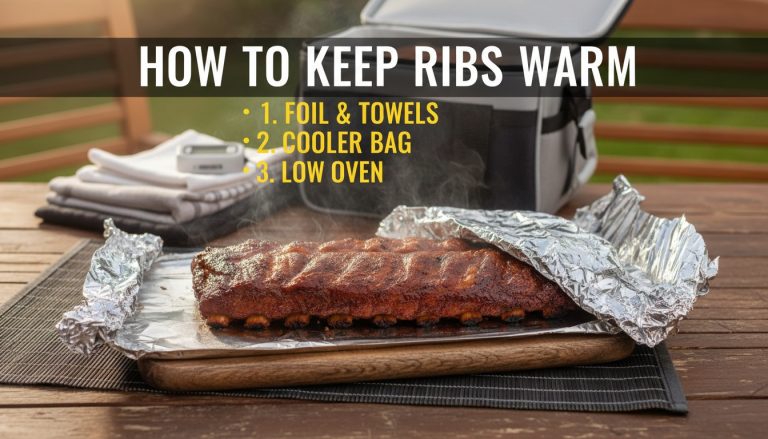
Vent the foil wrap briefly before rewrapping to release excess heat without drying the meat. This careful resting step guarantees that when you slice the brisket at 140-150 degrees internal, each cut is succulent and fork-tender, optimizing the eating experience. Using a cooler setup to maintain temperature during this rest can preserve moisture and bark texture effectively.
Why Slicing Brisket Too Hot or Cold Affects Texture?
Once your brisket has rested properly and reached the ideal internal temperature, timing your slice becomes just as important.
If you slice too hot, above 155°F, the meat’s fibers are still too contracted, causing juices to escape rapidly. This leaves your brisket dry and tough.
Conversely, slicing too cold, below 130°F, means the fats and connective tissues have solidified. This results in a chewy, less tender texture that’s hard to cut smoothly.
The sweet spot, around 140-150°F, allows the rendered fat to stay soft and the muscle fibers relaxed. Each slice retains moisture and tenderness.
For best results, slice your brisket immediately before serving or reheating to avoid juice loss and preserve maximum flavor.
Step-by-Step Guide to Slicing Brisket Flat and Point
Start by separating the brisket into its two main components: the flat and the point.
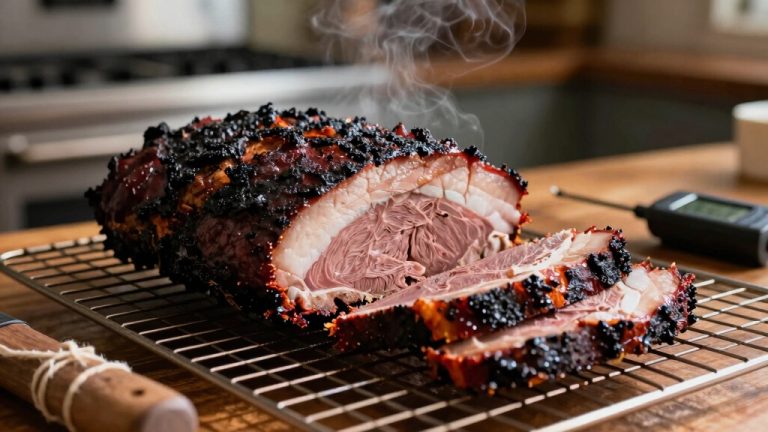
Lay the flat down with the grain running left to right. Using a sharp knife, slice thin quarter-inch pieces against the grain for maximum tenderness and uniformity.
Place the flat brisket with the grain left to right, then slice thin quarter-inch pieces against the grain for tenderness.
Keep your cuts consistent to enhance flavor and texture.
Next, handle the point by cutting it in half perpendicular to the initial separation.
Rotate one half 90 degrees, then slice quarter-inch against the grain to break down its fattier structure evenly.
Repeat on the other half.
Remember, the flat cooks to a lower temperature and is lean, so slicing thin preserves moisture.
The point’s higher fat content allows for slightly thicker cuts, ideal for chopped or sandwich-style servings.
Always slice when the brisket rests between 140-150°F for best results.
Allowing the brisket to rest in a preheated cooler before slicing helps retain moisture and develop flavor fully.
Adjusting Brisket Slice Temperature for Different Serving Styles
When tailoring your brisket slice temperature for various serving styles, you’ll need to balance juiciness, texture, and presentation.
For tender, moist slices ideal for plated meals, aim to slice between 140-150°F after adequate resting.
Sandwiches or chopped brisket benefit from slightly higher temperatures around 200-203°F to ease shredding without sacrificing moisture.
Adjust the slice thickness and temperature based on the brisket cut: flat slices are best thinner and cooler, while point slices handle thicker, warmer cuts.
Slice flat brisket at 140-150°F for fork-tender servings.
Hold point brisket warmer (200-203°F) when serving chopped.
Rest brisket 1+ hour before slicing to retain juices.
Cool brisket slightly if serving thin slices for presentation.
Match slice temperature to serving style for ideal texture and moisture.
For best results, consider how resting and carryover temperatures affect final juiciness and tenderness before slicing.
Frequently Asked Questions
Can I Slice Brisket With a Serrated Knife Instead of a Chef’s Knife?
You can slice brisket with a serrated knife, but it’s not ideal.
Serrated blades tend to tear the meat fibers rather than cut cleanly, which can affect texture and presentation.
A sharp chef’s knife or slicing knife gives you smooth, even slices that retain juices better.
If you only have a serrated knife, use a gentle sawing motion and slice thinly against the grain to minimize shredding and maintain tenderness.
How Long Can Sliced Brisket Be Safely Stored in the Refrigerator?
Just like the fleeting window to catch a perfect sunset, sliced brisket won’t stay fresh forever.
You can safely store it in your refrigerator for 3 to 4 days if you wrap it tightly or use an airtight container.
Keep the temperature at or below 40°F to slow bacterial growth.
For longer storage, freeze it within that time frame to preserve flavor and tenderness for weeks.
What’s the Best Way to Reheat Sliced Brisket Without Drying It Out?
To reheat sliced brisket without drying it out, wrap your slices tightly in foil with a splash of beef broth or drippings to keep moisture locked in.
Heat it low and slow in a 250°F oven for about 20-30 minutes until warmed through. Avoid microwaving directly, as it can toughen your meat.
Let it rest briefly after reheating, so juices redistribute, keeping every bite tender and juicy.
Does the Type of Wood Used in Smoking Affect Slicing Temperature?
The type of wood you use for smoking doesn’t directly change the slicing temperature of brisket.
Instead, it influences flavor and smoke absorption.
You’ll still want to slice brisket at 140-150°F internal temperature for peak juiciness and tenderness, regardless of wood choice.
Focus on achieving the right doneness and resting time; that’s what really affects sliceability, not the wood variety you select for smoking.
Can I Freeze Sliced Brisket and Still Maintain Its Texture After Thawing?
Yes, you can freeze sliced brisket and maintain good texture if you do it right.
Slice the brisket into quarter-inch pieces after it’s properly rested and cooled to around 140-150°F.
Wrap slices tightly in plastic wrap, then foil, or use vacuum-sealed bags to prevent freezer burn.
Thaw slowly in the fridge to preserve moisture.
Avoid refreezing to keep the brisket tender and juicy after thawing.
From Rest to Remarkable: Mastering the Final Slice
Now that you know the sweet spot for slicing brisket—around 150°F after resting—you’ll unleash its tender, juicy soul like opening a treasure chest. Cutting too hot or cold locks in toughness or dryness, but timing it right lets those flavors dance on your tongue.
Follow these steps carefully, and your brisket won’t just be meat; it’ll be a masterpiece carved with precision and love every time.