What Temp to Cook Steaks on Pellet Grill: Step-by-Step Guide
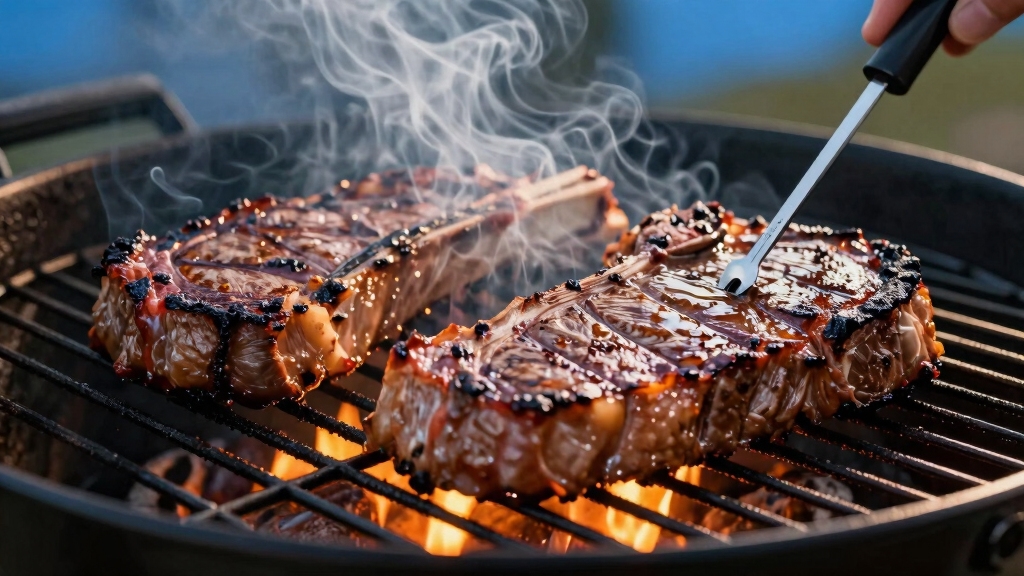
You’ll want to start your steak on a pellet grill at 225°F for a flavorful low-and-slow smoke that infuses rich smoky notes.
Once it reaches about 110–115°F internally, crank the heat above 500°F to sear quickly. This develops a caramelized crust that locks in juicy tenderness.
Preheat your grill for at least 15 minutes to maintain consistent temperature control.
Stick with this approach, and you’ll master timing, seasoning, and searing for perfect steak every time.
Key Takeaways
- Smoke steaks at 225°F on a pellet grill for low-and-slow cooking with deep smoky flavor before searing.
- Preheat pellet grill to above 500°F for at least 15 minutes to achieve a hot searing surface.
- Use direct grilling at 400°F for medium-rare steaks, cooking about 4–6.5 minutes per side.
- For quick rare sear, cook steaks at 450°F for 3–4 minutes per side on the pellet grill.
- Maintain consistent heat during smoking with precise temperature control on the pellet grill.
Pellet Grill Temperatures for Cooking Steaks

Mastering pellet grill temperatures is key to cooking steaks that hit your preferred doneness every time.
Start with 225°F if you want to use the reverse-sear method. This lets you smoke steaks slowly while adding Super Smoke flavor.
For direct grilling, preheat your grill to 400°F for medium-rare steaks, grilling about 4-6.5 minutes per side.
If you crave a rare steak with a quick sear, crank it up to 450°F and cook 3-4 minutes per side.
When using the reverse-sear, begin with a 325°F smoke for 45-60 minutes before searing at high heat (above 500°F) for a perfect crust.
Always preheat your pellet grill 15-20 minutes to ensure consistent temperature and precise control over your steak’s finish.
To get the best texture and flavor, it’s essential to rest steaks for 10–15 minutes after cooking to allow juices to redistribute.
Seasoning and Preparing Steaks for Pellet Grills
To kick things off, grab some olive oil and give your steaks a nice coating. This not only helps the seasoning stick but also sets the stage for a fantastic crust!
Now, let’s talk seasoning. A good mix of kosher salt, black pepper, garlic powder, and onion powder works wonders. Just sprinkle them on and give the steaks a gentle pat to ensure even coverage.
Oh, and here’s a crucial tip: make sure to insert your probe into the thickest part of the steak. This way, you can keep an eye on the internal temperature while it’s cooking. Trust me, it makes a big difference! For the most accurate reading, insert the probe horizontally into the center of the thickest muscle, avoiding fat pockets and thin edges to prevent misleading temperature data from probe placement.
Steak Oil Coating
Coat your steaks evenly with olive oil before seasoning to help the spices adhere and promote a perfect crust during grilling. Olive oil creates a thin, even layer that locks in moisture and enhances browning when exposed to high heat. This simple step sets the foundation for a juicy, flavorful steak.
When applying oil, keep these points in mind:
Use just enough to lightly coat. Too much oil can cause flare-ups.
Spread it uniformly on all sides, including edges.
Opt for extra virgin olive oil for its rich flavor and smoke point suited to pellet grills.
This oil coating guarantees your seasoning stays put and your steak develops that desirable sear. Maximize texture and taste every time you fire up your pellet grill. For even better seasoning performance and higher smoke point, consider using avocado oil as an alternative for coating.
Seasoning Blend Tips
Once your steaks are properly oiled, the next step is to build a seasoning blend that enhances their natural flavors without overpowering them.
Start with kosher salt and freshly ground black pepper for a classic base. Add garlic powder and onion powder to introduce subtle depth.
Pat these seasonings gently into the meat to make certain they stick without drawing out moisture. Avoid heavy-handed spices that mask the beef’s taste.
If you want to experiment, consider a light sprinkle of smoked paprika or a touch of dried rosemary for complexity.
Keep your blend balanced; too much salt or strong herbs can overwhelm. This straightforward approach guarantees your pellet-grilled steaks develop a flavorful crust while letting the meat shine through every bite.
For best results, apply the rub firmly and evenly to ensure proper crust formation and flavor penetration.
Probe Placement Guide
When you’re seasoning and preparing steaks for your pellet grill, getting the probe placement right is essential for accurate temperature readings.
Insert the probe into the thickest part of the steak, avoiding bones and fat, to make sure you measure the true internal temperature. Proper placement helps you pull the steak at the perfect doneness without guesswork.
Keep these tips in mind:
Insert the probe horizontally into the center, avoiding edges. Aim for the thickest muscle area, not near bone or gristle. Push the probe deep enough to capture the core, about halfway through.
This method guarantees precise monitoring during cooking, letting you adjust heat or timing confidently. Accurate internal temps are the key to mastering your pellet-grilled steaks every time. Make sure the ambient sensor remains outside the meat to provide accurate ambient temperature readings that affect internal temperature measurements.
Reverse-Sear Method for Pellet Grill Steaks
To kick off your reverse-sear method, start by smoking your steaks at 225°F. You’ll want to keep an eye on them until they hit an internal temperature of 110-115°F. This usually takes around 30 to 60 minutes, so it’s a good time to relax and enjoy the aroma!
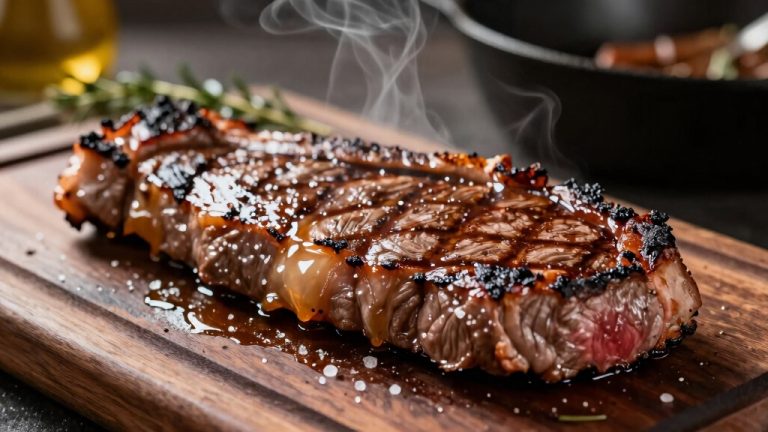
Once they’re at the right temp, it’s time for the fun part. Crank your pellet grill up to high heat, or grab a cast iron skillet if you prefer. You’ll want to give the steaks a quick sear for about 1-2 minutes on each side. This step is crucial because it locks in all those delicious juices and gives you that perfect crust.
Using a pellet grill with precise temperature control helps maintain consistent heat during the smoking phase, ensuring even cooking and better results.
Smoking Temperature And Time
Although the reverse-sear method demands patience, smoking your steaks at 225°F releases deep smoky flavors while gently raising the internal temperature to 110-115°F over 30 to 60 minutes.
This low-and-slow approach guarantees even cooking and enhances tenderness before the final sear.
To nail the smoking phase, keep these in mind:
- Maintain consistent 225°F with Super Smoke for rich flavor.
- Monitor the internal temp with a probe to hit 110-115°F precisely.
- Allow 30-60 minutes depending on steak thickness and grill performance.
Keep in mind that the controller modulates pellet feed and fan speed to maintain temps within approximately ±15°F, ensuring temperature stability during smoking.
Searing Techniques And Tips
Because the reverse-sear method relies on precise temperature control, you’ll want to preheat your pellet grill to a high setting above 500°F after the initial smoking phase to develop a perfect crust.
Once your steaks reach 110-115°F internally at 225°F smoke, remove and rest them briefly. Then, crank up the heat for 10-15 minutes to ensure the grill’s surface is searing hot.
Sear the steaks for 1-2 minutes per side to lock in juices and create a flavorful crust. If you prefer, use a cast iron skillet indoors over medium-high heat for an even sear.
After searing, rest your steaks for 15 minutes to allow juices to redistribute, assuring a tender, juicy bite every time.
For best results, make sure to pat the steaks dry before searing to enhance Maillard crust formation.
Direct-Heat Pellet Grill Temps for Medium-Rare Steaks
When you want a perfectly cooked medium-rare steak on your pellet grill, preheat it to 450°F for direct-heat grilling.
For a flawlessly cooked medium-rare steak, preheat your pellet grill to 450°F for direct heat grilling.
This high temperature creates the ideal environment to develop a beautiful sear while locking in juices.
Cook your steak about 3.5 minutes per side, flipping once, and pull it when it reaches an internal temp around 130°F, slightly under your target to rest into perfection.
Visualize this:
A sizzling crust forming quickly on the steak’s surface.
Juices bubbling beneath a caramelized, seasoned exterior.
The grill grates imprinting clear, inviting sear marks.
This method demands attention but rewards with a steak that’s tender, juicy, and medium-rare from edge to edge.
No guesswork, just reliable results every time.
For optimal grilling performance, consider the grill’s temperature consistency to maintain precise heat throughout the cooking process.
Ideal Pellet Grill Internal Temps for Steak Doneness
To achieve the perfect steak doneness on your pellet grill, you need to monitor and target specific internal temperatures closely. Aim for 120-130°F for rare, but pull the steak at 115-120°F to allow carryover cooking.
For medium-rare, target 130-135°F, removing the steak about 5°F below your desired temp.
Medium steaks should reach between 135-145°F, while medium-well ranges from 150-155°F.
Well-done steaks hit 160-165°F. Always use a reliable probe inserted in the thickest part to track temps accurately. Pull steaks slightly early to avoid overcooking, as residual heat will finish the job.
Using a two-zone fire setup can help you control cooking intensity and achieve more precise doneness on your pellet grill.
With precise internal temps as your guide, you’ll consistently serve juicy, perfectly cooked steaks every time on your pellet grill.
How Steak Thickness and Grill Model Affect Cook Time?
Knowing your steak’s ideal internal temperature is a solid starting point, but cook time doesn’t hinge on that alone. Thickness drastically impacts how long your steak stays on the grill.
Ideal steak temperature matters, but thickness truly determines grilling time and doneness precision.
A thicker cut demands more time for heat to penetrate, while thinner steaks cook faster and risk drying out if left too long. Your grill model also plays a key role; some pellet grills provide more consistent heat, while others have direct flame options for searing, affecting overall timing.
Consider these factors:
A 1-inch steak typically needs 3-4 minutes per side at 450°F, while a 2-inch cut may require double that time. Models like the YS640s allow direct flame grilling, speeding crust development.
Less powerful grills may require longer cooking and monitoring for accuracy. Adjust your approach accordingly for perfect results every time.
Super Smoke and High Heat Tips for Pellet Grills
Although pellet grills excel at low-and-slow cooking, you can release bold flavors by leveraging the Super Smoke feature at 225°F before finishing with high heat searing.
Start by smoking your steaks at this temperature to infuse deep smoky notes without overcooking. Use the Super Smoke mode specifically designed for temperatures at or below 225°F to maximize smoke output.
Once your steaks reach about 110-115°F internally, rest them briefly while you crank the grill to a high heat setting for searing. This combination locks in smoky flavor and creates a mouthwatering crust.
Pellet Grill Searing Tips for a Perfect Crust
When you want that perfect crust on your steak, searing on a pellet grill requires high, consistent heat and careful timing.
Start by preheating your grill to above 500°F for at least 15 minutes to ensure a blazing hot surface.
This intense heat caramelizes the steak’s exterior, locking in juices and flavor.
Don’t forget to pat your steak dry and coat it lightly with olive oil for even browning.
Use direct heat and sear each side for 1-2 minutes, avoiding overcooking.
Rest the steak for 15 minutes after searing to redistribute juices.
Mastering these steps guarantees a beautifully crusted steak every time on your pellet grill.
Frequently Asked Questions
What Wood Pellet Flavors Best Complement Different Steak Cuts?
You’ll want to match wood pellet flavors to steak cuts for the best taste.
Hickory and mesquite bring strong, smoky notes perfect for bold cuts like ribeye or T-bone.
Fruitwoods like apple or cherry offer subtle sweetness that complements leaner steaks like filet mignon.
Oak is versatile, working well with most cuts for balanced flavor.
Experiment with blends to find your favorite pairing, enhancing each steak’s natural character.
How Do Weather Conditions Affect Pellet Grill Cooking Times?
Weather conditions affect pellet grill cooking times like a traffic jam slows your commute; you’ll face delays.
Wind cools the grill, making it work harder to maintain temperature and extending cook times. Cold weather also lowers efficiency, so you’ll need to preheat longer and monitor internal temps closely.
Rain adds moisture, potentially dampening pellets and causing inconsistent heat. Adjust your cooking time, keep the lid closed, and use a reliable probe to guarantee perfect results.
Can You Cook Frozen Steaks Directly on a Pellet Grill?
You shouldn’t cook frozen steaks directly on a pellet grill because they’ll cook unevenly and risk drying out.
Instead, thaw them first in the fridge for 24 hours. If you’re short on time, use cold water to speed thawing.
Once thawed, follow your preferred cooking method, such as reverse sear or direct heat, to ensure even cooking and juicy results.
Pat the steaks dry before seasoning for the best crust.
What Maintenance Keeps Pellet Grills Performing Optimally for Steaks?
You keep your pellet grill performing optimally by cleaning the grease trap and drip pan regularly to prevent flare-ups.
Empty and inspect the hopper to avoid pellet jams, and clean the fire pot to maintain consistent heat.
Check and tighten screws, and clean the grill grates after each use.
Season your cast iron griddle if you use one.
Regularly inspect the igniter and make certain your pellet quality is good for steady smoke and heat.
Are Pellet Grills Safe for Indoor Use With Proper Ventilation?
Using a pellet grill indoors is like walking a tightrope. You can do it, but only with proper balance.
Yes, you can safely use a pellet grill indoors if you have excellent ventilation, like a powerful hood vent to clear smoke and fumes.
Always follow manufacturer guidelines, never leave it unattended, and make certain carbon monoxide detectors are active.
With these precautions, you’ll enjoy delicious steaks without risking your safety.
From Grill to Greatness: Master the Perfect Steak
Now that you know the perfect pellet grill temps for steaks, you’re ready to impress like it’s 1899. A good cook meant everything back then.
Remember, mastering seasoning, reverse-searing, and managing heat turns your pellet grill into a steakhouse powerhouse. Adjust times based on thickness and grill type.
Don’t forget to crank the heat for that perfect crust. With these practical tips, you’ll consistently serve mouthwatering, perfectly cooked steaks every time. Fire up and enjoy!