What Temp Do You Wrap Ribs: From Smoker to Showstopper
You should wrap ribs when their internal temperature reaches between 150°F and 160°F. At this stage, wrapping locks in moisture, accelerates collagen breakdown, and softens connective tissue for tender ribs.
Wrapping too early can ruin the bark, while waiting too long risks drying out the meat. Use foil for maximum juiciness or butcher paper to preserve bark texture. Adjust your smoker temp after wrapping to speed cooking.
Discover how timing and technique make all the difference.
Key Takeaways
- Wrap ribs when the internal temperature reaches between 150°F and 170°F, ideally around 150–160°F for optimal moisture retention and tenderness.
- Wrapping at 150–160°F accelerates collagen breakdown, softening connective tissue and locking in natural juices.
- Visual cues like meat pulling back from bones about a quarter-inch help confirm the right wrapping time alongside temperature.
- Use foil or butcher paper for wrapping; foil locks in moisture tightly, while butcher paper preserves bark texture.
- After wrapping, increase smoker temperature to around 250°F to speed cooking, then reduce heat after unwrapping to firm the bark.
When Should You Wrap Ribs During Smoking?
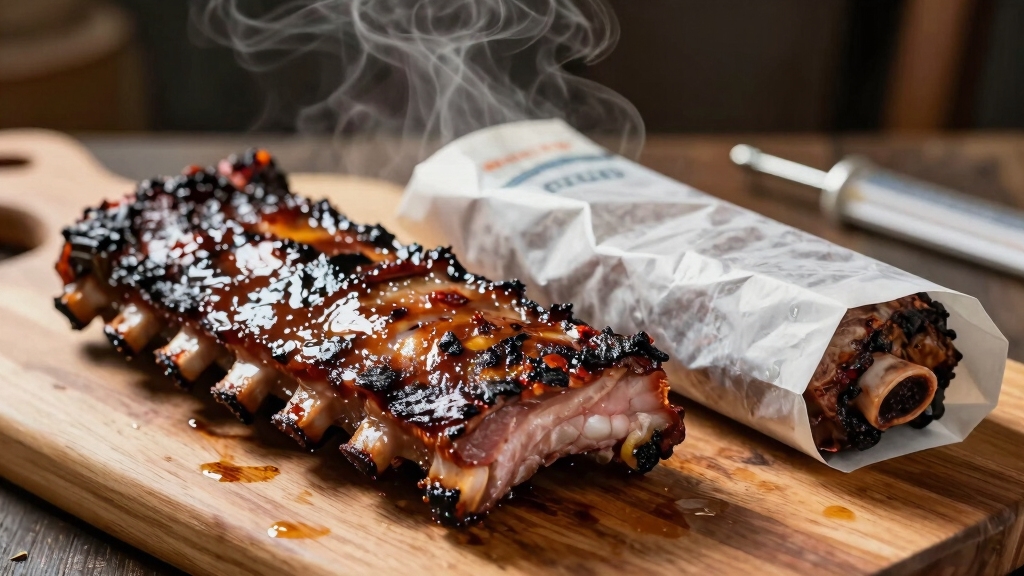
Typically, you wrap ribs during smoking once the internal temperature hits between 150°F and 170°F, often around the 3-hour mark if you’re using the 3-2-1 method.
This timing lets you lock in moisture and accelerate the cooking process without sacrificing bark development.
You want to catch the ribs when they’re halfway cooked—usually around 150-160°F—to maintain tenderness and prevent drying.
Wrapping too early can soften the bark prematurely, while waiting too long risks drying out the meat.
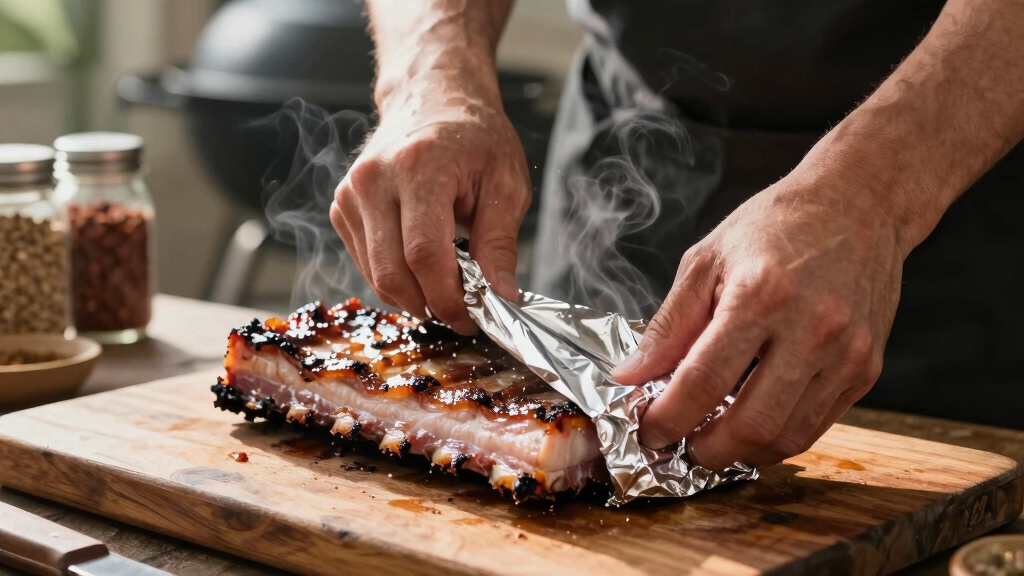
Use foil or butcher paper, wrapping tightly to eliminate air pockets.
After wrapping, you can increase smoker temperature slightly to speed up cooking.
This approach balances smoke absorption and moisture retention, ensuring your ribs stay juicy and tender through the remainder of the cook.
Wrapping traps moisture, halts the stall, and accelerates cooking by reducing the duration of the stall temperature plateau.
What Visual Cues Show Ribs Are Ready to Wrap?
When you notice the meat starting to pull back from the bones by about a quarter of an inch, it’s a clear sign your ribs are ready to be wrapped.
This visual cue means the collagen is breaking down, and the ribs have entered the critical tenderizing phase.
Look for a deep mahogany bark that’s slightly tacky but not wet. This indicates the smoke has penetrated well without drying the surface.
The bark texture should feel leathery to the touch, showing it’s set but not hardened.
Avoid wrapping too early; premature wrapping can soften the bark excessively.
Check that the ribs jiggle slightly when you gently shake the rack. This signals internal moisture retention and readiness for the next cooking phase.
These cues help you wrap at the best moment for juicy, tender ribs.
Maintaining a smoker temperature steady between 225°F and 250°F during this phase promotes optimal bark formation and tenderness.
Why Timing Matters More Than Exact Temperature When Wrapping?
You know, you really can’t just depend on a thermometer when it comes to wrapping your ribs. Sure, it gives you a number, but there’s so much more to it!
Take a look at those visual cues—like the way the bones start to pull back or how the bark looks. These signs are super important because they tell you when the meat is actually ready.
By tuning into those texture indicators, you can be a bit more flexible with your timing. It’s not just about hitting a specific temperature; it’s about how the ribs respond.
This way, you can keep that moisture locked in and ensure your ribs come out tender and juicy. You definitely want to avoid overcooking or drying them out, right? So, keep an eye on those cues, and you’ll be golden!
Also, using probe tenderness alongside visual cues can help you decide the perfect moment to wrap for optimal juiciness and texture.
Visual Cues Over Numbers
How do you know the perfect moment to wrap your ribs if not by temperature alone?
You rely on visual cues that tell you the ribs are ready for their next stage.
Look for a deep mahogany bark color, signaling the smoke has penetrated well.
Notice the bark’s texture—it should be slightly tacky and leathery, not dry or overly crusty.
Check for a quarter-inch of bone showing at the ends; this meat pull-back indicates the collagen is breaking down.
These signs mean the ribs have absorbed enough smoke and are primed for wrapping to lock in moisture and accelerate tenderness.
Trusting these visual indicators over strict temperature readings lets you adapt to your smoker’s unique conditions.
This guarantees your ribs come out juicy, flavorful, and perfectly cooked every time.
Additionally, wrapping helps maintain the surface moisture needed to keep the bark from drying out during the finishing phase.
Meat Texture Indicators
Frequently, relying solely on temperature readings can mislead you about the perfect moment to wrap ribs. Instead, pay close attention to meat texture indicators.
When the ribs feel firmer but still have some give under gentle pressure, they’re nearing the ideal wrap window, usually between 150°F and 170°F. This stage signals collagen breakdown has begun, but the meat hasn’t dried out yet.
Wrapping now locks in moisture and accelerates tenderness without sacrificing bark quality. If you wait for a strict temperature, you might miss this sweet spot, resulting in tougher or overly mushy ribs.
Use a probe or your fingers to gauge resistance, combining this tactile feedback with temperature. This approach guarantees your timing adapts to variations in rib thickness, smoker consistency, and meat quality, giving you reliably tender ribs every time.
Maintaining a steady smoker temperature around 225°F to 250°F during this process helps optimize smoke flavor and texture, ensuring consistent cooking conditions for best results.
Flexible Timing Benefits
Relying solely on temperature or texture alone can limit your ability to adapt during cooking. When wrapping ribs, timing matters more than hitting an exact temperature.
You need to respond to how the meat behaves, not just a number on your thermometer. This flexibility helps you optimize tenderness and flavor without overcooking.
Keep these practical points in mind:
- Wrap once ribs show slight bone pull-back, not just a target temp.
- Adjust wrapping time based on bark color and texture.
- Don’t rush wrapping; premature foil traps moisture but can soften bark too much.
- Use timing as a guideline, combined with sensory cues for best results.
Remember, wrapping tightly between 155°F and 170°F helps retain moisture while managing bark texture, balancing tenderness and juiciness through wrapping techniques.
How Wrapping at 150-160°F Helps Make Ribs Tender?
Wrapping your ribs when they hit that sweet spot of 150-160°F is a game changer. It’s all about locking in moisture right from the start. You definitely don’t want your ribs drying out while they cook!
By wrapping them up with foil or butcher paper, you’re creating a cozy, steamy environment that really helps speed up the tenderness process.
And here’s the cool part: this temperature range is just perfect for breaking down collagen. That means those tough, chewy bits of meat transform into melt-in-your-mouth goodness.
This temperature range initiates collagen breakdown which, combined with time, converts connective tissue into tender gelatin for juicy ribs.
Early Wrapping Temperature Benefits
Although some pitmasters wait longer, wrapping ribs at an internal temperature of 150-160°F can markedly enhance tenderness by locking in moisture early in the cooking process.
When you wrap at this stage, you effectively create a controlled environment that steams the meat, softening connective tissues and accelerating collagen breakdown.
This approach helps prevent drying out while maintaining a juicy interior.
Benefits include:
- Faster tenderizing as steam penetrates the meat
- Protection of the developing bark from overcooking
- Even heat distribution throughout the ribs
- Reduced cooking time without sacrificing texture
For best results, use foil wrapping to retain maximum moisture and create an airtight seal that enhances juiciness during the wrapping phase.
Moisture Retention Techniques
Locking in moisture early by wrapping ribs at 150-160°F creates a steamy environment that actively softens connective tissues and keeps the meat juicy.
When you wrap the ribs tightly in foil or butcher paper at this stage, you trap the natural juices and any added liquids like apple juice or butter, preventing evaporation.
This steam penetrates the meat, accelerating collagen breakdown without drying the surface.
You’ll notice the cooking speed increases as heat transfers more efficiently through the foil, reducing overall cook time while maintaining tenderness.
To maximize moisture retention, make sure the wrap is snug with no air pockets.
This technique also protects the bark from over-darkening, preserving flavor.
Wrapping at this temperature strikes the perfect balance between moisture preservation and continued cooking progression.
Using foil or butcher paper for wrapping also helps maintain heat and moisture effectively during the resting process.
Tenderness Development Process
When you wrap ribs at the ideal temperature range of 150-160°F, you create a moist, steamy environment that actively accelerates collagen breakdown in the meat. This process transforms tough connective tissue into gelatin, delivering tender, juicy ribs.
Wrapping at this stage prevents drying and speeds cooking by trapping heat and moisture effectively. You’ll notice the ribs begin to soften, making probing easier without tearing the meat.
Collagen dissolves into gelatin, enhancing tenderness. Moisture retention prevents tough, dry textures. Heat distribution becomes more uniform inside the wrap. Bark sets without burning, preserving flavor balance.
Maintaining temperature consistency during the entire cooking process is essential to achieving these results.
Foil vs Butcher Paper: Choosing the Best Wrap for Ribs
Choosing between foil and butcher paper can make a significant difference in how your ribs finish cooking and develop flavor.
Foil creates a tight, moisture-sealed environment that speeds cooking and locks in juices, making ribs tender quickly. However, it can soften the bark, potentially sacrificing texture.
Butcher paper, on the other hand, allows the ribs to breathe slightly, preserving bark crispness while still retaining moisture. It slows cooking just enough to enhance smoke absorption without drying out the meat.
For a balance of tenderness and bark, butcher paper is often preferred by pitmasters aiming for a deep smoke ring and robust texture. If you want faster cooking and softer bark, foil’s your go-to.
Ultimately, choose based on whether bark texture or speed and moisture retention matter most to you.
How Wrapping Speeds Cooking and Keeps Ribs Moist?
By wrapping ribs tightly in foil or butcher paper, you create a controlled environment that traps heat and moisture. This accelerates the cooking process while preventing the meat from drying out.
This technique effectively boosts heat conduction, softens connective tissues faster, and maintains juiciness. When you wrap ribs, consider these key effects:
- Traps steam and natural juices, keeping ribs moist and tender.
- Increases internal temperature more rapidly, reducing total cook time.
- Prevents bark from becoming too dry or bitter by locking in moisture.
- Allows you to add flavor enhancers like apple juice or butter bath for deeper taste.
Using wrapping at the right time and temperature guarantees more consistent results and tender ribs that practically fall off the bone while maintaining a desirable bark texture.
How to Adjust Your Smoker Temperature After Wrapping Ribs?
Wrapping ribs not only speeds cooking but also changes how you manage heat in your smoker. Once you wrap, it’s wise to increase your smoker temperature by about 25°F.
Wrapping ribs speeds cooking and calls for a smoker temp increase of about 25°F for best results.
This bump accelerates the cooking process without drying out the meat, thanks to the moisture trapped inside the wrap. Maintain a consistent smoker temp around 250°F during the wrapping phase to push the ribs toward tenderness efficiently.
Avoid dropping the heat too low, which can prolong cooking and risk uneven textures. Keep monitoring internal temps; aim for 195-203°F before unwrapping.
After unwrapping, reduce smoker heat back to 225°F for the final hour to firm up the bark without burning. Adjusting your smoker temperature this way balances speed and quality perfectly.
Frequently Asked Questions
Can You Wrap Ribs Too Early or Too Late During Smoking?
Yes, you can wrap ribs too early or too late.
Wrapping too early, before the bark sets, can result in a mushy texture and less flavorful crust.
Wrapping too late might dry out the meat and slow cooking.
Ideally, wrap ribs around 150-170°F internal temp, usually after 3 hours of smoking, to lock in moisture and tenderize without compromising bark or flavor.
Timing matters for peak tenderness and bark quality.
What Liquids or Additives Are Best to Include When Wrapping Ribs?
When you wrap ribs, think of a gentle rain nourishing a parched garden. Apple juice, honey, or a butter bath work wonders.
Apple juice adds subtle sweetness and moisture, honey deepens caramelization, and butter enriches texture and flavor.
Pour these liquids inside your foil or butcher paper wrap tightly to trap steam, speeding cooking while keeping ribs tender and juicy.
This simple addition transforms your ribs from good to unforgettable.
How Does Wrapping Affect the Bark Texture on Ribs?
Wrapping ribs softens the bark by trapping moisture, so you won’t get a super crispy crust during that phase.
You’ll notice the bark turns tacky and leathery rather than dry and crunchy. This helps prevent it from darkening too much or becoming bitter.
When you unwrap for the final hour, the bark firms up again, giving you that perfect balance of tenderness inside and a flavorful, slightly chewy crust outside.
Is It Necessary to Rest Ribs After Unwrapping Them?
Resting ribs after unwrapping is like letting a fine breathe. You let the juices redistribute for peak flavor.
Yes, you should rest them to lock in moisture and improve tenderness. Pull them off the heat once they hit 195-203°F.
Then loosely tent with foil for about 15-30 minutes. This pause prevents juice loss when slicing and helps maintain that perfect bark texture you worked hard to develop.
Can Wrapping Ribs Change Their Flavor Profile Significantly?
Yes, wrapping ribs can markedly change their flavor profile. When you wrap ribs tightly in foil or butcher paper, you trap moisture and any added liquids like apple juice or butter.
This intensifies juiciness and tenderness. It also softens the bark texture and mellows smoky flavors, creating a more balanced taste.
However, wrapping too early or loosely can steam the ribs, diluting that smoky bark flavor you worked hard to build.
The 160°F Secret to Fall-Off-the-Bone Ribs
Wrapping ribs at 150-160°F is the golden ticket to unfastening tender, juicy perfection. It’s like turning your smoker into a magic meat oven.
Don’t obsess over exact temps; watch for those visual cues that signal it’s time to wrap. Choosing foil or butcher paper wisely and adjusting your smoker afterward will speed cooking while sealing in moisture.
Mastering this step guarantees ribs so tender, they’ll practically fall off the bone with a single touch.