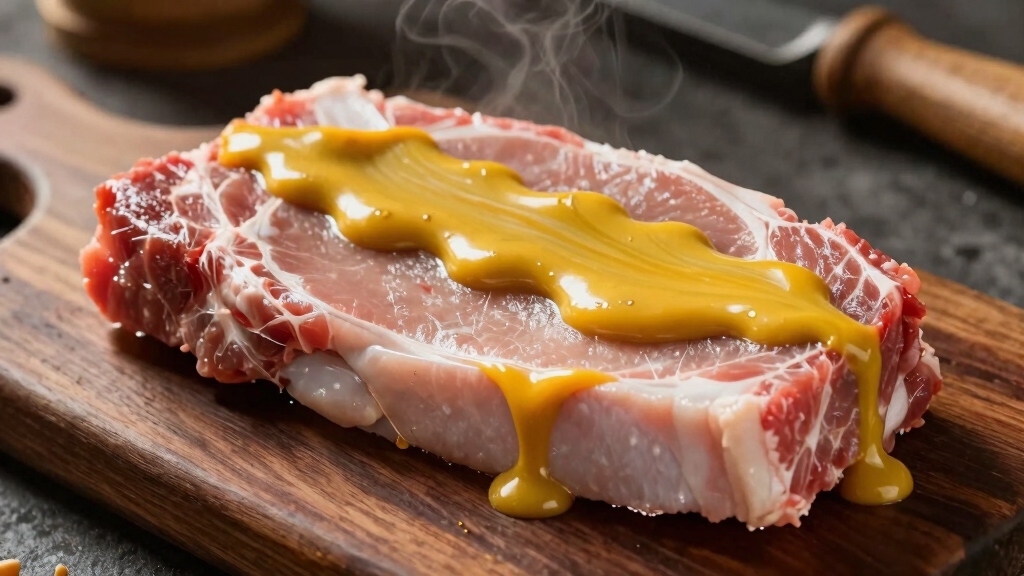
What Does Mustard Do to Meat: BBQ Binder Explained
When you add mustard to meat, its potent antioxidants curb lipid oxidation and reduce harmful cholesterol oxides, preserving freshness and safety.
Mustard’s antimicrobial properties slow bacterial growth, extending shelf life and maintaining quality. It also helps retain moisture, limiting fluid loss to keep meat juicy.
Additionally, mustard enhances flavor and color stability, improving sensory appeal and visual freshness. Applying mustard early maximizes these benefits, and exploring specific uses reveals how best to optimize meat preservation.
Key Takeaways
- Mustard acts as a natural antioxidant, reducing lipid oxidation and preserving meat quality during storage.
- It exhibits antimicrobial properties that inhibit bacterial growth, extending meat shelf life and safety.
- Mustard reduces moisture and fluid loss, maintaining meat juiciness and physical integrity during retail display.
- It enhances flavor, aroma, and color, improving overall sensory appeal and consumer acceptance.
- Mustard lowers harmful cholesterol oxidation products, contributing to healthier and more stable cooked meat.
How Mustard’s Antioxidant Compounds Protect Meat From Oxidation?

When you add mustard seed or its extracts to meat, you tap into potent antioxidant compounds that actively inhibit oxidative processes.
Adding mustard seed to meat unlocks powerful antioxidants that prevent oxidation and preserve quality.
The phenolic compounds in ground mustard exhibit strong antioxidant activity, reducing malondialdehyde (TBARS) levels below 1 mg/kg during storage. This effectively prevents off-flavors.
Incorporating as little as 0.5% mustard seed effectively suppresses cholesterol oxidation product formation in cooked meat.
Ethanol-extracted mustard seed (50-75%) demonstrates superior antioxidant capacity, particularly in dry-aged meat.
Throughout retail display, mustard-treated patties maintain low lipid oxidation levels, delaying deterioration compared to untreated samples.
By reducing oxidative damage, mustard preserves meat quality, sensory attributes, and shelf life.
This antioxidant effect relies on bioactive compounds that neutralize free radicals and inhibit lipid peroxidation.
These compounds enhance meat’s stability during processing and storage without compromising its organoleptic properties.
How Mustard Reduces Harmful Cholesterol Oxides in Meat?
Although cholesterol oxidation products (COPs) naturally form during meat processing and storage, incorporating mustard seed effectively inhibits their development.
This particularly targets harmful compounds like 7-ketocholesterol and 7β-hydroxycholesterol.
When you add 0.2–0.5% ground mustard seed to cooked meat, it markedly reduces oxysterol levels.
This effect leverages phenolic compounds such as canolol formed during heat treatment.
These antioxidants stabilize lipids, curbing cholesterol oxidation.
Studies show mustard-treated meat exhibits COP concentrations far lower than untreated samples over 12 days of chilling.
By reducing 7-ketocholesterol and 7β-hydroxycholesterol, mustard seed enhances the functional value of meat without compromising quality.
Hence, if you want to minimize harmful cholesterol oxides in meat products, mustard seed incorporation offers a scientifically supported, effective approach.
For enhanced flavor complexity, smoked salt can be added as a finishing touch to meat dishes treated with mustard seed.
How Mustard Extends Shelf Life by Fighting Bacteria?
Beyond reducing harmful cholesterol oxides, mustard also plays a significant role in extending meat’s shelf life by combating bacterial growth. When you apply mustard powder at 2%, it dramatically reduces natural meat flora and pathogens like *Escherichia coli*, maintaining microbial stability even at higher storage temperatures (4°C and 30°C) for up to two days.
This antibacterial effect delays spoilage compared to untreated meat, which deteriorates within 24 hours at 30°C. You benefit from longer freshness and safety through mustard’s antimicrobial properties.
| Treatment | Storage Duration | Bacterial Count Reduction |
|---|---|---|
| Untreated Meat | 24 hours at 30°C | Spoilage evident |
| Mustard 2% | 2 days at 30°C | Flora reduced to undetectable |
| Mustard 2% | 2 days at 4°C | *E. coli* uncountable |
| Untreated Meat | 2 days at 4°C | Microbial growth present |
How Mustard Preserves Meat Juiciness and Reduces Fluid Loss?
You know, applying mustard extract can really help keep meat juicy.
It works by reducing fluid loss during storage and when it’s on display for sale.
This means the meat stays moist, which not only makes it taste better but also improves the overall yield of the product.
So, it’s pretty interesting to see how mustard does this.
Understanding its role goes beyond just adding flavor; it actually plays a significant part in preserving that delicious juiciness we all love.
Mustard contains natural preservatives like vinegar and sugar that help inhibit bacterial growth and extend shelf life.
Mustard’s Role In Fluid
When you treat meat with mustard extract, especially at concentrations around 0.25%, it effectively reduces retail fluid loss, preserving the meat’s juiciness during storage and display.
This reduction in fluid loss is critical because it directly impacts product yield and consumer perception of freshness. Mustard’s phenolic compounds and antioxidant properties help stabilize lipids and proteins, minimizing exudate release.
Studies show that mustard-treated patties maintain lower fluid loss compared to untreated controls, correlating with enhanced antioxidant activity. This effect results from mustard’s ability to inhibit oxidative damage and stabilize muscle structure, which limits water migration.
Consequently, mustard application supports maintaining the meat’s physical integrity throughout retail periods, ensuring that fluid loss is minimized without compromising storage stability or sensory attributes.
Integrating mustard treatment with proper temperature and humidity control during storage further enhances meat quality by reducing bacterial growth and maintaining optimal conditions.
Moisture Retention Benefits
Preserving moisture in meat is essential for maintaining juiciness and consumer appeal. Mustard extract plays a significant role in this process.
When you treat meat with mustard extract, you effectively reduce fluid loss during storage and display. This helps in preserving yield and texture. The extract’s antioxidant properties also contribute to maintaining water-binding capacity, limiting dehydration.
Key moisture retention benefits of mustard extract include:
- Lower retail fluid loss in treated beef patties compared to controls.
- Improved water retention correlating with higher antioxidant levels.
- Enhanced meat yield through reduced drip and purge.
- Preservation of juiciness throughout storage periods.
- Stabilization of meat pH and water activity, supporting moisture maintenance.
Maintaining moisture retention is critical to preventing the muscle fiber contraction and juice expulsion that lead to dry, tough meat.
Impact On Meat Juiciness
Mustard extract markedly reduces fluid loss in meat products, directly contributing to enhanced juiciness and improved consumer appeal.
When you apply mustard extract at concentrations around 0.25%, it effectively preserves moisture within the meat matrix, minimizing retail fluid loss during storage and display.
This retention maintains the meat’s natural tenderness and succulence, which are critical to sensory quality.
The antioxidant compounds in mustard stabilize lipids, preventing oxidation-related dehydration.
As a result, the meat sustains higher water activity and lower drip loss compared to untreated samples.
By reducing fluid loss, mustard not only improves yield but also delays textural degradation.
Incorporating mustard extract consequently guarantees meat products remain juicier and more appealing over time, enhancing both functional value and consumer satisfaction in retail and culinary contexts.
How Mustard Enhances Meat’s Flavor, Taste, and Sensory Appeal?
You know, when you add mustard to meat, it really amps up the flavor. It’s not just about taste; the aroma gets a boost too! Those special compounds in mustard help enhance the smell, making grilled or cooked meat much more enticing.
And it’s interesting—these sensory benefits really do increase how much people enjoy the meat overall. In sensory evaluations, mustard consistently shows it has a big role in elevating the quality of meat. So, next time you’re cooking, think about adding a little mustard to really bring out those flavors!
Flavor Enhancement Effects
Enhancing the sensory qualities of meat with natural ingredients can markedly influence consumer acceptance. Mustard seed proves effective in this regard.
When you apply mustard seed or its extracts, it improves the flavor profile and overall sensory appeal of meat products. You’ll notice that mustard enhances taste complexity and maintains desirable physical properties during storage.
Additionally, it positively affects color and juiciness, contributing to a more appealing eating experience. Key flavor enhancement effects of mustard on meat include:
- Improved taste and odor, leading to higher consumer acceptability
- Preservation of juiciness and reduction of retail fluid loss
- Enhanced color stability without adverse effects
- Maintenance of texture and physical properties during storage
- Positive influence on overall sensory evaluation scores
These factors collectively elevate meat’s flavor and sensory qualities. Similar to how brining preserves moisture and enhances flavor in smoked meats, mustard application can complement these effects by improving juiciness and taste through natural flavor enhancement and preservation of physical quality during storage, making it a valuable addition to meat preparation processes such as smoking or curing brining techniques.
Odor Improvement Benefits
Frequently, the presence of off-odors in meat diminishes consumer appeal and reduces product acceptability. Mustard’s antioxidant compounds actively inhibit lipid oxidation, which is a primary source of unpleasant odors in meat.
By reducing malondialdehyde formation, mustard maintains odor profiles below detectable thresholds, preventing rancidity. Additionally, mustard’s antimicrobial properties suppress spoilage bacteria, further minimizing odor-causing compounds during storage.
Mustard’s ability to limit cholesterol oxidation products also contributes to cleaner aromatic profiles, enhancing overall freshness perception. When you apply mustard at appropriate concentrations, it stabilizes volatile compounds responsible for off-odors, preserving the meat’s natural scent.
This precise control over oxidative and microbial processes means you get meat with a consistently improved odor. This directly impacts its sensory appeal and consumer acceptance without altering its fundamental flavor characteristics. Moreover, incorporating natural antimicrobials like mustard can complement the use of curing agents that inhibit bacterial growth and enhance meat preservation safety.
Sensory Quality Boost
Consistently, mustard seed additions at low concentrations improve the sensory attributes of meat products by enhancing flavor, aroma, and overall acceptability.
When you apply mustard, it elevates the taste profile and reinforces the meat’s natural characteristics without overpowering them.
You’ll notice improvements in odor and juiciness, contributing to a more enjoyable eating experience.
Analytical studies confirm these enhancements, especially at 0.2% to 0.5% concentrations.
Key sensory benefits include:
- Improved odor and aroma intensity
- Enhanced taste complexity and balance
- Increased juiciness and moisture retention
- Better color stability, preserving visual appeal
- Maintenance of physical properties during storage
Additionally, controlling temperature during processing helps maintain these sensory qualities and ensures product safety.
How Mustard Improves Meat’s Color and Visual Quality?
Although color is often the first quality attribute consumers notice, mustard plays a significant role in preserving and improving meat’s visual appeal.
Color catches the eye first, and mustard significantly enhances meat’s visual appeal and freshness.
The antioxidant compounds in mustard, particularly phenolic substances generated during heat treatment, inhibit lipid oxidation that typically causes discoloration.
By reducing malondialdehyde levels and cholesterol oxidation products, mustard helps maintain the bright, fresh color of meat throughout storage.
Additionally, mustard-treated meat exhibits lower retail fluid loss, which preserves surface moisture and prevents dulling.
This combination of antioxidant activity and moisture retention results in meat products with enhanced redness and overall visual quality, making them more appealing on display.
Consequently, incorporating mustard into meat preparation directly contributes to color stability and an attractive appearance, which are critical factors influencing consumer purchasing decisions.
Proper storage and handling are essential to maximize these visual benefits and extend the shelf life of mustard-treated meat.
How Mustard Improves Meat’s Shelf Life and Freshness?
Several studies have demonstrated that adding mustard to meat markedly extends its shelf life by inhibiting microbial growth and reducing oxidative deterioration.
When you apply mustard to meat, you actively slow spoilage processes and maintain freshness longer.
Here’s how mustard achieves this:
Reduces natural meat flora and E. coli counts, limiting bacterial spoilage.
Inhibits formation of cholesterol oxidation products, enhancing lipid stability.
Lowers malondialdehyde (TBARS) values, preventing off-flavors during storage.
Maintains moisture retention, reducing retail fluid loss and improving juiciness.
Decreases pH and volatile nitrogen compounds, improving storage stability.
Using a chamber vacuum sealer to package mustard-coated meat can further extend freshness by providing true airtight seals that prevent spoilage and moisture loss.
Which Mustard Extracts Best Preserve Meat Quality?
Understanding the effectiveness of different mustard extracts is essential when aiming to maximize meat quality preservation. Studies reveal that mustard seed extracts prepared with 50% and 75% ethanol concentrations demonstrate superior antioxidant capacity compared to other extraction methods.
Mustard seed extracts with 50% and 75% ethanol offer superior antioxidant benefits for preserving meat quality.
These extracts effectively reduce lipid oxidation and maintain low TBARS values below 1 mg/kg during storage. They inhibit cholesterol oxidation products like 7-ketocholesterol and 7β-hydroxycholesterol, enhancing lipid stability.
Additionally, mustard powder at 2% reduces microbial flora markedly, prolonging shelf life. Extracts also contribute to lower pH and volatile basic nitrogen levels, indicating reduced protein deterioration and improved storage stability.
You’ll find that using these specific mustard extracts optimizes meat quality by preserving flavor, color, and moisture while preventing oxidation and microbial spoilage. This makes them the best choice for maintaining meat freshness. Always ensure proper storage conditions and temperature control during preservation to maintain optimal meat quality.
How to Use Mustard Powder and Extracts in Meat Preparation?
Incorporating mustard powder and extracts into meat preparation requires careful consideration of concentration and timing to maximize their antioxidant, antimicrobial, and sensory benefits.
You should apply mustard powder at concentrations around 0.2–2%, depending on desired effects. Timing is critical: include extracts early in processing to inhibit oxidation and microbial growth effectively.
Consider these guidelines:
Use 0.5% mustard powder to reduce cholesterol oxidation products and enhance lipid stability.
Apply mustard powder at 2% for antimicrobial effects, extending shelf life.
Add extracts with 50–75% ethanol concentration for peak antioxidant capacity.
Incorporate mustard early during marination or mixing for maximal preservation.
Use mustard powder to improve sensory qualities such as odor and juiciness.
Following these precise steps guarantees you harness mustard’s functional benefits in meat products.
Frequently Asked Questions
Can Mustard Affect the Cooking Time of Meat?
Mustard doesn’t notably affect meat’s cooking time directly.
However, its application can influence moisture retention, potentially making meat juicier and slightly altering heat transfer. You might notice minor differences if mustard forms a coating, which could insulate the surface and slow heat penetration marginally.
Does Mustard Interact With Other Common Meat Seasonings?
Yes, mustard interacts synergistically with common meat seasonings like salt, pepper, and garlic, enhancing overall flavor complexity.
Its phenolic compounds can stabilize lipids, reducing oxidation that might otherwise alter seasoning profiles.
Mustard’s antimicrobial properties also preserve seasoning freshness during storage.
However, its pungency may dominate if overused, potentially overshadowing subtler spices.
You should balance mustard concentration carefully to maintain harmonious seasoning interactions in your meat preparations.
Is Mustard Safe for People With Mustard Allergies When Used in Meat?
Think of mustard as a locked vault for those with allergies. It’s not safe.
If you have a mustard allergy, you shouldn’t consume meat containing mustard or mustard extracts.
Even small amounts can trigger serious allergic reactions.
Mustard proteins remain active in meat products, so cross-contamination risks persist.
Always check labels and avoid any meat seasoned with mustard to protect your health and prevent exposure.
How Does Mustard Influence Meat Texture After Freezing and Thawing?
Mustard helps preserve meat texture after freezing and thawing by reducing fluid loss and maintaining moisture retention.
When you treat meat with mustard extract, it minimizes retail fluid loss, resulting in juicier products.
The antioxidant properties also protect against protein deterioration, enhancing storage stability.
This means the meat keeps a firmer, more desirable texture post-thaw, rather than becoming dry or mushy, improving your overall eating experience.
Can Mustard Usage Impact the Nutritional Profile of Meat?
You can reduce harmful cholesterol oxidation products in meat by up to 90% using just 0.5% ground mustard seed.
Mustard’s phenolic compounds act as potent antioxidants, lowering lipid oxidation and improving storage stability.
This means your meat stays nutritionally better, with less oxidative damage and fewer off-flavors.
Plus, it helps maintain moisture and protein integrity, enhancing the overall nutritional quality during cooking and storage.
Unlocking the Protective Power of Mustard in Meat
When you add mustard to meat, you’re not just seasoning. It’s like giving your meat a suit of armor.
Mustard’s antioxidants slow oxidation, reduce harmful cholesterol oxides, and fight bacteria. This extends freshness and shelf life. It keeps meat juicy, enhances flavor, and improves color, making every bite more appealing.
By choosing the right mustard extract, you’ll preserve quality efficiently. This ensures your meat stays fresh and tasty longer while maintaining its nutritional value.