What Are Charcoal Steaks: Taste, Texture & Cooking Tips
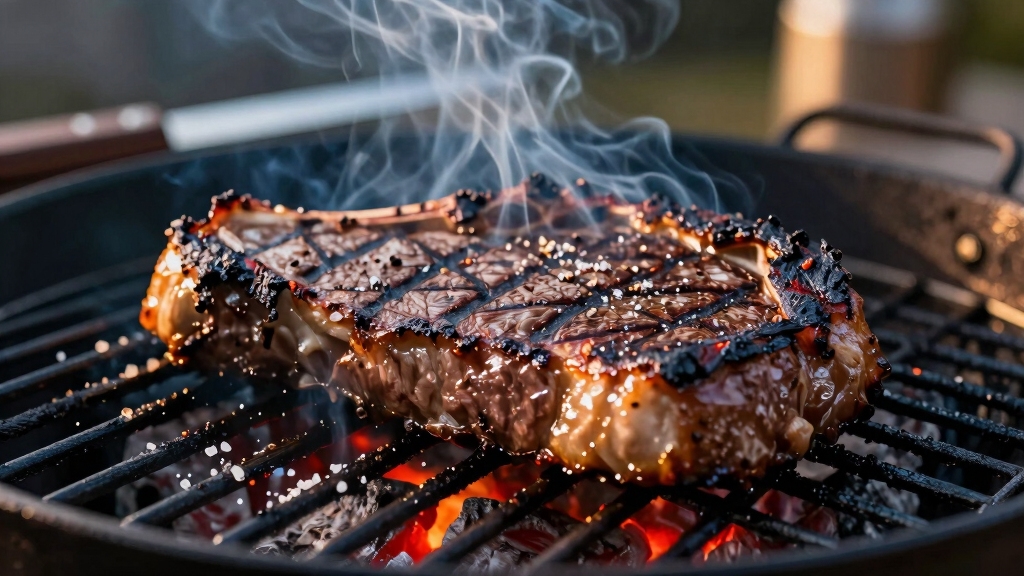
Charcoal steaks offer a richer, more complex flavor thanks to the smoky aroma charcoal imparts. This enhances natural beef notes without overpowering.
You get intense radiant heat for superior searing and caramelization that gas or electric grills can’t match. The two-zone fire setup lets you precisely control temperature.
This preserves juiciness while developing a perfect crust. Handling your grill and prep carefully guarantees peak taste and texture. Keep exploring to master every step for flawless charcoal steaks.
Key Takeaways
- Charcoal steaks are grilled over charcoal, imparting a distinctive smoky aroma and deeper flavor than gas or electric grilling.
- Intense radiant heat and open flames create a rich Maillard crust and rapid caramelization on the steak surface.
- Two-zone charcoal fire allows precise cooking by searing steaks over direct heat and finishing them gently with indirect heat.
- Charcoal grilling engages the senses with tactile heat, smoke, and char that enhance the overall steak experience.
- Proper preparation includes seasoning, resting, and using a clean, oiled grate to ensure juicy, flavorful, and tender steaks.
What Makes Charcoal Steaks So Special?

Charcoal steaks captivate your senses with a unique combination of smoky aroma and intense sear that other cooking methods simply can’t replicate.
When you grill over piping hot charcoal, the direct heat quickly caramelizes the steak’s surface, triggering the Maillard reaction and developing rich, complex flavors.
The smoke from the charcoal infuses subtle earthy notes, enhancing depth without overpowering the meat’s natural taste.
Using a two-zone fire setup, you control cooking precisely, searing over hot coals then finishing gently, preserving juiciness.
This method yields a crust that’s crisp and flavorful while maintaining a tender interior.
You’ll find that charcoal grilling engages you in a tactile, sensory experience—managing heat, observing smoke, and achieving a perfect balance of char and succulence that elevates the humble steak to culinary artistry.
To maximize cooking time and heat consistency, many grillers prefer using high-density briquettes for longer-lasting coals during extended grilling sessions.
How to Prepare Steaks for Charcoal Grilling?
To get the best flavor and texture, you’ll want to season your steaks with kosher salt a few hours before grilling. Just sprinkle it on and let it sit at room temperature. This really helps enhance the taste!
Next, don’t forget to trim any excess fat. This not only makes for a better bite but also prevents curling. A few strategic slashes on the edges can help too.
Before you throw those steaks on the grill, give them a light brush with some high smoke point oil. This little trick ensures they won’t stick to the grate.
For optimal texture and flavor, consider using a dry brine technique by salting your steak in advance and patting it dry before seasoning.
With these simple preparations, you’re setting yourself up for a perfectly charred, juicy steak. Happy grilling!
Seasoning And Resting
Although seasoning may seem straightforward, how you prepare your steaks before they hit the grill profoundly impacts the final flavor and texture.
Start by bringing your steak to room temperature, allowing even seasoning absorption and consistent cooking.
Apply kosher salt generously hours ahead; this draws moisture out, then reabsorbs it, intensifying flavor and tenderizing.
Complement salt with freshly ground pepper and optional garlic powder or beef rub for layered complexity.
After grilling, resting your steak is essential; let it sit for about three minutes.
This pause redistributes juices, preventing loss when sliced, and lets residual heat finish cooking gently, enhancing tenderness and juiciness.
Skipping resting undermines all seasoning efforts, resulting in a drier, less flavorful steak despite your careful preparation.
For optimal texture, aim to slice steaks when their internal temperature has cooled to the ideal resting range to retain maximum juiciness and tenderness.
Trimming And Oiling
Trim excess fat from your steaks carefully, but don’t remove it all. This layer adds flavor and moisture during grilling.
Precisely trimming guarantees even cooking while retaining essential juiciness. Next, lightly oil the surface to prevent sticking and promote a perfect sear.
Use a high smoke point oil like grapeseed or avocado oil, which withstands charcoal’s intense heat without burning.
Consider these key points when preparing your steak:
- Trim fat margins but leave a thin layer for taste and moisture.
- Make vertical slashes in the fat ring to avoid curling.
- Apply oil evenly on both sides to enhance grill marks.
- Avoid over-oiling, which can cause flare-ups.
- Use a brush or cloth for a thin, controlled oil coating.
This careful preparation balances texture, flavor, and cooking efficiency for ideal charcoal steaks. Patting the meat dry before oiling helps form a pellicle that improves rub and smoke adhesion, enhancing flavor development during grilling.
How to Set Up Your Charcoal Grill for Great Steaks?
To set up your charcoal grill for great steaks, first, light the charcoal in a chimney starter. You want to get it nice and hot until it’s evenly coated with white ash. This step is key because it ensures you have consistent heat throughout the cooking process.
Once your coals are ready, it’s time to arrange them. Create a two-zone fire: one side should be intensely hot for searing those steaks, while the other side should be cooler, perfect for gentle cooking and finishing. This setup gives you the flexibility to achieve that beautiful crust on the outside while keeping the inside juicy and tender.
Before you start grilling, don’t forget to clean and oil the grates. This helps prevent sticking and promotes even cooking, making it easier to flip those steaks later on. With everything set up, you’re ready to grill up some delicious steaks! Managing airflow and vent settings carefully during grilling helps maintain the ideal temperature and burn rate for the best results.
Lighting Charcoal Properly
Mastering the art of lighting charcoal is essential for achieving the perfect steak sear and smoky flavor. You want your coals to reach an even, glowing heat with a white ash coating, signaling readiness.
Using a chimney starter is the most reliable way. It ignites your charcoal evenly without lighter fluid’s chemical taste. Make sure your ventilation allows steady airflow for consistent burning.
Once ash-coated, spread the coals evenly for uniform heat distribution.
Keep these steps in mind:
- Fill chimney starter with charcoal and light newspaper underneath.
- Wait 15-20 minutes for white ash to form.
- Avoid lighter fluid to prevent off-flavors.
- Use briquettes or lump charcoal based on heat control preference.
- Maintain good airflow by adjusting vents before grilling.
Proper airflow and vent adjustment are crucial to maintaining steady temperatures and preventing warping during grilling, just as in seasoning a smoker with steady temperature control.
Lighting charcoal properly sets the foundation for exceptional steaks.
Arranging Two-Zone Fire
Arrange your charcoal grill with a clear two-zone setup to control cooking intensity and achieve perfect steaks.
Start by piling hot coals on one side of the grill, creating a high-heat direct zone ideal for searing.
Leave the other side free of coals to serve as an indirect, cooler zone where steaks can finish cooking gently without burning.
This contrast in heat zones lets you manage the cooking process precisely. Sear steaks over intense heat to develop a flavorful crust, then move them to the cooler side to cook through evenly.
Positioning the coals in a single-layer grid prevents flare-ups and maintains stable temperatures.
Establishing this two-zone fire empowers you to balance Maillard browning with controlled doneness, ensuring steaks turn out juicy and perfectly cooked every time.
For enhanced flavor, consider adding a smoke tube positioned near a steady air source away from direct flames to infuse your steaks with rich, steady smoke during cooking.
Preparing And Oiling Grates
Start by thoroughly cleaning your grill grates to remove any residual debris or buildup from previous cookouts. This prevents sticking and guarantees even heat transfer.
Once clean, oiling the grates creates a non-stick surface that protects the steak’s integrity and highlights grill marks. Use a high smoke point oil like canola or grapeseed to withstand intense heat without burning.
Apply oil with a folded paper towel held by tongs, wiping evenly across the grates.
Keep these tips in mind:
- Clean grates preheating with a wire brush.
- Use oil sparingly to avoid flare-ups.
- Oil grates after preheating, not before.
- Guarantee even oil coverage for consistent searing.
- Avoid aerosol cooking sprays; they can cause flare-ups.
Proper preparation of grates maximizes flavor and texture in your charcoal steaks. After cleaning and oiling, it’s beneficial to oil grill grates after heating to create a more effective protective layer and prevent rust.
How to Cook Charcoal Steaks Step-by-Step?
Prepare your charcoal grill by lighting the coals in a chimney starter until they’re covered with white ash, which usually takes about 15 to 20 minutes.
Next, arrange the hot coals in a two-zone setup: one side densely packed for direct searing and the other sparse for indirect cooking.
Place your seasoned steaks on the indirect side first to cook gently, preserving juiciness while allowing heat to penetrate evenly.
After about 10 minutes per side, transfer the steaks to the direct heat zone. Sear each side for 2 to 4 minutes with the lid closed to develop a rich, smoky crust through the Maillard reaction.
Flip steaks only once when they release easily from the grill, ensuring clean grill marks and avoiding tearing. This method balances precision and flavor expertly.
For best results, consider using reverse sear technique to ensure even doneness and a perfect crust.
How to Check Doneness and Rest Your Steaks?
Monitor your steak’s internal temperature closely using a reliable meat thermometer to achieve perfect doneness. Insert the probe into the steak’s thickest part without touching bone or fat for an accurate reading.
Remember, the steak’s temperature will continue to rise 3-5°F during resting, so remove it slightly below your target. Resting allows juices to redistribute, preventing them from spilling out when you cut.
To check doneness and rest your steak effectively:
Aim for 135°F for medium-rare and 145°F for medium doneness. Use tongs, not forks, to flip and handle the steak.
Rest steaks loosely covered with foil for 3-5 minutes. Avoid cutting immediately to retain moisture. Note internal temperature rise during rest for precise timing.
These steps make certain a juicy, evenly cooked charcoal steak every time. For consistent results, insert the probe horizontally into the thickest muscle, avoiding fat pockets and edges to get an accurate core temperature reading.
Flavor and Texture Tips for Perfect Charcoal Steaks
Once you’ve mastered checking doneness and resting your steak, focus on how flavor and texture come alive through charcoal grilling techniques.
Achieve a perfect crust by maintaining high heat (400-500°F) for the Maillard reaction, which enhances aroma and taste. Use two-zone fire to sear over direct heat, then finish cooking indirectly to preserve juiciness and tenderness. Avoid piercing the meat to retain moisture.
| Technique | Effect on Steak |
|---|---|
| High-heat searing | Crispy crust, rich flavor |
| Two-zone cooking | Even doneness, juicy interior |
| Resting post-grill | Redistributed juices, tender |
Apply these tactics with care, and your charcoal steaks will boast a complex smoky flavor and satisfying texture.
Benefits of Charcoal Grilling for Steaks
Releasing the full potential of steak flavor starts with choosing charcoal grilling, a method that infuses meat with a distinctive smoky aroma and complex taste profile.
Unlock steak’s rich flavor with charcoal grilling’s unique smoky aroma and complex taste profile.
When you grill over charcoal, the radiant heat and smoke create a Maillard reaction that enhances browning, texture, and savory depth.
This technique also allows precise temperature control using a two-zone fire setup, ensuring even cooking and ideal doneness.
Additionally, the open flame imparts subtle caramelization unavailable in gas or electric grills.
Consider these benefits of charcoal grilling for your steaks:
- Deep smoky flavor that complements natural beef notes
- Superior searing and crust development
- Greater heat intensity for faster cooking
- Enhanced moisture retention through indirect heat zones
- Authentic grilling experience connecting you to tradition and craft
Charcoal grilling elevates your steak beyond simple cooking into an artful culinary experience.
Frequently Asked Questions
What Types of Charcoal Are Best for Grilling Steaks?
You’ll want to choose lump charcoal or briquettes for grilling steaks.
Lump charcoal burns hotter and cleaner, giving you a distinct smoky flavor and quick searing ability, perfect for that Maillard reaction.
Briquettes provide consistent heat and longer burn time, helping maintain stable temperatures during indirect cooking.
Opt for natural, additive-free charcoal to avoid off-flavors.
Balancing these options lets you control heat zones effectively for perfectly grilled steaks every time.
Can Charcoal Steaks Be Cooked Indoors With a Grill Pan?
You can’t truly replicate charcoal steaks indoors with a grill pan because you miss the smoky flavor charcoal imparts.
A grill pan will give you grill marks and sear, but lacks the intense direct heat and smoke from burning coals.
If you want authentic charcoal steak qualities, you need actual charcoal grilling outdoors.
Indoors, the best you’ll get is a decent sear, not the full charcoal steak experience.
How Do Weather Conditions Affect Charcoal Grilling?
You know what they say: “Don’t let the weather rain on your parade.”
Wind can blow heat away, making it harder to maintain consistent charcoal temperature. You’ll need to shield your grill.
Cold weather slows charcoal ignition and cooking time, demanding patience and careful heat management.
Rain introduces moisture, cooling coals and causing flare-ups. You’ll want to monitor your fire closely and adjust airflow to keep your charcoal steaks cooking evenly despite the elements.
What Safety Precautions Should I Take When Grilling With Charcoal?
You should always grill in a well-ventilated area to avoid carbon monoxide buildup.
Keep a fire extinguisher or water spray nearby for flare-ups.
Use long-handled tools and heat-resistant gloves to protect yourself from burns.
Never add lighter fluid to hot coals; it causes dangerous flare-ups.
Arrange coals carefully to prevent tipping and let ashes cool completely before disposal.
Staying alert and prepared guarantees a safe, controlled grilling experience.
How Do I Clean and Maintain My Charcoal Grill After Use?
You clean your charcoal grill by first letting the coals fully extinguish and cool down.
Then, remove the ash and debris from the bottom using an ash tool or brush.
Scrub the grates with a stiff wire brush to eliminate residue, and wipe them with a cloth dipped in hot, soapy water.
Regularly oil the grates to prevent rust.
Store your grill covered in a dry place to maintain longevity and prevent corrosion.
Charcoal Mastery: The Secret to Juicier, Richer Steaks
Charcoal steaks offer a unique flavor that gas grills simply can’t match. Over 60% of steak enthusiasts prefer charcoal for its smoky, rich taste.
By mastering preparation, grill setup, and cooking techniques, you unleash a depth of flavor and perfect texture that elevates every bite.
Paying close attention to doneness and resting guarantees tenderness. Embrace charcoal grilling not just for tradition, but because it scientifically enhances your steak’s complexity and juiciness every time.