Weston Vacuum Sealer Reviews: Seal in Confidence
If you need a vacuum sealer for light home use, Weston’s Compact model with a 110W motor works well for occasional sealing and smaller bags.
For heavier workloads, their Pro series offers stronger motors, wider seal bars, and durable seals. The Pro-1100 suits medium use, while the Pro-2300 and Pro-3000 handle larger batches and continuous sealing.
Features like fan-cooled motors, angled chambers, and accessory ports enhance reliability and versatility. Keep going to find out which model fits your needs best.
Key Takeaways
- Weston vacuum sealers range from entry-level to heavy-duty models suited for various sealing frequencies and bag sizes.
- Pro models offer stronger motors, wider seal bars, and digital displays for commercial-grade sealing performance.
- The Pro-3000 features a double piston pump for continuous sealing without overheating or cooldown breaks.
- Fan-cooled motors and angled vacuum chambers reduce overheating and liquid intake, improving seal reliability.
- Pulse functions and adjustable vacuum modes allow precise control, especially for delicate or moist foods.
Comparing Weston Vacuum Sealer Models

When comparing Weston vacuum sealer models, you’ll notice distinct differences in motor power, vacuum strength, and seal bar size that cater to varying needs.
Weston vacuum sealers vary in motor power, vacuum strength, and seal bar size to suit different sealing needs.
The Compact model features a modest 110W motor and 22.5″ Hg vacuum with an 11″ seal bar, suitable for light use.
Pro models, like the Pro-1100 and Pro-2300, ramp up power to 680W and 935W respectively, delivering stronger 28″ Hg vacuums and wider seal bars: 11″ for Pro-1100 and 15″ for Pro-2300.
The Pro-3000 shares the Pro-2300’s specs but adds a double piston pump for heavy-duty sealing.
The Professional Advantage stands out with a 210W fan-cooled motor and 23″ Hg vacuum but lacks a wide seal bar.
Seal thicknesses vary from 2mm on entry-level models to 5mm on Pro-2300, affecting durability and bag compatibility.
Choosing the right model requires evaluating your daily packaging volume and the types of foods you plan to seal to ensure optimal performance and efficiency.
Which Weston Vacuum Sealer Is Right for You?
Choosing the right Weston vacuum sealer depends on your sealing needs, kitchen space, and budget.
If you mainly seal smaller portions or occasional items, the Compact model’s 110W motor and 11″ seal bar offer a space-saving, affordable option.
For heavier use, consider the Pro-1100 or Pro-1400, delivering stronger vacuum power (28″ Hg) with digital controls and a similar seal bar size.
The Pro-2300 and Pro-3000 suit larger batches and commercial use, featuring wider 15″ seal bars and robust motors up to 935W.
The Pro-3000’s double piston pump handles continuous sealing without cooldown.
If you want a middle ground, the Professional Advantage balances power and size with a 210W motor.
Match your model choice to your volume, bag size preferences, and whether you need advanced features or compact design.
When sealing meats or other foods, choosing the correct wrapping material like butcher paper versus freezer paper can affect preservation quality and storage life.
Key Features That Set Weston Sealers Apart
Understanding the features that differentiate Weston vacuum sealers helps you make an informed choice beyond just motor power or seal bar size.
For instance, many models offer an accessory port for hose attachment, expanding versatility for jars or containers.
Entry-level sealers include pulse buttons and adjustable vacuum modes, letting you customize settings for delicate items.
Pro models add digital displays showing seal time and vacuum progress, improving control and convenience.
Fan-cooled motors on most Westons prevent overheating during extended use, a clear advantage over some competitors.
The angled vacuum chamber design minimizes liquid intake, reducing mess and enhancing reliability.
An angled vacuum chamber design limits liquid intake, preventing mess and boosting sealer reliability.
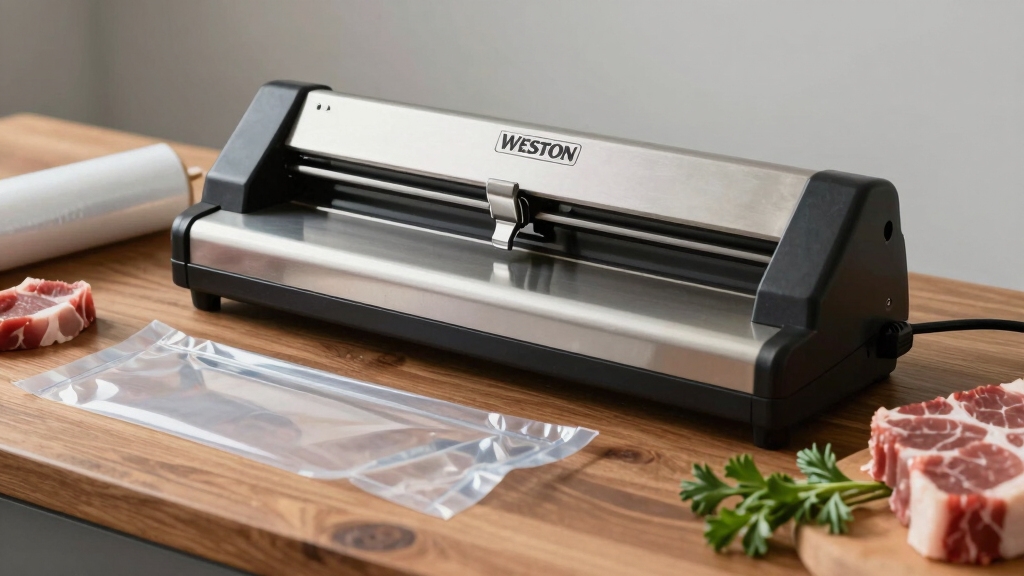
Additional thoughtful touches include detachable power cords, built-in bag cutters, and roll storage compartments.
These features enhance usability and organization, setting Weston models apart from typical vacuum sealers.
Proper maintenance, including regular cleaning and inspection, ensures long-lasting performance and reliability.
Performance With Bulk and Moist Foods
Since vacuum sealing bulk or moist foods challenges many machines, Weston models stand out by guaranteeing strong, consistent suction without overheating or frequent cooldowns.
Their commercial-grade pumps, especially in the Pro-2300 and Pro-3000, deliver up to 28″ Hg vacuum strength, efficiently handling large meat batches and juicy harvests.
The angled vacuum chamber design prevents liquid intake, reducing seal failures and mess.
Compared to entry-level brands like FoodSaver, Weston’s wider seal bars (11-15″) and thicker seal strips (up to 5mm) guarantee robust, leak-proof seals on moist or bulky items.
You’ll appreciate how the fan-cooled motors keep performance steady during extended sealing sessions.
Whether you’re sealing fish, sharp-edged foods, or bulk cuts, Weston’s precise manual modes and durable construction outperform many competitors in reliability and ease of use.
Proper storage and packaging, including vacuum sealing, help retain crispness and flavor of the bark on smoked meats.
Where to Buy Weston Vacuum Sealers and Pricing?
Weston vacuum sealers combine professional-grade performance with competitive pricing, making them accessible to both home users and small businesses.
Weston vacuum sealers offer professional performance at prices suited for home use and small businesses.
You can find popular models like the Pro-1100 at Costco for around $269 during sales, while the Pro-3000 runs about $582, reflecting its top-tier motor and seal strength.
Lowe’s stocks the Professional Advantage model, offering a sleek black or stainless finish.
Best Buy and the official Weston site also carry a broad selection, often matching or beating prices found elsewhere.
Compared to competitors like FoodSaver, Weston offers stronger pumps and wider seal bars, justifying slightly higher prices.
Their commercial-grade motors and durable builds deliver value, especially if you seal large or moist items frequently.
To maintain optimal performance and safety, it is important to inspect equipment regularly and follow manufacturer guidelines.
Tips to Optimize Your Weston Vacuum Sealer Use
When you want to get the most out of your vacuum sealer, adjusting settings like vacuum strength and seal time based on the food type can make a significant difference.
For example, using low vacuum mode helps protect delicate foods like berries, while higher vacuum strength suits dense meats.
The Pro models’ digital displays allow precise control over seal time, essential for sealing moist or thick items without compromising bag integrity.
Using the pulse function lets you manually control air removal, ideal for fragile or liquid-rich foods.
Additionally, choosing the right bag width—11 to 15 inches depending on your model—prevents waste and guarantees proper sealing.
Always keep the angled chamber clean to avoid liquid buildup, which can reduce vacuum efficiency.
These steps optimize performance and extend your sealer’s lifespan.
For preserving delicate items such as smoked salmon, vacuum-seal storage is crucial to maintain texture and flavor during freezing.
Frequently Asked Questions
How Do I Clean and Maintain My Weston Vacuum Sealer?
To clean your Weston vacuum sealer, unplug it first and wipe the sealing bar and chamber with a damp cloth to remove food residue.
Avoid abrasive cleaners to protect the seal bar and digital display.
Regularly check and clean the air intake ports, especially if sealing moist items.
Detach and clean the drip tray if your model has one.
Routine maintenance, like checking the gasket and keeping the fan-cooled motor vents clear, guarantees long-lasting performance.
Can I Vacuum Seal Liquids Without Making a Mess?
Yes, you can vacuum seal liquids without making a mess if you choose the right model. Chamber vacuum sealers, like the Pro-1400 or Pro-2300, handle liquids better by equalizing pressure and preventing liquid suction into the pump.
Their angled chambers and elevated air intake ports reduce mess risk. Entry-level external vacuum sealers often struggle with liquids, causing spills. Using pulse mode and freezing liquids partially also helps control mess during sealing.
Are Replacement Bags and Rolls Compatible With Other Brands?
Picture a roll of vacuum sealer bags fitting snugly into your machine, sealing perfectly without gaps.
Weston replacement bags and rolls generally work with other brands, thanks to standard widths like 11” and 15″.
However, some brands have proprietary textures or thicknesses, like Weston’s 5mm seals versus thinner FoodSaver bags, so performance may vary.
You’ll want to check size and bag thickness compatibility to avoid weak seals or jams when mixing brands.
Can I Use Weston Sealers for Sous Vide Cooking?
Absolutely, you can use Weston sealers for sous vide cooking. Think of them as your trusty sous-chef in sealing.
Their strong vacuum strengths (up to 29.5″ Hg) and thick seal bars (up to 5mm) create tight, reliable seals that prevent water from sneaking in during long cooks.
Compared to typical sealers, Weston’s commercial-grade pumps handle moist, juicy foods better. This ensures bags don’t burst or leak under heat.
They’re solid for both beginners and pros.
Unlock the Power of Freshness with Weston Sealers
Choosing the right Weston vacuum sealer is like finding the perfect key to release freshness in your kitchen.
Whether you’re sealing bulky cuts or moist marinades, each model offers unique strengths tailored to your needs.
With features designed for precision and durability, Weston sealers stand out in performance and value.
Armed with these insights, you’ll confidently preserve your food’s flavor and texture, turning everyday storage into a seamless, airtight art.