Texas Bbq Sausage Recipe: Juicy, Smoky & Grill Perfect
For authentic Texas BBQ sausage, start with brisket trimmings for your beef, adding up to 50% meat for juiciness. Aim for 20–25% fat.
Blend paprika, cayenne, garlic, and mustard powders for bold flavor. Then chill and grind evenly.
Use hog casings and stuff carefully to avoid air pockets. Smoke over post oak at 225°F until hitting 160°F inside.
Pair with tangy sides, then store properly to keep freshness. Master these steps to unleash true Texas sausage mastery.
Key Takeaways
- Use brisket trimmings as primary meat with 20–25% fat content for tender, juicy Texas-style sausage.
- Season with paprika, cayenne, garlic, onion powders, mustard powder, and curing salt for authentic flavor and safety.
- Grind chilled meat and fat coarsely, mix with salt, milk powder, and cold water until sticky and pliable before stuffing into hog casings.
- Smoke sausages at 225–250°F using post-oak wood for mild, traditional Texas smoke flavor until internal temperature reaches 160°F.
- Serve on toasted buns with mustard or pickles, store refrigerated up to 4 days, or freeze for longer preservation.
Texas BBQ Sausage Recipe – Quick Overview Table
| Main Term | Texas BBQ Sausage Recipe |
|---|---|
| Recipe Author | Cleo Ellis |
| Published Date | March 15, 2026 |
| Recipe Type | BBQ / Smoked Sausage |
| Cuisine | Texas BBQ |
| Main Meat | Beef brisket trimmings (optional pork shoulder up to 50%) |
| Ideal Fat Ratio | 20–25% fat |
| Preparation Time | 1–2 hours (including chilling & mixing) |
| Cooking Method | Smoking or oven baking |
| Smoking Temperature | 225–250°F |
| Internal Temperature | 160°F |
| Wood Type | Post oak (traditional), hickory or mesquite alternatives |
| Key Seasonings | Paprika, cayenne, garlic powder, onion powder, mustard powder |
| Additional Ingredients | Milk powder, curing salt, cold water |
| Casings | Natural hog casings |
| Grind Size | Coarse grind (around 10 mm) |
| Mixing Temperature | Keep meat below 40°F |
| Best Serving Style | On toasted bun with mustard or pickles |
| Side Dishes | Coleslaw, baked beans, grilled peppers |
| Storage | Refrigerate 3–4 days or freeze up to 2–3 months |
Picking the Best Meats and Fat Ratios for Texas Sausage

Choosing the right meats and balancing fat ratios are vital steps in crafting authentic Texas BBQ sausage that bursts with flavor and texture.
Selecting quality meats and mastering fat ratios are key to authentic Texas BBQ sausage perfection.
You’ll want to start with beef as your primary protein. Brisket trimmings are the gold standard, but chuck or eye of round work well too.
If you prefer a touch of meat, adding shoulder or belly up to 50% can introduce juiciness without overpowering the beef’s boldness.
Venison also makes a unique, lean alternative if you’re feeling adventurous.
Keep your fat content between 20-25% to guarantee the sausage stays tender and binds properly.
Too little fat leads to dry, crumbly sausage; too much can make it greasy.
Striking this balance gives you that perfect bite that’s both flavorful and satisfying every time.
For optimal texture and flavor, it’s important to trim silver skin and use lean cuts when selecting your meat.
Creating Your Own Texas Sausage Spice Blend
With the perfect meat and fat ratio in place, the next step is to craft a spice blend that captures the bold, smoky character of Texas BBQ sausage.
Start with paprika as your foundation; it brings a subtle sweetness and vibrant color. Add cayenne pepper for a kick, adjusting to your heat tolerance.
Ground black pepper deepens the flavor, while garlic and onion powders provide aromatic layers that sing in every bite. Don’t forget a pinch of mustard powder and a touch of sage or thyme to add complexity.
Mix your spices evenly before combining them with the meat to ensure consistent flavor. This blend will give your sausage that unmistakable Texas punch, balancing heat, smokiness, and savory notes perfectly.
For optimal flavor infusion, consider using a sous vide method before cooking to evenly distribute spices and maintain juiciness.
Preparing and Mixing Meat for Proper Binding and Texture
Before you start mixing, make sure your meat and fat are thoroughly chilled. This step is essential for achieving the right texture and preventing spoilage.
Keep everything below 40°F as you grind brisket trimmings and meat shoulder fat into a coarse, even grind. Once ground, combine your seasoned meat in a stand mixer or by hand, adding salt and milk powder to promote proper binding.
Maintain a temperature below 40°F while grinding and seasoning meat for optimal binding and texture.
Gradually incorporate cold water while mixing continuously for 2-3 minutes. This helps develop a sticky, fibrous texture that holds together when cooked.
The key is patient, consistent mixing to guarantee all ingredients blend evenly. This creates a sausage mixture that’s firm yet pliable, ready to be stuffed and smoked into authentic Texas BBQ sausage.
For an enhanced flavor profile, consider incorporating a sweetener choice such as light brown sugar or honey to balance savory notes during the mixing process.
Selecting and Preparing Casings for Texas Sausage
When it’s time to pick out casings for your Texas sausage, hog casings are definitely the way to go. They’re just the right size and have a natural texture that really makes a difference.
Now, before you start stuffing, you’ll want to soak those casings in warm water. This helps to soften them up, making sure they don’t tear when you’re working with them.
And here’s a tip: keep your sausage stuffer well-chilled! This little trick helps you fill those casings evenly, which is key for that authentic, juicy bite we all love. Enjoy the process!
For optimal results, make sure to match your casing size with the correct stuffer horn diameter to reduce stuffing effort and prevent casing damage.
Hog Casing Preparation
Choose your hog casings carefully to guarantee your Texas sausage turns out perfectly textured and flavorful.
Start by selecting fresh, high-quality casings, which are typically sold packed in salt.
Rinse them thoroughly under cold water to remove excess salt and impurities.
Soak the casings in warm water for at least 30 minutes to soften and make them pliable.
While soaking, gently flush water through the casing to clear the inside, preventing any blockages during stuffing.
Handle casings delicately; they’re thin but strong, ensuring your sausage holds its juicy filling without bursting.
Proper preparation keeps the casings flexible and ready, preserving the authentic snap that defines Texas BBQ sausage.
It is important to note that curing salt, which contains sodium nitrite and is dyed pink, should be used in meat curing to ensure safety and preservation, rather than regular pickling salt.
With prepped casings, you’re set to move confidently into the stuffing stage.
Stuffing Techniques
With your hog casings softened and rinsed, you’re ready to move on to the stuffing process, where careful handling and preparation make all the difference.
First, fit your stuffer with a clean, chilled tube to keep the meat cold as you work.
Slide the casing onto the tube, leaving extra length at the end for tying off.
Hold the casing gently to prevent tearing while feeding the seasoned, chilled meat mixture steadily into the tube.
Keep the grind size around 10mm for ideal texture, and avoid overstuffing to prevent bursting during cooking.
If you don’t have a stuffer, hand-stuffing works too; just take your time.
Maintaining cold conditions throughout guarantees your Texas sausage stays firm and flavorful.
Using vacuum sealing after stuffing can help preserve freshness and extend shelf life.
Stuffing Techniques for Even Texas Sausage Links
Mastering the art of stuffing sausage casings guarantees your Texas sausage links come out evenly filled and perfectly textured every time.
Start by soaking hog casings in warm water to make them pliable. Keep your meat mixture cold, ideally below 40°F, to prevent fat smearing during stuffing.
Use a sausage stuffer for consistent pressure, ensuring the casing fills uniformly without air pockets. Twist links gently at regular intervals to maintain even thickness.
| Step | Tip | Result |
|---|---|---|
| Soak Casings | 30 minutes in warm water | Flexible, easy to handle |
| Maintain Cold Mix | Keep below 40°F | Prevents fat separation |
| Use Stuffer | Apply steady pressure | Evenly filled, no air gaps |
Ensuring sausages are thoroughly thawed and handled with care is crucial for food safety and achieving the best texture during cooking, as proper food safety practices prevent uneven cooking and spoilage.
Smoking and Cooking Methods for Authentic Texas Sausage
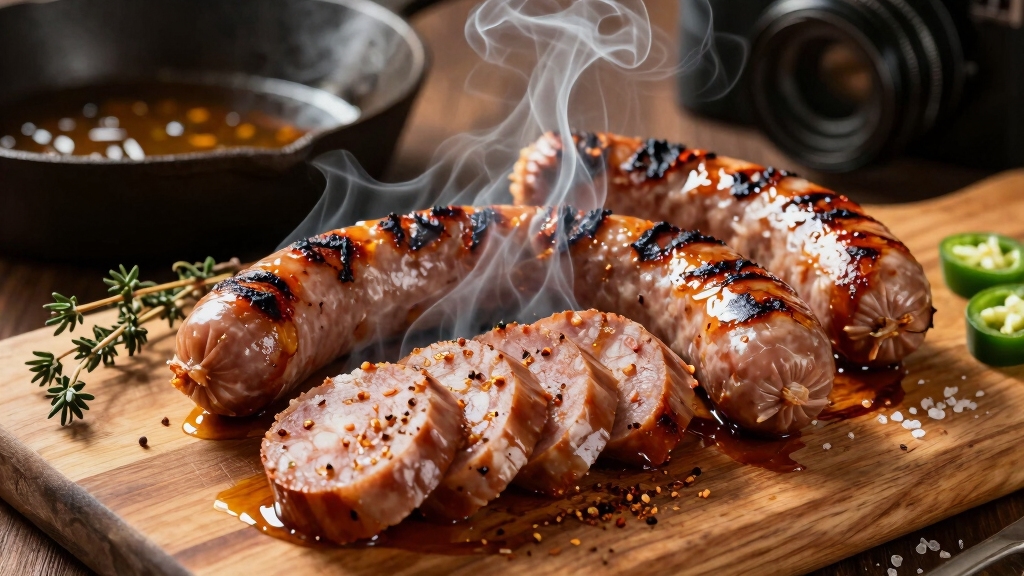
When you’re smoking Texas sausage, go for post-oak wood. It’s got that classic, mellow smoke flavor that really complements the rich beef blend. You’ll want to keep your smoker at a steady temperature of around 225°F. This way, the sausage can absorb smoke slowly and cook evenly.
Now, timing is super important. You’ll want to smoke the sausage until the internal temperature reaches 160°F. That way, you’ll guarantee juicy, perfectly cooked links. Trust me, it’s worth the wait!
Using properly seasoned oak ensures a clean, flavorful smoke that enhances the sausage without bitterness.
Smoking Wood Selection
Choosing the right wood for smoking your Texas sausage plays a crucial role in developing its signature flavor. Post oak is the classic choice, offering a mild, smoky taste that complements beef without overpowering it.
If you want a slightly sweeter smoke, mesquite works well but use it sparingly to avoid bitterness. Hickory delivers a stronger, meat-like flavor that adds depth but can dominate if overused. Experiment with blends to find your perfect balance.
Mesquite’s high lignin content causes it to burn hotter and faster, producing a bold and intense smoke that requires careful control.
| Wood Type | Flavor Profile |
|---|---|
| Post Oak | Mild, smoky, traditional |
| Mesquite | Sweet, intense, bold |
| Hickory | Strong, smoky, meat-like |
Selecting your wood carefully guarantees your sausage embodies authentic Texas BBQ character.
Temperature And Timing
Achieving the perfect texture and flavor in your Texas sausage hinges on precise control of temperature and timing throughout smoking and cooking.
You’ll want to maintain a steady smoking temperature around 225-250°F, allowing the sausage to slowly absorb the rich post-oak smoke while cooking evenly.
Keep a close eye on internal temperature, aiming for 160°F to guarantee safety and optimal juiciness.
Smoking can take several hours, but patience pays off with deep, smoky complexity.
If you choose oven baking, set it to 425°F and expect a shorter cooking time of 10-12 minutes, turning halfway through for even browning.
Whether smoking or baking, don’t rush; timing and temperature balance bring out authentic Texas sausage’s signature taste and texture.
Using a water pan during smoking helps maintain humidity and prevents the sausage casing from drying out.
Serving Suggestions and Storage Tips for Texas Sausage
Although Texas sausage boasts a robust flavor on its own, pairing it with classic sides like tangy coleslaw, smoky baked beans, or freshly grilled peppers enhances the experience dramatically.
You can also serve it sliced on a toasted bun with mustard or pickles to balance the spice.
For storage, wrap cooled sausages tightly in plastic wrap or foil, then place them in an airtight container.
Refrigerate for up to 4 days or freeze for longer storage, ideally within two months to maintain flavor and texture.
When reheating, use low heat to preserve juiciness; grilling or gentle oven warming works best.
Following these tips will guarantee your Texas sausage stays delicious and ready whenever you crave that smoky, spicy kick.
Frequently Asked Questions
Can I Freeze Texas Sausage Before or After Cooking?
You can freeze Texas sausage both before and after cooking, but each method has perks.
Freezing raw sausage preserves freshness and flavor if you plan to cook it later. Just wrap it tightly to avoid freezer burn.
After cooking, freezing lets you enjoy ready-to-eat sausage anytime.
Just cool it first and package well. When thawing, do so in the fridge to keep texture and taste at their best.
What Wood Alternatives Work if Post-Oak Isn’T Available?
If you can’t find post-oak, try hickory or pecan wood. They offer a similar sweet, smoky flavor that complements sausage well.
Mesquite works too, but use it sparingly since it’s stronger and can overpower the meat.
Fruitwoods like apple or cherry provide a milder, slightly sweet smoke. They add complexity without overwhelming your sausage.
Experiment with these to find your perfect balance and maintain that authentic smoky depth you’re after.
How Long Can Homemade Texas Sausage Be Refrigerated Safely?
How long do you think your homemade sausage stays fresh in the fridge?
You can safely refrigerate it for about 3 to 4 days if you keep it wrapped tightly and stored below 40°F.
To maintain that juicy texture and rich flavor, make sure it’s properly cooled before refrigerating.
If you want to keep it longer, freezing is your best bet, preserving quality for up to 2-3 months.
Are There Vegetarian Substitutes for Texas Sausage Spices?
Yes, you can definitely find vegetarian substitutes for Texas sausage spices.
You’ll want to focus on paprika for that smoky depth, cayenne for heat, and black pepper for bite.
Garlic and onion powders add rich aroma, while mustard powder, thyme, and sage bring complexity.
Mix these spices into plant-based proteins like textured vegetable protein or mushrooms to recreate that bold, savory flavor without meat.
Adjust heat to your taste!
What Is the History Behind Texas BBQ Sausage Traditions?
Imagine grilling Texas BBQ sausage while streaming your favorite show. It’s a modern twist on a rich tradition.
You’ll appreciate that Texas BBQ sausage traces back to German and Czech settlers in the 1800s who brought sausage-making skills. They combined local beef, especially brisket, with spices, creating a signature flavor.
Over time, this blend evolved into the smoky, spicy sausages you savor at Texas BBQ joints today. It preserves a proud cultural heritage.
Ready to Smoke the Perfect Texas Sausage?
So, now you’re basically a Texas sausage whisperer, mastering meats, spices, and smoky magic like a BBQ wizard.
Just remember, if your sausages don’t make your neighbors drool or your smoke alarm sing, you might’ve missed a step. But hey, even burnt attempts taste better with a cold drink.
Keep perfecting that craft, and soon you’ll have Texas-style sausages so good, they’ll practically moo and sizzle themselves onto your plate. Happy smoking!