Skirt Steak Vs Hanger Steak: Texture, Flavor & Cooking Tips
When choosing between skirt steak and hanger steak, consider their origins and textures: skirt is fibrous, longer, and chewier. It is ideal for bold marinades and quick cooking, while hanger offers a tender, buttery finish with a deep, mineral-rich flavor.
Hanger steak is best served rare and simply seasoned. Skirt is more affordable and abundant, whereas hanger is rarer and pricier. Your choice hinges on the balance you want between primal intensity and supple richness.
Explore further to master their distinct cooking and flavor profiles.
Key Takeaways
- Hanger steak is a tender, single cut near the diaphragm, while skirt steak is a longer, fibrous muscle from the plate section inside the rib cage.
- Skirt steak is more affordable and widely available; hanger steak is rarer, pricier, and requires trimming of an inedible membrane.
- Hanger steak has a supple texture suitable for thicker slices; skirt steak is chewier and demands thin, against-the-grain slicing.
- Hanger steak offers a deep, buttery, mineral-rich flavor; skirt steak delivers a bold, primal richness enhanced by marinating and spices.
- Both steaks cook quickly on high heat; hanger steak needs 3–5 minutes per side, skirt steak cooks faster, about 2 minutes per side.
Hanger or Skirt? The Ultimate Beef Cut Comparison Guide
| Aspect | Hanger Steak | Skirt Steak |
|---|---|---|
| Origin (Anatomy) | From the diaphragm, hangs between rib and spine (single cut per cow) | From the plate section inside the rib cage (two cuts per cow) |
| Size & Shape | Smaller (1–1.5 lbs), thick, V-shaped, requires trimming membrane | Longer, thinner, about 2 lbs, uniform strip |
| Availability | Rare, specialty butcher item | Widely available in most supermarkets |
| Price | Pricier due to limited supply | More affordable and budget-friendly |
| Texture | Tender, supple, buttery; fine grain | Chewy, fibrous, rope-like grain |
| Slicing Style | Can be sliced slightly thicker | Must be sliced thinly against the grain |
| Flavor Profile | Deep, mineral-rich, beefiest flavor with buttery finish | Bold, primal richness; thrives with marinades |
| Best Seasoning | Simple salt & pepper or light marinade | Bold marinades, spice rubs, acidic blends |
| Cooking Method | High heat grill/broil, 3–5 min per side | High heat, very quick cook, ~2 min per side |
| Ideal Doneness | Rare to medium-rare (125°F–130°F) | Medium-rare preferred, avoid overcooking |
| Versatility | Great for steak-forward dishes | Perfect for fajitas, tacos, stir-fries |
| Best For | Rich, buttery steak experience | Flavor-packed, budget-friendly meals |
Origin of Skirt and Hanger Steaks
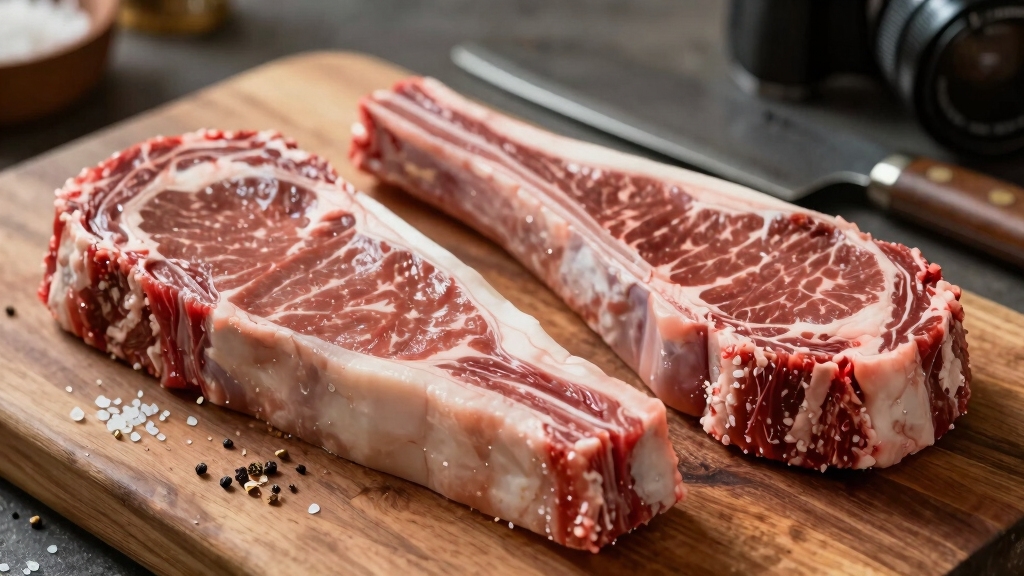
Although you mightn’t often consider the precise anatomy behind your steak, understanding the origin of skirt and hanger steaks reveals much about their unique qualities.
Discovering the anatomy behind skirt and hanger steaks unlocks their distinct flavors and textures.
The hanger steak, a singular cut per cow, hangs near the diaphragm, nestled between the last rib and spine close to the kidneys. This positioning grants it a tender texture, as it doesn’t bear much weight.
In contrast, skirt steak comes from the plate section inside the rib cage or chest wall and yields two cuts per animal. Its fibrous, long muscle structure explains its chewier, rope-like grain.
Knowing these origins helps you appreciate why hanger steak offers a supple, buttery bite, while skirt steak delivers a primal, intense chew that demands skillful slicing to savor fully.
Like the shoulder clod and chuck roll in the beef chuck primal, understanding the muscle composition of each cut is key to optimizing cooking and flavor.
Size, Availability, and Price Comparison
When choosing between hanger and skirt steaks, size and availability play a crucial role in your decision.
Hanger steak is smaller, weighing about 1 to 1.5 pounds, with a distinctive V-shape and an inedible membrane you’ll need to trim.
Skirt steak, in contrast, is longer and thinner, typically around 2 pounds, stretching out in a more uniform shape.
Availability is a key factor; you’ll find skirt steak stocked more commonly and priced affordably, making it a practical choice for feeding groups.
Hanger steak is rarer, only one per cow, and commands a higher price, often requiring a specialty butcher.
While hanger steak is more exclusive and costly, skirt steak offers you easier access and better value without sacrificing bold flavor.
Choosing the right cut also depends on marbling levels, which influence tenderness and flavor profiles.
Tenderness and Texture Compared
Beyond size and availability, how a steak feels and behaves when you bite into it often shapes your overall enjoyment.
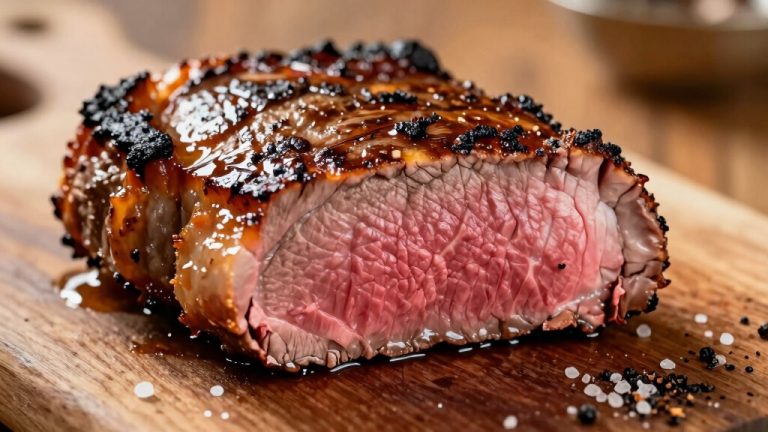
When you cut into hanger steak, you’ll notice its supple texture. Thanks to its diaphragm origin, it’s more tender and closer to the buttery softness of a ribeye.
Cutting into hanger steak reveals a tender, supple texture reminiscent of the buttery softness found in ribeye.
Its fine grain and slight give under your teeth make it ideal for savoring rare or medium-rare.
In contrast, skirt steak has a pronounced, ropier grain that demands your attention.
Its fibrous, chewy nature requires slicing thinly against the grain to ease toughness. You’ll experience a heartier bite, with resilience that pairs well with bold preparations.
Understanding these textural differences guides how you cook and slice each, maximizing your dining pleasure. These differences in texture are similar to the contrast seen between beef plate ribs and short ribs, which vary greatly in tenderness and connective tissue content.
Flavor Profiles of Skirt and Hanger Steaks
Flavor stands as the defining hallmark that sets skirt and hanger steaks apart, inviting you to explore their distinct beef-forward profiles.
When you bite into hanger steak, you’ll notice a deeper, mineral-rich essence paired with a buttery finish. This makes it the beefiest, most flavorful cut on the cow.
Skirt steak, in contrast, delivers intense, primal richness with a robust character that thrives when combined with bold spices or marinades.
The skirt’s flavor is raw and unapologetically vibrant, while the hanger steak’s complexity offers a smoother, almost velvety experience.
Whether you crave a pronounced, wild intensity or a nuanced depth layered with subtle sweetness, understanding these profiles lets you appreciate each steak’s unique taste journey.
For optimal flavor and texture, applying a dry rub with kosher salt and spices before cooking can enhance the natural beefiness of both cuts.
Choosing Between Skirt and Hanger Steaks
Sure! Here’s a more conversational version:
When you’re trying to decide between skirt and hanger steaks, it’s interesting to note how different they are. Hanger steak has this tender, buttery texture that just melts in your mouth, while skirt steak has a more chewy, fibrous bite.
And let’s talk about flavor! Hanger steak really delivers a rich, nuanced taste that you can enjoy all on its own. On the other hand, skirt steak shines when you pair it with bold marinades and spices.
In comparison, cuts like the beef shoulder steak offer a tenderloin-like texture with minimal connective tissue, making them ideal for quick, high-heat cooking methods.
Texture And Tenderness
Although both skirt and hanger steaks deliver robust beef flavors, their textures and tenderness vary markedly, influencing how you should prepare and enjoy them.
The hanger steak, sourced from the diaphragm, boasts a supple, tender texture akin to ribeye, thanks to its non-weight-bearing muscle position.
It’s best served rare to medium-rare to preserve this tenderness.
In contrast, skirt steak, cut from the plate, has a chewier, fibrous texture with a tougher, ropy grain that demands thin slicing against the grain to soften its bite.
This pronounced grain gives skirt steak a sinewy chew that’s satisfying when properly handled.
Understanding these tactile differences guides your cooking: hanger steak offers plush tenderness, while skirt steak requires precision slicing to reveal its best texture.
Both cuts benefit from cooking methods that respect their textural characteristics, such as slow-cooking techniques to enhance tenderness and flavor.
Flavor And Versatility
Beyond texture, the taste profiles of hanger and skirt steaks reveal distinct identities that shape how you might choose and prepare them.
Hanger steak delivers a deep, mineral-rich flavor with a buttery finish. It’s ideal when cooked simply to let its beefiness shine.
Skirt steak, with its primal, intense richness, thrives marinated. It pairs beautifully with bold spices, perfect for vibrant, international dishes.
Both cuts benefit from proper cooking techniques that enhance flavor and tenderness, much like how slow cooking benefits tenderize meat and develop complex flavors.
| Aspect | Hanger Steak | Skirt Steak |
|---|---|---|
| Flavor | Beefiest, mineral-rich, buttery | Intense, primal, spice-friendly |
| Versatility | Suits simple seasoning or marinade | Excels with marinades, bold rubs |
| Cooking | Quick grill, rare to medium-rare | Fast cook, slice thin on bias |
Choose based on flavor depth or your dish’s boldness.
Best Cooking Methods for Skirt and Hanger Steaks
Mastering the best cooking methods for skirt and hanger steaks means focusing on high heat and quick timing to preserve their bold flavors and unique textures.
Perfecting skirt and hanger steaks requires high heat and swift cooking to highlight their rich flavors and textures.
You’ll want to grill or broil both cuts, searing the hanger steak for 3-5 minutes per side until it reaches a medium-rare 125ºF.
Since skirt steak is thinner and fibrous, it cooks even faster—just a couple of minutes per side.
Marinating enhances skirt steak’s primal richness, while hanger steak shines with or without it.
After cooking, let the steaks rest for five minutes; this locks in juices and softens fibers.
When slicing, always cut skirt steak thinly against the grain to counter its toughness.
Hanger steak’s supple texture allows for slightly thicker cuts, maximizing its buttery finish.
For optimal results, remember that resting steaks after cooking is essential to redistribute juices and enhance tenderness.
Frequently Asked Questions
Can Skirt or Hanger Steak Be Used in Slow-Cooked Recipes?
You can use skirt or hanger steak in slow-cooked recipes, but it’s not ideal.
Both are best cooked quickly over high heat to preserve tenderness and flavor. Slow cooking can break down their fibers but risks drying hanger steak’s delicate texture and making skirt steak overly tough.
If you choose slow cooking, marinate well and cook with moisture. Expect a different experience than searing or grilling these bold, flavorful cuts.
How Should Leftover Skirt or Hanger Steak Be Stored?
You should let your leftover steak cool to room temperature.
Then wrap it tightly in plastic wrap or foil to lock in moisture and flavor.
Store it in an airtight container in the fridge, where it’ll stay fresh for 3 to 4 days.
If you want to keep it longer, freeze it in a vacuum-sealed bag or freezer-safe container.
When reheating, do it gently to preserve tenderness and avoid drying it out.
Are Skirt and Hanger Steaks Suitable for Sous Vide Cooking?
You don’t need a Victorian oven timer to know skirt and hanger steaks work well with sous vide.
You’ll get precise temperature control, preserving hanger’s buttery tenderness and enhancing skirt’s robust flavor.
Cook hanger steak at 129°F for 1–2 hours to keep it supple.
Skirt steak benefits from 131°F for 1–1.5 hours to soften its fibrous texture.
Finish both with a quick sear for irresistible crust and juiciness.
What Side Dishes Pair Best With Skirt Versus Hanger Steak?
You’ll want bold, vibrant sides with skirt steak. Think charred peppers, chimichurri, or spicy black beans to match its primal richness.
For hanger steak, choose earthy, buttery accompaniments like roasted mushrooms, garlic mashed potatoes, or caramelized onions. These complement its deep, mineral flavor.
Both benefit from fresh, acidic elements like a crisp arugula salad or a squeeze of lemon. This cuts through the meat’s intensity and balances your plate beautifully.
How Do Marinade Ingredients Differ for Skirt and Hanger Steaks?
You’ll want to tailor your marinades since skirt steak’s fibrous texture thrives with acidic, enzyme-rich ingredients like lime juice, pineapple, or vinegar to tenderize.
Hanger steak, being naturally tender and buttery, benefits from subtler marinades. Think garlic, herbs, and olive oil that enhance rather than mask its mineral-rich flavor.
Both respond well to bold spices, but skirt demands more aggression to soften. Hanger lets you highlight its beefy depth delicately.
The Final Sear: Skirt vs Hanger Steak Explained
Choosing between skirt and hanger steak is like picking a favorite character in a classic tale. Each brings its own unique strength to the story.
Skirt steak offers bold, intense flavor and a fibrous texture perfect for quick, high-heat cooking. Hanger steak delivers a tender, buttery bite with a rich, beefy essence.
Understanding their origins and qualities lets you master the culinary narrative. This ensures every meal is a memorable chapter in your cooking journey.