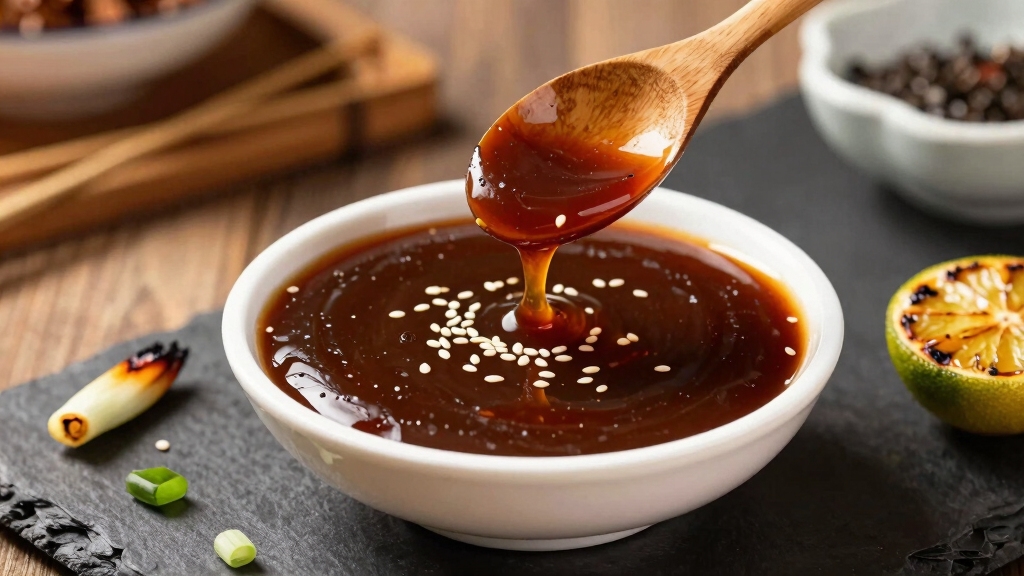
Recipe for Asian BBQ Sauce: Sticky, Sweet & Umami Rich
You can whip up a vibrant Asian BBQ sauce by blending soy sauce, hoisin, and rice vinegar for a tangy-salty base.
Add brown sugar or maple syrup to balance with rich sweetness, then boost aroma and depth with toasted sesame oil, fresh ginger, and garlic.
Spice it gently with red pepper flakes or boldly with gochujang for that signature kick.
Finish by simmering to thicken and deepen flavors. Keep exploring, and you’ll discover tips for customizing heat, sweetness, and texture perfectly.
Key Takeaways
- Use low-sodium soy sauce, hoisin, rice vinegar, sesame oil, fresh ginger, and garlic as a flavorful Asian BBQ sauce base.
- Choose sweeteners like light brown sugar, maple syrup, or honey to balance saltiness and add depth with controlled sweetness.
- Adjust heat with red pepper flakes, chili garlic sauce, sriracha, or gochujang for mild to bold spicy Korean-style notes.
- Simmer sauce gently with a cornstarch slurry to thicken, then finish with toasted sesame oil and seasoning adjustments.
- For gluten-free options, substitute tamari or coconut aminos for soy sauce and arrowroot for cornstarch in the thickening step.
Recipe for Asian BBQ Sauce Table
| Ingredient | Measurement | Purpose / Flavor Role |
|---|---|---|
| Low-Sodium Soy Sauce | ½ cup | Savory, salty umami base |
| Hoisin Sauce | ⅓ cup | Sweetness and thick texture |
| Rice Vinegar | 2 tablespoons | Bright acidity to balance sweetness |
| Brown Sugar or Maple Syrup | ⅓ cup | Rich caramel-like sweetness |
| Gochujang (or Chili Garlic Sauce) | 1–2 tablespoons | Heat and fermented depth |
| Toasted Sesame Oil | 1 tablespoon | Nutty aroma and richness |
| Fresh Garlic (minced) | 2 cloves | Bold aromatic foundation |
| Fresh Ginger (minced) | 1 tablespoon | Warm, zesty spice |
| Red Pepper Flakes (optional) | ¼ teaspoon | Adjustable mild heat |
| Cornstarch Slurry (1 tbsp cornstarch + 1 tbsp water) | As needed | Thickening for glossy finish |
What Ingredients Do You Need for Asian BBQ Sauce?

When you’re ready to whip up a flavorful Asian BBQ sauce, you’ll need a blend of savory, sweet, tangy, and spicy ingredients that work in harmony.
Craft a perfect Asian BBQ sauce by balancing savory, sweet, tangy, and spicy flavors in every bite
Start with soy sauce as your base; choose low-sodium for better control over saltiness.
Add hoisin sauce to bring sweetness and thickness, while rice vinegar introduces a bright tang to balance it out.
Don’t forget sesame oil; just a tablespoon or two lends a rich, nutty essence.
Fresh ginger and garlic, minced finely, build a fragrant foundation that awakens your sauce.
For heat, consider red pepper flakes or a spoonful of chili garlic sauce.
You can elevate your sauce further with optional touches like scallions or a splash of liquid smoke.
These staples set the stage for a truly authentic and mouthwatering Asian BBQ sauce.
To deepen complexity, consider incorporating umami-rich ingredients like anchovies and soy protein, which add savory depth similar to traditional American BBQ sauces.
Balance Your Sauce With the Right Sweeteners
A handful of sweeteners can transform your Asian BBQ sauce from good to unforgettable by perfectly balancing the savory and tangy elements.
Choosing the right sweetener depends on your flavor goals, whether you want deep molasses notes, light floral sweetness, or subtle fermented hints.
Here’s a quick guide to help you pick:
| Sweetener | Flavor Profile | Typical Use Amount |
|---|---|---|
| Light Brown Sugar | Rich, caramel-like | ⅓ to 1 cup |
| Honey | Floral, mild sweetness | Around 2 tablespoons |
| Brown Rice Syrup | Mild, less sweet | ¼ cup |
| Mirin | Sweet, slightly | ¼ cup |
| Maple Syrup | Earthy, complex sweetness | ⅓ to 1 cup |
Use these in balance with soy sauce and vinegar to create a harmonious, luscious sauce. Proper storage in airtight containers and refrigeration helps maintain the sauce’s freshness and flavor.
How to Add Heat: Choosing Spices for Asian BBQ Sauce?
Although adding heat to your Asian BBQ sauce might seem straightforward, choosing the right spices can transform a simple kick into a complex, flavorful experience.
Start with red pepper flakes for a mild warmth that builds gradually. If you want a bolder punch, chili garlic sauce or sriracha adds a vibrant, tangy heat that complements the sauce’s sweetness.
For authentic depth, go for gochujang, a fermented chili paste that delivers smoky, spicy layers. Sweet chili sauce balances spice with a hint of sugar, perfect if you prefer milder heat.
Don’t forget a pinch of black pepper to enhance savoriness without overpowering the chili’s fire. By mixing these spices thoughtfully, you craft a heat profile that enhances, rather than masks, your Asian BBQ sauce’s rich flavors.
Balancing heat with sweetness and acidity is crucial, as it mirrors the principles of flavor complexity used in brining smoked fish.
Make a Classic Korean-Style Asian BBQ Sauce
Now that you’ve explored how to layer heat into your sauce, it’s time to build the foundation of a classic Korean-style Asian BBQ sauce.
Start by gathering these essential ingredients:
- Soy sauce – Use low-sodium for a balanced salty base.
- Gochujang – Adds fermented spice and deep color.
- Rice vinegar – Brings a bright tang to cut through richness.
- Maple syrup or brown sugar – Provides natural sweetness and caramel notes.
Combine these with freshly minced garlic and ginger, plus a splash of toasted sesame oil for nuttiness.
Simmer gently to meld flavors, allowing the sauce to thicken slightly as the sugars dissolve and the heat from the gochujang deepens.
This blend creates the perfect balance of savory, sweet, and spicy that defines authentic Korean BBQ sauces.
For an added depth of flavor, consider incorporating a dry brine mixture to enhance moisture retention and flavor infusion before cooking.
How to Thicken and Finish Your Asian BBQ Sauce?
Once your sauce has simmered and the flavors melded beautifully, it’s time to focus on thickening and finishing touches that elevate your Asian BBQ sauce to perfection.
To thicken, whisk in a cornstarch slurry: mix 1 tablespoon cornstarch with 1 tablespoon cold water.
Whisk together cornstarch and cold water, then stir into your sauce to achieve the perfect thickness.
Slowly add it into the simmering sauce while stirring constantly until it reaches a luscious, spoon-coating consistency.
Avoid over-thickening; the sauce should cling but remain pourable.
Next, finish by adding a splash of toasted sesame oil for a rich, nutty aroma.
Taste and adjust seasoning—maybe a pinch more sugar or a dash of vinegar to balance sweetness and tang.
Let the sauce cool slightly before using or storing.
These final steps guarantee your sauce bursts with depth and coats your grilled dishes beautifully.
For optimal flavor layering, consider applying the sauce during cooking with a mop sauce technique to build complexity and keep your meat moist.
Customize Your Asian BBQ Sauce With Variations and Substitutions
If you’re looking to make your Asian BBQ sauce gluten-free, it’s super easy! Just swap out the soy sauce for tamari or coconut aminos, and you won’t lose any of that delicious savory depth you love.
Now, let’s talk sweetness. You can experiment with different sweeteners like honey, maple syrup, or even brown rice syrup to find that perfect balance that tickles your taste buds just right.
And hey, if you like it spicy, adjusting the heat level is a breeze. Just play around with the amount of chili garlic sauce or gochujang until it’s just how you like it. Happy cooking!
For best flavor results, remember that measuring spices accurately ensures a balanced and consistent taste every time.
Gluten-Free Sauce Options
When crafting a gluten-free Asian BBQ sauce, you can easily swap traditional soy sauce with tamari or coconut aminos without sacrificing flavor.
These alternatives provide that essential umami depth while keeping your sauce safe for gluten sensitivities.
To perfect your gluten-free sauce, consider these tips:
- Use tamari for a closer soy sauce taste, ensuring it’s labeled gluten-free.
- Coconut aminos offer a slightly sweeter, milder profile, great for lighter sauces.
- Replace hoisin sauce with a homemade blend of gluten-free miso, honey, and spices.
- Substitute cornstarch with arrowroot or potato starch to thicken your sauce without gluten.
With these swaps, you’ll enjoy a rich, balanced Asian BBQ sauce perfect for everyone at your table.
Additionally, when preparing brines or pickling solutions for vegetables, it is important to use pickling salt to ensure clear brines and proper preservation without unwanted additives.
Sweetener Alternatives Guide
Often overlooked but essential, the choice of sweetener can dramatically transform your Asian BBQ sauce’s flavor profile and texture. You can customize sweetness levels and nuances by swapping traditional sugars with natural or alternative options.
Whether you prefer a rich molasses depth or a light floral hint, the right sweetener balances saltiness and acidity perfectly. Using sweeteners that complement the smoky flavor from woods like oak wood can enhance the overall depth and complexity of your BBQ sauce.
| Sweetener | Flavor Profile | Usage Tip |
|---|---|---|
| Light Brown Sugar | Deep, caramel notes | Dissolves well, adds richness |
| Honey | Floral, subtle sweetness | Use sparingly to avoid overpowering |
| Maple Syrup | Earthy, smooth | Adds complexity and moisture |
| Brown Rice Syrup | Mild, less sweet | Great for authentic Korean blends |
Experiment to find your perfect balance and elevate your sauce effortlessly!
Spice Level Adjustments
Although Asian BBQ sauces are known for their bold flavors, adjusting the spice level lets you tailor the heat to your taste. You can easily customize your sauce by varying key spicy ingredients.
Here’s how to dial it up or down:
- Start mild with ¼ teaspoon of red pepper flakes for a gentle kick without overwhelming heat.
- Add 1 tablespoon of chili garlic sauce or sriracha for moderate, tangy spiciness.
- For bold, fermented heat, mix in ½ cup of gochujang, which also adds depth and umami.
- Balance intense heat with sweet chili sauce, adjusting between 1-2 tablespoons to suit your preference.
For a precise heat adjustment, consider the Scoville heat units of your chili ingredients to predict and tailor the spice intensity accurately.
Frequently Asked Questions
How Long Can You Store Homemade Asian BBQ Sauce Safely?
You can safely store homemade Asian BBQ sauce in an airtight container in the refrigerator for up to two weeks.
Make sure it’s completely cooled before sealing it to maintain freshness and prevent bacterial growth.
If you want to keep it longer, freezing it in small portions works great; just thaw in the fridge before use.
Always check for off smells or mold before using, and trust your senses to keep things safe.
Can Asian BBQ Sauce Be Used as a Marinade or Only a Dipping Sauce?
You can definitely use Asian BBQ sauce as both a marinade and a dipping sauce.
Its blend of soy, ginger, garlic, and sweeteners tenderizes and flavors your meat beautifully when you marinate. Just let your protein soak for at least 30 minutes, or longer for deeper taste.
Plus, it doubles as a delicious dipping sauce to enhance grilled or cooked dishes, adding that perfect balance of savory, sweet, and spicy notes.
What Dishes Pair Best With Asian BBQ Sauce Besides Grilled Meats?
You’ll find Asian BBQ sauce pairs wonderfully beyond grilled meats.
Drizzle it over stir-fried veggies for a savory boost or toss it with roasted tofu for a flavorful twist.
It’s perfect as a glaze on roasted sweet potatoes or mixed into noodle bowls for extra depth.
Don’t forget to use it as a dipping sauce for spring rolls or dumplings.
It adds that irresistible tangy, sweet, and spicy kick you’ll crave every time.
Is Asian BBQ Sauce Suitable for Vegetarians or Vegans?
Yes, Asian BBQ sauce can be suitable for vegetarians and vegans, but you’ll want to check the ingredients carefully.
Most versions rely on soy sauce, vinegar, and spices, which are plant-based. However, some recipes include honey or fish sauce, which aren’t vegan.
You can easily swap those with maple syrup or a vegan-friendly alternative. This way, you’ll enjoy that rich, tangy flavor without compromising your dietary choices.
How Do You Adjust Asian BBQ Sauce for Low-Sodium Diets?
You can easily adjust Asian BBQ sauce for low-sodium diets by swapping regular soy sauce with low-sodium or tamari versions.
Cut back on salty ingredients like hoisin sauce or use reduced-salt alternatives.
Boost flavor with fresh garlic, ginger, and a splash of rice vinegar to keep it vibrant.
Adding natural sweetness from fruit purees or a touch of honey helps balance salt reduction without sacrificing that rich, savory depth you love.
Your Sauce, Your Story: Make Every Bite Memorable
Just like a master painter balances colors on a canvas, you’ll find your perfect blend of sweet, spicy, and savory in this Asian BBQ sauce recipe.
Remember, even a small tweak like swapping honey for brown sugar can transform your sauce from good to unforgettable.
So, don’t be afraid to experiment. After all, the best sauces are like stories, rich with layers that keep your taste buds coming back for more.