Is Maple Wood Good for Smoking: Expert BBQ Tips Inside
You’ll find maple wood excellent for smoking thanks to its mild, sweet smoke that enhances flavors without overpowering them.
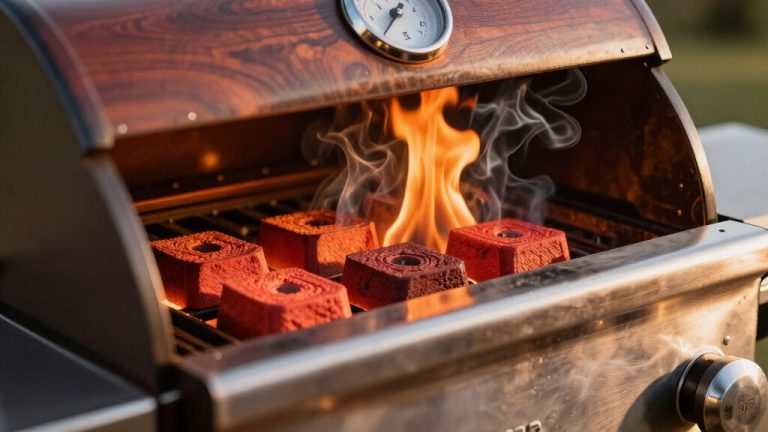
It burns hot and steady with clean blue smoke, minimizing bitterness and supporting precise temperature control.
Maple pairs well with meat, poultry, and fish, and works superbly when blended with stronger woods.
Proper seasoning and chunk size are key to unleashing its full potential. Keep exploring to master how maple wood elevates your smoking game.
Key Takeaways
- Maple wood produces mild, sweet smoke with subtle caramelized notes, enhancing rather than overpowering natural food flavors.
- It burns hot and steady with high BTU output, providing clean blue smoke and consistent heat for long smoking sessions.
- Maple is excellent for smoking meat, poultry, fish, cheeses, and vegetables, but should be blended for stronger meats like beef brisket.
- Properly seasoned sugar maple wood (moisture below 20%) ensures clean combustion, minimal bitterness, and long-lasting coals.
- Combining maple with stronger woods like hickory balances flavor intensity and prevents overpowering bitterness in smoked foods.
Why Maple Wood Is Ideal for Smoking Flavor and Heat?

Maple wood stands out as an ideal smoking choice because it delivers a mild, sweet smoke that enhances rather than overpowers your food’s natural flavors.
Maple wood offers a mild, sweet smoke that perfectly complements your food’s natural flavors.
You’ll appreciate its subtle caramelized sugar notes derived from lignin and cellulose, which contribute complexity without veering into dessert-like sweetness.
When properly seasoned, maple produces clean blue smoke and long-lasting coals, ensuring steady, reliable heat with minimal ash.
Its particularly high BTU output surpasses many hardwoods, so you get efficient, consistent burning ideal for long cooks.
You can count on quick ignition and even combustion, avoiding bitterness or overpowering intensity common with woods like mesquite or hickory.
Maple wood’s mild smoke profile makes it a versatile option that complements a variety of meats, similar to how oak wood provides balanced flavor without overwhelming the palate.
How Maple Smoke Boosts the Flavor of Different Meats?
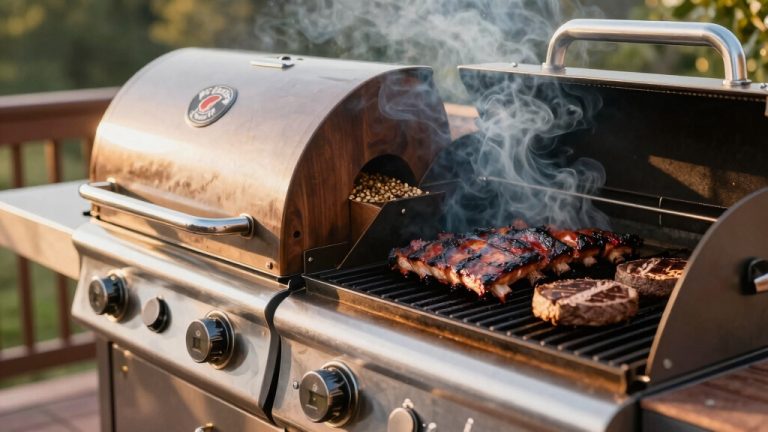
You know, maple smoke really does wonders for meat. Take meat, for instance. Its mild, sweet smoke balances out that natural earthiness, so it doesn’t overpower the flavor. This makes it perfect for ribs, meat just delicious!
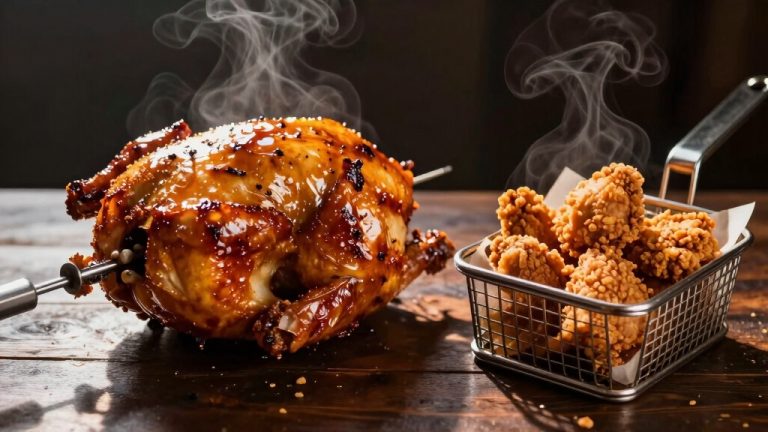
And let’s not forget about poultry. Maple smoke adds a lovely depth to chicken and turkey while still preserving their delicate textures. It’s like a warm hug for your taste buds!
When it comes to fish and other delicate foods, maple smoke shines there too. It gives a gentle warmth that complements the flavors instead of masking them. So, whether you’re grilling or smoking, maple is definitely a go-to! Maple wood also burns steadily at moderate heat, producing clean smoke that enhances flavors without bitterness, making it an excellent choice for a variety of meats and cooking styles with consistent cooking.
Enhancing Meat and Poultry
When smoking meat and poultry, incorporating wood with a mild, sweet profile markedly enhances the natural flavors without overpowering them.
Maple wood’s smoke delivers subtle caramelized sugar notes through complex organic compounds like lignin and cellulose, creating a gentle warmth that complements meat’s earthiness and poultry’s delicate texture.
You’ll notice how ribs, meat, chicken, and turkey develop an appealing savory-sweet balance, avoiding the harshness associated with heavier woods like hickory or mesquite.
Maple’s clean blue smoke ensures consistent heat and flavor stability over long cooks, preventing bitterness and over-smoking.
Its steady burn and high BTU output let you maintain precise temperature control, essential for tender, juicy results.
Using properly seasoned maple wood allows you to elevate meat and poultry with nuanced, refined smoky depth.
Combining maple with stronger woods like hickory can create a balanced flavor profile that enhances complexity without overwhelming the meat.
Pairing With Delicate Foods
Building on how maple wood enhances meat and poultry, its mild, sweet smoke also excels with more delicate proteins.
When you smoke salmon or trout with maple, the subtle caramelized sugar compounds gently infuse the flesh, elevating natural flavors without overpowering their delicate texture.
Maple smoke’s clean blue smoke delivers consistent heat and complex organic compounds that bind well to fish’s surface, intensifying umami nuances.
This precise flavor layering enhances rather than masks freshness.
You can also confidently smoke cheeses or light sausages, as maple’s low-intensity profile prevents bitterness or harshness.
By controlling moisture and burn temperature with properly seasoned sugar maple chunks, you guarantee a long-lasting, even smoke that balances the fragile nature of these foods.
This makes maple wood a technically sound choice for delicate meat smoking. Unlike mesquite, which burns hotter and faster due to its high lignin content, maple provides gentler smoking conditions ideal for preserving delicate flavors.
Best Food Pairings for Maple Wood Smoke
Maple wood smoke is truly a gem when it comes to flavor pairings! It works wonders with meat cuts like ribs. The mild sweetness of the smoke enhances the meat’s natural earthiness without being too overwhelming.
But it doesn’t stop there! When you use maple wood smoke with poultry and delicate fish, you’re in for a treat. The subtle caramelized notes really elevate the complexity of the flavors, making each bite a delightful experience.
And let’s not forget about the versatility of maple! It’s great with vegetables, cheeses, and sausages, too. This makes it a fantastic choice for anyone looking to achieve a balanced and nuanced smoke in their dishes. So whether you’re grilling or smoking, maple wood has got your back!
For consistent and clean smoke, it’s best to use well-prepared fuel such as soaked chunks or pellets to avoid off-flavors and maintain the purity of the maple smoke.
Ideal Meats for Smoking
Although maple wood imparts a mild and sweet smoke, it excels in enhancing the natural flavors of certain meats without overpowering them.
You’ll find meat, especially ribs, meat, pairs exceptionally well because maple’s subtle caramelized sugar compounds accentuate meat’s earthy richness.
Poultry such as chicken and turkey also benefit, as the wood’s gentle warmth preserves their delicate profiles while adding complexity.
For fish like salmon and trout, maple’s clean blue smoke infuses nuanced sweetness without masking freshness.
When smoking these meats, you’ll appreciate maple’s consistent heat output and clean combustion, which support long, steady cooks.
Avoid using maple alone for beef brisket or stronger-flavored meats; instead, opt for blends to balance intensity.
Maple wood’s ability to produce clean, slow burn ensures a smooth smoke flavor that complements rather than overwhelms the meat.
Versatile Food Pairings
Beyond meats, maple wood smoke brings a refined sweetness and complexity that enhances a wide range of foods.
You’ll find it elevates delicate proteins like salmon and trout by imparting subtle caramelized sugar notes without overpowering their natural flavors.
Maple’s mild smoke profile also complements poultry, such as chicken and turkey, enhancing moisture retention and taste.
Vegetables benefit from its gentle warmth, adding depth without bitterness.
Cheeses and sausages pair well, as maple smoke balances their richness with a nuanced sweetness.
When blending woods, maple softens stronger flavors like hickory, offering a balanced smoke that suits brisket and other robust cuts.
Its versatility guarantees you can experiment confidently, achieving consistent, clean smoke that complements rather than competes with your rubs and sauces.
Maple wood is especially favored in smoking salmon due to its ability to provide a subtle smoke flavor that harmonizes with the fish’s natural richness.
How Maple Burns Compared to Other Smoking Woods?
When comparing maple to other smoking woods, its burning characteristics stand out for delivering a hotter and steadier heat with conspicuously higher BTU output.
Maple offers hotter, steadier heat and significantly higher BTU output compared to other smoking woods.
You’ll find maple produces markedly more BTUs than common woods like oak, making it an efficient choice for longer smokes requiring stable temperatures.
Its combustion is clean and even, generating minimal ash and consistent heat, which prevents temperature spikes or drops.
Unlike softer woods, maple lights quickly and burns predictably, aiding in precise heat control.
Properly seasoned maple yields clean blue smoke, avoiding bitterness common with some hardwoods.
This reliability during extended cooks guarantees the smoke flavor remains pleasant without degradation.
Using food-grade hardwood pellets made from maple can enhance smoke flavor while providing cleaner combustion and easier temperature management.
Blending Maple Wood With Other Smoking Woods for Balanced Flavor
Maple’s strong heat output and clean smoke create an ideal foundation for blending with other smoking woods to craft complex flavor profiles.
When you combine maple with hardwoods like hickory or oak, it tempers their intensity by adding subtle sweetness and caramelized notes, preventing overpowering bitterness.
Maple-cherry blends enhance both flavor and visual appeal, balancing sweet and fruity undertones with maple’s mild warmth.
In competition-style mixes, including hickory, cherry, and maple, you achieve a layered profile: maple’s gentle sweetness, hickory’s robust backbone, and cherry’s bright fruitiness.
To maintain balance, monitor the ratios carefully. Too much strong wood can mask maple’s nuances, while too little may lack depth.
This blending strategy allows you to tailor smoke intensity and complexity, optimizing results for diverse meats and cooking durations.
For best results, maintain a steady smoker temperature around 225°F to ensure gentle, even cooking and optimal smoke absorption.
How to Choose and Season Maple Wood for Smoking?
Selecting high-quality maple wood is essential for achieving ideal smoking results. Improperly seasoned or low-grade wood can produce off-flavors and inconsistent heat.
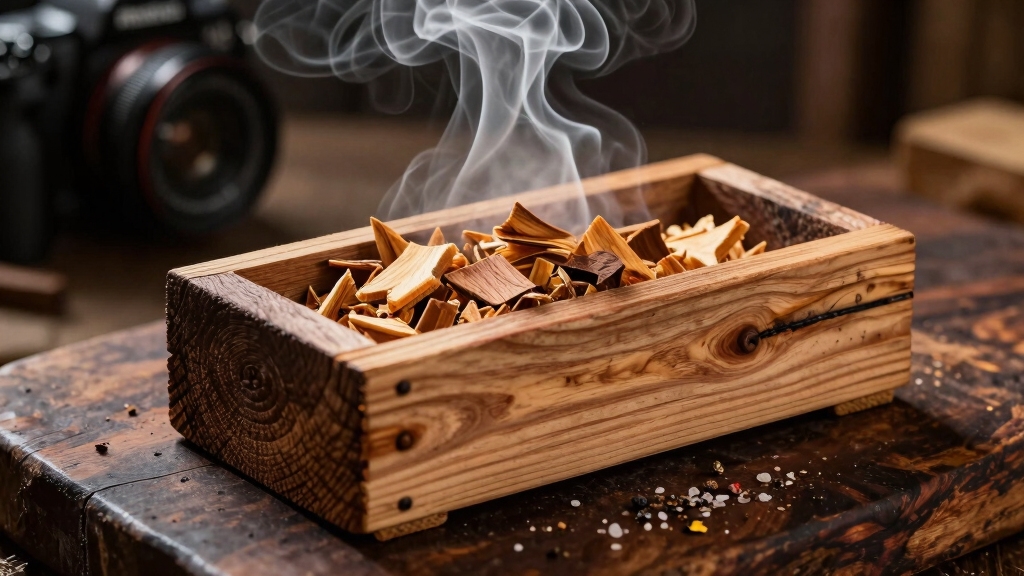
You should choose hardwood maple, preferably sugar maple, with moisture content below 20% to guarantee clean combustion and steady heat output. Larger chunks provide longer burn times and more stable smoke.
To season maple wood, store it in a dry, ventilated area for 6–12 months. This allows moisture to evaporate fully, preventing bitter smoke and excessive ash.
| Factor | Ideal Range/Condition | Impact on Smoking |
|---|---|---|
| Wood Type | Sugar maple | Best flavor & heat consistency |
| Moisture Content | < 20% | Clean, blue smoke; steady heat |
| Chunk Size | Large (3–6 inches) | Longer burn, sustained flavor |
| Seasoning Time | 6–12 months | Reduces bitterness & creosote |
| Storage | Dry, ventilated area | Prevents mold, maintains quality |
For cold smoking with maple wood, it is important to maintain the ideal temperature range of 50°F to 60°F to ensure proper smoke infusion without cooking the food or encouraging bacterial growth.
Why Beginners Love Smoking With Maple Wood?
Beginners often find maple wood exceptionally forgiving because it’s nearly impossible to oversmoke food with it. This allows you to maintain control without risking bitterness or overpowering flavors.
Its clean blue smoke and steady heat output create an ideal learning environment for mastering temperature and timing. You’ll appreciate maple’s mild, sweet smoke that complements rather than overwhelms, making it easier to assess your smoking technique.
Key reasons beginners love maple wood include:
- Burns hot and consistently, simplifying temperature management.
- Produces minimal ash, reducing maintenance and interruptions.
- Offers subtle caramelized notes, enhancing food without masking natural flavors.
- Compatible with various smoking methods and foods, allowing experimentation.
Maple wood’s forgiving nature helps you build confidence and achieve balanced, flavorful results early on.
Avoid These Maple Wood Smoking Mistakes
Although maple wood smoking is generally forgiving, overlooking key factors can lead to disappointing results.
First, avoid using improperly seasoned maple wood. Excessive moisture causes uneven combustion, producing bitter smoke and inconsistent heat.
Second, don’t use soft or resinous maple varieties. Stick to hardwoods like sugar maple for peak flavor and clean burn.
Third, avoid small wood chunks that burn too quickly. This sacrifices long, steady heat and flavor infusion.
Fourth, resist overloading your smoker, which can choke airflow. This causes incomplete combustion and off-flavors.
Finally, don’t neglect balancing maple’s sweet smoke with complementary rubs and sauces. Failing to do so results in a flat taste profile.
Frequently Asked Questions
Can Maple Wood Be Used for Smoking Vegetables Exclusively?
Yes, you can use maple wood exclusively for smoking vegetables. Its mild, sweet smoke gently enhances vegetable flavors without overpowering them.
Maple produces clean blue smoke and steady heat, ensuring consistent cooking and subtle caramelized notes that complement rather than mask natural tastes.
You’ll find it especially effective for delicate vegetables, maintaining a balanced flavor profile throughout long smokes. This makes it an excellent choice for achieving nuanced, savory results.
Is Maple Wood Safe for Cold Smoking Cheese?
Sure, you can absolutely moonlight as a cheese sommelier and cold smoke your dairy with maple wood. Who wouldn’t want their Brie with a hint of sweet, caramelized sophistication?
Maple’s clean, blue smoke burns steadily at low temps without overpowering, making it safe and ideal for cold smoking cheese. Its mild sweetness enhances flavors subtly, while its hardwood nature guarantees no toxic resins contaminate your delicate cheese during the slow smoking process.
How Does Maple Wood Affect the Color of Smoked Meat?
Maple wood imparts a subtle amber hue to smoked meat, enhancing its natural color without overwhelming it.
The mild, sweet smoke deposits fine tannins and caramelized sugar compounds, promoting a gentle browning effect on the meat’s surface.
You’ll notice a consistent, warm tone rather than a dark or heavy crust.
This effect is especially pronounced during long, low-temperature smokes where the clean blue smoke and steady heat encourage even coloration.
Can All Maple Tree Varieties Be Used for Smoking?
Not all maple tree varieties are equally suited for smoking. You should prioritize Sugar Maple, as it provides optimal flavor and heat characteristics.
Other maples might lack the ideal lignin and cellulose content, affecting smoke quality and taste. Always make certain the wood is properly seasoned and kiln-dried to avoid bitterness and inconsistent combustion.
Selecting large, clean chunks from Sugar Maple guarantees reliable heat, clean blue smoke, and a sweet, mild profile perfect for smoking.
Does Maple Wood Smoke Cause Allergic Reactions?
Maple wood smoke rarely causes allergic reactions in most people, but it’s not impossible. You should be cautious if you have known sensitivities to wood smoke or airborne particulates.
Maple’s combustion releases organic compounds that might irritate respiratory systems. Proper ventilation and using well-seasoned wood reduce irritants.
If you experience symptoms like coughing, wheezing, or skin irritation, limit exposure and consult a healthcare professional to rule out hypersensitivity or allergy.
Sweet Smoke, Serious Results: The Maple Wood Advantage
If you want to transform your smoking game overnight, maple wood is your secret weapon. Its perfect balance of sweet, mild smoke and steady heat isn’t just good—it’s revolutionary.
Maple elevates flavors with unmatched precision, whether you’re smoking brisket or veggies. Don’t underestimate its versatility or ease of use; it practically guarantees success for beginners and pros alike.
Master maple wood, and you’re not just smoking food; you’re creating culinary masterpieces every time.