How to Wrap Ribs in Foil: Tips for Smoker and Grill Masters
To wrap ribs in foil, start with heavy-duty foil wide enough to double wrap and prevent leaks.
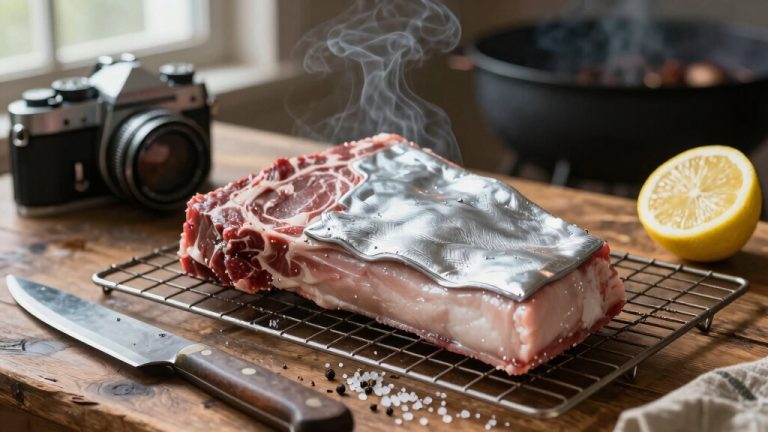
Place your seasoned ribs meat-side down on the foil, then add pats of butter and a splash of apple juice or your favorite liquid to keep them moist.
Fold the foil tightly around the ribs, molding it snugly to avoid air pockets, and seal all edges securely.
Double wrap for extra protection. After cooking, keep them wrapped to lock in steam and tenderness.
Follow these steps carefully, and you’ll uncover more tips for perfect ribs.
Key Takeaways
- Use heavy-duty aluminum foil wide enough for a double wrap to prevent leaks and punctures.
- Place ribs meat-side down on foil and add liquids like apple juice or butter pats for moisture.
- Fold foil ends tightly around ribs, shaping the wrap to avoid air pockets and seal in steam.
- Double wrap ribs to strengthen the packet and maintain a sealed braising environment during cooking.
- Keep ribs wrapped after cooking and rest for at least ten minutes to redistribute juices and enhance tenderness.
Gather Essential Materials

Before you begin wrapping ribs in foil, gather all the essential materials to assure a smooth process.
Start with heavy-duty aluminum foil, at least 18 inches wide, ensuring the length is two to two-and-a-half times the rack size to prevent leaks.
If you prefer airflow, consider pink butcher paper as an alternative.
Prepare three to six pats of butter per rack to add fat and flavor.
Have apple juice, honey, brown sugar, or a BBQ butter bath ready to maintain moisture during cooking.
Assemble everything within reach so you won’t interrupt the wrapping process.
This preparation guarantees you can wrap the ribs tightly, avoiding air pockets and leaks, which is vital for even cooking and maintaining juiciness throughout the smoking or grilling session.
Wrapping in foil traps moisture and heat, creating a sealed, braising environment that speeds cooking and maximizes juiciness.
Prepare Your Ribs for Wrapping
With all your materials ready, focus on preparing the ribs to maximize flavor and tenderness.
Gather your ingredients and prepare ribs carefully to enhance flavor and achieve perfect tenderness.
Start by removing the membrane from the back of each rack using a dull knife. This allows better seasoning penetration and tenderness.
Next, evenly apply your dry rub. Combine kosher salt, paprika, garlic, thyme, and black pepper, covering all surfaces thoroughly.
If you have large racks, consider cutting them crosswise for uniform cooking.
Let the seasoned ribs rest at room temperature for 15 to 30 minutes to absorb the rub and stabilize before wrapping. This step is vital to guarantee the flavors develop deeply and the meat remains juicy during cooking.
Proper preparation sets the stage for effective foil wrapping and excellent results.
To enhance bark formation, ensure the ribs are patted dry before applying the rub to create a tacky pellicle that helps seasoning and smoke adhere.
How to Wrap Ribs Tightly in Foil (With Juices and Flavor)?
When you’re ready to wrap the ribs, lay a heavy-duty foil sheet flat, ensuring it’s wide enough for a double wrap to prevent leaks.
Place the ribs meat-side down, then add flavorful liquids like apple juice or a splash of apple cider vinegar.
Scatter butter pats or a spoonful of BBQ sauce evenly to enhance moisture and taste.
Fold the foil ends tightly, molding the wrap to the rack’s shape to avoid air pockets.
Finally, double wrap to shield against punctures.
To maintain food safety, ensure ribs have been thawed properly using a recommended safe thawing method before wrapping.
| Ingredient | Purpose |
|---|---|
| Apple juice | Adds moisture |
| Butter pats | Adds fat, richness |
| BBQ sauce | Boosts flavor profile |
| Dry rub inside foil | Enhances seasoning |
This method locks in juices, ensuring tender, flavorful ribs.
Cook and Rest Your Foil-Wrapped Ribs
Although you’ve wrapped your ribs tightly to lock in moisture and flavor, you’ll need to cook them carefully to achieve that perfect tenderness.
Place your foil-wrapped ribs on a grill set to medium heat (350-450°F). Cook for about one hour, turning the packets halfway through to guarantee even heat distribution.
After cooking, remove the ribs from the grill but keep them wrapped to retain steam.
Remember to rest your ribs for at least ten minutes before unwrapping. This allows the juices to redistribute, keeping the meat moist and tender.
- Maintain grill temperature between 350-450°F
- Cook foil packets for approximately one hour
- Turn packets once for even cooking
- Rest wrapped ribs for 10 minutes post-cook
- Avoid opening foil during cooking to preserve steam
For best results, ensure the internal temperature reaches 165°F to maintain food safety standards.
Tips for Perfect Tender and Juicy Ribs
To achieve perfectly tender and juicy ribs, you need to control moisture and temperature throughout the cooking process.
Master moisture and temperature control to consistently create tender, juicy ribs every time.
Start by applying an even dry rub. Then wrap ribs tightly in heavy-duty foil with added liquids like apple juice or a butter pat to trap steam.
Maintain a consistent grill temperature between 350-450°F during the foil-wrapped phase, turning packets occasionally to ensure even cooking.
Avoid puncturing the foil to retain moisture and prevent drying out. After cooking, rest ribs in the foil for at least ten minutes to allow juices to redistribute.
This method softens the bark slightly while preserving juiciness, speeds tenderizing, and prevents drying. Following these steps methodically guarantees ribs that are fall-off-the-bone tender and flavorful every time.
For optimal tenderness, aim for an internal temperature between 185°F and 200°F to achieve the perfect collagen breakdown during cooking.
Frequently Asked Questions
Can I Wrap Ribs in Foil Without Adding Liquids Inside?
Yes, you can wrap ribs in foil without adding liquids, but be aware it may affect tenderness and moisture.
Without liquids like apple juice or butter, the ribs won’t steam inside the foil, potentially resulting in a drier texture.
To compensate, make certain your ribs are well-seasoned and monitor cooking time closely.
Wrapping still protects ribs from drying out, but adding moisture inside the foil helps achieve that fall-off-the-bone tenderness you want.
Is It Better to Use Aluminum Foil or Butcher Paper for Wrapping Ribs?
You’ll find aluminum foil is better for wrapping ribs if you want to trap moisture and speed tenderizing.
It creates a tight seal, locking in steam for fall-off-the-bone texture and prevents drying during long cooks.
Butcher paper allows more airflow, preserving bark crispness but slows cooking.
For competitions or faster, juicier ribs, go with heavy-duty foil double wrapped.
Use butcher paper if you prioritize bark texture over speed and moisture retention.
How Do I Prevent Foil From Tearing During Cooking?
Imagine ribs sizzling like a ticking time bomb. You don’t want foil tears exploding all over your grill.
To prevent this, always double-wrap with heavy-duty, 18-inch wide foil, cutting a length two to two-and-a-half times the rack size.
Tuck ends tightly, avoiding air pockets, and place ribs meat-side down on foil. This method guards against punctures from sharp bones, ensuring a tight, leak-proof seal that keeps moisture locked in and foil intact.
Can I Reuse Foil for Multiple Rib Racks?
You shouldn’t reuse foil for multiple rib racks because it often develops tears or weak spots from bone punctures and moisture.
Each rack needs a fresh, heavy-duty double wrap to prevent leaks and maintain steam, which is essential for tenderness.
Using new foil ensures a tight seal, traps moisture effectively, and avoids cross-contamination.
Investing in fresh foil every time guarantees consistent, juicy results and protects your ribs during long cooking sessions.
What Is the Best Way to Store Leftover Foil-Wrapped Ribs?
Oh sure, just toss those precious foil-wrapped ribs anywhere because who needs food safety?
But seriously, you should tightly seal your leftover ribs with fresh foil or place the entire packet in an airtight container.
Refrigerate within two hours of cooking to avoid bacteria. For longer storage, freeze them in a freezer-safe bag, squeezing out all air.
When reheating, unwrap carefully to preserve moisture and flavor. Remember, methodical storage keeps that rib magic alive!
The Final Wrap: Your Path to Fall-Off-the-Bone Ribs
Now that you’ve mastered wrapping ribs in foil, you hold the secret to locking in flavor and tenderness like a treasure chest seals its riches.
By gathering the right materials, preparing your ribs carefully, and wrapping them tightly with their juices, you set the stage for succulent results.
Remember to cook and rest them properly to let the magic happen. Follow these steps precisely, and you’ll serve ribs so juicy and tender, they’ll melt off the bone every time.