How to Smoke T Bone Steaks? Tips for Juicy Perfection
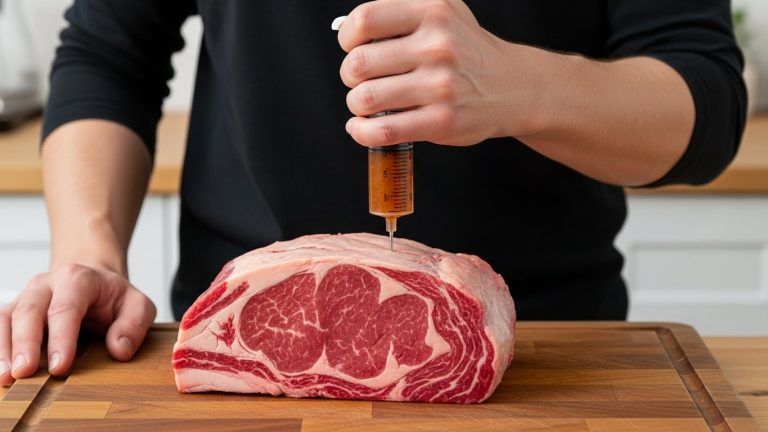
Choose a prime-grade T-bone about 1.25–1.5 inches thick, pat it dry, and season evenly with kosher salt and coarsely ground black pepper for dry brining.
Preheat your smoker to 225°F using hickory or apple wood for balanced smoke. Smoke the steak low and slow until it reaches 105–120°F internal temperature.
Finish with a high-heat reverse sear for a crusty exterior. Rest briefly to lock in juices before slicing. You’ll find detailed techniques to guarantee consistent, flavorful results.
Key Takeaways
- Select 1.25–1.5-inch thick, high-grade T-bone steaks with good marbling and trim excess fat for even smoking and flavor.
- Season steaks with coarse kosher salt and cracked black pepper, applying salt 40–60 minutes prior for dry brining and flavor penetration.
- Preheat smoker to 225°F using hickory or apple wood for balanced, savory smoke without overpowering the steak.
- Smoke steaks at 200–225°F until internal temperature reaches 115–120°F for a perfect reverse sear finish.
- Remove steaks from smoker, rest briefly, then sear on high heat to develop a caramelized crust and optimal tenderness.
Pick and Prep the Perfect T-Bone Steak

When selecting the perfect T-bone steak for smoking, prioritize high-grade beef, preferably Prime or top Choice, to assure peak marbling and tenderness.
Choose Prime or top Choice grade T-bone steaks for superior marbling and tenderness ideal for smoking.
Aim for a thickness between 1.25 and 1.5 inches to balance smoke penetration with even cooking.
Check for abundant, fine marbling, indicating juiciness and flavor retention.
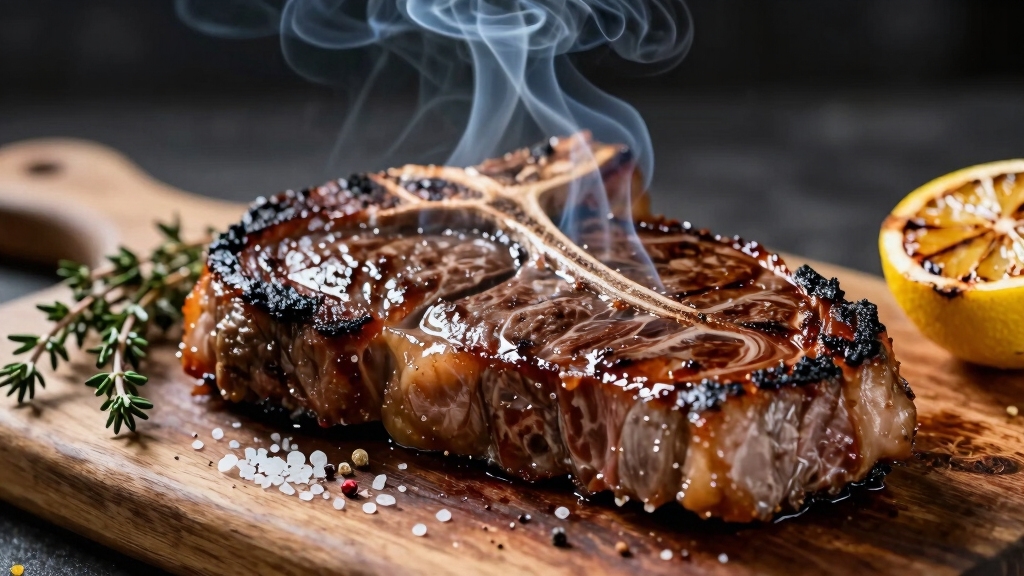
The T-bone’s characteristic T-shaped bone separates tenderloin and strip muscles, aiding moisture retention and structural integrity. This cut is carved from the short loin section near the spine, ensuring the presence of both the filet mignon and strip steak.
Inspect for bright cherry-red color and minimal purge in vacuum-sealed packaging to assure freshness.
Trim thick external fat while preserving internal marbling to maintain flavor and moisture during smoking. Leave a moderate fat rim for self-basting.
Season Your T-Bone Steak for Deep Smoke Flavor
When you’re getting ready to season your T-bone steak, start by sprinkling some kosher salt and coarsely ground black pepper all over it. This is key for ensuring that the seasoning really seeps in and gives you that nice crust when you cook it. Using kosher salt at about ½ teaspoon per pound helps draw out moisture and enhances flavor penetration.
Now, here’s a little tip: let your steak rest at room temperature after seasoning for about 20 to 45 minutes. This time allows the salt to work its magic, penetrating those muscle fibers and helping the rub to hydrate and stick. Because a T-bone contains a smaller portion of tenderloin compared to a porterhouse, it offers a slightly different texture and flavor profile.
If you want to take things up a notch, think about adding some garlic and a few subtle spices. Just make sure they balance nicely with the smoke you’ll be using. You want to enhance the flavor without drowning out the delicious, natural taste of the beef. Applying the rub firmly ensures better flavor absorption and a more pronounced crust. Happy grilling!
Salt And Pepper Basics
Seasoning your T-bone steak with coarse kosher salt and freshly ground black pepper is essential for developing deep smoke flavor and a well-formed crust. Coarse kosher salt draws moisture to the surface, dissolving crystals that help smoke adhere and enhancing bark development. Allowing the steak to air dry slightly before seasoning can help form a tacky pellicle that improves smoke and rub adhesion.
Freshly ground black pepper releases aromatic oils and forms a robust crust without burning or falling off. Apply salt from 8–10 inches above for even coverage, then press pepper gently into the surface. Cover all sides, including fat and bone, to guarantee balanced flavor across the strip and tenderloin.
Use a 1:1 volume ratio of kosher salt to medium-coarse black pepper for classic steakhouse seasoning. Pat steaks dry before seasoning to prevent steaming inside the smoker. It is best to apply seasonings right before cooking to ensure the rub adheres well and does not wash off with escaping moisture. Adjust pepper levels based on smoke intensity; heavier for strong woods, lighter for mild smoke.
Timing For Seasoning
Getting the timing right for seasoning your T-bone steak markedly impacts how deeply smoke flavor penetrates the meat. For thicker cuts (≥1.5 inches), apply kosher or coarse salt 40–60 minutes before smoking to initiate dry brining: salt dissolves, drawing moisture out, then reabsorbs, carrying seasoning inward. Allowing time for the meat to enter the stall temperature range before wrapping can help retain moisture during smoking.
Refrigerate for 1–24 hours if possible to maximize internal flavor and moisture retention. Remove steaks 20–60 minutes before seasoning to raise surface temperature, promoting even smoke absorption and better rub adhesion.
Season before the smoker reaches 225–250°F, ideally during the 15–30 minute preheat, ensuring rub incorporation before exposure. This timing optimizes smoke compound adherence during the 30–60 minute low-temp smoke, enhancing depth of flavor without compromising crust development or food safety. Using a Traeger smoker preheated to 225°F with Super Smoke if available will add optimal flavor during the initial smoke phase.
Enhancing With Aromatics
Although the timing of seasoning influences smoke penetration, the choice and combination of aromatics fundamentally shape the depth and complexity of your T-bone’s smoked flavor.
Use coarse kosher or sea salt to enhance protein solubility, improving browning and flavor concentration. Incorporate umami boosters like garlic powder, mushroom powder, or MSG to intensify savory notes without increasing smoke intensity.
Add fresh herb sprigs such as rosemary or thyme to vaporize essential oils that layer aromatic complexity during smoking. Because the T-bone is a composite steak, balancing flavors to complement both the strip steak and tenderloin portions is key.
Choose low- or no-sugar rubs to prevent bitter crust formation over long smokes. Using oak wood can provide a medium smoky taste that complements the aromatic profile without overpowering the natural beef flavors.
Use robust spices like cracked black pepper and smoked paprika, compatible with hickory or mesquite smoke. Apply fresh garlic paste before searing to caramelize and reinforce smoky crust flavor.
This aromatic synergy elevates your smoked T-bone’s profile with nuanced, savory depth.
Get Your Smoker Ready With the Best Wood
When it comes to smoking your T-bone, the type of wood you choose can really make a difference. For a rich, savory flavor, hickory is a fantastic option.
On the other hand, if you’re in the mood for something a bit milder, apple wood will add a nice touch of sweetness that complements the steak beautifully. Hickory’s moderate burn rate and steady smoke release help develop deeper flavor complexity over longer cooking times.
Before you get started, make sure to preheat your smoker to around 225°F. This temperature is ideal for getting that wood chip combustion just right, which means you’ll enjoy a steady flow of smoke throughout the cooking process. For the best results, consider using a blend of woods including hickory, which adds a robust smoke flavor to your steaks.
Ideal Wood Types
Selecting the right wood type profoundly influences the flavor and aroma of your smoked T-bone steaks. You want a balance between smoke intensity and the beef’s natural richness. Using hardwoods and seasoned wood ensures clean, flavorful smoke without off-flavors. Avoid softwoods like pine, as their resinous smoke can impart harsh, unpleasant flavors and pose health risks.
Oak is a top choice, offering medium to bold, earthy smoke with steady burn, perfect for full cooks or reverse sear. Hickory delivers a strong, smoky, slightly sweet profile ideal for thicker cuts but can overpower thinner steaks if overused.
Mesquite provides an intense, bold smoke best used sparingly or during short smokes to avoid bitterness.
- Oak: Balanced, robust smoke; long, steady burn; classic Texas-style profile.
- Hickory: Strong, sweet smoke; suitable for thick steaks; blends well with fruit woods.
- Mesquite: Very bold, quick smoke; use in moderation; excellent for fast, intense flavor.
Smoker Temperature Settings
Maintaining your smoker between 200 and 225°F optimizes the smoke absorption phase for T-bone steaks, balancing flavor development with cooking efficiency. It is crucial to use fire-resistant insulation or a smoker jacket in cold conditions to maintain consistent temperatures and reduce fuel consumption.
At 200°F, you’ll get a gentler cook and more intense smoke flavor, but expect 60–75 minutes to reach ~120°F internal temperature. It is important to use T-bone steaks that are at least ¾ inch thick to ensure they absorb the smoke properly and cook evenly.
Increasing to 225°F shortens smoke time to 35–60 minutes while reducing drying risk.
For reverse searing, smoke to 115–120°F internal, then sear at 450–500°F for 3–4 minutes per side to develop a crust without overcooking.
Preheat your smoker for 15 minutes to stabilize temperature and avoid frequent lid openings, which cause fluctuations and prolong cook time.
Use an instant-read thermometer for precise monitoring to achieve your desired doneness efficiently. Positioning your smoker away from wind and using windbreaks can help maintain steady heat during the smoking process.
Smoke Your T-Bone Steak Low and Slow While Monitoring Temperature
Smoking your T-bone steak low and slow at a controlled temperature between 225°F and 250°F guarantees even cooking and peak smoke absorption. Set your smoker to 225°F, preheat with the lid closed for 15 minutes, and use hardwoods like hickory for robust flavor. Using a water pan can help maintain temperature consistency and add moisture during cooking.
Insert a leave-in temperature probe into the steak’s center, away from the bone, to track internal temperature continuously. Remember, time is secondary; focus on internal temps for doneness. Position steaks with space for even airflow and maintain thin blue smoke by adjusting vents. Using an instant-read thermometer (e.g., Thermapen ONE) helps ensure accurate temperature monitoring throughout the cook.
Monitor internal temperature closely: remove rare steaks at 115–120°F, medium-rare at 115–125°F for finishing later. Use an instant-read thermometer to verify even doneness across both strip and tenderloin sides.
Keep the smoker lid closed to prevent temperature fluctuations and extend cook consistency. Gradual vent adjustments are key to avoiding sudden temperature spikes and maintaining a steady cook.
Reverse Sear Your T-Bone Steak for a Crusty, Flavorful Finish
When you reverse sear your T-bone steak, you start by gently cooking it at a low temperature to guarantee even doneness throughout the meat before finishing with a high-heat sear that creates a flavorful, crusty exterior. Maintaining a steady temperature control during the initial cooking phase helps ensure even heat distribution and optimal results.
Reverse searing ensures even cooking and a delicious crust for a perfectly cooked T-bone steak.
Set your grill to indirect heat at 225°-250°F and cook until the internal temperature is about 5°F below your target, typically around 110°F for medium-rare. Use an instant-read thermometer in the thickest part for accuracy. This gradual heating minimizes the risk of overcooking and ensures a uniform medium-rare throughout.
After cooking, let the steak rest briefly while you prepare your grill for direct, intense heat of 550°-600°F. Pat the steak dry again, then sear each side for 45-60 seconds.
This method makes certain uniform cooking and a perfect Maillard crust, maximizing flavor and texture on those thick, premium T-bone cuts.
Rest and Slice Your Steak to Lock in Juices

After achieving the perfect sear, you need to let your T-bone steak rest to keep its juices locked inside. Resting allows muscle fibers to relax, letting internal juices redistribute evenly from the surface back toward the center.
For a 1.5-inch steak, rest it at least 10 minutes, tented loosely with foil on a warm cutting board. This resting period also completes carryover cooking, raising the internal temperature about 5°F to medium-rare. Avoid cutting too soon, or flavorful juices will escape, drying out the steak.
Key points to lock in juices:
- Rest 5 minutes per inch of thickness, tented with foil.
- Use a thermometer to slice at approximately 120°F center temperature.
- Never cut during the rest; wait until juices fully redistribute.
For optimal moisture retention and flavor, consider wrapping your steak in foil and resting it in a warm insulated environment.
Serve Your Smoked T-Bone Steak With Classic Sides
Pairing your smoked T-bone steak with classic sides elevates the meal by balancing its rich, smoky flavors with complementary textures and tastes.
Enhance your smoked T-bone by pairing it with sides that balance smoky richness and varied textures.
For vegetables, sautéed green beans and garlic-Parmesan roasted carrots add crunch and savory depth. Roasted broccolini and red cabbage-fennel coleslaw introduce nutty and tangy contrasts. Oven-roasted vegetables also bring caramelized, slightly sweet, smoky flavor that balances steak.
Potato options like grilled, parboiled-then-grilled, or baked potatoes provide creamy centers with charred exteriors that absorb smoke perfectly.
Pasta and grain sides such as creamy mushroom pasta or Parmesan snap pea pasta with fresh herbs add richness or invigorating crispness.
Fresh, acidic sides like wedge salad or Caprese asparagus cut through the steak’s intensity with bright, tangy notes.
Opt for light, sautéed vegetable preparations with minimal fat and fresh herbs to maintain nutrition and amplify flavor without overpowering the steak.
Tips for Perfect T-Bone Steak Smoking Every Time
Perfecting your smoked T-bone steak starts with selecting the right cut and preparing it meticulously.
Choose steaks 1.5–2 inches thick with USDA Choice or Prime marbling. Bring them to room temperature for 20–30 minutes and pat surfaces dry to guarantee even cooking and peak bark formation.
Season with coarse salt and cracked black pepper at least 20 minutes before smoking.
Key tips for flawless smoking:
Maintain smoker temperature at 200–250°F (93–121°C) and monitor internal temp, pulling steaks at 105–120°F for reverse sear.
Use oak, hickory, or mesquite wood for bold smoke; apple or cherry for milder flavor.
Finish with a high-heat sear at 450–500°F (232–260°C) for 60–90 seconds per side to develop crust and grill marks.
Follow these steps precisely for consistent, flavorful results every time.
Frequently Asked Questions
Can I Smoke T-Bone Steaks Without a Reverse Sear Step?
Yes, you can smoke T-bone steaks without a reverse sear.
Maintain your smoker at 225°F and cook the steaks slowly until they reach 125–140°F internally for medium-rare to medium doneness.
Without searing, expect a softer crust and more subtle browning, but you’ll get a pronounced smoke flavor and tender texture.
Use a reliable thermometer to monitor temperature, as visual cues won’t be as obvious without the Maillard reaction from searing.
How Do Altitude Changes Affect Smoking Times and Temperatures?
At higher altitudes, you’ll notice smoking times increase due to lower boiling points. Water evaporates around 1–2°F less per 1,000 ft, slowing internal temperature rise.
You’ll need to extend cook times, especially near the 195–200°F stall. Adjust your smoker temperature down about 2°F per 1,000 ft above 3,000 ft to avoid excessive drying.
Also, expect less stable fire behavior and faster moisture loss. This requires careful airflow and humidity control.
Can I Use Electric Smokers for Smoking T-Bone Steaks?
Yes, you can use electric smokers for T-bone steaks; they excel at maintaining steady temperatures between 200–225°F, ideal for low-and-slow smoking.
With built-in temperature probes, you’ll precisely track internal doneness, typically pulling steaks at 115–120°F for reverse searing.
While electric smokers lack direct high-heat searing, you can finish your T-bone on a grill or cast iron to develop a perfect crust without overcooking inside.
How Do I Store Leftover Smoked T-Bone Steak Safely?
To store leftover smoked T-bone steak safely, slice it into smaller pieces and cool it within 2 hours to minimize bacterial growth.
Wrap portions tightly in airtight containers, vacuum seal, or use heavy-duty freezer bags to retain moisture and prevent contamination.
Refrigerate at or below 40°F (4°C) for up to 3–4 days. For longer storage, freeze properly labeled packages, keeping quality for 2–3 months.
Reheat leftovers to 165°F (74°C) before serving.
Achieve Consistent, Mouthwatering Results Every Time
Like a master craftsman perfecting a fine watch, smoking a T-bone steak demands patience and precision.
Remember, a 225°F smoke over 90 minutes transforms tough muscle into tender perfection, much like time polishing a gem’s facets.
When you reverse sear and rest it, you’re locking in every nuanced flavor and juice.
Follow these steps meticulously, and your T-bone won’t just be cooked—it’ll be a smoky masterpiece that tells a story with every bite.