How to Smoke Rib Eye Steak: Rest, Sear, and Savor
To smoke rib eye steak, start by dry brining with kosher salt for 40 minutes to 24 hours. Then pat it dry and season with salt and pepper. Set your smoker to 225°F using wood like oak or cherry for balanced smoke flavor.
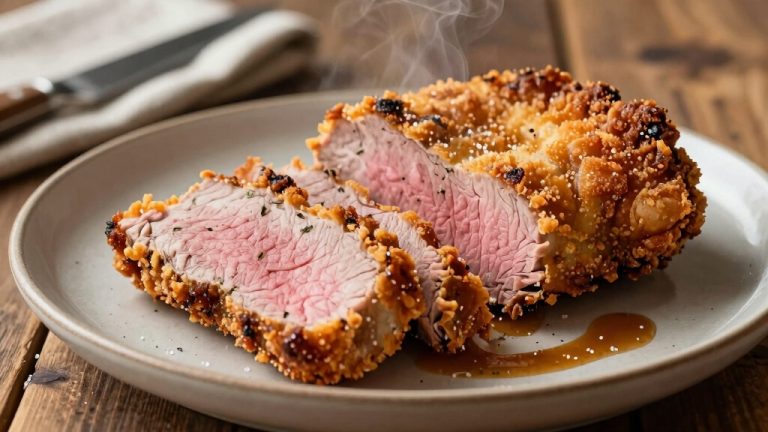
Smoke the steak until it reaches 110°F–120°F internally. Finish with a high-heat sear to develop a crust and reach medium-rare at 130°F. Master these steps for perfectly juicy, flavorful rib eye.
Key Takeaways
- Dry brine rib eye with kosher salt for 40 minutes to 24 hours, then pat dry and season with oil, salt, and pepper.
- Preheat smoker to 225°F using wood like oak, apple, or pecan for balanced smoke flavor.
- Smoke rib eye until internal temperature reaches 110°F–120°F, checking every 20 minutes to avoid overcooking.
- Use reverse sear by increasing heat to 450°F–475°F and sear steaks 4–10 minutes per side to reach 130°F for medium-rare.
- Rest smoked steaks tented for 10–15 minutes to redistribute juices and enhance tenderness before serving.
Prepare Rib Eye Steak for Smoking
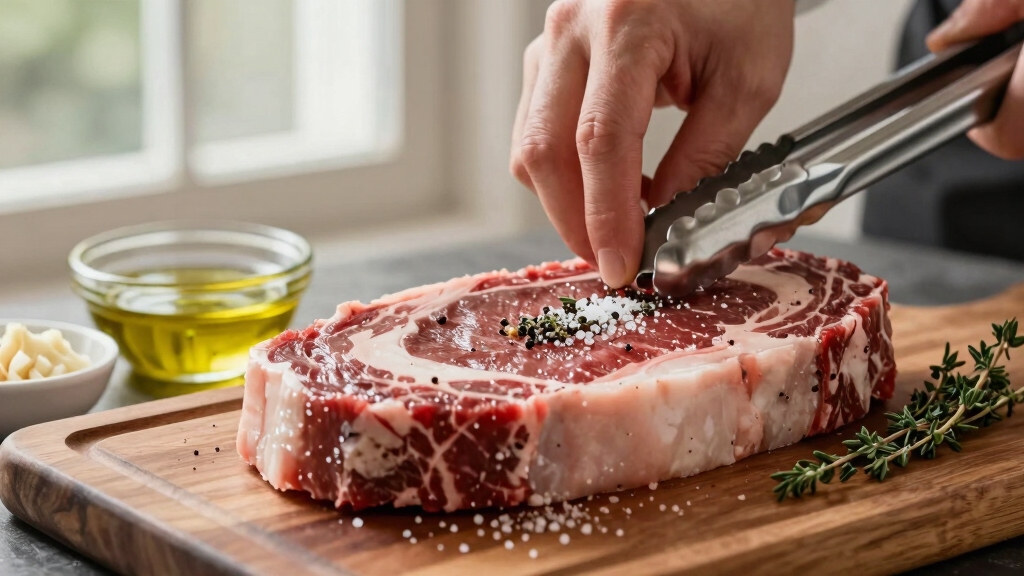
Start by dry brining your rib eye steak with kosher salt, leaving it uncovered at room temperature for 40 minutes or refrigerating it for up to 24 hours.
Begin by dry brining your rib eye with kosher salt, resting it uncovered for 40 minutes or up to 24 hours.
This process enhances flavor and improves texture. After brining, pat the steak dry thoroughly with paper towels to remove excess moisture, ensuring a better sear later.
Next, brush both sides lightly with olive oil to help seasonings adhere. Apply ½ teaspoon of kosher salt and freshly ground black pepper per side, seasoning evenly.
Focus extra salt on fatty areas for balanced taste. You can use a simple salt and pepper combo or a specialized steak rub, such as a Texas-style blend, depending on your preference.
This careful preparation sets the foundation for a perfectly smoked rib eye steak. Proper probe insertion technique ensures accurate temperature readings for ideal cooking results.
Set Up Your Smoker at 225°F With Ideal Wood Choices
When setting up your smoker, aim for a steady temperature of 225°F to guarantee gentle, even cooking that maximizes smoke absorption.
Prepare your smoker for indirect heat, guaranteeing the coals or heat source won’t directly touch the steak.
Choose woods like oak, hickory, apple, pecan, cherry, peach, or pear for ideal smoke flavor.
Oak and hickory offer robust smokiness, while fruitwoods like apple and cherry provide a milder, sweeter profile.
Fill the water pan if your smoker has one to maintain humidity and stabilize temperature.
Preheat the smoker fully before placing the rib eye inside.
Position the steaks on the grate or a rack for easy handling.
This setup guarantees your rib eye will develop peak flavor and texture during smoking.
Using oak wood can provide a balanced, medium smoky flavor that complements rib eye steak well.
Smoke Rib Eye Steak to the Right Temperature

Maintain your smoker temperature at 225°F and monitor your rib eye’s internal temperature closely to guarantee perfect doneness.
Use a digital thermometer to track progress, aiming for 110°F–120°F before resting or searing. Avoid relying on time alone, as thickness affects cooking duration.
Pull thinner cuts earlier, thicker ones later.
| Internal Temp (°F) | Doneness Level |
|---|---|
| 110 | Rare (pre-rest) |
| 120 | Medium-rare (pre-rest) |
| 130 | Medium-rare (final) |
| 135–145 | Medium to Medium-well |
Check every 20 minutes after the first 20 to prevent overcooking. Remove steaks at target temp, tent with foil, and rest to allow juices to redistribute before the next step. For best results, consider using a reverse sear technique to achieve an even crust and doneness throughout.
Reverse Sear for Juicy, Perfectly Cooked Rib Eye
After removing your rib eye from the smoker at 110°F to 120°F, you’ll want to tent it with foil.
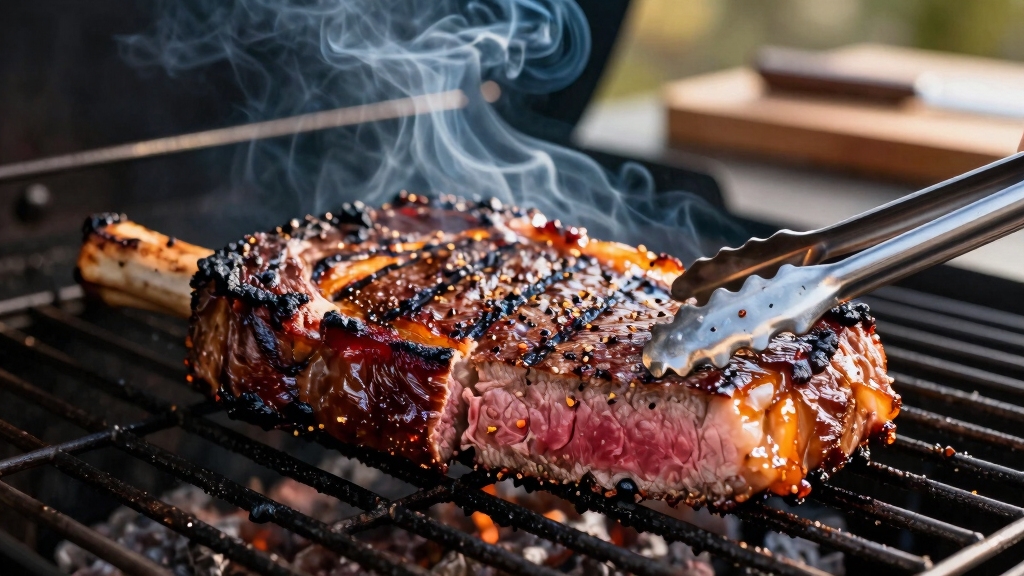
Increase the smoker temperature to 450°F–475°F for the reverse sear. This high heat step crisps the exterior and locks in juices, finishing the steak perfectly.
For best results during the reverse sear, sear each side 4–10 minutes on hot grill grates or a cast iron pan until the internal temperature hits 130°F for medium-rare.
Focus on crisping fatty areas to enhance texture and flavor. If you’re not using the smoker’s searing option, pull the steak 10°F below your target doneness before searing.
This technique guarantees a juicy, evenly cooked rib eye with a beautiful crust every time.
To maintain optimal juiciness and tenderness, it’s important to monitor the internal temperature carefully and allow for a brief resting period to let the meat’s collagen convert fully, similar to the collagen breakdown process in brisket.
Enhance Flavor and Texture: Seasoning, Resting, and Wood Tips

Mastering seasoning, resting, and wood selection plays a vital role in elevating your rib eye’s flavor and texture.
Start by dry brining your steak with kosher salt, ideally for 40 minutes at room temperature or up to 24 hours in the fridge uncovered.
Pat it dry, brush with olive oil, then season evenly with salt and pepper, adding more to fatty areas.
Choose a wood that complements without overpowering; apple, cherry, or pecan are excellent for a balanced smoke profile.
After smoking, let your steak rest tented for 10-15 minutes to redistribute juices and enhance tenderness.
This resting period also allows residual heat to mellow flavors.
For best results, press the seasoning firmly into the meat surface to create a flavorful crust and improve rub adhesion.
Frequently Asked Questions
Can I Smoke Ribeye Steak Without a Water Pan in the Smoker?
Yes, you can smoke ribeye steak without a water pan.
The water pan helps maintain moisture and stabilize temperature, but it’s not essential.
Just keep the smoker temperature steady at around 225°F and monitor the internal steak temperature closely with a digital thermometer.
Make sure to control airflow and wood smoke to prevent drying out.
Frequent checks and proper seasoning will help you achieve juicy, smoky results even without a water pan.
How Do I Store Leftover Smoked Ribeye Steak Safely?
Don’t worry about leftover smoked ribeye losing flavor if stored properly.
Cool the steak quickly by wrapping it tightly in foil or placing it in an airtight container. Refrigerate within two hours of cooking and consume within 3-4 days.
For longer storage, freeze the steak in vacuum-sealed bags or freezer-safe containers.
When reheating, use low heat to maintain juiciness and avoid drying out your delicious smoked ribeye.
What’s the Best Way to Reheat Smoked Ribeye Without Drying It Out?
The best way to reheat smoked ribeye without drying it out is to use low, gentle heat.
Wrap the steak tightly in foil with a splash of beef broth or water to maintain moisture.
Then, heat it in a 250°F oven until warmed through, about 20-30 minutes depending on thickness.
Avoid microwaving, as it can dry the meat out quickly.
Finish with a quick sear if you want to refresh the crust.
Can I Use Frozen Ribeye Steaks for Smoking, or Must They Be Fresh?
You can use frozen ribeye steaks for smoking, but you must thaw them completely first to guarantee even cooking and proper smoke absorption.
Thaw steaks slowly in the refrigerator for 24 hours or use a cold water bath to speed it up. Avoid smoking directly from frozen, as it leads to uneven temperature and texture.
Once thawed, follow your usual preparation and smoking process for the best results.
How Does Altitude Affect Smoking Times and Temperatures for Ribeye Steak?
At higher altitudes, lower atmospheric pressure reduces boiling points, so your ribeye will cook slightly faster. You’ll want to increase smoking temperatures by about 10-15°F to compensate and monitor internal temps carefully.
Smoking times might shorten, so use a reliable thermometer instead of guessing. Adjust your smoke wood choice and humidity to maintain moisture, ensuring your steak stays tender and flavorful despite altitude-related changes.
From Smoke to Sear: Mastering the Legendary Rib Eye
Now that you’ve mastered preparing and smoking your rib eye at the perfect 225°F, the real magic begins with the reverse sear. Locking in those juicy flavors you’ve been building is essential.
But don’t rush the resting; it’s the secret step that transforms a good steak into unforgettable. Ready to impress your taste buds? Keep these tips close, and your next smoked rib eye will be nothing short of legendary.