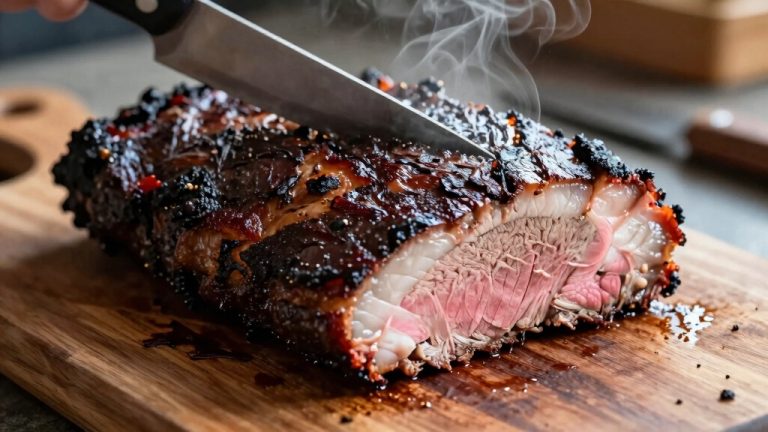
How to Smoke Rib Eye Roast: Easy Backyard BBQ Method
Choose a well-marbled, bone-in rib eye roast around 6–8 pounds. Trim the fat cap to ¼ inch and score it diagonally to help seasonings penetrate.
Rub with olive oil and your favorite spice blend, inserting garlic cloves into the cuts. Smoke at a steady 225°F–250°F using post oak or fruitwoods until internal temp hits 120°F–125°F.
Finish by searing over high heat, then rest before slicing. Keep exploring for expert tips on timing, wood selection, and seasoning.
Key Takeaways
- Choose a 6–8 pound whole bone-in rib eye roast with firm marbling and trim fat cap to about ¼ inch, scoring it in a crosshatch pattern.
- Season roast with olive oil, robust rub, and insert garlic cloves into scored cuts for deep flavor infusion.
- Maintain smoker temperature between 225°F and 275°F using indirect heat and post oak or soaked apple/cherrywood chips for steady, balanced smoke.
- Smoke roast at 250°F until internal temperature reaches 120°F–125°F, approximately 35 minutes per pound, monitoring with a digital probe.
- Sear roast at 400°F for 3–4 minutes per side after smoking, then rest 20–30 minutes before slicing against the grain.
How to Choose and Prep Your Rib Eye Roast?

Start by selecting a whole bone-in rib eye roast with a good layer of fat, but be prepared to trim it down to about ¼ inch to avoid excessive grease.
Begin with a whole bone-in rib eye roast, trimming fat to about ¼ inch for balanced flavor.
Look for firm, evenly marbled meat with a bright red color and a thick fat cap for flavor and moisture retention. Choose a roast weighing between 6 to 8 pounds for manageable cooking times.
Inspect the bone structure to guarantee it’s intact and clean, which helps with even heat distribution.
When you bring it home, keep the roast refrigerated and let it rest at room temperature for 30-60 minutes before cooking.
Handle the meat gently to maintain the fat cap and muscle integrity, setting the stage for a perfectly smoked rib eye roast.
For best results, consider dry brining the roast with kosher salt uncovered for at least 40 minutes to enhance flavor and tenderness before smoking, a key step in preparing rib eye steak.
Trimming Fat and Scoring Your Rib Eye Roast
When you’re getting ready to cook your rib eye roast, the first thing you want to do is trim the fat cap down to about a quarter inch. This is super important because it helps prevent flare-ups and ensures that your roast cooks evenly.
Once you’ve got that fat cap trimmed, the next step is to score it. You’ll want to do this in a diagonal crosshatch pattern.
Why? Well, scoring helps the seasonings really penetrate the meat and allows the fat to render evenly. Trust me, this little technique can make a big difference.
It not only boosts the flavor absorption but also guarantees that you’ll end up with a crispy, well-textured crust on that delicious rib eye roast. Enjoy the process!
For best results, consider using a digital leave-in probe to monitor the internal temperature accurately throughout the cooking process.
Fat Trimming Techniques
A crucial step in preparing your rib eye roast is trimming the fat to about a quarter-inch thickness and scoring it in a diagonal crosshatch pattern.
Start by removing any thick, uneven fat caps, leaving a uniform layer that will render beautifully during smoking.
Next, carefully trim away tail fat and sinew to expose clean meat, promoting even seasoning absorption.
Finally, cut the roast in half where the meat tapers to guarantee consistent cooking.
Follow these steps to master fat trimming:
- Trim excess fat to ¼ inch for balanced moisture and flavor.
- Remove sinew and tail fat to prevent chewy spots.
- Cut tapered ends to promote even heat distribution.
This precise trimming sets the foundation for a perfectly smoked rib eye roast. Proper trimming and scoring help to maximize the Maillard reaction, enhancing flavor and crust formation during smoking.
Scoring Patterns Explained
Although trimming the fat to a quarter-inch layer is essential, scoring it in a diagonal crosshatch pattern enhances flavor penetration and fat rendering during smoking.
Use a sharp knife to make shallow cuts about ¼ inch apart, first diagonally across the fat cap.
Then, rotate the roast and score in the opposite diagonal direction, forming diamond shapes.
Avoid cutting into the meat to prevent drying.
This pattern allows seasoning, garlic oil, and smoke to seep deeper, while encouraging even melting of fat.
The scoring also helps the roast cook uniformly by increasing surface area.
Take your time to guarantee consistent depth and spacing, as uneven scoring can lead to uneven cooking and flavor absorption.
Proper scoring sets the stage for a juicy, flavorful rib eye roast.
For best results, allow the roast to rest after cooking to redistribute juices and enhance moisture retention.
Benefits of Proper Scoring
Mastering the diagonal crosshatch scoring technique doesn’t just enhance flavor absorption. It directly impacts how the fat renders and the roast cooks.
By trimming excess fat to about ¼ inch and scoring it, you control the melting process. This prevents greasy spots and encourages even cooking. Proper scoring also opens the meat’s surface, allowing rubs and oils to penetrate deeply.
Here’s why you’ll want to score properly:
- Improved Flavor Distribution: Seasonings seep into the meat through the cuts, boosting taste.
- Better Fat Rendering: Scoring helps the fat melt slowly, creating a moist, tender roast.
- Even Cooking: The roast cooks uniformly, avoiding undercooked or overcooked areas.
Using a dry rub application technique before smoking helps the seasonings adhere better and develop a flavorful crust. Follow these steps carefully for a perfectly smoked rib eye roast every time.
Seasoning Your Rib Eye Roast: Rubs, Oils, and Garlic
Start by drizzling 2–3 tablespoons of olive oil over all sides of your rib eye roast to create a moist surface that helps the seasoning adhere better.
Next, generously apply about ¼ cup of a robust rub like Killer Hogs TX Rub, coating every inch evenly.
Press the seasoning gently to embed it into the olive oil.
Then, insert whole peeled garlic cloves into the scored crosshatch cuts you made earlier; this infuses rich flavor throughout the roast.
For enhanced aroma, massage additional olive oil mixed with minced garlic over the surface before refrigerating it overnight, loosely covered.
This resting period allows the garlic and rub to penetrate deeply, ensuring a flavorful crust once smoked.
Remember to season with salt and pepper just prior to cooking for balanced taste.
Before cooking, ensure your smoker is properly seasoned and preheated to maintain optimal flavor and prevent sticking.
How to Set Up Your Smoker for the Best Rib Eye?
Alright, let’s talk about how to set up your smoker for that delicious rib eye! First things first, you want to get your smoker running at a steady temperature. Aim for somewhere between 225°F and 275°F. This range is perfect for evenly cooking your meat and getting that nice, tender bite.
Now, when it comes to wood, I’ve got a couple of suggestions for you. If you’re after that traditional smoky flavor, go for post oak. It’s a classic choice!
But if you prefer something a bit sweeter and fruitier, soaking some applewood or cherrywood chips can really elevate the aroma of your rib eye. Trust me, your taste buds will thank you!
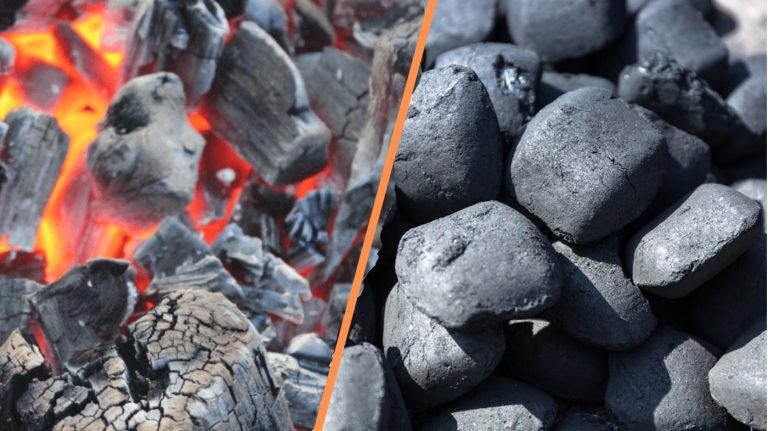
Also, don’t forget about the heat source. Using indirect heat with hardwood lump charcoal is the way to go. This combination creates an ideal environment for smoking your rib eye roast evenly and getting that perfect smoky flavor throughout.
Happy smoking! Oak also burns slowly, providing a steady release of smoke and heat ideal for long smoking sessions with consistent results.
Optimal Temperature Settings
When you prepare your smoker for rib eye roast, maintaining a consistent temperature between 225°F and 275°F is essential for achieving tender, flavorful results.
This range allows the meat to cook slowly, rendering fat properly while absorbing smoky flavor without drying out. Here’s how to optimize your smoker settings:
- Set your smoker to a steady 250°F for even cooking; this temperature balances time and tenderness perfectly.
- Avoid temperature spikes by using indirect heat and monitoring with a reliable thermometer.
- Adjust the smoker to 275°F only if you need to shorten cook time, but watch internal temperature closely to avoid overcooking.
In colder weather, it is also important to use proper insulation and wind protection to maintain consistent smoker temperatures and prevent heat loss.
Wood Selection Tips
Maintaining the right smoker temperature is only part of the equation; selecting the proper wood will define the flavor profile of your rib eye roast.
Start with post oak for a classic, robust smoke that complements beef without overpowering it. If you prefer a slightly sweeter, fruitier note, soak applewood or cherrywood chips for an hour before adding them to your smoker.
Avoid resinous woods like pine, as they can impart unpleasant flavors. Use hardwood lump charcoal for a clean, consistent burn and indirect heat.
Introduce wood chips gradually during smoking to maintain steady smoke levels. Remember, the goal is a balanced, rich smoke flavor that enhances your rib eye’s natural taste without masking it.
Choose your wood thoughtfully to elevate your smoked roast. For a bolder, more intense earthy and spicy flavor, consider using mesquite wood, but be sure to control the smoke quantity carefully to avoid bitterness.
Best Wood Choices for Smoking Rib Eye
Choose your wood carefully to enhance the natural richness of a rib eye roast. The right wood complements the beef’s bold flavor without overpowering it.
Selecting the right wood is key to highlighting the rib eye roast’s rich, bold flavors perfectly.
Here are three top choices to contemplate:
- Post Oak – Delivers a steady, medium smoke perfect for long cooks. It adds a subtle, robust flavor that pairs beautifully with rib eye’s marbling.
- Cherry Wood – Offers a mild, sweet smoke that imparts a rich mahogany color and delicate fruitiness, enhancing visual appeal and taste.
- Applewood – Provides a light, slightly sweet smoke that balances the meat’s fattiness, highlighting its natural tenderness.
Avoid resinous or overpowering woods like mesquite, which can mask rib eye’s nuanced flavors. Soak chips briefly if using fruitwoods to make certain a slow, controlled smoke.
For rib eye, woods with a steady burn and moderate smoke production are generally preferred to preserve the meat’s delicate flavor profile.
Ideal Smoking Temperatures for Rib Eye Roast
Smoking rib eye roast ideally requires a controlled temperature range between 225°F and 275°F to guarantee even cooking and peak flavor development.
Maintaining your smoker between 225°F and 250°F allows the meat to absorb smoke slowly, enhancing tenderness and flavor. If you increase the temperature to around 275°F, the roast cooks faster but still stays juicy and flavorful.
You’ll want to monitor internal temperature closely, aiming for 120°F to 125°F before searing. Avoid temperature spikes that can dry out the meat.
Use indirect heat and keep wood smoke steady by soaking chips beforehand. Consistent heat secures the roast cooks evenly, while controlled smoking at these temperatures maximizes the rib eye’s natural marbling and rich taste.
Step-by-Step Smoking Process and Timing for Rib Eye Roast
Once you’ve prepared your rib eye roast and set your smoker to the ideal temperature range between 225°F and 275°F, begin by placing the roast on the grill using indirect heat.
Start your rib eye roast on the smoker using indirect heat at 225°F to 275°F.
Maintain a steady temperature around 250°F for consistent cooking. Monitor the internal temperature closely; aim for 120°F to 125°F for medium-rare doneness.
To accomplish this:
- Smoke the roast for approximately 35 minutes per pound, turning the pan every hour to ensure even heat distribution.
- Add wood chips soaked in apple or cherrywood every 45 minutes to enhance smoky flavor.
- Use a reliable meat thermometer to track progress, removing the roast promptly at the target temperature to rest before searing.
This method guarantees juicy, tender rib eye with a perfect smoky crust.
Searing Your Rib Eye Roast: Timing and Technique
Although your rib eye roast will be flavorful from the smoking process, searing at high heat is essential to develop a rich crust and lock in juices.
Preheat your grill or cast iron skillet to 400°F. Once your roast reaches an internal temperature of 110°F-115°F from smoking, transfer it promptly for searing.
Sear each side for about 3-4 minutes, including edges, until you achieve a deep, caramelized crust. Use tongs to rotate carefully, avoiding piercing the meat to retain moisture.
Monitor internal temperature closely; remove the roast once it reaches 5°F below your target doneness, typically around 122°F-125°F for medium rare.
This precise timing and technique make certain a tender, flavorful rib eye with an enticing, savory exterior.
Resting, Final Seasoning, and Serving Your Smoked Rib Eye
After searing your rib eye roast to the perfect crust and temperature, let it rest tented loosely with foil for 20 to 30 minutes.
Rest your seared rib eye roast under foil for 20 to 30 minutes to lock in juices and tenderness.
This step allows juices to redistribute, ensuring tender, juicy slices. When resting finishes, apply your final seasoning: kosher salt, freshly cracked black pepper, and a light smear of garlic herb butter to enhance flavor and mouthfeel.
To serve your smoked rib eye roast perfectly:
- Slice against the grain into ½-inch thick pieces to maximize tenderness.
- Plate slices neatly, pouring reserved au jus or pan drippings for added moisture.
- Garnish with fresh herbs like rosemary or thyme for aroma and visual appeal.
Following these steps guarantees a memorable, flavorful experience your guests will savor.
Frequently Asked Questions
Can I Smoke a Rib Eye Roast Without Trussing It?
You can smoke a rib eye roast without trussing it, but trussing helps maintain an even shape for consistent cooking.
Without it, the roast may cook unevenly, causing some parts to dry out or overcook. If you skip trussing, monitor the temperature closely and rotate the roast frequently to promote even heat distribution.
Trussing also makes handling easier, so consider it for better results and presentation.
How Do Weather Conditions Affect Smoking Times?
Weather conditions impact smoking times considerably. If it’s cold or windy, you’ll need longer cooking times because your smoker struggles to maintain consistent heat.
High humidity can slow the cooking process, while hot, dry weather may speed it up. You should monitor your smoker’s internal temperature closely and adjust fuel or airflow accordingly.
Always rely on your meat’s internal temperature, not just time, to guarantee perfect doneness.
What Internal Temperature Is Safe for Well-Done Rib Eye?
When it comes to well-done rib eye, you’ll want to hit an internal temperature of 160°F or higher to play it safe.
This guarantees harmful bacteria are cooked out and the meat is thoroughly done.
Use a reliable meat thermometer inserted into the thickest part of the roast.
Remember, hitting that target temp is the whole ball of wax.
You’ll avoid undercooking while keeping your roast juicy and flavorful.
Can I Use Electric Smokers for Rib Eye Roasts?
Yes, you can use electric smokers for rib eye roasts. They provide steady temperature control, which is key for even cooking.
Set your electric smoker to 225°F-250°F, use wood chips like applewood or cherrywood for flavor, and smoke until your roast reaches the desired internal temperature.
Remember to monitor the temperature closely and rest the meat after smoking for peak tenderness and juiciness.
Electric smokers make the process consistent and manageable.
How Long Can Smoked Rib Eye Roast Be Stored Safely?
You can safely store smoked rib eye roast in the refrigerator for 3 to 4 days.
Wrap it tightly in foil or airtight containers to maintain moisture and prevent contamination.
If you want to keep it longer, freeze the roast in heavy-duty freezer bags or vacuum-sealed packs for up to 2 to 3 months.
Always thaw in the fridge and reheat to at least 165°F before serving to guarantee safety.
Finish Strong with a Perfectly Smoked Rib Eye
Now that you’ve mastered smoking your rib eye roast, you’re holding a flavor bomb ready to explode at the dinner table.
Remember, patience and precise temperature control are your best friends here. Trim, season, smoke, sear, and rest with care; each step builds layers of deliciousness.
Follow these steps like a pro, and you’ll turn a simple roast into a smoky masterpiece that’ll leave everyone asking for seconds. Your grill skills just leveled up!