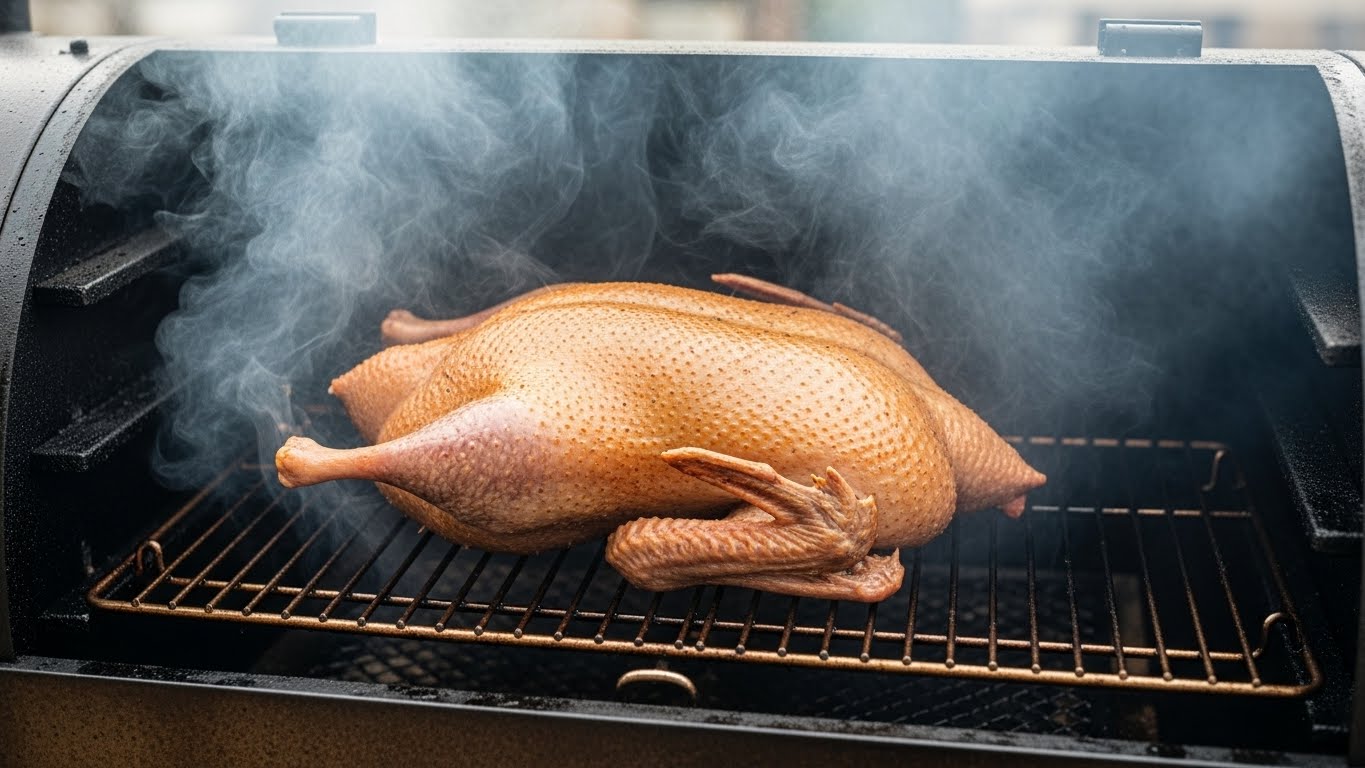
How to Smoke a Duck? Step-by-Step Guide for Perfect Flavor
To smoke a duck, start by choosing a smoker that fits whole ducks without crowding and preheat it to 275°F using fruit or nut woods for mild smoke.
Brine the duck to enhance flavor and tenderness, pat dry, then smoke low and slow until the internal breast temp reaches about 160–165°F.
Score the skin to render fat efficiently, and finish with higher temps for crispiness. Master these steps precisely, and soon you’ll understand the finer techniques for flavor and presentation.
Key Takeaways
- Brine the duck for 4–6 hours to tenderize and enhance flavor, then pat dry and let form a pellicle for better smoke absorption.
- Preheat smoker to 225–275°F using fruit or nut woods like apple or pecan for balanced, mild smoke flavor.
- Smoke the duck low and slow for 2.5–3.5 hours, aiming for an internal breast temperature of 160–165°F for optimal doneness.
- Score skin deeply and dry overnight to promote fat rendering and crisp skin; increase smoker temp toward the end to finish rendering.
- Rest the smoked duck 5–10 minutes before carving thinly against the grain; serve with fruit-based sauces or glazes for contrast.
Choosing Equipment and Preparing Your Smoker
When selecting equipment for smoking a duck, start by choosing a smoker that matches your skill level and flavor goals.
Wood pellet smokers offer automated pellet feeding and consistent temperature control, easing long smokes. Charcoal smokers deliver robust smoke flavor but need skillful heat management.
Electric smokers provide stable low-temperature smoking ideal for beginners, though smoke intensity is milder. Offset smokers allow precise smoke flavor customization but require experience to balance fire and airflow.
Consider smoker size to ensure whole ducks fit without crowding, allowing proper smoke circulation and even skin exposure. Selecting the right size also helps prevent overcrowding which can cause uneven cooking and soggy skin.
Make sure your smoker accommodates a water or drip pan to manage humidity and fat drips. Accurate temperature control with reliable thermometers and adjustable vents is critical to maintain the target smoking range between 200–325°F (93–163°C). When using smokers not designed for pellets, understanding proper airflow management is essential for safe and efficient operation.
Preparing and Brining the Duck
After setting up your smoker, focus on preparing the duck to optimize flavor and texture.
Begin by creating a brine—dissolve 1/4 cup salt and 1/4 cup sugar in 4 cups water, adding optional herbs, peppercorns, or orange zest. Properly handling and storing the duck before brining is important to maintain freshness and quality.
Start by making a brine with salt, sugar, and optional herbs for enhanced duck flavor.
Boil and simmer for 15-20 minutes, then cool completely.
Submerge the duck fully for 4-6 hours to tenderize and infuse flavor.
For a dry brine, rub the breast with salt and refrigerate uncovered 8-12 hours to enhance skin crispiness.
Smoking also helps to tenderize wild ducks and reduces any gamey flavors.
After brining, pat the duck dry thoroughly with paper towels; don’t rinse after a dry brine. Allowing the surface to dry promotes formation of a pellicle, which improves smoke absorption.
Allow it to rest 20-30 minutes at room temperature before smoking.
Brining retains moisture and balances flavor, essential for moist, tender smoked duck.
Smoking Temperature and Timing Techniques
Although smoking a duck requires patience, controlling temperature and timing precisely guarantees peak fat rendering and tender meat.
Start by preheating your smoker to 275°F using fruit or nut woods like apple or pecan. Aim for an internal breast temperature of 157°F, finishing around 160-165°F for ideal doneness. Because duck meat is dark and rich with a thick layer of fat, maintaining the right temperature is essential to properly render fat and develop flavor. In cold weather, consider using insulation techniques to maintain consistent smoker temperatures and reduce fuel consumption.
Adjust timing based on temperature: low and slow at 225-275°F takes about 2.5 to 3.5 hours, while hotter ranges (300-350°F) reduce cook time to 90 minutes. Monitor closely with a reliable probe thermometer for accuracy.
Begin smoking at 225°F for 2 hours to build smoke flavor. Increase to 300-325°F until the breast hits 150°F. Maintain smoker temperature between 295-330°F with alarms.
Use a Thermapen to verify internal temps after alarms. Brine method requires roughly 3 hours per pound at 275°F.
Managing Fat Rendering and Smoke Flavor
Master fat rendering by preparing your duck with precise techniques that promote efficient fat release and enhance smoke flavor. Score the skin deeply, steam the duck, then dry uncovered overnight.
During smoking, maintain low heat to slowly render fat in its own liquid. Then raise temperature to 450°F to finish rendering to 165°F internal. Position breast-side-up for even drainage.
Collect rendered fat and strain post-smoking for storage or use. Smoke fat indirectly below its smoke point for flavor infusion, then filter to remove soot. Using oak wood for smoking can add a rich, balanced flavor that complements the natural taste of duck.
| Step | Technique |
|---|---|
| Preparation | Score skin, steam, dry overnight |
| Initial Rendering | Boil fatty bits in water, low heat |
| Final Rendering | Increase temp to 450°F, breast-up |
| Post-Smoking | Rest, slit skin, strain fat |
| Smoke Flavor | Indirect smoke, filter soot |
Serving, Carving, and Storing Smoked Duck
When serving smoked duck, focus on balancing rich flavors with complementary sides like mashed potatoes, roasted vegetables, or fresh salads to enhance the dish’s complexity. A classic presentation is to slice the duck thinly and spoon a fruit-based sauce such as cherry and red wine over the top for a sweet-savory contrast.
Enhance smoked duck by pairing it with mashed potatoes, roasted veggies, or fresh salads for a perfect flavor balance.
Carve the duck breast thinly against the grain once it hits 130°F internal temperature, trimming excess fat for peak texture. Use precise angled cuts on the skin to preserve its integrity. It is important to rest the meat for 5–10 minutes before carving to retain juices and guarantee tenderness.
For storage, keep leftover smoked duck refrigerated and prepare crostini or accompaniments in advance to streamline future plating. Store leftovers in airtight containers and refrigerate within two hours to maintain quality and safety.
Serve with mashed pumpkin mixed with parmesan and rocket for creaminess and color. Drizzle duck slices with orange-cumin or honey balsamic glazes for brightness.
Present thin slices atop crostini with goat cheese mousse and chopped hazelnuts. Store leftovers and spiced jams for use in sandwiches or glazes.
Rest duck 5–10 minutes before carving to retain juices and guarantee tenderness.
Frequently Asked Questions
Can I Smoke Duck Breast Separately From the Whole Bird?
Yes, you can smoke duck breast separately from the whole bird, and it’s often recommended.
This lets you control temperature and timing precisely to achieve medium-rare doneness (130–135°F), avoiding overcooked breast while legs finish properly.
Use higher initial heat to crisp skin and render fat, then lower temps to finish.
Separate brining and smoke intensity optimize flavor and texture.
Just handle separately to prevent cross-contamination and monitor internal temperature with a probe thermometer.
What Is the Best Wood for a Subtle Smoke Flavor on Duck?
Choosing apple wood for a subtle smoke on duck is like adding a whisper of sweetness to a rich melody. It enhances without overpowering.
Apple wood delivers a mild, fruity smoke that complements dark meat perfectly. If you want a slightly different nuance, cherry or pear wood also offer gentle, fruity notes.
Pecan adds mild nuttiness but is a bit stronger. For precision, apple wood remains your best bet for subtlety and balance.
How Do I Prevent the Skin From Becoming Too Bitter During Smoking?
To prevent bitter skin, dry your duck breasts thoroughly to remove surface moisture and form a pellicle.
Score the skin carefully with a sharp knife, allowing fat to render and baste the meat.
Maintain smoker temps between 225°F-250°F initially, then finish at higher temps for crisping.
Use mild woods like applewood, avoid overcrowding for proper smoke circulation, and lightly oil the skin before smoking to enhance crispness without bitterness.
Is It Safe to Reuse Duck Fat Collected During Smoking?
Yes, you can safely reuse duck fat collected during smoking if you make certain it never contacts raw juices and handle it with strict sanitation.
Clarify and gently reheat the fat to remove water and solids, then store it refrigerated or frozen.
Avoid reusing fat showing off-odors, discoloration, or prolonged warm storage.
Limit reuse cycles to reduce oxidation and toxin buildup.
Proper management minimizes microbial and chemical risks, making certain safe culinary reuse.
Should I Remove the Duck’s Giblets Before Smoking?
Yes, you should remove the duck’s giblets before smoking.
Removing them allows you to stuff the cavity with aromatics, makes for even smoking, and prevents off-flavors from developing.
It also helps with proper fat rendering and skin crisping. After removal, you can use the neck for stock and save the liver separately.
Trim excess fat and skin to avoid excess smoke and discard these parts to focus on smoking the main bird.
Take Your Smoked Duck Skills to the Next Level
Smoking a duck demands patience and precision, yet rewards you with rich, complex flavors that contrast its simple preparation.
While managing temperature and fat rendering, you balance science with art. Each step is deliberate, each moment essential.
As you carve and serve, the tender, smoky meat reveals the harmony between technique and taste.
Mastering this process transforms raw poultry into an elevated culinary experience, proving that meticulous control and bold flavor thrive together.