How to Reheat a Whole Turkey: The Perfect Reheated Turkey
To reheat a whole turkey, first let it rest at room temperature for 30–45 minutes to warm evenly.
Preheat your oven to 350°F and place the turkey on a rack over 6–8 ounces of broth or stock in a roasting pan to keep it moist.
Cover loosely with foil and heat about 12 minutes per pound, basting occasionally.
Use a thermometer to reach 165°F safely. Uncover near the end to crisp skin.
Discover how to perfect every step and serve juicy, tender turkey.
Key Takeaways
- Let the whole turkey rest at room temperature for 30–45 minutes before reheating to ensure even warming.
- Preheat the oven to 350°F and place the turkey on a rack above 6–8 ounces of broth or water in a roasting pan.
- Cover the turkey loosely with foil to trap steam and maintain moisture throughout the reheating process.
- Reheat the turkey approximately 12 minutes per pound, basting halfway and removing foil in the last 30 minutes to crisp skin.
- Use a calibrated meat thermometer to ensure the thickest part reaches 165°F for safe consumption before serving.
Why Properly Reheating Your Whole Turkey Matters?

When you reheat your whole turkey properly, you make certain every bite stays juicy, flavorful, and safe to eat. Reheating isn’t just about warming; it’s about preserving moisture and enhancing taste.
If done incorrectly, dry, tough meat and uneven temperatures can ruin your effort and increase the risk of bacteria growth. You want that tender, savory texture to linger, not turn rubbery or bland.
Proper reheating also makes certain food safety, bringing the internal temperature to a safe 165°F, eliminating harmful germs. By following the right techniques, you protect your turkey’s quality and your health. Using a meat thermometer helps ensure the turkey reaches the safe internal temperature without overcooking.
How to Prepare Your Whole Turkey for Reheating?
Before you dive into reheating your turkey, it’s a good idea to let it rest at room temperature for about 30 to 45 minutes.
This little tip helps ensure that your turkey warms up evenly.
Now, while that turkey is resting, go ahead and prepare your roasting pan.
Just pour in a layer of broth or stock.
This will keep the meat moist while it’s reheating.
Trust me, this simple step makes a big difference; it helps the turkey heat evenly so that the internal temperature reaches a safe 165°F without drying out.
Make sure to use a calibrated probe thermometer to accurately check the internal temperature and ensure food safety.
Resting Turkey Before Reheating
Although it might be tempting to reheat your turkey straight from the fridge, letting it rest at room temperature for 30 to 45 minutes guarantees more even warming throughout.
This simple step prevents the outside from overheating while the center remains cold.
To prepare your turkey for reheating, follow these key points:
- Remove the turkey from the fridge and place it on a clean surface.
- Let it sit uncovered or loosely covered to avoid trapping moisture.
- Keep it away from direct sunlight or heat sources.
- Make certain the room temperature is safe—generally around 68-72°F (20-22°C).
For food safety, avoid leaving the turkey in the USDA danger zone for more than 2 hours during resting or reheating.
Preparing Roasting Pan Liquids
To keep your turkey moist and flavorful during reheating, start by pouring a layer of chicken broth, turkey stock, or water into the bottom of your roasting pan. This liquid creates steam, preventing dryness and enhancing flavor as the turkey warms. Aim for about 6-8 ounces to maintain moisture without diluting your turkey’s taste.
Choose the liquid that complements your turkey best: stock adds richness, broth brings lighter notes, and water keeps it simple.
| Liquid Type | Flavor Impact | Quantity Needed |
|---|---|---|
| Chicken Broth | Light, savory | 6-8 ounces |
| Turkey Stock | Rich, deep flavor | 6-8 ounces |
| Water | Neutral, clean | 6-8 ounces |
Adding this liquid sets the stage for juicy, tender reheating results. Wrapping the turkey tightly and maintaining a consistent temperature during reheating will help preserve moisture and enhance flavor.
Ensuring Even Temperature Rise
When you want your whole turkey to reheat evenly, letting it sit at room temperature for 30 to 45 minutes is key. This step prevents a sudden temperature shock, helping the heat distribute more uniformly.
To make certain an even temperature rise, follow these steps:
- Remove the turkey from the fridge and rest it uncovered on the counter.
- Preheat your oven to the recommended temperature before placing the bird inside.
- Pour a layer of broth or water into the roasting pan to maintain moisture and prevent drying.
- Cover the turkey loosely with foil to trap steam, promoting gentle, even heating.
Additionally, monitor the internal temperature carefully and ensure it reaches at least 140°F to maintain food safety and quality during reheating.
Pick the Best Oven Temperature for Reheating Turkey
When it comes to reheating your turkey, you’ll want to pick an oven temperature that gently warms it up while keeping that juicy texture intact. If you go too high, the meat can dry out, which we definitely want to avoid.
On the flip side, if you set it too low, it might take ages to heat up, and that can affect tenderness. So, finding that sweet spot is key to ensuring every bite is flavorful and moist.
A good rule of thumb is to aim for around 325°F. This temperature strikes a nice balance, allowing the turkey to heat through without losing its delicious juiciness.
Plus, it won’t take forever to warm up! Just keep an eye on it, and you’ll have a tasty turkey ready to enjoy in no time.
After reheating, be sure to let the turkey rest and then store it properly to prevent mold and mildew formation and keep it safe for later consumption.
Optimal Oven Temperatures
Although reheating turkey might seem straightforward, choosing the right oven temperature can make all the difference in preserving its moisture and flavor.
Too high, and you risk drying out the meat; too low, and reheating takes forever, potentially encouraging uneven warming.
Here’s how to pick the best temperature:
- 350°F (175°C) – Ideal for reheating a whole turkey slowly, allowing even heat penetration without drying.
- 450°F (230°C) – Best for quickly reheating sliced turkey, locking in juices fast.
- 180°C/160°C fan (Gas Mark 4) – A moderate heat for gentle reheating of slices, balancing time and moisture retention.
- Use foil cover – Always cover your turkey to trap steam, regardless of temperature.
For best results, ensure the turkey reaches an internal temperature of 165°F (74°C) to guarantee food safety.
Stick to these temps, and your turkey will come out perfectly juicy and flavorful every time.
Temperature Effects on Texture
Selecting the right oven temperature profoundly influences your turkey’s texture, ensuring it stays moist and tender rather than dry and tough.
Reheating at a moderate 350°F allows gentle warming, preserving juiciness while preventing the meat from drying out. Going too high risks toughening the outer layers before the inside heats through.
Conversely, too low a temperature prolongs reheating, inviting uneven texture and possible bacterial growth. Covering the turkey with foil traps steam, keeping the skin from becoming leathery and the meat succulent.
Remember to baste occasionally to redistribute moisture. By balancing temperature and time, you’ll revive your turkey’s natural tenderness and flavor, making every bite as delightful as freshly cooked, without sacrificing safety or quality. For optimal moisture retention and texture preservation, consider wrapping techniques that balance steam escape and heat retention during reheating.
Add Moisture to Keep Your Turkey Juicy
Frequently, adding moisture is the key to keeping your reheated turkey tender and flavorful. Without enough liquid, the meat can dry out quickly, losing its juicy appeal.
Adding moisture is essential to keep reheated turkey tender and prevent it from drying out.
To lock in moisture, try these effective steps:
- Pour a layer of chicken broth, turkey stock, or water into the roasting pan’s bottom before reheating.
- Dot the turkey with small pieces of butter to add richness and prevent dryness.
- Cover your turkey loosely with foil to trap steam and maintain a moist environment.
- Baste the turkey periodically with pan juices or melted butter during reheating.
For best results, reheat turkey gently and avoid high heat to prevent texture loss and dryness.
Step-by-Step Guide to Oven Reheating a Whole Turkey
When you’re ready to reheat your whole turkey, start by letting it rest at room temperature for 30 to 45 minutes to guarantee even warming throughout.
Preheat your oven to 350°F and pour 6 to 8 ounces of chicken broth or stock into the roasting pan to keep the meat moist.
Place your turkey on the rack above the liquid, then cover it tightly with foil to trap steam.
Roast the turkey for about 12 minutes per pound; a 10-pound bird takes roughly two hours.
Halfway through, baste the turkey with its own juices or a bit of butter for added flavor.
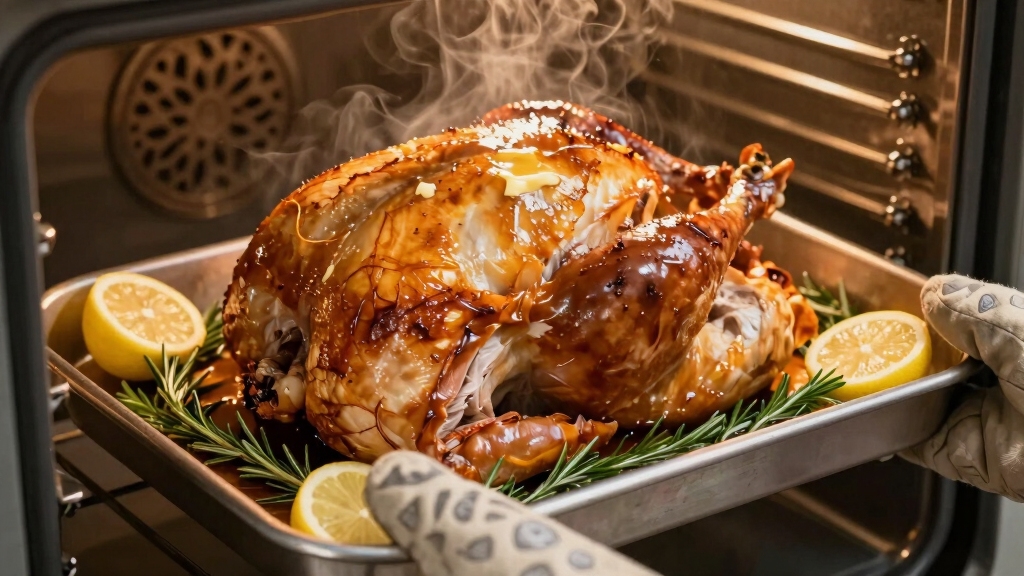
Finally, remove the foil and roast uncovered for an extra 30 minutes to crisp the skin.
Make certain the internal temperature reaches 165°F in the thickest part before serving.
For best food safety, avoid leaving the turkey at room temperature longer than two hours to limit bacterial growth and ensure safe reheating temperature control.
When and How to Cover Your Turkey While Reheating?
When you’re reheating your turkey, it’s super important to cover it the right way. This helps lock in all that moisture and keeps the meat from drying out. So, grab some foil or an oven-safe lid and make sure it’s snug on the turkey for most of the reheating time.
But here’s the fun part: near the end, go ahead and uncover it! This way, the skin can get nice and crispy while soaking up all those delicious juices. Trust me, your turkey will thank you for it!
Importance Of Covering
Covering your turkey during reheating locks in moisture and guarantees even heat distribution, preventing the meat from drying out.
When you cover your bird, you create a steamy environment that keeps the meat juicy and tender.
Here’s why it’s essential:
- It traps steam, which bastes the turkey naturally.
- It prevents the skin from burning or toughening prematurely.
- It makes certain the heat penetrates evenly to the turkey’s core.
- It reduces reheating time by maintaining consistent oven temperature.
When you cover your turkey, place the foil snugly over the roasting pan without touching the skin to avoid sticking.
Keep it sealed until the final minutes to baste or crisp the skin, ensuring a perfectly reheated turkey that’s moist and flavorful every time.
Best Covering Materials
Although you might be tempted to grab any available kitchen wrap, choosing the right covering material makes a significant difference in preserving your turkey’s moisture and texture during reheating.
Aluminum foil is your best bet. It traps steam effectively, preventing the turkey from drying out while allowing heat to circulate evenly.
Make sure to tent the foil loosely over the bird, avoiding tight wrapping that could steam the skin excessively.
Alternatively, a lid or oven-safe roasting cover can also work well, especially if your roasting pan comes with one.
Avoid plastic wraps or bags, as they’re unsafe for oven use and can melt.
Properly covering your turkey keeps it juicy and tender throughout the reheating process, ensuring every bite tastes as delightful as the first.
When To Uncover
Keeping your turkey properly covered locks in moisture and heat during most of the reheating process, but there comes a point when uncovering the bird makes all the difference.
You want to uncover your turkey near the end to crisp the skin and deepen the flavor.
Follow these steps:
- Reheat covered at 350°F, allowing juices to circulate and the meat to stay tender.
- About 30 minutes before finishing, remove the foil to expose the skin.
- Baste the bird with its own juices or melted butter to enhance browning.
- Continue roasting uncovered until the skin turns golden and crispy, and internal temperature hits 165°F.
Uncovering at the right time guarantees your turkey stays moist inside while sporting a deliciously crisp exterior.
How Long to Reheat Different Sizes of Whole Turkey?
When you’re reheating a whole turkey, timing is crucial to guarantee it stays juicy and reaches the safe internal temperature of 165°F.
The size of your bird directly affects reheating time, so you’ll want to plan accordingly. Here’s a quick guide based on weight, roasting at 350°F with foil-covered turkey and liquid in the pan to keep moisture locked in:
| Turkey Weight (lbs) | Reheating Time (hours) | Notes |
|---|---|---|
| 8-10 | 1.5 – 2 | Smaller birds reheat faster |
| 10-12 | 2 – 2.5 | Most common size |
| 12-14 | 2.5 – 3 | Larger birds need longer |
| 14-16 | 3 – 3.5 | Check moisture levels |
| 16+ | 3.5+ | Consider tenting foil |
Use these times as a solid baseline to keep your turkey moist and perfectly heated.
How to Check Your Turkey’s Internal Temperature Safely?
After estimating the reheating time based on your turkey’s size, the next step is to make sure it has reached the right internal temperature for safe eating.
Checking the temperature properly prevents foodborne illness and guarantees juicy, tender meat.
Here’s how to do it safely:
- Insert a food thermometer into the thickest part of the thigh without touching bone.
- Wait a few seconds for the reading to stabilize.
- Confirm the internal temperature reads at least 165°F (74°C).
- If it’s below, return the turkey to the oven and recheck every 10-15 minutes.
Using these steps guarantees your reheated turkey is both delicious and safe, giving you peace of mind before serving your feast.
Tips for Basting and Uncovering Your Turkey
Although it might seem like a small step, basting your turkey and knowing the right moment to uncover it can make a huge difference in achieving moist, flavorful meat.
As your turkey reheats, periodically spoon the pan juices or melted butter over its surface to lock in moisture and enhance flavor.
Keep the turkey covered with foil during most of the reheating to trap steam and prevent drying.
Then, about 30 minutes before it’s done, uncover the turkey to allow the skin to crisp and brown beautifully.
This balance between covered and uncovered makes certain tender meat inside with an appetizing golden exterior.
How to Rest and Serve Your Reheated Turkey?
To guarantee your reheated turkey stays juicy and flavorful, let it rest for a few minutes in its own juices before serving. This step locks in moisture and enhances the taste, so don’t skip it.
Here’s how to rest and serve your turkey perfectly:
- Remove the turkey from the oven or stove and cover loosely with foil to retain heat.
- Let it rest for 10-15 minutes to allow juices to redistribute evenly.
- Carve the turkey using a sharp knife. Slice the breast thinly and remove leg meat from the bone.
- Serve alongside warm gravy or pan juices to enrich every bite.
Following these steps guarantees your reheated turkey tastes fresh, tender, and delicious every time.
Frequently Asked Questions
Can I Reheat a Whole Turkey Using a Microwave?
You can’t effectively reheat a whole turkey in the microwave because it heats unevenly and can dry out the meat.
Instead, slice the turkey first for even reheating. Use the microwave to warm slices with some stock or gravy, heating in short bursts until hot throughout.
This method keeps your turkey moist and delicious without risking cold spots or overcooking that happen with microwaving a whole bird.
What Is the Best Way to Store Leftover Whole Turkey Before Reheating?
You should store leftover whole turkey in an airtight container or tightly wrapped with aluminum foil or plastic wrap to keep it moist and prevent odors.
Refrigerate it within two hours of cooking to avoid bacteria growth. Place it on a shelf, not the door, for consistent temperature.
If you want to keep it longer, freeze it in a sealed bag or container, labeling with the date for freshness before reheating.
Is It Safe to Reheat Turkey Multiple Times?
Yes, you can reheat turkey multiple times, but it’s best to avoid doing it more than once to keep it safe and tasty.
Each reheating cycle can dry out the meat and increase bacteria risk if not done properly.
To enjoy juicy turkey, only reheat the portion you plan to eat and store the rest in the fridge promptly.
This way, you’ll savor every bite without worry or waste.
Can I Use a Slow Cooker to Reheat a Whole Turkey?
You can use a slow cooker to reheat a whole turkey, but it takes patience.
Set it on low and add some stock or broth to keep the meat moist.
Cover the turkey tightly to trap steam and heat gently for several hours until it reaches an internal temperature of 165°F.
This method prevents drying out but reheats slower than an oven.
Remember to check the temperature regularly for safety and juiciness.
How Do I Avoid Dry Skin When Reheating Whole Turkey?
Oh sure, just crank up the oven and let your turkey turn into a dry, leathery relic if that’s your goal!
To keep the skin juicy, cover the bird tightly with foil during reheating and add broth or stock in the pan to maintain moisture.
Baste occasionally and roast at 350°F, then uncover for the last 30 minutes to crisp the skin without drying it out.
You’ll thank yourself later!
Make Every Bite Feel Like Thanksgiving Again
Reheating your whole turkey isn’t just about warmth; it’s about reviving the flavors and memories baked into every bite. By following these steps, you’ll guarantee juicy, tender meat that feels like a fresh celebration.
Remember, patience and care are your secret ingredients. So, embrace the aroma, savor the moment, and let your turkey shine as the centerpiece once more. Every feast deserves a second chance to impress.