How to Preserve Garlic in Olive Oil: Step-by-Step Guide
To preserve garlic in olive oil safely, first acidify peeled cloves by simmering in vinegar or soaking in 3%–5% acetic acid for at least a week to lower pH below 4.6. This prevents botulism.
Thoroughly dry and boil cloves in saltwater, then pack into sterilized jars. Submerge completely in oil and seal airtight.
Refrigerate immediately and consume within 2–3 months, or freeze for longer storage. Proper acidification, sterilization, and temperature control are essential steps to guarantee safety and flavor preservation.
Key Takeaways
- Acidify peeled garlic cloves by simmering in vinegar or soaking in 3%-5% acetic acid for at least one week before packing in oil.
- Thoroughly dry acidified or precooked garlic cloves to prevent dilution and microbial growth before submerging completely in sterilized olive oil.
- Use sterilized jars and lids, seal tightly, and refrigerate garlic-in-oil mixtures immediately to inhibit bacterial contamination and toxin formation.
- Store garlic-in-oil refrigerated at ≤4°C and consume within 2-3 months to ensure safety and preserve quality.
- Avoid room-temperature storage without acidification and sterilization, as it creates high risk for botulism toxin development.
Understand Botulism Risks in Garlic Preservation

Because garlic-in-oil mixtures create an anaerobic, low-acid environment at room temperature, you must understand the significant risk of botulism toxin development.
Garlic-in-oil mixtures pose serious botulism risks due to their anaerobic, low-acid conditions at room temperature.
Clostridium botulinum spores thrive under these conditions: absence of oxygen, low acidity, and moderate warmth, enabling toxin production that causes severe foodborne illness.
At least three outbreaks in North America confirm this hazard.
Commercial producers legally add citric or phosphoric acid to boost acidity, preventing toxin formation.
However, home acidification is unreliable. Soaking whole garlic cloves in vinegar requires over a week to reach safe pH levels.
Without proper acidification or refrigeration, storing garlic in oil at room temperature is unsafe.
You should handle garlic-in-oil mixtures with strict temperature control and sterilization protocols to mitigate botulism risk effectively.
Using curing salts is not appropriate for vegetable preservation and does not prevent botulism in garlic-in-oil mixtures.
Acidify Garlic to Prevent Botulism Safely
To keep garlic safe and prevent botulism, it’s really important to acidify it properly. You see, Clostridium botulinum can thrive in oil if garlic isn’t acidified well, which can lead to toxin formation. So, how do we do this safely?
One method is to cook garlic in vinegar. That’s a great way to ensure it’s acidic enough. You can also soak the garlic to raise its acidity levels. Just make sure you do it long enough! If you don’t acidify it properly, you create a high-risk anaerobic environment, which is definitely something you want to avoid.
Understanding these protocols is crucial. Improper acidification can lead to serious foodborne illnesses, and nobody wants that! So, take the time to do it right and enjoy your garlic safely! When preserving foods like garlic in oil, controlling factors such as temperature and storage is essential to further reduce the risk of contamination.
Importance Of Acidification
When storing garlic in oil, acidification plays a critical role in preventing botulism by inhibiting Clostridium botulinum growth under anaerobic, low-acid conditions.
This bacterium thrives in oxygen-free, low-acidity environments like garlic submerged in oil, producing dangerous neurotoxins.
To guarantee safety, you must lower the pH below 4.6, creating an environment hostile to bacterial spores.
Without adequate acidification, you risk toxin formation, posing severe health hazards.
Commercial producers add acids like citric or phosphoric acid to maintain safe acidity levels by law.
At home, natural acidification requires careful preparation, as garlic’s low inherent acidity and anaerobic oil environment promote botulism risk.
Proper acidification directly impacts microbial control, making it a non-negotiable step in safe garlic preservation within olive oil.
Using acidification as a microbial control ensures the prevention of bacterial growth in low-acid, anaerobic food preservation methods.
Safe Acidifying Methods
Although acidifying garlic at home poses challenges, several effective methods exist to safely lower its pH and inhibit Clostridium botulinum growth.
You can simmer peeled garlic cloves in a dilute vinegar solution, such as apple cider vinegar, for several minutes to acidify them effectively. This process reduces pH below 4.6, the critical threshold to prevent botulinum toxin formation.
Alternatively, soaking peeled garlic in a 3%–5% acetic acid solution for at least one week guarantees sufficient acid penetration. Avoid relying on quick dips or whole cloves in vinegar, as these don’t guarantee uniform acidification.
After acidifying, thoroughly dry the cloves before packing them in sterilized jars and covering them completely with oil to eliminate oxygen exposure. These methods maintain safety while preserving garlic’s flavor and texture.
Using food-grade materials for storage is essential to prevent contamination and ensure the safety of preserved garlic.
Risks Of Improper Acidification
Since improper acidification fails to lower garlic’s pH below the critical threshold of 4.6, it creates an ideal environment for Clostridium botulinum spores to germinate and produce deadly botulinum toxin. Garlic-in-oil stored at room temperature without sufficient acidification combines low acidity, anaerobic conditions, and warmth, perfect for botulism.
Commercially, acids like citric or phosphoric guarantee safety, but home methods lack reliability. You risk severe poisoning if you don’t properly acidify or refrigerate promptly. Additionally, maintaining consistent temperature during storage is crucial to prevent bacterial growth.
| Risk Factor | Cause | Consequence |
|---|---|---|
| Low pH | Insufficient acidification | Botulinum toxin production |
| Anaerobic environment | Oil covering garlic | Spore germination |
| Warm temperature | Room temperature storage | Rapid bacterial growth |
| Inadequate sterilization | Improper jar and equipment cleaning | Contamination risk |
| Improper storage | No refrigeration or prolonged room temp | Toxin accumulation |
Prepare Garlic Properly Before Preserving
To get your garlic ready for preserving, start by peeling the cloves completely. You want to make sure all the outer layers are off to minimize any risk of contamination.
Once you’ve got those cloves peeled, it’s a good idea to soak them in some saltwater for about 30 minutes. This helps to keep microbial growth at bay, which is super important for safety.
After soaking, you’ll want to boil the cloves in that same saltwater for just 2 to 5 minutes. The goal here is to make them tender but still firm, so you achieve the right texture before moving on to the preserving process.
For added flavor, consider drizzling the cloves with olive oil before sealing, which also helps preserve them properly.
Peel Garlic Thoroughly
Start by peeling the garlic cloves thoroughly to guarantee all papery skins are completely removed before preserving. Residual skin fragments can trap moisture and harbor bacteria, increasing contamination risk.
Use a paring knife or press the cloves gently with the flat side of a knife to loosen skins for complete removal. Inspect each clove carefully under bright light to identify any remaining thin layers.
Avoid peeling with wet hands to reduce microbial transfer. Since unpeeled or partially peeled cloves can compromise oil clarity and preservation quality, make certain each clove is clean and intact.
Thorough peeling is a critical control point to minimize spoilage and pathogenic growth during storage, especially when preserving in low-acidity olive oil. Precision here supports safer, longer-lasting garlic-in-oil preparations.
To ensure safety and optimal preservation, maintain temperature control during storage to inhibit bacterial growth and extend shelf life.
Soak In Saltwater
After thoroughly peeling the garlic cloves, soaking them in saltwater helps reduce microbial load and draw out impurities that could affect preservation. This step decreases surface bacteria and dirt, minimizing spoilage risks before oil packing.
Use a 3-5% saltwater solution (30-50g salt per liter) for 30 minutes at room temperature. This osmotic effect improves garlic stability by inhibiting unwanted microbial growth.
| Parameter | Recommendation |
|---|---|
| Salt Concentration | 3-5% (30-50g/L) |
| Soaking Duration | 30 minutes |
| Temperature | Room temperature (20-25°C) |
Ensure complete submersion to maximize saltwater contact. After soaking, rinse briefly and proceed to boiling or drying. This critical step prepares garlic for safe, extended preservation in olive oil. Always refrigerate the garlic during soaking to maintain safety and control microbial growth, similar to best practices for safe brining.
Boil Until Tender
Consistently boiling peeled garlic cloves in saltwater until tender but firm guarantees enzymatic activity slows and microbial presence decreases, creating a safer base for preservation.
This step denatures enzymes responsible for spoilage and reduces Clostridium botulinum risk by lowering bacterial load.
Maintain a 2-5 minute boil duration. Overcooking compromises texture; undercooking fails to inhibit pathogens effectively.
Use clean, filtered water with added salt (around 1-2% concentration) to enhance osmotic pressure, aiding microbial reduction.
After boiling, immediately cool cloves to halt thermal processing and pat dry thoroughly to prevent dilution of olive oil and microbial growth.
Properly boiled cloves exhibit softened yet intact cell structure, essential for uniform oil infusion and extended shelf life.
This controlled thermal treatment is critical before proceeding to packing and oil sealing stages.
For optimal safety, store preserved garlic in olive oil at or below 40°F (4°C) and consume within a few days to prevent foodborne illness.
Sterilize Jars and Equipment for Garlic Preservation
Because sterilization eliminates contaminants that could spoil your garlic preservation or cause harmful bacteria growth, you must thoroughly clean all jars and equipment before use.
Thoroughly cleaning jars and equipment is essential to prevent spoilage and harmful bacteria in garlic preservation.
Start by washing jars and lids in hot, soapy water, rinsing thoroughly to remove soap residues. Dry them completely, then place jars in an oven preheated to 120°C (248°F) for 30 minutes to guarantee sterilization.
Simultaneously, sterilize lids by boiling them in water for 5 minutes. Use only sterilized utensils and weights during packing to avoid recontamination.
This process minimizes microbial presence, vital for preventing Clostridium botulinum proliferation in anaerobic, low-acid garlic-in-oil environments. Proper sterilization is a foundational safety step before filling jars with garlic and olive oil, reducing spoilage risk and guaranteeing preservation integrity. Using chamber vacuum sealers can further enhance preservation by creating airtight seals that prevent contamination and spoilage in stored jars.
How to Pack Garlic in Olive Oil?
When packing garlic in olive oil, you must make sure the cloves are fully peeled, dry, and properly prepared to prevent contamination and spoilage.
After boiling peeled cloves in saltwater for 2 to 5 minutes and cooling them, pat them completely dry to eliminate moisture that promotes microbial growth.
Place the cloves into sterilized glass jars, ensuring they’re packed without crushing to maintain texture and prevent oil clouding.
Add herbs like bay leaves or peppercorns if desired for flavor, but avoid overcrowding.
Use clean utensils and weights to keep garlic submerged beneath the oil surface, eliminating oxygen exposure that fosters anaerobic bacteria like Clostridium botulinum.
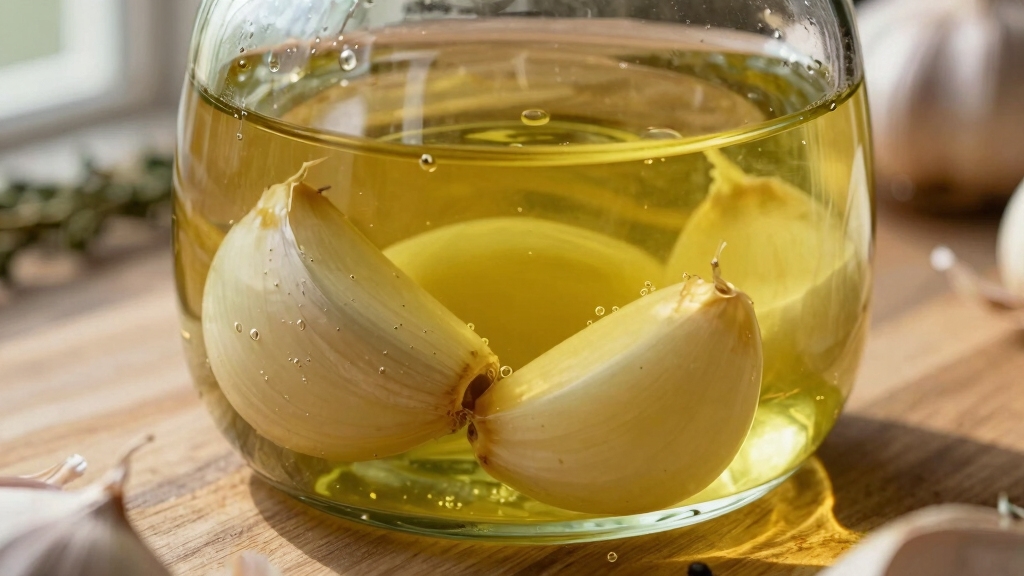
Finally, fill the jar fully with extra virgin olive oil, covering all cloves completely to create an anaerobic environment critical for preservation and safety.
Seal and Store Garlic in Oil Safely
Although properly packing garlic in olive oil reduces contamination risks, sealing and storing it correctly is crucial to prevent botulism and spoilage.
Proper sealing and storage of garlic in olive oil are vital to prevent botulism and spoilage risks.
After packing peeled, boiled, and dried cloves into sterilized jars, fully submerge them with extra virgin olive oil to exclude oxygen.
Use sterilized lids and seal jars promptly. Boil sealed jars briefly to enhance the vacuum and inhibit microbial growth.
Always refrigerate garlic-in-oil mixtures immediately, as low acidity and anaerobic conditions promote Clostridium botulinum toxin formation at room temperature.
Limit room exposure to under two hours. Keep refrigerated storage under 3 months, monitoring for off-odors or discoloration.
Avoid storing at ambient temperatures to eliminate botulism risk. Employ clean utensils to maintain sterility when accessing garlic.
These precise steps are essential to safe preservation without compromising quality or safety.
Freeze Garlic in Oil for Longer Storage
Proper refrigeration limits garlic in oil storage to a few months. Freezing extends its usability markedly while maintaining safety and flavor.
To freeze, pack peeled or confit garlic cloves fully submerged in olive oil into airtight containers or heavy-duty freezer bags. Remove air to prevent oxidation. Label with the date and freeze promptly. This method inhibits Clostridium botulinum growth by maintaining low temperature and oxygen exposure.
| Step | Details |
|---|---|
| Preparation | Peel, boil or confit garlic |
| Packing | Use sterilized, airtight containers |
| Submersion | Make certain cloves fully covered with oil |
| Freezing | Freeze immediately after packing |
| Storage Duration | Up to 4 months at stable -18°C |
Freeze garlic in oil to preserve quality and reduce spoilage risks effectively.
Use and Cook With Garlic Preserved in Oil
Tap into the versatility of garlic preserved in oil by incorporating it directly into your cooking and seasoning routines. Use grated or chopped frozen cloves straight from storage to maintain flavor integrity and reduce prep time.
The infused oil serves as a flavorful medium for sautéing or dressing salads, enhancing aroma and depth. When cooking, apply low heat to prevent oil degradation and preserve garlic’s delicate compounds.
Solidified oil can be spooned out with a dry utensil to avoid moisture contamination. Integrate preserved garlic as a substitute for fresh in any recipe, noting its mellowed profile from preservation.
Reserve the seasoned oil separately for dressings or marinades, leveraging its concentrated taste while ensuring safe handling to prevent spoilage.
Avoid Common Mistakes When Preserving Garlic
When preserving garlic in oil, you must avoid common errors that compromise safety and quality.
First, never store garlic oil mixtures at room temperature beyond two hours. This creates an anaerobic, low-acid environment ideal for Clostridium botulinum growth.
Second, skip unsterilized jars or lids. Use heat-treated glassware and boil lids to guarantee microbial control.
Third, don’t omit acidification. Since home acidifying is unreliable, precook garlic in vinegar or saltwater to reduce botulism risk.
Fourth, make certain garlic cloves are fully submerged under oil to prevent oxygen exposure and mold formation.
Finally, refrigerate the preserved garlic and consume within recommended timeframes: 2-3 months refrigerated or freeze for longer storage.
Avoid these mistakes to maintain microbial safety and preserve peak flavor and texture in your garlic-infused olive oil.
Frequently Asked Questions
Can I Use Garlic-Infused Olive Oil for Skin Care or Medicinal Purposes?
You shouldn’t use garlic-infused olive oil for skin care or medicinal purposes without caution.
The oil may contain botulinum spores if not properly acidified and stored, posing serious health risks.
Also, garlic compounds can cause skin irritation or allergic reactions.
For safe topical or medicinal use, rely on commercially prepared products with verified safety standards or consult a healthcare professional.
Homemade garlic oil isn’t sterile or standardized for such applications.
How Do I Tell if Garlic Preserved in Oil Has Gone Bad?
You tell if garlic preserved in oil has gone bad by checking for off odors like rancid or sour smells, which indicate spoilage.
Look for discoloration, such as darkening or cloudiness, and any mold growth on the surface.
If the oil is unusually thick or the garlic texture turns slimy, discard it.
Always note if storage time exceeds recommended refrigeration limits, as prolonged storage increases botulism risk despite no visible signs.
What Are the Best Herbs to Add for Flavor When Preserving Garlic?
The best herbs to add for flavor when preserving garlic are bay leaves, thyme, and basil. These herbs provide balanced aromatics without overpowering garlic’s essence.
Incorporate whole peppercorns for subtle spice. Make certain herbs are fresh and dry to prevent moisture contamination.
Use sterilized jars and fully submerge garlic and herbs in oil to inhibit microbial growth. This combination optimizes flavor while maintaining safety during preservation.
Can I Reuse the Olive Oil After Removing the Garlic Cloves?
Coincidentally, the olive oil you used with garlic isn’t ideal for reuse.
That’s because garlic-infused oil can harbor Clostridium botulinum spores, posing botulism risks, especially when stored improperly.
Even if the oil looks clear, it may contain invisible bacteria.
Technically, it’s safer to discard the oil after removing garlic cloves unless you boil it thoroughly to sterilize.
However, repeated heating degrades oil quality and safety.
Is It Safe to Preserve Other Vegetables in Olive Oil Using the Same Method?
No, you shouldn’t preserve other vegetables in olive oil using this method without proper acidification and sterilization. Low acidity and anaerobic conditions create a botulism risk similar to garlic-in-oil mixtures.
Unless you can reliably acidify and sterilize the veggies, it’s unsafe. Commercial products add acids to prevent toxin growth, but home methods rarely achieve this.
Always refrigerate and limit storage time to minimize bacterial hazards when preserving vegetables in oil.
Preserve Flavor, Protect Your Kitchen: Garlic Done Right
Preserving garlic in olive oil is like bottling sunshine if you handle it with care. By acidifying the garlic, sterilizing your tools, and freezing the mixture, you create a safe, flavorful treasure chest.
Avoid botulism’s hidden trap by rigorously following these steps. With precision and vigilance, you transform simple ingredients into a culinary powerhouse, ensuring every drop bursts with freshness and safety.
Your kitchen alchemy starts where science meets art; preserve wisely.