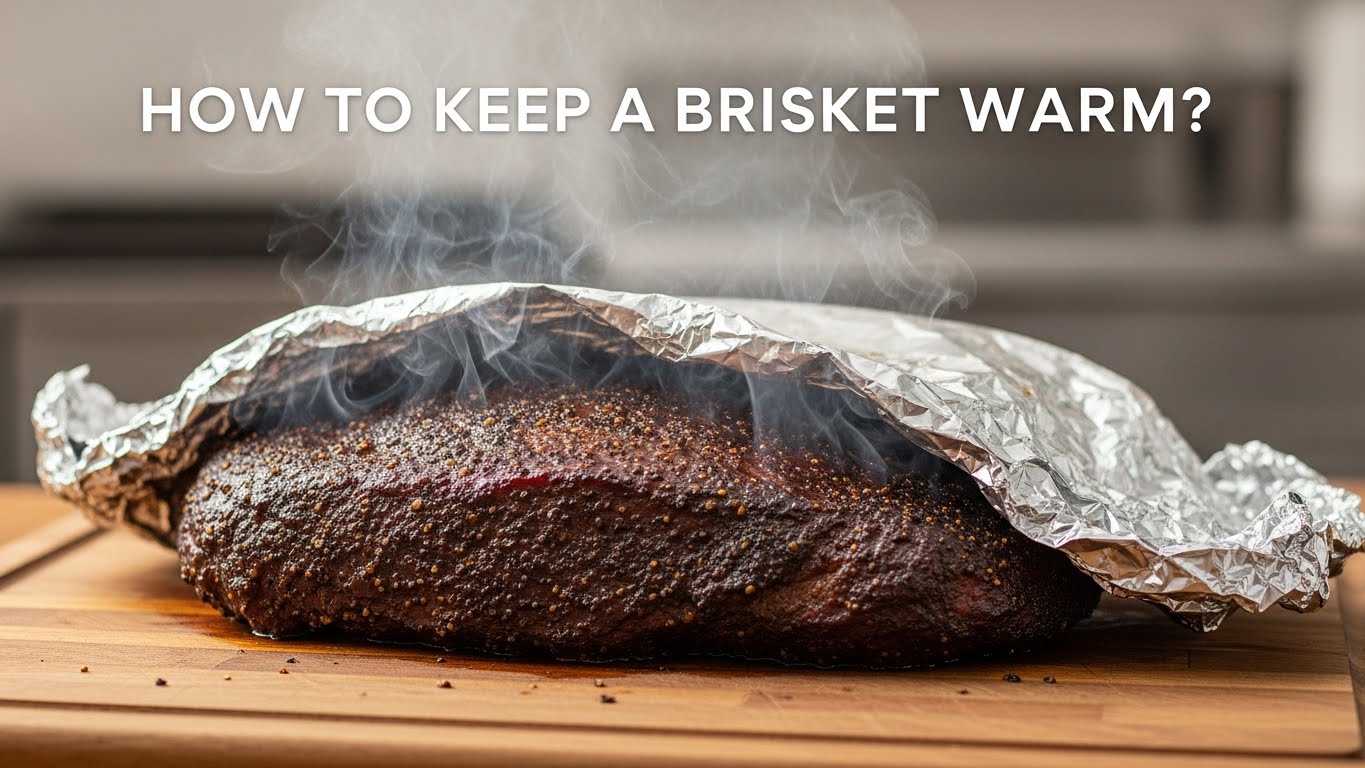
How to Keep a Brisket Warm? Wrapping and Holding Tips
To keep your brisket warm, maintain its internal temperature between 140°F and 165°F using a precise warming drawer, holding cabinet, or an insulated cooler preheated to trap heat.
Wrap the brisket tightly in butcher paper or foil to preserve moisture. Foil locks in juiciness but softens bark, while butcher paper balances moisture with texture.
Use a reliable probe thermometer to monitor temperature consistently. Controlling humidity and timing your hold guarantees tenderness and flavor. Explore deeper methods to master holding techniques and bark preservation.
Key Takeaways
- Hold brisket at 140°F–165°F to maintain safety, tenderness, and moisture without drying or overcooking the bark.
- Wrap brisket tightly in foil or butcher paper at 155°F–170°F to retain moisture and preserve bark texture during holding.
- Use insulated coolers or warming cabinets with controlled temperature and humidity for extended holding without drying.
- Place brisket seam-side down on towels inside a preheated cooler to minimize heat loss and maintain consistent temperature.
- Monitor internal temperature continuously, keeping it within ±5°F of 150°F to balance collagen breakdown and moisture retention.
Ideal Temperature Range for Holding Brisket
Although it’s essential to keep brisket safe from bacterial growth, you should hold it within the USDA’s recommended minimum of 140°F to guarantee food safety during extended periods.
The ideal holding range spans 140°F to 165°F, with 140°F being perfect for slicing and 150°F optimal for long-term holding without drying out the meat. Professionals often use foil or butcher paper for wrapping to balance moisture retention and bark preservation during holding.
Professionals often hold brisket at 170°F for up to 17 hours, but maintaining between 140°F and 150°F is common in commercial settings.
To prevent temperature drops, transfer the brisket at 165°F or higher, then maintain steady heat within this range.
Wrapping your brisket in foil or butcher paper before holding helps retain moisture, which is crucial because the resting period after cooking allows juices to redistribute, ensuring moistness.
Equipment Options for Keeping Brisket Warm
When you need to keep brisket warm for extended periods without sacrificing quality, selecting the right equipment becomes essential.
Commercial holding cabinets offer precise temperature control (86–185°F) and humidity trays, ideal for batch holding without drying out the meat. The ROVSUN 4-Tier Hot Food Warmer is a budget-friendly option that holds briskets at the ideal temperature, preventing dry meat during the holding period. These units help maintain temperatures above 140°F, ensuring food safety during extended holding.
Commercial holding cabinets provide precise temperature and humidity control, perfect for keeping brisket moist during batch holding.
Insulated coolers, like Cambro “Cooler Rest,” provide a low-energy option for 2–6 hour rests by trapping heat passively. However, you must monitor temps to avoid food safety issues.
Domestic ovens can serve as holding devices, but their minimum temps often run too high, risking overcooking. Commercial ovens with better humidity control are preferable.
For short-term holding or serving sliced brisket, warming drawers or mats work well.
Match your equipment choice to your hold time, capacity needs, and power availability to maintain brisket quality efficiently.
Wrapping Techniques to Retain Moisture and Flavor
Selecting the right wrapping technique plays a critical role in preserving your brisket’s moisture and flavor during the resting phase.
You can choose foil wrap for ultimate moisture lock and tenderizing steam but expect a softer bark. Butcher paper offers balanced moisture retention with a smokier bark, ideal for traditionalists. The boat method lets your bark breathe while catching juices underneath, preventing sogginess.
Wrapping also helps to lock in moisture, preventing the brisket from drying out and ensuring a juicy final product. Wrapping at the correct time also supports maintaining internal temperature for optimal tenderness.
| Technique | Moisture Control | Bark Quality |
|---|---|---|
| Foil Wrap | Excellent | Softens due to steam |
| Butcher Paper | Moderate | Crisp, smoky |
| Boat Method | Balanced | Firm, protected |
Wrap tightly at 155-170°F, adding ½ to ¾ cup broth or juice for flavor infusion. Seal seam-side down to lock in juices and preserve texture.
Best Practices for Using Insulated Coolers
When you wrap your brisket tightly, it really helps lock in those delicious juices. Now, if you pair that with a well-insulated cooler, you can keep that ideal temperature for hours on end. It’s a win-win! Properly maintaining temperature prevents bacterial growth and preserves flavor.
Just make sure to choose a cooler that fits your brisket snugly. This way, you minimize any air pockets that could mess with the temperature control. Using insulated coolers designed for heat retention ensures better temperature stability.
Next up, grab some ice packs or pre-frozen water bottles to keep the environment nice and stable. You want to make sure those temperatures don’t rise above 140°F. Remember to fully fill all empty spaces with ice packs to maintain consistent temperature inside the cooler.
And hey, don’t forget to keep an eye on things with a thermometer. This way, you can ensure your brisket stays both safe and flavorful during the holding period. Happy cooking!
Wrapping Techniques
Although proper wrapping might seem straightforward, mastering the techniques for using insulated coolers can dramatically extend your brisket’s warmth and preserve its bark.
Start with a primary wrap: use butcher paper for a breathable layer that maintains bark texture, or heavy-duty foil to trap moisture and speed heat retention. Applying a thin layer of vegetable oil on foil can also help create a moisture barrier that prevents drying out.
Add a secondary layer, like foil or freezer paper, for longer holds. Then wrap a clean cotton towel or insulated blanket around the brisket to add thermal mass and protect the cooler interior. Using towels under, around, and on top of the brisket adds insulation; towels can be heated in a dryer beforehand to improve heat retention towel insulation.
Seal all seams tightly to minimize air exchange and reduce convection. Position the brisket flat with seams up, on a towel cushion inside the pre-warmed cooler.
Fill voids with towels to limit air volume, and place towels on top before closing the lid for maximum insulation. Ensuring proper ventilation inside the cooler helps prevent moisture buildup and preserves the brisket’s texture.
Temperature Maintenance
Mastering wrapping techniques sets a solid foundation, but maintaining your brisket’s temperature inside an insulated cooler demands equal attention.
Begin by preheating the cooler with water above 140°F (60°C) for 10–15 minutes to prime insulation, then drain thoroughly. Using a high-quality insulation method significantly reduces heat loss during resting.
Wrap the brisket tightly in foil or butcher paper, followed by multiple towels to absorb moisture and trap heat. This rest period allows the collagen to continue melting and significantly increases tenderness.
Use a high-quality, Yeti-style cooler for superior thermal retention, which can hold temperature safely for up to 12 hours.
Keep the internal temperature above 140°F (60°C) by monitoring with a probe thermometer, avoiding frequent cooler openings.
If you notice temperature dropping near the danger zone, transfer the brisket to a warming drawer or oven set between 150-170°F (66-77°C) to maintain tenderness and safety.
Managing Humidity During Extended Holds
When you’re holding brisket for an extended period, controlling humidity is key. You want to keep that meat juicy, but you also don’t want to lose that delicious, crispy bark. It’s all about finding that sweet spot with moisture levels. Managing humidity levels effectively prevents the brisket from becoming either soggy or too dry.
If the humidity is too high, your brisket could end up soggy, which we definitely want to avoid. Using a cooler with towels and steam is a popular method to maintain heat and humidity in home setups without commercial holding ovens.
On the flip side, if it’s too low, you risk drying it out. So, it’s really a balancing act.
Let’s dive into how adjusting humidity can affect both the texture and flavor of your brisket while it’s holding. It’s an important part of the process that can make all the difference in your final result!
Humidity’s Role Explained
Humidity plays a crucial role in maintaining your brisket’s moisture and texture during extended holds by preventing evaporative cooling. This cooling can cause the meat to sweat and lose juiciness. Evaporative cooling is inevitable in an open BBQ system unless external pressures or full immersion are applied, making humidity management key during holding. Spritzing the brisket surface during the cook can help maintain moisture and improve bark texture, which complements humidity control during holding.
Achieving near 100% humidity inside the holding environment stops moisture evaporation from the brisket surface, preserving its tenderness and slowing the stall effect. However, even at high humidity, internal water exudation from the meat continues, so complete prevention of moisture loss is not possible.
Using water pans strategically placed opposite the heat source generates vapor that saturates the air and keeps the meat moist. While water pans mainly act as a heat sink/thermal buffer, they can also contribute some moisture vapor to the holding environment.
Wrapping the brisket in foil or butcher paper completely blocks evaporation, pushing temperatures upward faster while retaining moisture. This method reduces evaporative cooling and changes cook dynamics by minimizing moisture loss from the meat surface.
Monitor smoke quality: thin blue smoke signals proper humidity balance, while thick smoke indicates dryness. Increased airflow over the meat raises evaporation rate, which can dry the brisket and alter smoke flavor if humidity is not controlled.
Maintaining this equilibrium during holds prevents drying out, ensuring your brisket stays succulent, even after hours in the cooker. Using a spray bottle with a fine mist to spritz can help keep the surface hydrated without oversaturating during the cooking process.
Balancing Moisture and Bark
Although holding temperatures are key to finishing your brisket perfectly, managing moisture and bark texture during extended holds requires careful control of humidity and wrapping methods.
To balance these factors effectively, consider these expert strategies:
- Use butcher paper for initial wrapping to retain moisture while preserving bark texture. Switch to foil for longer holds to maximize juiciness at the expense of bark firmness.
- Maintain moderate humidity inside holding cabinets using water pans or steam injection to prevent surface drying and bark checking without causing sogginess. This helps preserve the brisket’s moisture and flavor.
- Monitor internal brisket temperature within ±5°F of 150°F, the sweet spot that balances collagen breakdown and moisture retention without overcooking or drying out the meat.
Mastering these techniques guarantees your brisket stays tender and juicy with a desirable bark throughout extended holding periods.
Monitoring Internal Brisket Temperature Accurately
When monitoring internal brisket temperature accurately, selecting the right probe placement and thermometer is essential to achieving consistent results. Injecting a brisket 12-24 hours before cooking can help maintain moisture retention and improve tenderness during the cooking process.
Insert the probe fully into the thickest part of the point, avoiding fat pockets or bones, ensuring you hit the coldest center.
Use a reliable thermometer like the ThermoPro TP980 or Chef’s Temp Quad XPro, both offering multiple probes and precise ±0.5°F accuracy.
Leave the probe in at least 10 seconds for stable readings, and monitor every 30 minutes during resting or warming phases. Maintaining the brisket temperature between 195°F and 205°F ensures optimal tenderness by fully converting collagen to gelatin.
Set a high alarm at 203°F to catch perfect doneness without low alarms.
Consider using wireless models for remote tracking so you can manage temperature without opening the cooker, preserving heat and moisture effectively.
Timing Strategies for Resting and Serving
Since resting is essential for achieving a tender, juicy brisket, you’ll want to time it carefully to let juices redistribute and collagen settle properly. Aim for a minimum rest of 1 hour after the brisket hits 195–205°F internal temp, with many pitmasters preferring 2 hours for ideal texture.
For longer holds, use insulated methods like coolers, extending rest up to 4–8 hours safely. This resting period also allows the collagen to gelatinize, which significantly enhances the meat’s texture. Using oak wood during smoking can impart a rich, medium smoky flavor that enhances the overall brisket experience.
- Manage carryover cooking by briefly unwrapping to vent heat and reduce internal temp below 185°F before resealing.
- For short service (1–3 hours), rest in a cooler or foil wrap, slicing as needed.
- For extended service, hold at ≥140°F in warming cabinets, slicing on demand to maintain moisture and safety.
Common Challenges When Holding Brisket Warm
Resting your brisket properly sets the stage, but holding it warm brings its own set of challenges you need to manage carefully.
One major hurdle is toughening; as brisket cools in a cooler, fibers contract, squeezing out moisture and toughening texture, especially after two hours.
Cooling brisket causes fibers to contract, forcing out moisture and toughening the meat, particularly after two hours.
Overcooking from carryover heat also risks drying out your meat. Pulling too early means the residual heat in a warm holding cabinet continues cooking, pushing internal temps beyond 140°F. Many Texas BBQ establishments cook briskets the day before service, pulling them off pits late at night to manage timing and temperature.
The lean flat section is particularly vulnerable, drying out during extended holds without adequate wrapping or venting.
Temperature fluctuations further complicate matters, causing uneven cooking and moisture loss.
To avoid these pitfalls, maintain steady, precise temperatures around 150°F with controlled humidity. Use tight wrapping to trap juices and time your holds to prevent fiber contraction and dryness.
Tips for Maintaining Bark Texture While Holding
Although holding your brisket warm is essential, preserving the bark’s crisp texture requires precise control of temperature, humidity, and wrapping techniques. You want to avoid sogginess and maintain that robust crust by managing these factors carefully.
- Wrap Smartly: Use butcher paper instead of foil to allow moisture to escape. Apply the Texas Crutch only after the bark fully forms. Double wrapping is sparing; use minimal au jus and foil bands only on dry spots.
- Control Temperature: Keep your holding environment between 140-160°F. Avoid exceeding 165°F to prevent condensation that softens bark.
- Manage Humidity: Create dry conditions with False caverns in dry towels inside your cooler. Preheat it with hot water to stabilize heat. Unwrap brisket just before serving to restore bark crispness.
Frequently Asked Questions
Can I Hold Brisket Warm Overnight Safely Without Drying It Out?
Imagine your brisket as a treasure you want to guard all night.
You can hold it warm safely overnight by wrapping it tightly in foil or butcher paper, then placing it in an oven set to 170°F.
This low, steady heat keeps it above 140°F, preventing bacteria and locking in moisture.
Avoid drying by not exceeding this temperature, and make sure you rest it 2-3 hours beforehand for tender, juicy results.
How Long Can Brisket Be Kept Warm Before Quality Declines Noticeably?
You can keep brisket warm for up to 10-12 hours before quality noticeably declines. During this window, hold it around 140-150°F to maintain juiciness and texture without overcooking.
After two hours, expect peak flavor and tenderness to start fading slowly. To minimize drying, wrap brisket tightly in foil and use a warming drawer or oven with stable temperature control.
Beyond 12 hours, expect diminished taste and moisture.
Is It Safe to Slice Brisket Several Hours Before Serving?
It’s not ideal to slice brisket several hours before serving because juices escape, leading to dryness and oxidation.
To keep it safe and juicy, rest the whole brisket until it reaches 140-150°F internally.
Then hold it wrapped tightly in foil or butcher paper.
Slice right before serving or reheating to preserve moisture and flavor.
This method minimizes food safety risks and maintains peak tenderness.
Can Adding Broth Inside the Wrap Affect the Brisket’s Flavor?
Yes, adding broth inside the wrap does affect your brisket’s flavor.
It infuses deeper, rich beefy notes and keeps the meat moist by creating a steamy environment.
However, be cautious: foil wrapping with broth can introduce a pot-roasty taste and soften your bark’s texture.
To balance flavor and texture, use low-sodium broth sparingly.
Consider re-crisping the bark at 225°F after unwrapping to restore its firmness.
What Is the Best Way to Reheat Brisket if It Cools Below 140°F?
If your brisket cools below 140°F, the best way to reheat is low-and-slow in the oven at 225–275°F.
Wrap it tightly in foil with a splash of beef broth to lock in moisture. Heat until the internal temp reaches 160–165°F, checking every 20–30 minutes.
For better texture, you can also use sous-vide at 145–165°F, reheating gently without drying or toughening the meat.
Extend Your Brisket’s Perfect Texture
By keeping your brisket nestled at the perfect warmth, like a cozy campfire glowing just right, you’ll lock in juicy tenderness and smoky flavor.
Wrap it tight, monitor temps closely, and manage humidity to preserve that mouthwatering bark.
With these expert techniques, your brisket stays ready for the table, every slice bursting with savory goodness. Mastering the hold means your hard work shines through, turning every bite into a memorable feast.