How to Cook Smoked Sausage on the Stove? Perfect Every Time
To cook smoked sausage on the stove, start by selecting a quality poultry sausage, fully thawed and patted dry.
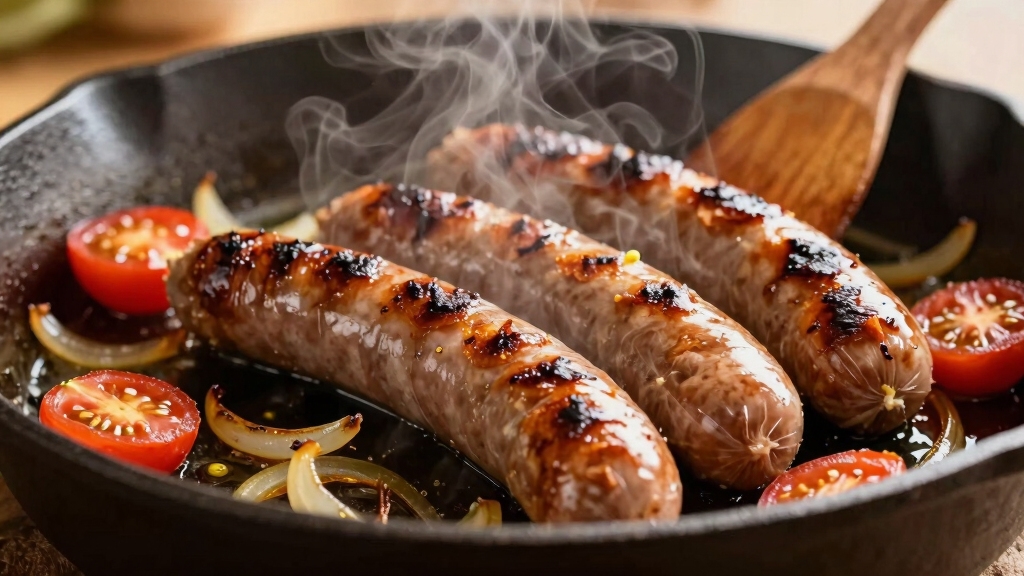
Preheat a heavy skillet on medium-high heat, add a bit of oil and butter, then sear the sausage, turning every few minutes for even browning.
After about 3 minutes, add a splash of water, cover to steam briefly, then uncover to crisp the casing.
Cook until hot throughout, juicy, and browned, perfect for your meal. Want tips for juiciness and flavor pairings?
Key Takeaways
- Preheat a heavy-bottomed skillet over medium-high heat with 1 tablespoon olive oil and 1 tablespoon butter for even searing.
- Slice smoked sausage diagonally into quarter-inch pieces for even browning and better presentation.
- Sear sausage pieces undisturbed for 3 minutes on each side until a crisp, browned crust forms.
- Add 1/4 cup water, cover, and steam for juiciness, then uncover to finish browning the casing.
- Cook until internal temperature reaches 160°F and sausage is firm with no pink inside; use an instant-read thermometer.
Recipe at a Glance
| Ingredients / Tools | Steps / Actions |
|---|---|
| 1 lb smoked sausage | Slice into 1/2-inch pieces or leave whole depending on preference |
| 1 tbsp olive oil | Heat oil in a skillet over medium heat |
| Skillet / Frying pan | Add sausage slices to the hot skillet |
| Tongs or spatula | Turn sausage occasionally for even browning |
| Optional: onions, bell peppers | Add vegetables halfway through cooking for extra flavor |
| Salt & pepper | Season to taste |
| Optional: garlic or spices | Sprinkle desired spices while cooking |
| Lid (optional) | Cover pan for 5 minutes to retain juices if needed |
| Timer | Cook for 8–12 minutes or until sausage is browned and heated through |
| Plate & serving utensils | Serve hot with sides or in sandwiches |
Choosing the Right Smoked Sausage for Stovetop Cooking

Selecting the right smoked sausage for stovetop cooking sets the foundation for a flavorful and satisfying meal. You’ll want to contemplate the type, such as beef, or poultry, based on your desired taste and texture.
Understanding the fat content of the sausage helps determine the best cooking method and flavor outcome.
Choosing the right smoked sausage—beef, or poultry—is key to a tasty stovetop meal.
Beef sausages offer a bolder, heartier bite that holds up well to medium heat around 300-350°F, ideal for skillet dishes.
If you prefer something lighter, poultry sausages bring a mild, delicate flavor but need careful cooking to stay moist. Remember that poultry sausages are prone to drying out if overcooked, so moderate heat and attentive cooking are key.
Don’t forget to explore flavor profiles, from smoky garlic to spicy jalapeño cheddar, to match your meal’s mood.
Essential Equipment for Cooking Smoked Sausage
Once you’ve picked the perfect smoked sausage to suit your taste, having the right tools at hand makes all the difference in achieving that ideal cook.
A heavy-bottomed skillet, like cast iron, guarantees even heat and a golden-brown sear without overcrowding your sausage links. It’s also important to clean your cookware properly to avoid rust and mold buildup that can affect flavor and safety.
Tongs let you flip the sausages gently, preserving their casing. An instant-read meat thermometer guarantees your sausage reaches the safe internal temperature of 165°F without overcooking.
Finally, a lid for your pan helps trap steam when you add a splash of water or broth, keeping the sausages juicy and tender.
Using a meat thermometer is important to confirm the sausages have reached the recommended internal temperature for safety and optimal texture.
- Heavy-bottomed skillet (cast iron preferred)
- Tongs for safe flipping
- Instant-read meat thermometer
- Pan lid for steam retention
Preparing Your Sausage for the Skillet
Before you heat your smoked sausage, make sure it’s fully thawed to guarantee even cooking and a juicy result. Thawing guarantees the sausage heats uniformly, avoiding cold centers or overcooked edges.
Check for freshness by inspecting the casing for any sliminess, off odors, or discoloration. If store-bought, confirm the packaging is intact and not past its expiration date.
Once thawed, pat the sausage dry with paper towels to achieve a crispier casing. Skip rinsing to prevent bacterial spread. Smoking sausages at temperatures of 200°F or above ensures safety without the need for curing.
You can choose to slice the sausage into quarter-inch pieces to release flavorful grease and help them brown evenly or leave them whole to maintain their shape.
Lightly pricking the casing helps release steam and prevents splitting during cooking. These steps prepare your sausage perfectly for the skillet.
Setting the Optimal Heat for Cooking
When cooking sausage, it’s best to start with medium-high heat. This way, you can get that nice, crispy skin without drying it out. Maintaining the right temperature is crucial to prevent bitterness and achieve a balanced flavor.
But keep in mind, the thickness of the sausage matters! Thicker links might need a gentler touch so they can warm through evenly.
Finding that balance is key. To ensure safety, the internal temperature of smoked sausage should reach 160°F (71°C) before serving.
Once you master it, you’ll be able to enjoy juicy, perfectly cooked smoked sausage every single time!
Medium-High Heat Importance
Mastering medium-high heat is key to cooking smoked sausage perfectly on the stove. This heat level crisps the exterior without charring, locking in juicy flavor and preventing casing splits.
It also rapidly brings the sausage’s core to the USDA-recommended 160°F, assuring safety without drying out the meat.
Proper temperature control and timing are essential to maintain optimal texture and flavor during cooking.
Here’s why you should embrace medium-high heat:
- Balances quick reheating with even browning at 350-400°F stove surface temperatures. This temperature range is ideal for creating a desirable crust similar to Maillard reactions that enhance savory taste.
- Assures the sausage reaches the safe internal temperature of 160°F in just 10-15 minutes.
- Optimizes texture by creating a crisp skin while maintaining tenderness inside.
- Speeds cooking time markedly compared to low smoker or baking methods.
Smoked sausages are typically already cooked but benefit from reheating with medium-high heat to evenly warm through and enhance their smoke flavor.
Using medium-high heat guarantees a flavorful, safe, and perfectly cooked smoked sausage every time.
Adjusting Heat for Thickness
Adjusting the stove’s heat based on your sausage’s thickness guarantees a perfectly cooked link without splitting or drying out.
For thin sausages, set your skillet to medium heat around 300-350°F. Add a splash of water and cover the pan to keep them juicy, turning every 2-3 minutes. Cooked smoked sausage freezes well for later use, so you can prepare extra and save some for quick meals.
Wrapping or covering during cooking helps retain moisture and accelerates even heat distribution, much like the stall effect in barbecue.
Aim for an internal temperature of 140°F within 10-12 minutes. For thicker links, lower the heat to medium-low, about 325°F.
Start by steaming with water, covered for 12-15 minutes, then uncover to brown gently. Monitor internal temps, targeting 160°F for raw and holding 152°F if fully smoked.
Avoid going above 350°F to prevent the casing from bursting. Preheat your skillet 2-3 minutes and use a thermometer for accurate, even cooking.
Step-by-Step Stovetop Cooking Process
First things first, grab your cast-iron skillet and heat it up over medium-high heat. You want to wait until a shimmering layer of olive oil coats the surface—this is when you know it’s ready to go.
Before adding the sausage, grease the skillet with cooking spray to ensure even cooking and prevent sticking proper technique.
To maintain your skillet’s performance, remember to apply a thin layer of oil after each use to preserve the seasoning and prevent rust.
Now, while that skillet is warming up, take your smoked sausage and slice it on an angle into bite-sized pieces. Once the skillet is nice and hot, toss those sausage pieces in there.
Just a tip: make sure not to overcrowd the pan; you want them to have some space to brown nicely.
Let them sit there undisturbed for about three minutes. This is key—don’t rush it! You want each side to develop that rich, dark crust that gives the sausage such great flavor.
After three minutes, you can go ahead and turn them to brown the other side.
Preparing the Skillet
Choose a large skillet with a wide base to give you plenty of room for stirring and to prevent any overflow when cooking your smoked sausage and vegetables. Using a large skillet is recommended because many ingredients are added and stirring space is needed.
A cast-iron skillet offers even heat distribution, while a nonstick skillet minimizes sticking. Before heating, make sure the skillet is dry to avoid splatter. For safety, consider wearing heat-resistant gloves when handling the hot skillet.
Then, follow these steps:
- Place the skillet on medium-high heat and preheat for 1-2 minutes until you see a shimmer or faint smoke.
- Add 1 tablespoon olive oil and 1 tablespoon butter to combine lubrication with rich flavor.
- Allow the fats to melt completely, coating the skillet evenly.
- Adjust heat as needed and prepare to add your sausage for cooking.
This careful prep guarantees an ideal cooking surface.
Cooking and Browning
Heat your skillet to medium-high, aiming for a temperature around 300-350°F (150-175°C) to create a perfect sear without overcooking the sausage.
Place whole links or cut pieces in the hot pan, spacing them evenly to avoid overcrowding. For best results, use a large cast-iron skillet to evenly distribute heat.
Ensuring even heat distribution helps achieve a consistent crust and juicy interior.
Let the sausages cook undisturbed for about 3 minutes until they develop a light golden crust.
Flip them every 2-3 minutes, browning all sides evenly while maintaining a juicy interior.
After initial browning, add a quarter cup of water and cover the skillet to steam, ensuring the sausages reach a safe internal temperature of 165°F.
Finally, uncover for a crisp finish. This method delivers sausages with a flavorful snap and tender, juicy bite in 8-12 minutes.
How to Tell When Your Sausage Is Done?
Although it can be tempting to rely solely on appearance, knowing when your sausage is truly done means checking both its internal temperature and physical cues.
Sausages should reach at least 160°F internally, with some fully smoked varieties done at 140-150°F. To guarantee perfect doneness, follow these key steps:
- Use an instant-read thermometer, inserting it into the center for accuracy.
- Look for juices breaking through the casing and a browned, firm exterior with a satisfying snap.
- Check that the sausage feels steaming hot in the center when pierced.
- Confirm there’s no pink inside—an even color throughout signals it’s cooked through.
Additionally, always ensure your sausage has been thoroughly thawed before cooking to achieve optimal results. Proper thawing and cooking to the correct temperature help prevent foodborne illness.
Flavor Pairings and Serving Suggestions
When pairing smoked sausage, you’ll find its rich, smoky flavor shines brightest alongside bold spices, hearty vegetables, and comforting starches.
Using a seasoning blend like Slap Ya Mama Cajun can enhance the dish with authentic Cajun flavor and balanced heat.
Try Cajun-inspired dishes like jambalaya or red beans and rice with shrimp to bring heat and depth. For veggies, sauté peppers and onions together or stuff smoked sausage into bell peppers for a satisfying weeknight meal.
Potatoes also complement perfectly; think hash with peppers or a cheesy frittata with caramelized onions.
Smoked sausage and potatoes also pair well in casseroles that require minimal dishes, making them ideal for family meals with simple, throw-together flavors comfort-food style casserole.
Grains and pasta work wonders; toss smoked sausage into Cajun Alfredo or mix with farro and vegetables for a nutrient-rich dish.
Don’t forget sweet and tangy sides like applesauce or creamy mac and cheese to balance the smokiness.
These pairings elevate your sausage into memorable, flavorful meals every time.
Tips for Perfect Browning and Juiciness
Pairing smoked sausage with the right flavors is only part of the experience. Getting that perfect balance of a golden, crispy exterior and juicy interior elevates your dish even more.
To accomplish this, focus on heat control and moisture retention. Here’s how to nail it:
- Start by poaching the sausage gently in water at 160-190°F to lock in moisture before searing. Using salted water during poaching helps enhance the cooking process and flavor.
- Sear all sides over medium heat until a rich brown crust forms. Add a splash of water or broth and cover to steam.
- Maintain medium heat, around 300-350°F, to avoid scorching and ensure even cooking.
- Use an instant-read thermometer to confirm a safe 160°F internal temperature. Overcooking dries it out, so pull it off right then.
This method guarantees a juicy inside wrapped in a perfectly browned skin.
Quick Side Dishes to Complement Your Sausage
You’ll often find that the best smoked sausage meals are elevated by quick, flavorful side dishes that complement their rich, smoky taste.
Whether you want something creamy, crunchy, or hearty, these sides enhance your sausage perfectly. Smoked sausage pairs wonderfully with classic dishes like baked beans, potato salad, and roasted vegetables, making meal planning simple and delicious.
Mac and Cheese offers comforting creaminess, while Coleslaw brings a crisp, tangy crunch.
Baked Beans add a sweet, filling touch, and sautéed vegetables provide a smoky freshness.
Potatoes, roasted or boiled, round out the meal with earthy warmth.
| Side Dish | Why It Works |
|---|---|
| Mac and Cheese | Creamy, pairs with all sausage |
| Coleslaw | Crisp texture, cool contrast |
| Baked Beans | Sweet, hearty, easy to prepare |
Pick any to balance flavors and textures effortlessly.
Frequently Asked Questions
Can Smoked Sausage Be Cooked From Frozen on the Stove?
Yes, you can definitely cook smoked sausage from frozen on the stove.
Start by simmering the sausages in a bit of water or chicken stock to gently thaw and heat them through.
Then, uncover the pan, add oil, and brown the sausages by turning them regularly.
This method guarantees even cooking, juicy insides, and a crispy exterior.
Just check they reach 165°F inside for safe, delicious results every time.
How Do You Store Leftover Cooked Smoked Sausage?
To store leftover cooked smoked sausage, swiftly seal it in shallow, airtight containers to stifle spoilage and sustain savoriness.
Slide your sausages into the fridge within two hours, keeping the temperature at 40°F or below.
Consume within 3-4 days to capture the best taste, or freeze in heavy-duty bags for up to two months.
Always avoid air to prevent dryness and freezer burn, ensuring your sausage stays scrumptiously safe and savory.
Is It Safe to Reuse Skillet Drippings for Gravy?
Yes, you can safely reuse skillet drippings for gravy if you handle them properly.
After cooking, strain the drippings to remove solids, then refrigerate them in a sealed glass container.
Before reuse, heat the drippings thoroughly, boiling for about twenty minutes to kill any bacteria.
Always check for sour odors or color changes; discard if spoiled.
Proper storage and reheating guarantee your gravy stays delicious and safe to enjoy.
Can You Cook Smoked Sausage With Vegetables in the Same Pan?
Yes, you can definitely cook smoked sausage with vegetables in the same pan.
Start by browning the sausage to render flavorful oils, then use that to sauté your veggies like bell peppers, zucchini, and corn.
This method infuses your veggies with savory sausage goodness while keeping everything juicy and tender.
Just keep the heat medium to medium-high, stir often, and season well for a delicious one-pan meal that’s quick and satisfying.
What Is the Best Way to Reheat Cooked Smoked Sausage?
The best way to reheat cooked smoked sausage is gently on the stovetop.
Warm a skillet with a little oil over medium heat, then add the sausage. Turn it frequently to heat evenly without drying out.
Alternatively, you can microwave them covered with a damp paper towel in short bursts to keep moisture.
Avoid high heat to preserve flavor and juiciness. This way, your sausage stays plump and delicious every time.
Serve and Savor – Delicious Side Ideas to Pair with Sausage
Now that you’ve mastered the art of cooking smoked sausage on the stove, just wait until you hear that satisfying sizzle and see the golden-brown crust form.
But here’s the secret: the perfect bite isn’t just about cooking—it’s about timing and technique.
Ready to release juicy, flavorful sausage every time? Keep these tips close, and you’ll never settle for anything less than mouthwatering perfection.