How to Choose a Good Brisket: Expert Guide
To choose a good brisket, focus on cuts and marbling. Lean flats cook faster but need moisture care. Fattier points benefit from slow, low heat to render fat and stay juicy.
Pick a balance with a 12–15 pound whole packer brisket for flavor and portions. Look for prime or choice grades with visible, even marbling and a smooth fat cap.
Proper trimming and matching your wood smoke will enhance flavor and tenderness. Understanding these basics guarantees a mouthwatering result and sets you up for deeper mastery.
Key Takeaways
- Select a whole packer brisket weighing 12–15 pounds for balanced flavor, tenderness, and portion size.
- Look for consistent intramuscular marbling, especially in the point, to ensure juiciness and rich flavor.
- Choose USDA Prime or Choice grades for better marbling and forgiving cooking windows.
- Inspect the fat cap for a smooth, even layer and trim any thick or uneven patches to avoid greasiness.
- Consider flat cut for leaner, faster cooks and point cut for fattier, juicier results suited to slow smoking.
Know Brisket Cuts: Flat vs Point
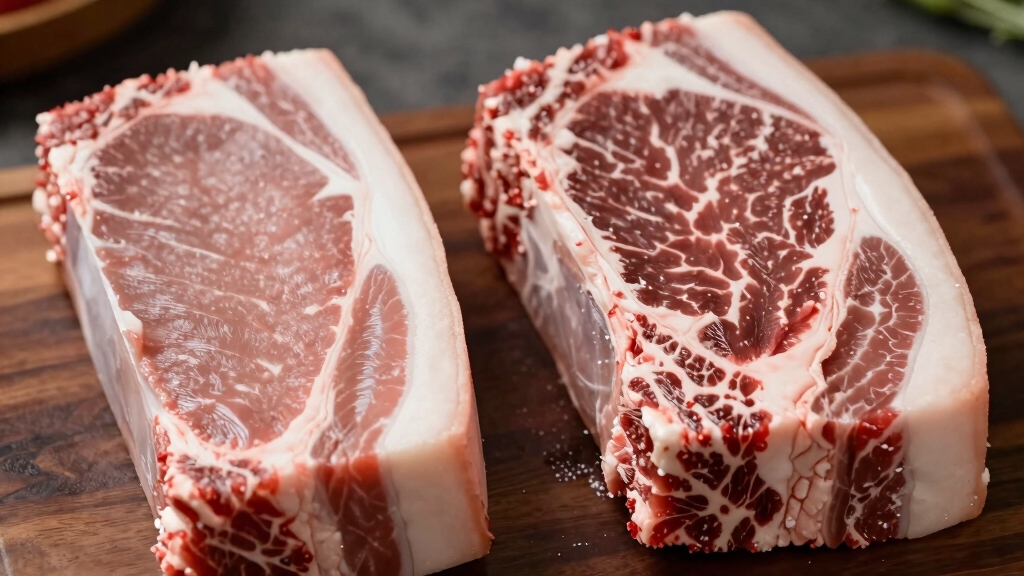
Understanding the difference between flat and point cuts is essential when choosing your brisket. Each offers unique qualities that affect flavor, texture, and cooking methods.
The flat cut, or first cut, is leaner, with a uniform rectangular shape perfect for slicing into neat sandwiches. It cooks faster but demands careful handling to avoid dryness.
The flat cut is lean, rectangular, cooks quickly, and is ideal for neat sandwich slices but needs careful cooking to stay moist.
The point cut, also known as the deckle or second cut, has thicker fat marbling and connective tissue. This makes it juicier and ideal for burnt ends or shredding.
When you pick a whole packer brisket, you get both cuts attached, weighing around 10-16 pounds. Knowing these distinctions helps you match your cooking style and desired results, ensuring flavorful, tender brisket every time.
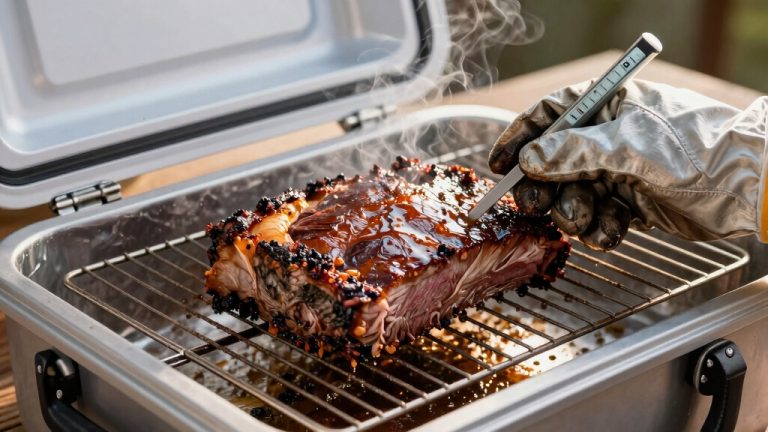
For the most accurate cooking results, it’s recommended to insert a temperature probe in the thickest part of the flat to monitor doneness precisely.
Pick the Right USDA Grade for Your Brisket
Choosing the right USDA grade for your brisket can dramatically influence the flavor, tenderness, and overall success of your cook.
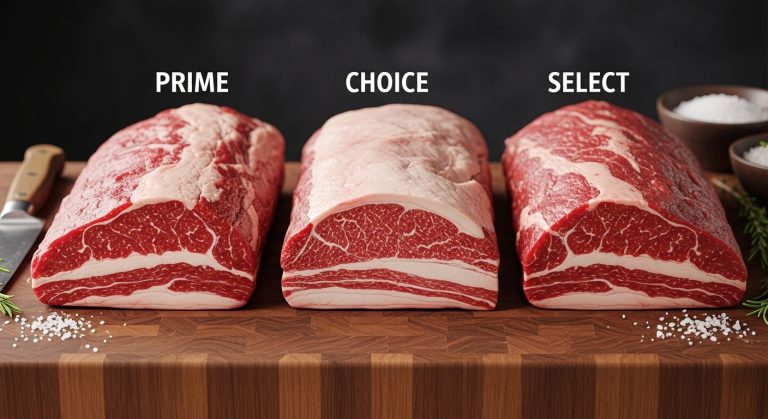
Prime brisket offers the highest marbling, making it incredibly tender and rich, which gives you a forgiving cooking window.
If you want a balance of quality and cost, Choice grade briskets provide good marbling with excellent flavor.
They are often preferred by pitmasters for better yield and taste.
Select grade has the least marbling, so it demands careful cooking to avoid dryness but can work if you’re cautious.
Remember, your grade choice sets the foundation: Prime for indulgence, Choice for versatility, and Select if you’re ready to manage a leaner cut.
Picking wisely guarantees your brisket shines on the plate every time.
Understanding the impact of intramuscular fat helps explain why marbling is so crucial for juiciness and tenderness.
Identify Marbling and Fat in Brisket
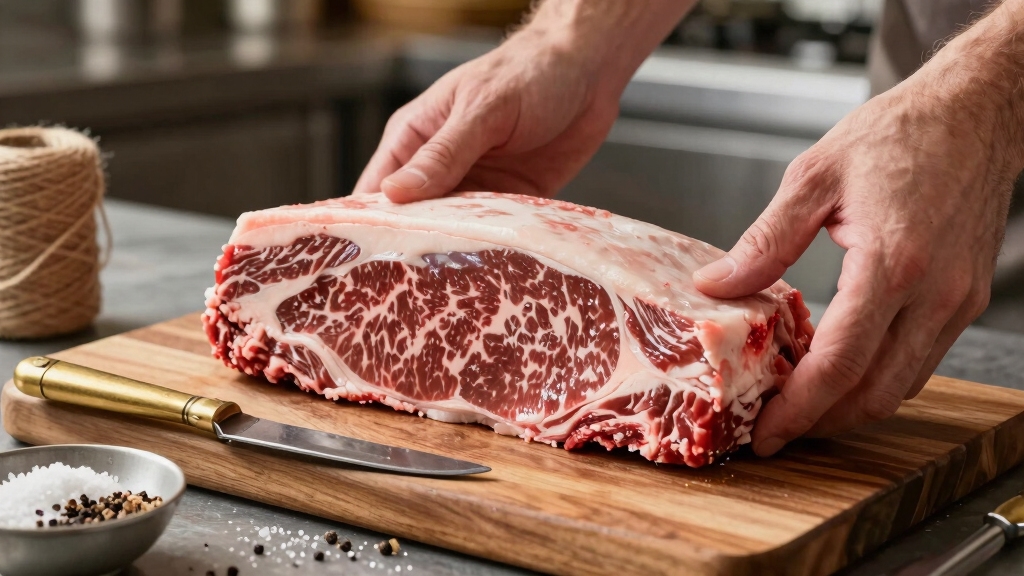
When you’re checking out a brisket, take a good look at the marbling patterns. You really want to focus on the point cut, where that fat weaves its way through the muscle. This isn’t just for show—it actually boosts the flavor and moisture of the meat.
And, let’s be real, fat distribution is super important. It plays a huge role in how the meat renders during cooking. The right amount of fat keeps your brisket tender without turning it into a greasy mess.
For cuts like the shoulder steak, understanding the role of connective tissue helps in choosing the right cooking method to preserve tenderness.
Marbling Patterns Explained
Marbling plays a crucial role in how your brisket will taste and hold moisture during cooking. Those thin streaks of intramuscular fat melt slowly, infusing the meat with juiciness and rich flavor.
When you examine brisket, look closely at the marbling patterns. The point cut typically boasts generous fat veins, promising succulent tenderness. The flat cut has leaner, subtler marbling that demands careful cooking.
Marbling’s delicate webs guarantee each bite bursts with flavor and moisture. Fat ribbons in the point create that coveted buttery mouthfeel.
Even marbling means consistent tenderness throughout the cut. Visible marbling signals a brisket that won’t dry out under low-and-slow heat. Marbling’s glow invites you to savor every slice with anticipation.
Recognizing these patterns helps you select a brisket that’ll deliver unforgettable taste. The higher fat content in brisket contributes to its exceptional juiciness and tenderness, especially when cooked slowly to break down connective tissue.
Fat Distribution Importance
Understanding how fat is distributed throughout a brisket sharpens your ability to pick a cut that cooks evenly and tastes rich. You want to spot consistent marbling in the point cut for juicy, flavorful meat. The flat requires a balanced fat cap to avoid dryness.
Proper fat layering bastes the leaner sections during cooking, enhancing tenderness and flavor. Recognizing these nuances helps you choose a brisket that suits your cooking style and desired outcome.
Maintaining a consistent smoker temperature during cooking ensures the fat renders properly, contributing to optimal tenderness and juiciness.
| Area | Fat Characteristics |
|---|---|
| Flat Cut | Lean, thin fat cap, low marbling |
| Point Cut | Higher intramuscular fat, thicker |
| Whole Packer | Combination of flat and point fat |
| Fat Cap | Protective layer, trim as needed |
| Marbling | Intramuscular fat, key for moisture |
Choose the Best Brisket Weight and Size
Selecting the right brisket weight and size is essential for achieving perfect cooking results and satisfying your guests. A brisket that’s too large can extend cooking times and challenge your smoker’s capacity. A smaller cut might leave you short on servings. Aim for a whole packer brisket weighing between 12-15 pounds to balance flavor, tenderness, and portion size.
Consider these factors when choosing your brisket size:
Feeding a crowd? Larger briskets provide ample meat to share. Cooking time matters; bigger briskets demand patience and precision.
Smaller cuts cook faster but may lack the rich marbling of larger pieces. Whole packers combine lean flat and fatty point for versatile dishes.
Picking the right size sets you up for mouthwatering, tender results every time. Keep in mind that the ideal brisket pull temperature around 203°F ensures optimal tenderness regardless of size.
Spot Visual Signs of Quality in Brisket
When you’re eyeing a brisket at the butcher or grocery store, knowing what to look for can make all the difference in flavor and texture.
Focus on uniform shape and consistent thickness, especially in the flat cut, for even cooking. Marbling in the point section signals juicy, flavorful meat.
Check that the fat cap is smooth, not overly thick, to balance moisture without greasiness. Avoid briskets with large veins of unrendered fat, which can ruin texture.
Controlling moisture loss during the cook is crucial for maintaining tenderness and flavor.
| Visual Sign | What It Means |
|---|---|
| Uniform flat shape | Guarantees even cooking and slicing |
| Visible marbling | Indicates tenderness and flavor |
| Smooth fat cap | Provides moisture without excess fat |
| Consistent thickness | Prevents uneven cooking |
| Minimal unrendered fat | Avoids chewy, unpleasant bites |
How to Trim and Prep Your Brisket?
Start by trimming your brisket to balance moisture retention and flavor without excess fat or toughness.
Focus on removing thick fat caps on the flat to avoid greasy bites while preserving enough to baste the meat during cooking.
Carefully trim silver skin and large connective tissues to prevent chewiness.
Separate the flat and point if you prefer tailored cooking times or specific textures.
Remember these essentials when prepping your brisket:
- Preserve a thin fat layer on the flat for juiciness and flavor.
- Remove uneven, thick fat patches that won’t render.
- Trim silver skin gently to avoid damaging the meat.
- Consider separating flat and point for cooking control.
- Score the fat cap lightly to enhance smoke absorption.
Proper trimming is the foundation of a tender, flavorful brisket you’ll be proud to serve. Wrapping the brisket around the stall temperature of 150°F to 170°F can help retain moisture and achieve even tenderness through collagen conversion.
Choose the Best Wood Smoke for Smoking Brisket
When you’re smoking brisket, the wood you choose really makes a difference. Each type brings its own unique flavor profile to the table. For instance, hickory delivers a bold, savory punch that can really enhance your meat.
On the other hand, pecan adds a subtle nuttiness, while post oak offers a nice, balanced smoke.
You want to pick wood that complements the brisket’s rich flavors without overshadowing them. This way, you can enhance both the flat and point cuts. By understanding these nuances, you’re setting yourself up to create that perfect, mouthwatering bark and a tender, juicy interior. Happy smoking!
Oak is especially popular in regions like Texas for its steady burn and medium smoky taste that enhances beef without overpowering it.
Wood Smoke Flavor Profiles
Choosing the right wood smoke for your brisket profoundly shapes its final flavor. You’ll want to take into account the distinctive profiles each wood offers.
The wood you pick can elevate your brisket from simply good to unforgettable. It complements its natural richness and fat marbling perfectly.
Whether you crave bold, subtle, or sweet notes, understanding these profiles helps you tailor smoke flavor to your taste.
Hickory delivers a strong, savory intensity that deepens beef’s robust character.
Post oak offers balanced, medium smoke, enhancing without overpowering.
Pecan brings gentle, nutty sweetness, adding complexity and warmth.
Mesquite infuses a bold, earthy punch best for shorter smoking times.
Cherry wood imparts mild fruitiness, creating a delicate, appealing aroma.
Mesquite burns hotter and faster than other woods, so careful quantity control is essential to avoid bitterness.
Choose wisely to make every bite a smoky masterpiece.
Choosing Wood For Brisket
Selecting the perfect wood smoke for your brisket can transform the cooking process and elevate the flavor to extraordinary levels.
Post oak stands out as a classic choice, offering a balanced, mellow smoke that enhances both flat and point cuts without overpowering the meat’s natural richness.
If you want a stronger, savory profile, hickory delivers robust, slightly sweet notes that cut through fattier brisket sections beautifully.
For a subtler, nutty complexity, pecan wood provides a gentle smoke that complements leaner flats perfectly.
Remember to avoid resinous woods like pine to prevent bitter flavors.
Your choice should harmonize with the brisket’s marbling and cooking style, ensuring smoke penetrates evenly.
Adjust Brisket Cooking Time and Flavor by Cut
Because brisket cuts vary so much in fat content and thickness, you’ll need to adjust cooking times and techniques to get the best flavor and texture from each.
The lean flat cut cooks faster and demands careful moisture control to avoid dryness. The fattier point cut benefits from longer, slower cooking to render its rich marbling fully.
When you cook a whole packer brisket, position the flat underneath to keep it moist from the point’s fat.
Embrace the patience needed for a perfectly tender point cut.
Revel in the juicy slices of a well-rested flat cut.
Feel the satisfaction of a bark that locks in smoky depth.
Marvel at how fat transforms flavor and tenderness.
Celebrate the art of balancing time and temperature to liberate brisket’s full potential.
Frequently Asked Questions
How Should Brisket Be Stored Before Cooking?
You should store brisket in the refrigerator if you plan to cook it within a few days, keeping it tightly wrapped to retain moisture and prevent contamination.
For longer storage, freeze it in an airtight bag or vacuum-sealed package to preserve flavor and texture.
Always thaw frozen brisket slowly in the fridge, never at room temperature, to maintain food safety and ensure even cooking when you’re ready to smoke or braise it.
Can Brisket Be Cooked in an Oven Instead of a Smoker?
Absolutely, you can cook brisket in an oven, and it can still turn out incredibly tender and flavorful!
Just low and slow is your mantra—think 225-275°F for several hours.
Wrap it in foil to lock in moisture, especially for the leaner flat cut.
While it won’t have that smoky bark from a smoker, you can mimic some depth with smoked paprika or liquid smoke in your rub.
Patience pays off big time!
What Is the Best Internal Temperature for Serving Brisket?
You want to serve brisket at an internal temperature of about 195°F to 205°F for peak tenderness and juiciness.
This range lets the collagen fully break down, making the meat tender and easy to slice or shred.
Don’t rush it; use a reliable meat thermometer and let it rest after cooking.
That resting period lets the juices redistribute, so you’ll get the richest, most flavorful bite every time.
How Long Can Cooked Brisket Be Safely Refrigerated?
You can safely refrigerate cooked brisket for 3 to 4 days.
Make sure you cool it promptly, ideally within two hours after cooking, to prevent bacterial growth.
Store it in airtight containers or tightly wrapped in foil or plastic wrap to maintain moisture and flavor.
When reheating, heat it evenly to at least 165°F to keep it safe and juicy.
Proper storage preserves that rich, smoky goodness you worked hard to achieve.
Are There Vegetarian Alternatives That Mimic Brisket Texture?
Imagine biting into a smoky brisket, its texture like a tender, fibrous cloud.
You can mimic that with jackfruit or seitan, which replicate brisket’s chewiness and layering.
Jackfruit’s stringy fibers absorb marinades well, while seitan’s wheat protein offers a dense, meaty bite.
Both can be seasoned and slow-cooked to develop rich depth, making them fantastic vegetarian alternatives that satisfy your craving for brisket’s complex texture and flavor.
Turn Smart Brisket Selection Into BBQ Success
Choosing the right brisket can transform your cooking. Knowing that USDA Prime briskets have up to 50% more marbling than Select cuts shows why quality matters.
By understanding cuts, marbling, and weight, you’ll consistently pick a tender, flavorful brisket. Remember, great brisket starts with smart choices before the smoke hits.
Trust your eyes, feel the fat, and embrace the process. Your patience and knowledge will reward you with unforgettable meals every time.