How to Brine Beef Brisket: Simple & Effective Method
To brine beef brisket, select a uniform flat cut weighing 5–7 pounds and fully submerge it in a cooled brine made with ½ to 1 cup kosher salt per gallon, light brown sugar, and toasted spices for 2 to 7 days in your refrigerator.
Weigh the meat down to prevent dry spots, flipping daily for even seasoning. After brining, rinse and dry the brisket before slow cooking. Following these steps guarantees tender, flavorful meat; there’s more to master for perfect results.
Key Takeaways
- Select a 5–7 pound flat cut brisket with uniform thickness for even brine absorption and manageable cooking.
- Dissolve ½ to 1 cup kosher salt and 1 cup brown sugar per 6 quarts boiling water, then rapidly cool the brine before use.
- Lightly toast whole spices like peppercorns and bay leaves, add to boiling brine for enhanced aromatic flavor extraction.
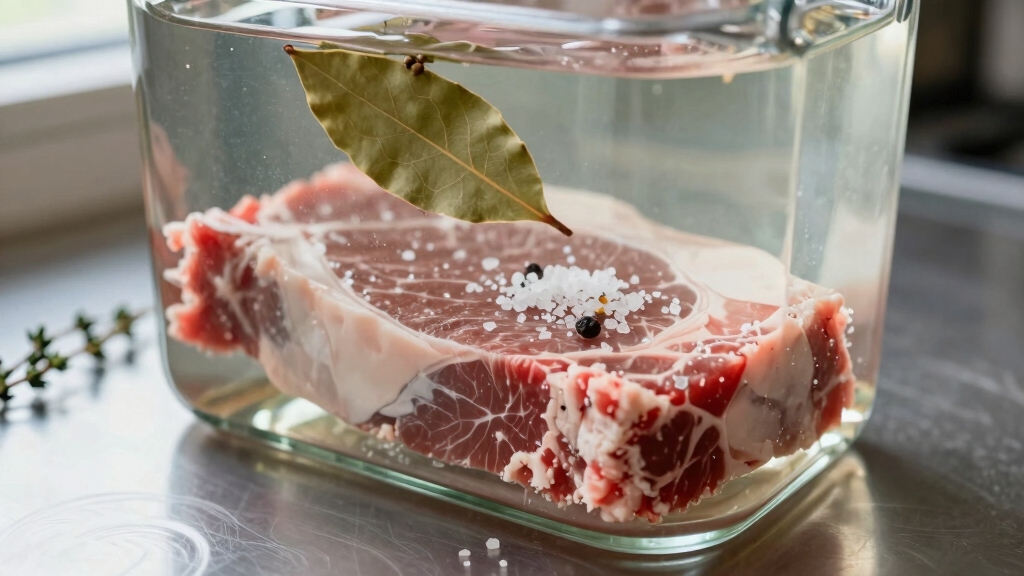
- Submerge brisket fully in refrigerated brine at or below 40°F for 5 days, flipping daily to ensure even seasoning and tenderness.
- After brining, rinse brisket thoroughly, pat dry, and cook low-and-slow to an internal temperature of 195–205°F for optimal tenderness.
Choosing the Right Brisket for Brining

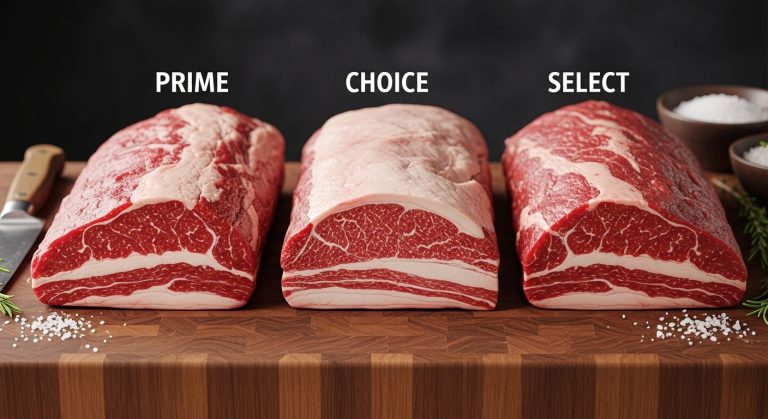
When selecting a brisket for brining, you should choose a flat cut weighing between 5 and 7 pounds to guarantee even absorption of the brine and manageable cooking.
The flat cut offers uniform thickness, which secures consistent penetration of the brine solution. Avoid briskets with excessively thick fat caps; trim them down to facilitate better brine contact with the meat surface.
Make sure the brisket fits comfortably in your brining container, allowing full submersion without folding. If the brisket is too large or irregular, the brine won’t evenly penetrate, compromising tenderness and flavor.
Opt for fresh, high-quality meat with minimal blemishes or discoloration to prevent spoilage during the extended brining period. Proper selection sets the foundation for effective brining and peak final results.
For improved brine penetration and portion control, consider cutting the brisket in half before brining.
Essential Ingredients for a Classic Brisket Brine
To make a classic brisket brine, you really want to get the balance right between kosher salt and light brown sugar. Usually, you’d go for about 1/2 to 1 cup of salt for every gallon of water. And if you’re working with 6 quarts, a cup of sugar will do the trick nicely.
Now, let’s kick things up a notch! Adding spices is a game changer. Think about tossing in some pickling spice, bay leaves, and black peppercorns. These little extras really enhance the flavor and bring a lovely complexity to your brine.
Be sure to combine the liquids first, then add the salt and sugar, stirring until fully dissolved to ensure even distribution in your brine solution.
Key Brine Components
A well-balanced brisket brine relies on a precise combination of kosher salt, light brown sugar, boiling water, and select spices to achieve ideal flavor and texture.
Kosher salt controls moisture retention and protein breakdown, while light brown sugar balances saltiness and aids caramelization. Boiling water dissolves solids efficiently, ensuring even distribution.
Cooling the brine rapidly with ice prevents premature cooking of the meat.
Proper brining requires using a non-reactive container and maintaining controlled refrigeration to ensure safety and consistency.
| Component | Role |
|---|---|
| Kosher Salt | Moisture retention, protein denaturation |
| Light Brown Sugar | Balances salt, aids browning |
| Boiling Water | Dissolves ingredients evenly |
| Ice | Rapidly cools brine before use |
Use these components accurately to optimize brine performance and brisket tenderness.
Flavor Enhancing Spices
Although the core brine ingredients establish the foundation, incorporating carefully selected spices elevates the brisket’s flavor profile markedly.
You should include pickling spice, bay leaves, and black peppercorns. Each contributes essential aromatic compounds that infuse complexity.
Lightly toasting whole spices before adding them releases essential oils, intensifying their impact without bitterness. Add these to the boiling brine to maximize extraction.
Bay leaves provide subtle herbal notes, while peppercorns introduce mild heat and depth. Pickling spice blends typically contain mustard seeds, coriander, and allspice, which combine for a balanced savory profile.
Be precise with quantities to avoid overpowering the brisket’s natural character. Properly seasoning the brine guarantees the meat absorbs nuanced flavors uniformly during osmosis.
This results in a brisket with enhanced complexity and well-rounded taste.
For safe and effective preservation, always use curing salt containing nitrites rather than pickling salt when brining meat.
Salt and Sugar Ratios
Balancing salt and sugar in your brisket brine directly influences both flavor and texture.
Use kosher salt at ½ to 1 cup per gallon of water to guarantee proper osmosis, which tenderizes meat by denaturing proteins and loosening fibers.
For sweetness and browning, add light brown sugar at roughly 1 cup per 6 quarts of boiling water.
Dissolve both fully in boiling water before cooling the brine with ice to prevent bacterial growth.
Maintaining these ratios achieves ideal moisture retention and flavor penetration without overpowering the meat.
Adjust slightly based on brisket size and desired taste, but avoid exceeding these ranges to prevent excessive saltiness or cloying sweetness.
Precise control here is key to crafting a classic, balanced brisket brine.
For best results, always freeze brisket promptly after brining to preserve quality and minimize bacterial growth.
How to Prepare Your Brisket Brine Properly?
Before you start brining your brisket, make sure to dissolve the kosher salt and light brown sugar completely in boiling water.
Use about 6 quarts of water for every cup of sugar and up to 1 cup of kosher salt per gallon to guarantee proper saturation.
Stir constantly until no granules remain. Once fully dissolved, remove the pot from heat and add ice—around 6 cups—to rapidly cool the brine.
This step prevents partially cooking the meat when submerged. Confirm the brine reaches refrigerator temperature or below before adding your brisket.
Use a container large enough to fully submerge the meat, applying a weight if necessary. Proper dissolution and cooling are critical to achieving consistent osmosis and tenderizing effects during the brining process.
For safety, ensure the brine and brisket stay at or below 40°F refrigerator temperature to prevent bacterial growth throughout the process.
How to Toast Spices to Boost Brisket Flavor?
To really amp up the flavor of your brisket, try toasting some spices like peppercorns, bay leaves, and pickling seeds before tossing them into the brine. It’s a simple step that can make a world of difference!
When you toast those spices, you’re releasing their essential oils, which boosts both the aroma and the taste. Proper spice toasting enhances the overall flavor profile while supporting safe curing practices essential for cold smoking and preservation.
Benefits of Toasting
Toasting spices releases essential oils that dramatically enhance the brisket’s flavor profile.
When you toast spices, heat breaks down their cell walls, freeing volatile oils responsible for aroma and taste. This process intensifies their natural flavors and adds a subtle smoky note.
You’ll notice a richer, more complex spice character that penetrates the brisket during brining and cooking.
Toasted spices also reduce moisture content slightly, concentrating their compounds for stronger impact.
Practically, you can toast spices in a dry skillet over medium heat, shaking frequently to avoid burning. Once aromatic and lightly browned, remove them promptly to preserve oils.
Incorporating toasted spices into your brine makes certain your brisket absorbs bold, nuanced flavors, improving the final dish’s depth and savor.
For an added layer of complexity, consider pairing toasted spices with smoked salt to boost the smoky flavor profile naturally.
Best Spices to Toast
Although many spices benefit from toasting, certain ones stand out for brisket brining due to their robust essential oil content and complementary flavors.
You’ll want to toast whole seeds and dried spices gently to release deep, aromatic notes that penetrate the meat during brining. Focus on robust spices that pair well with beef’s richness.
| Spice | Flavor Profile | Why Toast? |
|---|---|---|
| Black peppercorns | Pungent, slightly spicy | Releases sharp, complex oils |
| Coriander seeds | Citrusy, nutty | Enhances brightness and depth |
| Mustard seeds | Sharp, tangy | Boosts pungency and warmth |
| Bay leaves | Herbal, slightly floral | Amplifies subtle aromatic oils |
Use these toasted spices in your brine to markedly elevate brisket flavor by infusing essential oils deeply into the meat fibers. Incorporating salt and curing agents in your brine also helps draw out moisture and prevents microbial growth during the curing process.
Toasting Techniques and Tips
When you heat whole spices gently in a dry pan, their essential oils release, dramatically enhancing the flavor profile of your brisket brine. Use medium-low heat to prevent burning, and stir constantly for even toasting.
Toasting should last 2–3 minutes until you detect a fragrant aroma and the spices darken slightly. Remove immediately from heat to avoid bitterness. Focus on seeds like coriander, mustard, and peppercorns, as they benefit most from toasting.
After toasting, cool spices on a plate before adding them to the brine to preserve volatile oils. This step intensifies the brine’s complexity, ensuring deeper flavor infusion during the brining process.
Avoid pre-ground spices for toasting; whole spices yield superior results through this method.
Controlling surface moisture during preparation is essential to ensure the spices and brine adhere properly and contribute effectively to flavor development.
How Long to Brine Beef Brisket for Best Results?
Since brining time directly impacts both flavor development and tenderness, you should tailor the duration based on brisket size and your desired outcome.
Brining duration shapes flavor and tenderness, so adjust timing to suit your brisket size and taste preferences.
For a standard 5-7 lb flat cut, a 5-day brine guarantees thorough salt and sugar penetration, yielding classic corned beef texture and flavor.
If you’re short on time or prefer a milder profile, 2-3 days is the minimum to start tenderizing and flavoring the meat.
Larger or thicker briskets may benefit from up to 7 days for deeper infusion.
Always flip or rotate the brisket daily to maintain even brine exposure.
Avoid brining less than 48 hours, as the meat won’t absorb enough moisture or flavor, and the tough fibers won’t sufficiently break down for best tenderness.
How to Keep Your Brisket Fully Submerged While Brining?
To make certain even brining and consistent flavor absorption, you need to keep your brisket fully submerged in the brine solution throughout the entire process.
Exposure to air can cause uneven seasoning and texture.
Use a non-reactive container just large enough to hold the brisket and brine, minimizing air pockets.
Press the meat down with a clean, heavy plate or a sealed plastic bag filled with brine to weigh it down.
Check daily to make sure it remains submerged, adjusting the weight as needed.
Avoid dry spots that reduce flavor penetration.
Prevent bacterial growth by limiting air exposure.
Maintain consistent salt and spice contact.
Make certain uniform moisture retention throughout the brisket.
These steps guarantee an evenly brined, flavorful brisket every time.
Why Brisket Brining Makes Meat Tender and Flavorful?
Although brining might seem like a simple soak, it actually triggers key chemical processes that transform brisket’s texture and flavor. Through osmosis, salt penetrates the meat, drawing in water and dissolved flavor compounds.
This swelling of muscle fibers increases moisture retention during cooking, preventing dryness. Meanwhile, salt denatures proteins by unfolding their structures, loosening the dense muscle fibers typical of brisket.
This softening effect makes the meat more tender and easier to chew. Additionally, the dissolved spices and sugars in the brine infuse deep, balanced flavors beyond the surface.
The longer you brine, within recommended times, the more evenly these changes occur. This ensures a juicy, flavorful brisket with improved mouthfeel. This precise chemical interaction is why brining is essential for tender, tasty brisket.
What to Do Right After Removing Brisket From the Brine?
Once you remove the brisket from the brine, immediately rinse it thoroughly under cold running water to wash away excess salt and surface spices. This step prevents over-salting and guarantees balanced flavor.
Next, discard the brine to avoid contamination. Pat the brisket dry with paper towels to remove surface moisture, which promotes better browning during cooking. Finally, let the brisket rest briefly to stabilize its temperature before further handling.
Feel confident knowing you’ve locked in moisture and tenderness. Anticipate the satisfying aroma as surface moisture evaporates. Appreciate the clean, controlled flavor ready to shine. Experience pride in your precise preparation steps.
These actions optimize your brisket’s texture and flavor without overwhelming saltiness.
Finishing Your Brisket After Brining: Cooking and Serving Tips
Having prepped your brisket by rinsing and drying it after brining, you’re ready to move on to cooking methods that preserve moisture and enhance flavor.
Choose low-and-slow techniques like smoking, braising, or oven roasting at 225-250°F to break down connective tissue without drying the meat.
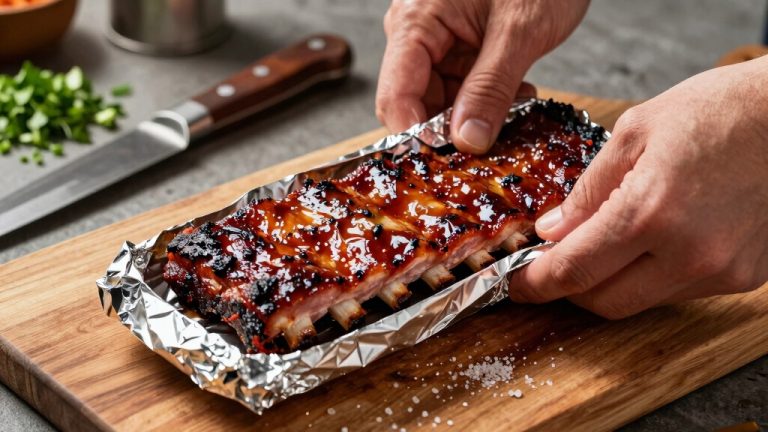
Use a water pan or wrap the brisket in foil during cooking to maintain humidity.
Monitor internal temperature with a probe; target 195-205°F for peak tenderness.
Rest the brisket for at least 30 minutes after cooking to redistribute juices.
When serving, slice against the grain to maximize tenderness and presentation.
Avoid over-seasoning since the brine infused salt and spices; a light finishing rub or sauce complements the brisket without overpowering its developed flavors.
Frequently Asked Questions
Can I Reuse the Brine for Another Brisket?
You might imagine the brine as a flavorful pool, rich and ready, but reusing it isn’t advisable.
After soaking a brisket, the solution harbors bacteria and diluted salt levels, compromising safety and effectiveness.
Instead, always prepare fresh brine to guarantee proper osmosis and protein denaturation.
This ensures peak tenderness, moisture, and flavor infusion, keeping your meat safe and your results consistent every time you brine.
What if I Forget to Flip the Brisket Daily?
If you forget to flip the brisket daily, the brine may not penetrate evenly, causing uneven seasoning and moisture distribution.
The side submerged longer will absorb more salt and flavors, while the other side remains less brined.
To minimize this, try to rotate the meat as soon as you remember.
For best results, maintain consistent flipping to guarantee uniform osmosis, tenderness, and flavor throughout the brisket.
How Do I Store Leftover Brined Brisket Safely?
You should store leftover brined brisket in an airtight container or tightly wrapped in plastic wrap and aluminum foil to prevent moisture loss.
Keep it refrigerated at or below 40°F (4°C) and consume within 3-4 days for safety.
For longer storage, freeze the brisket in a vacuum-sealed bag or freezer-safe container; it’ll maintain quality for up to 3 months.
Always thaw frozen brisket in the refrigerator to avoid bacterial growth.
Can I Brine Brisket Without Sugar?
Yes, you can brine brisket without sugar. Sugar primarily balances saltiness and adds slight sweetness but isn’t essential for the brining process.
Omitting sugar won’t hinder osmosis or protein denaturation, so tenderness and moisture retention remain effective. However, expect a less complex flavor profile.
If you want, you can substitute sugar with alternative sweeteners or spices to maintain flavor complexity while keeping the brine sugar-free.
Does Brining Affect the Cooking Time of Brisket?
Yes, brining can slightly reduce brisket’s cooking time because the salt breaks down muscle proteins, tenderizing the meat and allowing heat to penetrate more efficiently.
However, the difference isn’t drastic.
You should still cook brisket low and slow to render collagen fully.
Always monitor internal temperature rather than relying on time alone.
Brining primarily improves moisture retention and flavor, so don’t expect major changes in cooking duration.
Elevate Your BBQ Game with One Simple Step
Think of brining your brisket like tuning a guitar. Just the right amount of tension and time brings out perfect harmony.
When you brine properly, the salt and spices penetrate deeply, breaking down tough fibers and locking in moisture.
Studies show brined brisket retains up to 20% more juiciness. So, follow these steps precisely, and you’ll transform a tough cut into a tender, flavorful masterpiece that sings with every bite.