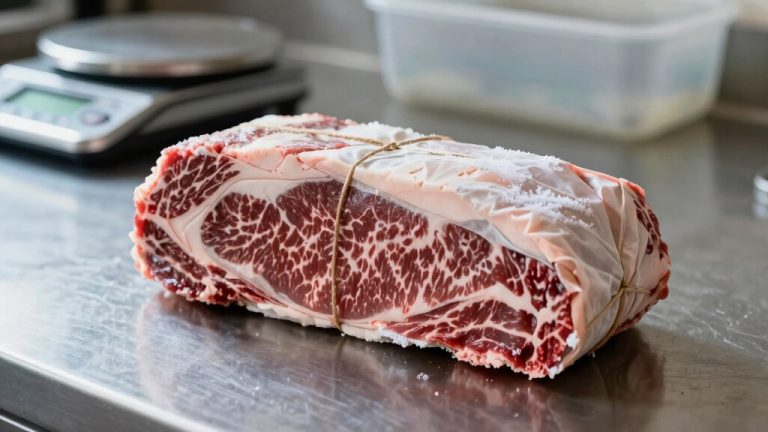
How Long Will Smoked Meat Last? Safe Handling Explained
Smoked meat’s shelf life depends on smoking type, packaging, and storage. Hot-smoked meats keep safely refrigerated for 3–4 days at ≤40°F, while cured, vacuum-sealed meats may last up to 60 days unopened.
Freezing at 0°F extends quality to 6–12 months, especially if vacuum sealed. Always refrigerate within two hours of smoking and watch for spoilage signs like off odors or sliminess.
Proper cooling and reheating to 165°F preserve safety and quality. Explore handling and storage nuances to maximize meat longevity.
Key Takeaways
- Hot-smoked meats last 3–4 days refrigerated at ≤40°F (4°C); smoked fish and poultry last 1–2 days refrigerated.
- Vacuum-sealed smoked meats can last 2–3 weeks refrigerated and up to 6–12 months frozen at 0°F (-18°C).
- Refrigerate smoked meat within 2 hours of smoking (1 hour if hot) to minimize bacterial growth risks.
- Opened cured and vacuum-sealed smoked products should be consumed within 3–5 days refrigerated.
- Discard smoked meat showing visual mold, sliminess, sour odor, or off-colors to avoid foodborne illness risks.
Types of Smoking and Their Effects on Shelf Life
Although smoking imparts distinctive flavors and some preservation benefits, the method you choose substantially affects the microbial safety and shelf life of smoked meat.
Cold smoking, conducted at 20–30°C, doesn’t cook the meat, leaving higher microbial risks and shorter shelf life unless combined with curing or refrigeration.
Hot smoking, at 60–90°C, cooks and smokes simultaneously, reducing microbial load and extending safe storage. Proper cleaning and maintenance of your smoker, including removable parts, ensure consistent performance and safer smoking conditions.
Warm smoking, between 30–60°C, partially cooks and preserves, with shelf life dependent on internal temperature and handling.
Smoke compounds deposit antioxidants that slow lipid oxidation, but these benefits require controlled smoke density and temperature.
Using reliable smokers with stable temperature control guarantees uniform cooking and smoke distribution, minimizing spoilage risks and enhancing microbial safety. Traditional smoking methods often rely on operator skill to manage temperature and smoke density, which can lead to variable results.
Smoking alone won’t guarantee long-term stability without additional preservation measures.
Recommended Refrigerator Storage Durations
Controlling temperature and smoke exposure during the smoking process influences microbial safety but doesn’t replace proper refrigeration.
Proper smoking controls microbes but must be combined with refrigeration for safe meat storage.
You should refrigerate smoked meats within two hours of smoking to inhibit bacterial growth.
For cooked smoked beef, and poultry, USDA guidelines specify a safe refrigerator storage duration of 3-4 days at 40°F (4°C) or below.
Smoked fish and poultry spoil faster; limit their refrigerated storage to 1-2 days.
Raw smoked sausages and whole poultry also require refrigeration within 1-2 days.
Cured and vacuum-sealed smoked meats, like salami and pepperoni, can last up to 60 days unopened, but opened packages should be consumed within 3-5 days.
Refrigeration slows bacterial growth but does not stop it entirely, so maintaining proper cold storage is essential to food safety refrigeration slows growth.
Always prioritize safety: if storage exceeds recommended durations or quality declines, discard the product to avoid foodborne illness risks.
Freezer Storage Guidelines and Quality Considerations
When freezing smoked meat, proper packaging plays a crucial role in preserving quality and preventing freezer burn. Vacuum sealing or double-layer wrapping limits air exposure and moisture loss, extending quality from 2–3 months up to 12 months depending on the cut. It is also important to label and date packages clearly to rotate older portions first and track safe consumption.
Maintain your freezer at 0°F (-18°C) or below to maximize shelf life. Avoid frost-free units that cause temperature fluctuations, accelerating quality degradation. Freeze smaller, portion-sized packages rapidly to minimize ice crystal damage and preserve texture. Proper insulation and wrapping techniques, similar to those used in moisture retention during resting, can help maintain the meat’s quality before freezing.
| Packaging Method | Quality Duration |
|---|---|
| Vacuum Seal | Up to 12 months |
| Double-layer Wrap | 3–6 months |
| Original Packaging + Overwrap | 2 months |
Keep an inventory with freeze dates. Thaw meats slowly in the refrigerator to maintain safety and texture.
Identifying Signs of Spoilage in Smoked Meat
Because smoked meat undergoes microbial and chemical changes over time, you need to recognize specific spoilage signs to guarantee safety and quality. Key indicators include visual, olfactory, and textural changes that reflect microbial growth, lipid oxidation, and enzymatic degradation.
- Visual cues: Look for color shifts to gray or green, surface mold, sliminess, or abnormal fat discoloration. All signal spoilage. Proper cleaning and storage, including avoiding moisture buildup, can help reduce mold development on smoked meat.
- Olfactory cues: Sour, putrid, ammonia-like odors or loss of smoky aroma indicate bacterial or chemical degradation. Keep in mind that pathogenic bacteria may be present without noticeable odor changes.
- Textural cues: Slimy or mushy textures, excessive dryness, or greasy separation suggest bacterial biofilm, proteolysis, or rancidity.
Identifying these signs promptly helps prevent consumption of unsafe smoked meat. However, absence of these signs doesn’t guarantee safety due to potential pathogenic bacteria.
Factors Influencing Shelf Life of Smoked Meat
The way you smoke meat can really impact how long it lasts. When you smoke it, you’re not just adding flavor; you’re also introducing some antimicrobial compounds that help keep it safe. Plus, that delicious bark that forms on the outside? It acts as a protective layer, which is super beneficial.
However, smoking alone does not guarantee long-term preservation, so it’s important to use proper storage methods to prevent spoilage. Maintaining the meat at safe holding temperatures after smoking is essential to prevent bacterial growth and preserve quality.
Now, let’s talk about how you package and store your smoked meat. Things like vacuum sealing and keeping the right temperature are crucial. They really help maintain the quality and safety of the meat. Many people choose to vacuum-seal and freeze portions to extend shelf life safely vacuum sealing and freezing.
And don’t forget about the type of meat you’re working with! Different meats spoil at different rates. For instance, poultry tends to spoil faster than beef, especially when you’re storing them in the fridge. So, keep an eye on what you’re smoking.
Smoking Method Impact
Diving into the effects of different smoking methods reveals how they distinctly influence the shelf life of smoked meat.
Cold smoking lowers water activity and inhibits lipid oxidation, protecting delicate EPA and DHA acids. However, it allows more hydrolytic fat changes. Additionally, the phenolic compounds in smoke bind to meat proteins and fats, creating lasting antimicrobial and aromatic effects that support preservation. Using oak wood for cold smoking can add a balanced smoky flavor while contributing to moisture reduction.
Hot smoking applies heat at 200-250°F, cooking meat to safe temperatures. This reduces lipid hydrolysis and extends shelf life to several days or weeks, depending on the product. The slow-burning nature of oak enhances the steady release of smoke and heat ideal for hot smoking.
Smoke compounds deposit antimicrobial phenols and formaldehyde, creating a hostile surface environment for spoilage organisms.
Key impacts include:
- Cold smoking minimizes oxidation but limits bacterial reduction.
- Hot smoking guarantees pathogen elimination and longer refrigerated shelf life.
- Smoke compounds enhance preservation by coating meat surfaces and reducing moisture.
Packaging and Storage
When you package and store smoked meat properly, you can greatly extend its shelf life by controlling factors like oxygen exposure, moisture, and temperature.
Vacuum-sealing is the most effective method, reducing oxygen contact and extending refrigerated shelf life from days to weeks (e.g., 2–3 weeks for brisket) and frozen storage up to six months. Always check for spoilage indicators before consuming to ensure safety, as consuming spoiled meat can cause food-borne illnesses.
Airtight rigid containers slow moisture loss but don’t eliminate oxygen, limiting refrigerated use to about 3–4 days. Choosing the proper packaging materials that balance moisture retention and breathability can help maintain meat quality.
Packaging film permeability affects gas and moisture transmission, with higher-barrier films preserving quality longer and reducing freezer burn.
Maintain seal integrity to prevent oxygen and spoilage organism ingress.
Refrigerate at or below 40°F, avoiding temperature fluctuations, and freeze below 0°F for long-term storage.
Rapid post-smoke cooling and continuous cold-chain management are critical to maximizing shelf life and safety.
Meat Composition Effects
Although proper packaging and storage are essential, the intrinsic composition of smoked meat markedly influences its shelf life. You must consider several compositional factors that affect spoilage kinetics and oxidative stability:
- Protein Type and Content: Red meats with higher myoglobin and heme iron catalyze lipid oxidation, accelerating rancidity. High protein content enhances water binding, limiting microbial growth. Proper temperature control during storage helps maintain protein integrity and prolong shelf life.
- Fat Characteristics: Increased fat, especially polyunsaturated fatty acids, heightens oxidative susceptibility. Surface fat is more prone to oxidation despite smoke phenolics’ partial protection. Trimming external and internal fat deposits can reduce rancid or gamey flavors and improve oxidative stability.
- Water Activity and Moisture: Lower water activity (≤0.75) achieved through smoking and curing suppresses microbial proliferation. However, moisture pockets can promote localized spoilage. Additionally, the use of additives like sodium tripolyphosphate can influence product pH, which in turn affects microbial growth and shelf life by creating a less favorable environment for spoilage organisms product pH influence.
Best Practices for Handling and Storing Smoked Meat
Since improper handling can promote bacterial growth and degrade quality, you should cool smoked meat rapidly to 40°F (4°C) or below within two hours using methods like ice baths or blast chillers. Proper cooling is essential to prevent uneven temperature gradients that could encourage bacterial growth in cold weather conditions, where heat loss dynamics differ.
Arrange large cuts upright or on racks for even airflow, avoiding stacking to prevent slow cooling and spoilage risk. For sausages, cool first to ~100°F (38°C) before final chilling to stop condensation and slime.
Wrap loosely during initial cooling to protect bark but allow moisture escape; tighten only after refrigeration temperature is reached. Using a water pan or maintaining moisture control during cooling can help preserve texture and flavor.
Store smoked meats at ≤40°F (4°C), ideally on middle or lower shelves, away from raw foods. Refrigeration is recommended for next-day or 1–2 days use. Position storage away from drafts or fluctuating temperatures to ensure consistent temperature stability.
Vacuum-sealing extends freezer life by limiting oxygen exposure; portion before sealing for easier thawing.
Label packages with dates, follow first-in, first-out rotation, and discard after recommended storage times to maintain safety and quality.
Safe Reheating and Consumption Tips
When it comes to reheating smoked meat, it’s super important to make sure it hits an internal temperature of 165°F (74°C). This temperature is key for getting rid of any harmful bacteria and toxins that might be lurking around.
To keep things on track, grab a probe thermometer to check the temperature accurately. Whether you’re using the sous vide method, tossing it in the oven, or firing up the smoker, this little gadget will be your best friend. Using a calibrated thermometer ensures you get precise readings for safe reheating.
Properly wrapping cuts in foil before reheating helps conserve moisture and maintain tenderness, ensuring your meat stays juicy and flavorful.
And remember, always stick to safe consumption practices! Before serving up your delicious reheated meat, just double-check that it reaches that safe temperature to keep foodborne illness at bay. Enjoy your meal!
Proper Reheating Temperatures
When reheating smoked meat, you must make certain it reaches an internal temperature of 165°F (74°C) to eliminate harmful bacteria and toxins, including Staphylococcus. Use a probe thermometer to monitor this precisely.
Here are three key reheating methods:
- Oven: Wrap meat in foil, heat at 350°F until internal temp hits 165°F. Brisket may take up to 2 hours, beef ribs about 45 minutes. Maintaining moisture by spraying with broth or water during reheating helps preserve juiciness and texture.
- Grill: Use indirect heat at 300–325°F, turning meat midway. Avoid direct heat to prevent drying. Controlling temperature and humidity on the grill ensures even reheating and protects the meat’s bark.
- Sous Vide: Seal meat in a bag, submerge in water bath until 165°F internal temperature is reached. This method preserves moisture effectively.
It is important to note that temperature rather than time is the best indicator to determine when reheated smoked meat is safe to eat.
Always make certain reheated smoked meat hits 165°F internally for safety, regardless of the method.
Safe Consumption Practices
Although smoked meat offers rich flavors and extended preservation, strict adherence to safe handling and storage practices is essential to prevent bacterial growth and toxin formation. Chill smoked meat within 2 hours (1 hour if hot) and store at ≤40°F promptly. It is important to note that smoked meats can carry polycyclic aromatic hydrocarbons (PAHs) and heterocyclic amines (HCAs) on their surface, which are mutagenic and pose health risks if consumed excessively.
Minimize time in the 40–140°F danger zone to reduce heat-stable toxin risks. Use insulated containers and ice packs for transport. Vacuum-packed products require immediate refrigeration to inhibit Clostridium botulinum growth.
| Practice | Temperature | Time Limit |
|---|---|---|
| Refrigerate | ≤40°F (4°C) | Within 2 hours |
| Hot-hold (if needed) | ≥140°F (60°C) | Until serving |
| Danger Zone Exposure | 40–140°F (4–60°C) | Minimize, under 2 hrs |
Reheat thoroughly. Avoid cross-contamination and label repackaged items with dates for safety.
Frequently Asked Questions
Can Smoked Meat Be Safely Canned for Long-Term Storage?
Yes, you can safely can smoked meat for long-term storage if you use a pressure canner following strict guidelines.
You must process low-acid smoked meat at temperatures above boiling (around 240°F) with correct pressure and time based on jar size and altitude.
Trim excess fat, use approved jars, and make certain proper seals.
Store sealed jars in cool, dark places.
For best quality, consume within one year, though safety may extend beyond if stored properly.
What Are the Nutritional Changes After Smoking Meat?
After smoking meat, you’ll notice protein concentration rises per 100 g due to moisture loss, though total protein mass stays similar or slightly declines.
Fat content decreases as rendered fat melts away, making the meat leaner.
Heat denatures proteins, altering digestibility, and some water-soluble vitamins degrade.
Essential minerals largely remain, sometimes appearing concentrated. However, harmful compounds like PAHs and nitrosamines may form, so moderate consumption is key to balancing nutritional benefits and risks.
How Does Altitude Affect Smoking and Preservation Times?
Altitude lowers the boiling point, causing moisture inside meat to evaporate faster. This can dry it out and extend smoking times by up to 25% at 5,000 ft.
You’ll need to monitor internal temperatures closely and adjust fuel and airflow due to reduced oxygen. Additionally, you may need to increase cooking duration.
Preservation times may shorten as drier conditions promote moisture loss. Use brining or wrapping techniques to maintain juiciness and protect quality during smoking and storage.
Are There Specific Wood Types That Better Preserve Smoked Meat?
Ever wonder if certain woods can actually help preserve smoked meat better?
Yes, woods like hickory and mesquite produce strong, dense smoke. They create a thicker smoke layer that inhibits bacterial growth more effectively.
Oak also contributes due to its steady burn and moderate smoke density.
In contrast, fruitwoods offer milder smoke and less preservative effect.
Can Smoked Meat Cause Allergic Reactions or Sensitivities?
Yes, smoked meat can trigger allergic reactions if you have alpha-gal syndrome, which is caused by sensitization to a sugar molecule found in mammalian meat.
Inhaling fumes from smoked meat may provoke immediate respiratory symptoms, while ingestion leads to delayed reactions.
Symptoms range from hives and GI distress to severe anaphylaxis.
If you’re sensitive, avoid exposure to smoked meat vapors and ingestion to prevent potentially life-threatening responses.
Maximize Smoked Meat Shelf Life with Proper Storage
You might think smoked meat lasts indefinitely due to its preserved nature, but its shelf life depends on smoking type, storage, and handling.
Properly refrigerated smoked meat typically stays safe for up to two weeks, while freezing can extend quality for several months.
Always check for spoilage signs like off-odors or texture changes before consuming.
By following recommended storage and reheating guidelines, you can confidently enjoy smoked meat without risking foodborne illness.