How Long Does It Take to Thaw a Brisket? Safe Tips Inside
You should plan on about 24 hours per 5 pounds to thaw a brisket safely in the refrigerator, keeping it between 34°F and 40°F.
Larger or denser cuts may take up to 5 days. Thawing at colder fridge temperatures slows the process, while thawing faster requires cold water immersion but demands immediate cooking after.
Proper thawing avoids bacterial growth and preserves quality. Understanding thawing methods, safety, and cooking options can guarantee the best results.
Key Takeaways
- Refrigerator thawing takes about 24 hours per 5 pounds at 35–40°F, making a 10-pound brisket require roughly 2 days.
- Thawing time increases with larger size, thickness, bone-in cuts, marbling, and colder refrigerator settings.
- Cold water thawing speeds the process to about 30 minutes per pound but requires changing water every 30 minutes and immediate cooking.
- Avoid thawing brisket at room temperature or with warm water to prevent bacterial growth in the 40–140°F danger zone.
- Microwave thawing requires immediate cooking and can cause uneven thawing; refreezing is unsafe unless thawed in the refrigerator.
Factors Affecting Brisket Thawing Time
When thawing brisket, you must consider several key factors that directly impact the time required to reach a safe, fully defrosted state.
Key factors determine how long it takes to fully and safely thaw brisket.
Size and thickness play vital roles: larger briskets have a lower surface area-to-volume ratio, slowing heat transfer to the core. Thicker cuts double thawing time due to fixed heat penetration rates. Proper temperature management is essential to maintain food safety during thawing.
Refrigerator temperature also matters; fridges set at 35°F extend thaw duration compared to those at 40°F. Colder settings add hours or days.
Additionally, freezer storage conditions affect initial meat hardness. Deeper, colder freezers produce rock-hard briskets that require longer thawing.
Brisket composition influences thaw speed as well; bone-in cuts and higher marbling reduce heat conduction, slowing uniform thaw.
Finally, the thawing method you choose can amplify or mitigate these size and composition-related delays. The refrigerator thawing method is recommended for optimal results, as it preserves the flavor, texture, and safety of large cuts like brisket.
Refrigerator Thawing Duration for Different Brisket Sizes
When you’re planning to thaw a brisket, it’s important to consider its weight. Generally, you should allow about 24 hours for every 5 pounds when you’re using your refrigerator, which should be kept between 34 and 40 degrees Fahrenheit.
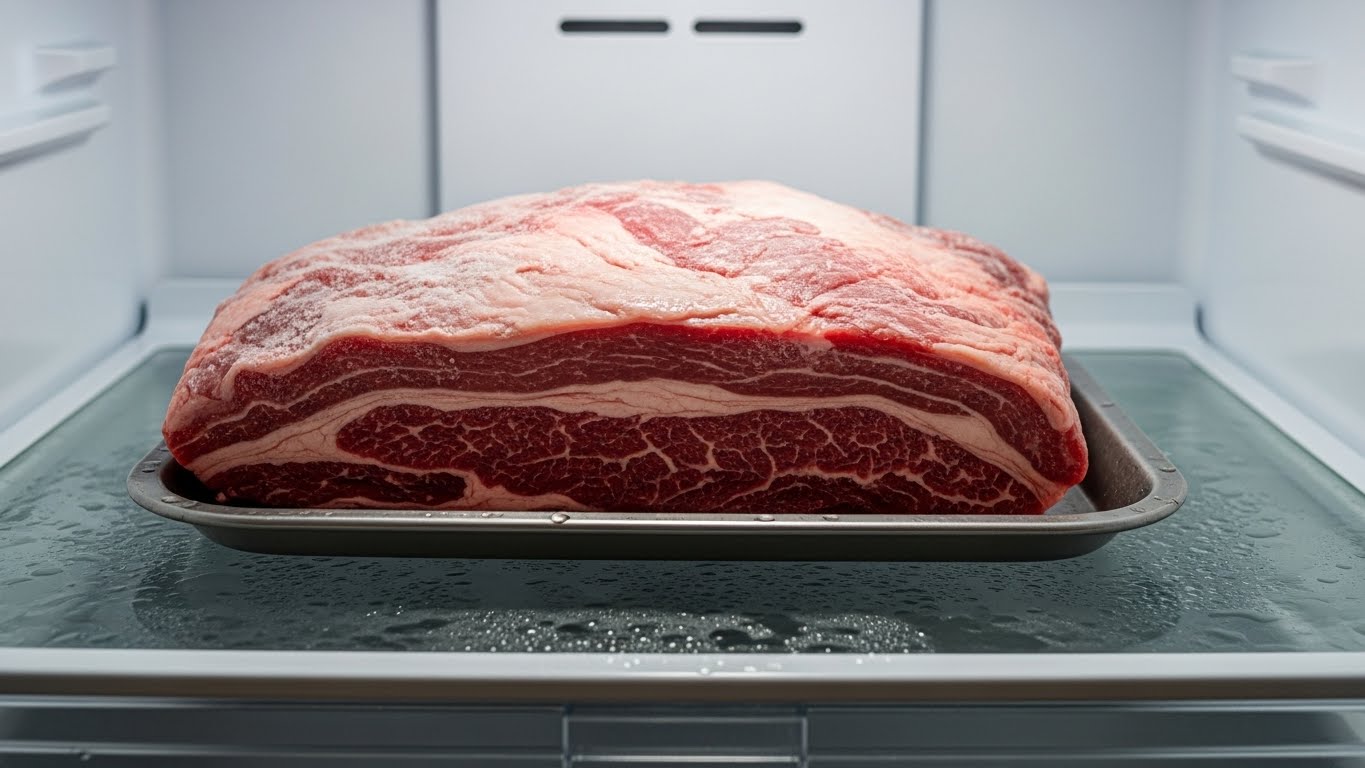
Thawing the brisket slowly in the fridge helps maintain food safety and preserves the meat’s texture. To ensure safety and prevent contamination, always place the brisket on the bottom shelf of the fridge on a tray to catch any drips and avoid cross-contamination safe thawing practices.
Time Estimates by Weight
Although thawing times vary, you can generally estimate refrigerator thawing duration by applying a guideline of about 5 hours per pound for briskets in solid frozen condition. Proper temperature control during thawing is crucial to maintain meat quality and safety, ensuring the brisket stays within the recommended temperature range.
For example, a 5-pound brisket typically requires 24 hours, while a 10-pound brisket takes about 48 hours. When thawing larger cuts, such as a 12-pound brisket, expect 3 days, aligning with the 5-hour-per-pound rule.
For briskets between 14 to 16 pounds, plan for 4 days, or 70 to 80 hours. However, a 15-pound brisket, especially if rock-solid frozen, may need up to 5 days due to deeper freeze conditions. Some cooks suggest that thawing in the refrigerator can sometimes take up to a week for very large or densely frozen briskets.
These estimates assume refrigeration immediately after freezing and consider packaging and freeze depth, which can affect thawing time. This method guarantees safety and flavor retention.
Fridge Temperature Impact
Because fridge temperature directly affects thawing speed and meat quality, you should carefully set and monitor your refrigerator when defrosting briskets. Proper temperature control is essential, similar to how steady temperature control ensures even curing in smoker seasoning.
Thawing at 40°F speeds the process, roughly 24 hours per 5 pounds, balancing safety and moisture retention. At 35°F, thawing slows, requiring extra time but minimizing purge and preserving texture. When planning to reheat the brisket sous-vide, it is recommended to thaw it fully in the refrigerator overnight to ensure even reheating recommended thawing practice.
Temperatures near 32°F extend thawing up to 6 weeks, ideal for large cuts, ensuring even defrost without drying.
| Brisket Size (lbs) | Thaw Time at 40°F | Thaw Time at 35°F |
|---|---|---|
| 5 | 1 day | 1.5 days |
| 10 | 2 days | 3 days |
| 14 | 3 days | 4.5 days |
Adjust thaw time upward for lower temps to maintain quality and safety.
USDA Guidelines for Safe Thawing
When you’re getting ready to thaw your brisket, it’s super important to keep the USDA guidelines in mind to ensure everything stays safe to eat. First off, make sure to keep that meat at 40°F or below. This helps prevent any nasty bacteria from growing on it.
Now, when it comes to timing, a good rule of thumb is to plan for about 24 hours of thawing for every 5 pounds of brisket in the refrigerator. It might take a little while, but it’s worth it! Place the brisket on a plate or in a bowl on the bottom shelf of the fridge to catch any drips and avoid cross-contamination, as recommended in the Ideal Method. Proper thawing helps maintain the brisket’s moisture and texture before cooking, which is crucial for achieving optimal tenderness.
Just remember, don’t go thawing it out at room temperature or in any warm spots; you really want to avoid that danger zone between 40°F and 140°F. Keeping everything safe and sound is key!
Thawing Time Recommendations
If you want to thaw a brisket safely, following USDA time recommendations is essential. The refrigerator method is safest, requiring about 24 hours per 5 pounds. It is important to allow plenty of time to fully thaw frozen brisket before cooking to ensure even cooking and food safety. Allow plenty of time Holding the brisket at the correct temperature after thawing is crucial to maintain its tenderness and moisture.
Cold water thawing speeds this up but demands water changes every 30 minutes and immediate cooking after thawing. Smaller packages thaw faster.
| Method | Thawing Time Estimate |
|---|---|
| Refrigerator | 24 hours per 5 pounds |
| Cold Water | 30 minutes per pound |
| Small Packages | 1 hour per pound or less |
Plan ahead, especially for large briskets. A 10-pound brisket needs several days in the fridge. Proper temperature monitoring during thawing and holding phases helps ensure food safety and quality.
Temperature and Safety Limits
Although thawing brisket is necessary before cooking, you must keep the meat out of the USDA-defined danger zone, temperatures between 40°F and 140°F where bacteria multiply rapidly.
To guarantee safety, thaw brisket in the refrigerator at or below 40°F, verifying temperatures with an appliance thermometer. Refrigerator-thawed meat is generally safe to refreeze without cooking if kept at or below 40°F. Proper temperature monitoring is essential to avoid prolonged exposure to unsafe conditions.
Avoid leaving meat in the danger zone over 2 hours; this limit shortens to 1 hour if ambient temperatures exceed 90°F. Using consistent temperature control during thawing helps minimize the risk of bacterial growth.
When thawing in cold water, change water every 30 minutes and keep meat sealed in leak-proof packaging to prevent contamination. Using a water pan or insulated container can help maintain steady temperatures during cold water thawing.
Microwave thawed brisket requires immediate cooking due to uneven thawing risks.
Never refreeze meat thawed by cold water or microwave without cooking first.
Following these guidelines minimizes bacterial growth and guarantees brisket safety before cooking.
How Fridge Temperature Influences Thawing Speed?
Since fridge temperature directly controls the rate at which frozen brisket warms, you’ll find that lowering the thermostat below the recommended 40°F (4°C) proportionally extends thawing time. It is important to maintain steady temperatures to avoid uneven thawing and ensure food safety during defrosting.
At 4°C, brisket typically thaws at a rate of 24 hours per 5 pounds, with each degree drop below this extending thawing duration correspondingly.
This slowdown occurs because colder temps delay the internal temperature rise from -20°C toward 2°C, the critical thaw range.
Maintaining a consistent 2-4°C environment prevents the outer meat from entering the bacterial danger zone, enhancing food safety. Studies show that refrigerator thawing also results in superior microbiological quality compared with other thawing methods.
While lower fridge temperatures lengthen thawing, they also reduce microbial proliferation and preserve meat quality by minimizing thaw loss and oxidation.
Consequently, adjusting your fridge temperature directly influences thaw speed and overall brisket integrity during defrosting, which ultimately affects the smoking time needed to achieve optimal tenderness and flavor.
Cold Water Thawing Method and Timing
When you need to thaw a brisket faster than fridge time allows, cold water thawing offers a reliable alternative that balances speed with safety. Seal the brisket in an airtight bag to prevent water absorption and bacterial contamination.
Fully submerge it in cold tap water, changing the water every 30 minutes to keep the temperature below 40°F. This frequent water replacement accelerates heat transfer and prevents bacterial growth. This method is demonstrated as the fastest and safest way to defrost a brisket. Proper hygiene and handling during thawing are essential to prevent contamination and ensure food safety.
Expect roughly 30 minutes per pound; for example, a packer brisket may thaw in about an hour, while a larger 16-pound brisket can take 8-10 hours with regular water changes. Avoid warm water to prevent spoilage.
Monitor the brisket’s flexibility to determine when thawing completes, ensuring it’s safe and ready for cooking. Using mild cleaning agents and maintaining cleanliness around your workspace helps prevent cross-contamination.
Proper Handling and Placement During Thawing
When thawing your brisket, it’s a good idea to place it on a tray or in a container. This way, you can catch any drips that might occur during the thawing process. Keeping it in its original packaging is also smart because it helps prevent moisture loss and reduces the chance of mold growth from residual moisture.
Now, make sure to position your brisket on the refrigerator’s bottom shelf. You want to set it between 35-40°F to maintain safe temperatures and make sure any leaks are contained. Plus, elevating the brisket can really help with air circulation, which promotes even thawing and lowers the risk of contamination. Using a fridge thermometer is recommended to ensure your refrigerator stays within the safe temperature range during thawing.
Safe Thawing Locations
Proper thawing locations markedly reduce the risk of bacterial growth and cross-contamination.
When thawing brisket in the refrigerator, place it on the bottom shelf on a plate or container to catch drips, maintaining temperature at 41°F (5°C) or lower. This slow, even thaw below 40°F ensures minimal bacterial growth and preserves the meat’s texture.
For cold water thawing, submerge the brisket in a leak-proof bag within a bowl or sink, using water below 70°F (21°C). Change the water every 30–60 minutes to keep it cold.
Microwave thawing requires a microwave with a thaw function, but only if you cook immediately afterward due to uneven thawing risks.
Avoid thawing on counters, garages, basements, or outdoors, as fluctuating temperatures promote bacterial growth.
Always keep the brisket in sealed packaging during thawing and plan timing accordingly to assure safe handling.
Packaging and Drip Control
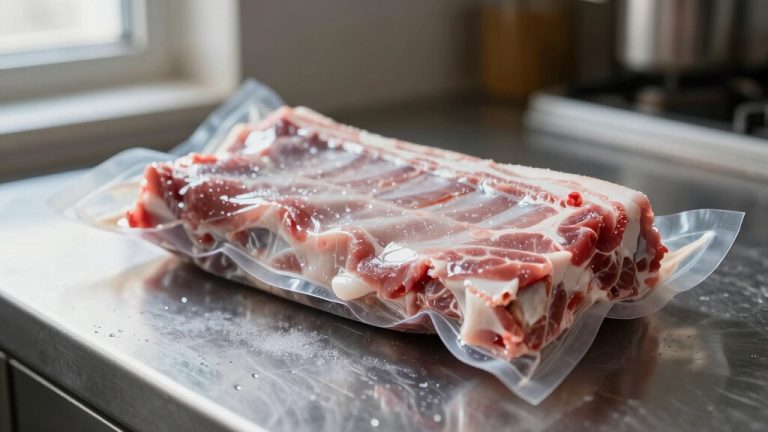
Keep vacuum-sealed packaging intact during thawing to preserve the brisket’s quality and prevent contamination. If the seal is damaged, pat the brisket dry, rewrap tightly in plastic wrap, and place it in an airtight container or vacuum-seal bag. Maintaining a consistent freezer temperature at 0°F / -18°C before thawing helps ensure the brisket retains its quality and safety.
For water thawing, use leak-proof bags and press out air to avoid water exposure. During refrigerator thawing, place the brisket on a large pan to catch drips and elevate to prevent pooling. Tight wrapping minimizes moisture loss and air exposure.
| Packaging Type | Thawing Method | Drip Control Tip |
|---|---|---|
| Vacuum-sealed | Refrigerator | Keep intact, use pan beneath |
| Torn packaging | Repackage & fridge | Dry surface, airtight wrapping |
| Non-vacuum sealed | Refrigerator | Multiple plastic wrap layers |
| Leak-proof bags | Cold water bath | Squeeze air out, seal tightly |
Freezer Storage Times and Quality Considerations
Although freezing brisket preserves its safety indefinitely when kept at zero degrees Fahrenheit, maintaining peak quality requires adhering to specific storage durations.
Freezing brisket keeps it safe indefinitely at 0°F, but quality depends on proper storage times.
Raw brisket retains optimal quality for 6 to 12 months when properly stored with airtight packaging, such as vacuum sealing. This can extend usability up to 2.5 years without substantial quality loss. However, vacuum sealing can extend quality retention significantly beyond standard recommendations.
Cooked brisket, however, maintains peak quality for only three months, regardless of packaging method. Portioning brisket into 1-pound packages aids quality retention and portion control.
Note that these guidelines focus on quality preservation, not safety; continuous freezing ensures safety beyond these periods. Freezer type and packaging integrity greatly impact quality outcomes.
Prioritize airtight, vacuum-sealed storage and adhere to recommended timelines to optimize flavor and texture upon thawing.
Safety Precautions to Avoid Bacterial Growth
When thawing brisket, you must guarantee the meat from lingering in the temperature danger zone between 40°F and 140°F, where bacteria can double every 20 minutes.
Avoid thawing at room temperature, in hot water, or using slow cookers and dishwashers, as these methods expose meat to unsafe temperatures. All listed methods increase risk due to extended time in the temperature danger zone.
Instead, thaw in the refrigerator at or below 40°F, placing the brisket on a tray on the bottom shelf to avoid cross-contamination.
For faster thawing, submerge the brisket in cold water, changing the water every 30 minutes to maintain temperatures below 40°F.
Ensure the meat is sealed in a leak-proof bag. Always cook the brisket immediately after thawing and discard any meat left too long in unsafe conditions to prevent bacterial growth.
Can You Refreeze a Thawed Brisket?
You can refreeze a thawed brisket safely if you’ve thawed it in the refrigerator at or below 40°F and maintained that temperature consistently.
Refreezing isn’t advisable if thawed using cold water, microwave, or left at room temperature due to bacterial risk.
Keep these points in mind:
Meat must be cold to the touch (≤40°F) before refreezing.
Partial freezing or presence of ice crystals confirms safety.
Refreezing may reduce quality due to moisture loss but doesn’t impact safety.
Use original packaging or double-wrap to prevent freezer burn.
Cooked brisket thawed in the fridge can be refrozen within 3–4 days. Once food is thawed in the refrigerator, refreezing without cooking is considered safe thawing and refreezing guidance.
Following these guidelines prevents bacterial growth and preserves food safety during refreezing.
Tips for Cooking Partially Thawed Brisket
Since cooking a brisket that’s only partially thawed won’t compromise texture or flavor, you can proceed confidently using low-and-slow methods at 225-250°F.
Trim the fat cap while half-frozen for accuracy, then season after spraying warm water to enhance rub adhesion.
Place fat side down on grates to avoid hooking issues. Expect a longer cook as the brisket warms from an internal 27°F, wrapping at 160-170°F to overcome the stall. It is important to monitor thaw progress to adjust your cooking schedule accordingly.
Use a probe to check tenderness, targeting 205°F internal, with optional oven finishing at 170°F if needed.
| Step | Temperature Range | Notes |
|---|---|---|
| Initial Smoking | 225-250°F | Raises brisket above freezing |
| Wrapping | 160-170°F | Use butcher paper + beef tallow |
| Probe Target | 205°F | Check thickest flat for tenderness |
| Reheat Slices | 168°F | Baste occasionally |
| Resting | 170°F (oven) | Up to 2 hours if not tender |
Frequently Asked Questions
How Does the Type of Packaging Affect Brisket Thawing Speed?
The packaging type directly influences thawing speed by affecting heat transfer and water exposure.
Vacuum-sealed briskets retain quality but don’t speed thawing noticeably.
Standard packaging requires about 24 hours per 5 pounds in the fridge, while leak-proof, air-removed bags optimize efficiency.
Waterproof, tightly sealed bags enable cold water submersion, reducing thaw time to 30 minutes per pound.
You’ll thaw brisket faster with airtight, water-resistant packaging designed for your chosen method.
Can Thawing Brisket Impact Its Flavor or Tenderness?
Yes, thawing brisket can impact its flavor and tenderness. If you thaw it in the fridge, you’ll preserve natural flavors and maintain tenderness because the meat stays cold and moisture loss is minimal.
Thawing in cold water can also keep texture intact if done correctly. However, improper thawing, like room temperature methods, risks bacterial growth and quality loss, which negatively affects flavor and tenderness.
Always thaw safely to protect meat quality.
Is It Safe to Thaw Brisket Using a Microwave?
Thawing brisket in a microwave is like walking a tightrope. You can do it, but one wrong move risks disaster.
Yes, it’s safe if you use the defrost setting, monitor closely, and cook immediately afterward. However, uneven heating can lead to bacterial growth and a rubbery texture.
For best results, thaw in short bursts, flip often, and never leave the brisket sitting afterward. It’s safer but not ideal for quality.
What Are the Signs That a Thawed Brisket Has Spoiled?
You’ll know a thawed brisket is spoiled if it smells sour, rancid, or sulfurous, especially after rinsing and drying.
Look for discoloration like gray, green, or moldy patches.
Feel the texture; sticky, slimy, or excessively soft meat signals spoilage.
Also, check for swollen or damaged packaging and excessive fluid leakage.
Any of these signs mean you should discard the brisket to avoid health risks.
How Long Can Thawed Brisket Sit at Room Temperature Before Cooking?
You shouldn’t let thawed brisket sit at room temperature longer than 2 hours. Beyond that, bacteria multiply rapidly, increasing foodborne illness risks.
Since brisket’s dense structure slows temperature changes, leaving it out won’t speed cooking materially. Instead, keep it refrigerated until just before smoking.
This approach safely limits bacterial growth while ensuring your brisket stays fresh and flavorful throughout the low-and-slow cooking process.
Ensure Safety and Quality With Smart Brisket Handling
Thawing a brisket is like winding down a clock; patience guarantees perfect timing and safety. By understanding factors like size, fridge temperature, and thawing methods, you control the process precisely. Always follow USDA guidelines to avoid bacterial risks, and never rush by skipping steps.
If needed, use cold water thawing carefully. Remember, proper thawing preserves quality and flavor, setting you up for a successful cook every time.