How Long to Smoke a 20 Lb Brisket: Expert Tips for Perfect BBQ
You’ll want to smoke your 20 lb brisket low and slow, typically between 225–250°F, for about 20 to 24 hours.
Plan on roughly 1 to 1.5 hours per pound, including time to manage the brisket stall around 155–165°F by wrapping it to speed cooking.
Don’t forget to rest it for 2–3 hours afterward to guarantee maximum tenderness.
Proper timing, temperature control, and handling will make all the difference. There’s plenty more to master for perfect results.
Key Takeaways
- Smoke a 20 lb brisket for approximately 20–24 hours at 225–250°F for optimal tenderness and flavor.
- Estimate 1 to 1.5 hours per pound, planning around 1.5 hours per pound including resting time.
- Wrap the brisket in butcher paper or foil when internal temp reaches 155–165°F to push through the stall.
- Maintain consistent smoker temp between 225°F and 260°F, raising to ~275°F after wrapping to finish cooking.
- Rest the brisket for 2–3 hours wrapped in foil or butcher paper to allow juice redistribution before slicing.
How Long Does It Take to Smoke a 20 Lb Brisket?

While smoking a 20 lb brisket, you can generally expect it to take between 18 and 24 hours at a steady temperature of 225-260°F. This timeframe aligns with a practical guideline of roughly 1 to 1.5 hours per pound, factoring in the natural stall and resting phases.
You’ll want to monitor internal temperatures closely, aiming for around 195-205°F before pulling it off the smoker. Keep in mind, larger briskets may vary due to fat content and thickness, so planning an additional buffer of a couple of hours is wise.
Starting early and using a reliable thermometer will help you adjust timing as needed. This ensures a tender, juicy result without guessing or rushing the process. For best results, consider pulling the brisket around 203°F when the probe tenderness feels like room-temperature butter.
Best Smoking Temperatures for a 20 Lb Brisket
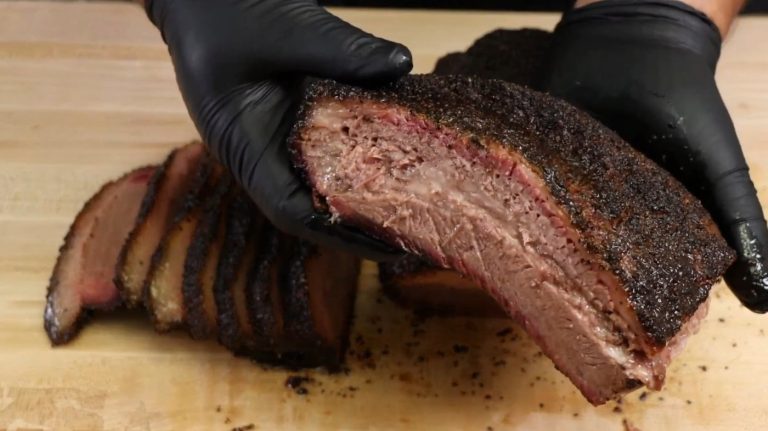
Mastering the smoking temperature is essential for a 20 lb brisket to develop the perfect bark and tender interior.
Perfecting the smoking temperature is key to achieving a flavorful bark and juicy brisket interior.
You’ll want to maintain a consistent 250-260°F during the initial low and slow phase, allowing the meat to gradually reach 155-165°F internal temperature.
This range promotes smoke penetration and bark formation without drying the brisket. Afterward, wrap the brisket in butcher paper or foil to push through the stall, then raise the smoker temperature slightly to 275°F to finish cooking.
Bring the internal temp up to 195-205°F. Avoid exceeding 275°F early on, as higher temps risk toughening the exterior.
Keep a close eye on internal temps with a probe thermometer to ensure precise control throughout the lengthy smoke.
This approach balances smoke flavor, tenderness, and efficient cooking time. Managing smoker humidity and airflow helps reduce evaporative cooling and shortens the stall phase.
Dealing With the Brisket Stall: What to Expect and How to Handle It
When your brisket hits the stall, you can expect the internal temperature to plateau around 155-165°F. This can sometimes last for several hours, which can feel like an eternity when you’re waiting for that perfect brisket.
At this point, it’s a good idea to wrap it in butcher paper or foil. This helps push through the stall without drying out the meat—nobody wants a dry brisket, right?
Keep a close eye on your thermometer during this phase. Adjusting your smoking strategy is key to maintaining consistent heat and ensuring everything turns out just right.
Spritzing the brisket during the stall can help maintain surface moisture and enhance bark development without significantly affecting the internal temperature.
Happy smoking!
Understanding The Brisket Stall
Because the brisket stall is a natural phase where the internal temperature plateaus, usually between 145°F and 165°F, you need to recognize it as a pivotal part of the smoking process rather than a setback.
During this phase, moisture evaporates from the brisket’s surface, cooling it and slowing temperature rise. You’ll notice the internal temp hanging steady for hours, which can feel frustrating, especially with a 20 lb brisket.
To handle the stall effectively, monitor the internal temperature closely using a reliable probe. Resist the urge to increase smoker heat prematurely; patience here guarantees proper collagen breakdown and tenderness.
Understanding this stall helps you plan your smoking timeline realistically, anticipating a multi-hour pause before the brisket’s temperature climbs toward the final 195-205°F target.
After the cook, allowing the brisket to rest in a preheated cooler helps maintain safe temperatures and enhances moisture and tenderness.
Wrapping Techniques During Stall
As the brisket hits the stall and the internal temperature plateaus, wrapping it properly can help you push through this challenging phase more efficiently.
You want to choose between foil and butcher paper based on your desired bark texture. Foil seals moisture tightly for a softer bark, while butcher paper breathes, maintaining a firmer crust.
Wrap the brisket tightly to trap heat and moisture, which speeds up cooking past the stall. Make sure to wrap once the internal temperature reaches around 155-165°F, where the stall typically begins.
After wrapping, increase the smoker temperature slightly if needed to maintain steady cooking. Keep the fat cap facing down initially, then flip after wrapping to protect the meat and promote even cooking.
This technique helps you manage the stall without sacrificing tenderness or flavor. Wrapping also traps steam, promoting even collagen conversion and enhanced tenderness through the Texas Crutch effect.
Temperature Monitoring Strategies
Accurately monitoring your brisket’s internal temperature is essential to successfully steering the stall phase without overcooking or drying out the meat.
Use a reliable digital probe thermometer and insert it into the thickest part of the flat to track temperature consistently.
Expect the stall around 155-165°F, where the temperature plateaus for hours.
Don’t rush this phase; frequent checks every 30 minutes help you gauge progress without opening the smoker too often, which wastes heat.
Once the stall hits, wrapping the brisket in butcher paper or foil helps push through efficiently.
After wrapping, continue monitoring until the internal temperature reaches 195-205°F.
Keeping a close eye on the temperature lets you adjust airflow or heat, ensuring you hit the target without sacrificing tenderness or moisture.
For the most accurate results, place the probe tip centrally in the thickest muscle area of the flat, avoiding fat seams and edges to prevent misleading readings from fat pockets.
When and How to Wrap a 20 Lb Brisket?
When you smoke a 20 lb brisket, knowing the right moment to wrap it can make all the difference in texture and moisture retention.
You want to wrap once the internal temperature hits the stall, typically around 155-165°F. This halts evaporation, locking in juices while pushing the brisket through the stall faster.
Use butcher paper or foil depending on your preference:
butcher paper allows slight breathability for a better bark, while foil traps more moisture for a tender finish.
Wrap tightly, ensuring no steam escapes, then return the brisket to the smoker.
Continue cooking until the internal temperature reaches about 200-210°F. Wrapping at this stage balances bark development and moisture, preventing a dry brisket while achieving that signature tender texture.
Maintaining a steady smoker temperature between 300–325°F is crucial for even cooking and optimal smoke flavor development.
Planning Your Smoking Start Time and Rest for a 20 Lb Brisket
Knowing exactly when to start smoking your 20 lb brisket is key to hitting your meal time without rushing the process or sacrificing quality.
Plan for roughly 1.5 hours per pound, meaning around 20-24 hours total including rest. Here’s how to schedule:
- Start smoking early, ideally the day before your meal, to allow a slow, steady cook.
- Factor in a 1-2 hour buffer for unexpected delays or longer stall phases.
- Wrap the brisket at the stall (155-165°F) to push through efficiently.
- Rest the brisket for at least 1 hour, loosely tented, to let juices redistribute and improve tenderness.
Maintaining a consistent smoker temperature between 225°F and 250°F is essential to ensure even cooking and optimal tenderness.
Choosing Wood and Smoke Techniques for 20 Lb Brisket Flavor
For maximizing flavor on a 20 lb brisket, selecting the right wood and mastering your smoke technique are essential steps.
Start with hardwoods like oak, hickory, or pecan for a robust, balanced smoke that complements the brisket’s rich profile.
Avoid overpowering woods like mesquite, which can dominate over long smokes.
Use wood chunks rather than chips to guarantee slow, steady smoke generation over 18-24 hours.
Maintain a consistent 225-260°F temperature, allowing the smoke to penetrate gradually.
Position the brisket fat side down initially to protect the meat and enhance smoke absorption.
Monitor smoke density; thin, blue smoke imparts cleaner flavor, while thick white smoke creates bitterness.
Finally, wrapping in butcher paper after the stall helps retain moisture and intensifies flavor through continued smoke exposure.
Using properly seasoned, dry oak wood ensures quality smoke and avoids excess moisture, contributing to juicy, smoky goodness.
What Internal Temperatures Mean Perfect Brisket Doneness?
Understanding internal temperatures is essential to achieving perfectly cooked brisket that’s tender, juicy, and flavorful. You’ll want to monitor temperatures closely to hit these key doneness points:
- 155-165°F: The stall range where collagen begins breaking down. Time to wrap and retain moisture.
- 195-200°F: Ideal final range for a tender bite; fat and connective tissue fully render.
- 200-210°F: Optional for those preferring ultra-tender brisket. Use caution to avoid dryness.
- Resting phase: After pulling at target temp, let brisket rest in a cooler. Internal heat redistributes for consistent texture.
Proper temperature management during smoking, including maintaining steady heat between 225°F and 275°F, is crucial for consistent results and avoiding overcooking, as recommended in temperature management.
Adjusting Time and Temperature for Different Brisket Sizes
Hitting the right internal temperature sets you up for success. Adjusting your smoking strategy based on brisket size guarantees consistent results.
Smaller briskets require less time and slightly higher temps to avoid drying out. Larger ones benefit from a lower, slower cook to break down connective tissue evenly.
| Brisket Size (lbs) | Smoking Time @ 250°F (hours) |
|---|---|
| 8-10 | 6-8 |
| 12-14 | 12-16 |
| 15-17 | 16-20 |
| 18-20 | 20-24 |
| 21+ | 24+ |
Adjust your temperature between 225°F and 260°F depending on size. Wrap at stall (around 155-165°F) to maintain moisture and accelerate the final phase.
This tailored approach guarantees you hit the ideal 195-205°F internal temp without rushing or overcooking.
Tips for Monitoring and Avoiding Overcooking Your Big Brisket
Regularly checking your brisket’s internal temperature is essential to prevent overcooking. Large cuts can easily dry out if left unattended.
Use a reliable digital probe to monitor the flat and point. Note when the brisket hits 155-165°F to wrap for stall management.
- Check temps every 30 minutes once you near 150°F to track progress precisely.
- Wrap the brisket in butcher paper or foil at stall to retain moisture and push through to 195-205°F.
- Avoid raising smoker temp too high post-wrap; keep it steady around 250°F to prevent drying.
- Plan a buffer of 1-2 hours; pull early and rest if needed to avoid overshoot.
This hands-on approach guarantees a juicy, tender 20 lb brisket without drying or overcooking.
How Resting Time Improves 20 Lb Brisket Tenderness?
You really want to let that 20 lb brisket rest for at least an hour. Trust me, it makes a huge difference!
This resting period allows the juices to redistribute evenly throughout the meat, which really enhances tenderness.
If you can, aim for 1 to 2 hours of resting time. Wrapping it in foil and then a towel helps keep it warm while it relaxes.
This step is crucial because it lets the meat fibers unwind and hold onto moisture.
Skipping this can lead to dry, tough bites, and after all that low and slow smoking, you definitely don’t want that! So, give it that time to rest, and you’ll be rewarded with a much better texture.
Importance Of Resting
Allowing your 20 lb brisket to rest after smoking is essential for achieving peak tenderness and juiciness. Resting lets the meat fibers relax and reabsorb the redistributed juices, preventing them from spilling out when sliced.
To maximize this pivotal phase, focus on these key points:
- Keep the brisket wrapped tightly in foil or butcher paper to retain heat and moisture.
- Place it in a cooler or insulated container to maintain temperature without overcooking.
- Avoid slicing too early; cutting immediately causes juice loss and toughness.
- Use a probe thermometer to monitor internal temperature, ensuring it stays steady during rest.
Resting Duration Guidelines
Though smoking times and temperatures largely determine your 20 lb brisket’s tenderness, the resting duration plays a critical role in perfecting its texture and juiciness.
After reaching an internal temperature of 195-205°F, you should rest the brisket for at least one hour per 10 pounds.
Plan for 2 to 3 hours for your 20 lb cut. This allows the meat’s internal juices to redistribute evenly, preventing them from spilling out when sliced.
Wrap your brisket tightly in butcher paper or foil and place it in a cooler or warming drawer to maintain warmth without overcooking.
Avoid cutting too soon; rushing the rest compromises moisture retention and tenderness.
Effects On Meat Texture
When a 20 lb brisket rests after smoking, its muscle fibers relax, allowing the internal juices to redistribute evenly throughout the meat. This process markedly enhances tenderness and texture.
Here’s what happens during resting:
1. Juice Redistribution
Resting prevents juices from spilling out when slicing, keeping the meat moist.
2. Fiber Relaxation
Muscle fibers unwind, reducing toughness and making the brisket easier to chew.
3. Temperature Equalization
Heat evens out internally, finishing the cooking process gently and consistently.
4. Flavor Development
Resting allows flavors to settle and intensify, improving overall taste.
To maximize tenderness on a 20 lb brisket, rest it for at least 1 to 2 hours wrapped in foil or butcher paper. This step is essential for an ideal eating experience.
Frequently Asked Questions
What Type of Trimming Is Best Before Smoking a 20 Lb Brisket?
You want to trim your 20 lb brisket by leaving about a ¼-inch fat cap to protect the meat during the long smoke.
Trim excess hard fat and silver skin that won’t render, especially from the point and flat.
Keep the fat cap intact but trim uneven or overly thick spots to promote even cooking.
This balance helps retain moisture while allowing smoke penetration for great bark development.
How Does Brisket Fat Cap Thickness Affect Smoke Absorption?
You might say the fat cap acts like a gentle guardian, shielding the meat from direct smoke.
A thicker fat cap slows smoke absorption, so you get a subtler smoky flavor and more moisture retention.
Thinner fat caps let smoke penetrate more deeply, intensifying the bark and smoke ring.
To balance flavor and tenderness, trim the fat cap to about ¼ inch, ensuring the brisket absorbs just the right amount of smoke without drying out.
Can I Use a Water Pan During Long Brisket Smokes?
Yes, you can definitely use a water pan during long brisket smokes. It helps maintain moisture inside the smoker, preventing the brisket from drying out over extended cooking times.
Place the pan near the heat source to stabilize temperature and add humidity. Just keep an eye on the water level, topping it off as needed.
This simple step creates a more consistent environment, improving tenderness and flavor in your brisket.
What Are Common Mistakes When Smoking Very Large Briskets?
You might think smoking a large brisket is just a longer version of a small one, but overlooking temperature control and wrapping timing can ruin your cook.
Don’t rush the stall or skip wrapping at 155-165°F. This traps moisture and speeds cooking.
Avoid inconsistent heat and underestimating resting time; both lead to dry meat.
Always monitor internal temps closely and plan for variability.
Master these details, and you’ll smoke a perfect brisket every time.
How to Safely Store Leftover Smoked Brisket?
To safely store leftover smoked brisket, let it cool to room temperature within two hours.
Then wrap it tightly in foil or butcher paper to retain moisture. Place it in an airtight container or resealable bag and refrigerate promptly. Consume within 3-4 days or freeze for up to 3 months.
When reheating, do so gently in foil at low heat to preserve tenderness and prevent drying out. Always check for off smells before eating.
The Final Rest: Unlocking Brisket’s Juicy Perfection
When you finally pull that 20 lb brisket from the smoker, its tender, smoky aroma will wrap around you like a warm embrace after a long day.
You’ve mastered the timing, temperature, and wrapping, steering through the stall with patience and precision.
Remember, resting isn’t just a pause; it’s when the juices settle, making every bite melt in your mouth. With these steps, you’ll serve a brisket that’s not just cooked, but perfected.