How Long Does Charcoal Burn: Secret to Longer-Lasting Heat
Charcoal burn time depends on the type you choose: lump charcoal burns hot but only 1 to 1.5 hours, while briquettes last 3 to 3.5 hours steadily. High-density briquettes can last up to 5 hours, and in low-oxygen conditions, even 8 to 10 hours.
Factors like airflow, temperature, and weather affect how long it burns. Knowing when your charcoal is ready and how to control burn time guarantees better cooking results.
There’s more to learn about managing these variables effectively.
Key Takeaways
- Lump charcoal burns for about 1 to 1.5 hours at temperatures up to 700°C.
- Standard briquettes provide steady heat for 3 to 3.5 hours around 600°C.
- High-density briquettes last longer, typically 4 to 5 hours, or 8 to 10 hours in low-oxygen conditions.
- Coconut shell charcoal burns approximately 2.5 hours with moderate heat.
- Burn duration varies based on airflow, charcoal quality, piece size, and weather conditions.
Charcoal Burn Times for Different Types
Understanding the burn times of different charcoal types helps you plan your grilling or cooking sessions effectively.
Lump charcoal typically burns for 1 to 1.5 hours and reaches temperatures up to 700°C. Larger chunks burn slower, but lump charcoal burns hotter and less consistently. The coconut shell variant offers a longer burn time of about 2.5 hours.
Briquettes, on the other hand, burn steadily at around 600°C for 3 to 3.5 hours, with high-density versions lasting 4 to 5 hours. In oxygen-restricted environments, briquettes can last 8 to 10 hours.
Startup charcoal burns quickly, ready in 10 to 15 minutes with a chimney starter for high heat grilling, or 20 to 25 minutes without one.
Knowing these specifics helps you choose the right charcoal for your cooking needs.
Mixing lump charcoal with briquettes can provide a balance of hot and steady heat to optimize burn time and temperature control.
Key Factors That Affect Charcoal Burn Duration
Although charcoal types influence burn time, several key factors directly affect how long your charcoal will last during cooking.
First, the temperature you maintain matters; a higher heat burns charcoal faster.
Airflow and oxygen levels also regulate the combustion speed. More oxygen means quicker burning, so controlling vents is vital.
Fuel quality impacts consistency; uniform, dense pieces burn steadily, while additives can reduce burn duration.
Weather conditions play a role too; wind accelerates burning, while dampness inhibits it.
Finally, how you arrange the charcoal influences airflow and heat retention.
In cold weather, increased heat loss means you will need more fuel and must manage fuel consumption carefully to maintain consistent temperatures.
Choosing the Right Charcoal for Your Cooking Needs
When selecting charcoal for your cooking, consider the type and burn characteristics that best match your grilling style and timing needs.
Lump charcoal burns hotter and faster, typically lasting 1 to 1.5 hours. This makes it ideal for quick, high-heat grilling.
If you prefer longer, consistent heat, briquettes burn steadily for 3 to 3.5 hours and offer better temperature control. High-density variants can last up to 5 hours.
For extended low-and-slow cooking, combining briquettes with lump charcoal can provide balanced heat lasting around 3.5 to 4 hours.
Also, factor in the size of charcoal pieces, as larger chunks burn slower.
Choose high-quality charcoal without additives to ensure safety and consistent burn duration.
Matching charcoal type to your cooking plan helps you avoid temperature fluctuations and undercooked meals.
In addition, understanding the differences between fuel types like wood chips and pellets can further enhance your smoking and grilling results.
How to Tell When Charcoal Is Ready for Cooking?
Selecting the right charcoal sets you up for success, but knowing exactly when it’s ready for cooking guarantees your food cooks evenly and safely.
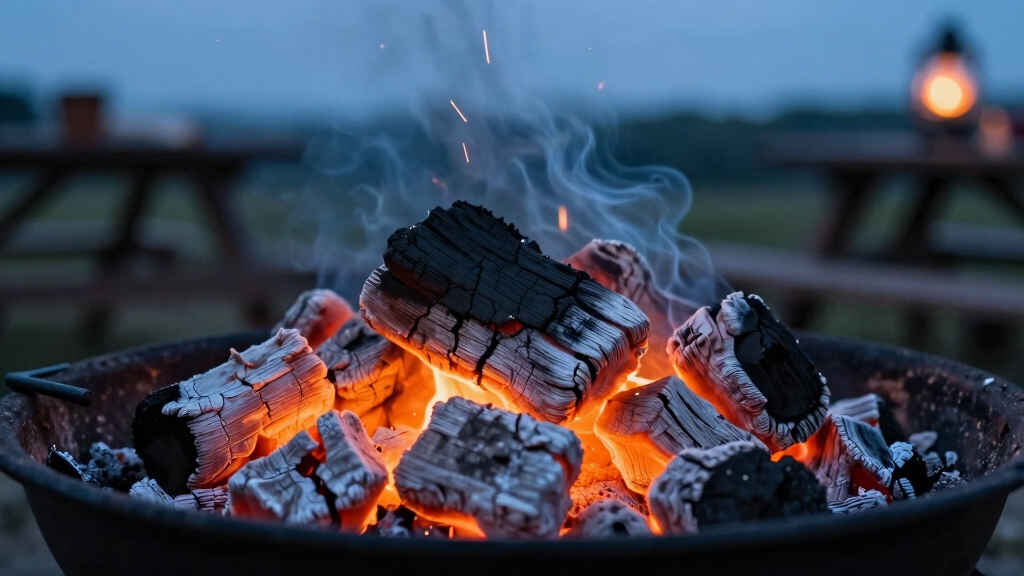
Look for charcoal pieces covered in gray, powdery ash with a glowing orange center; this indicates peak heat. Avoid starting while there’s thick, bluish smoke; it means incomplete combustion.
Use the hand test to gauge temperature: hold your hand 2 to 4 seconds above the grate for high heat (450–550°F), 5 to 6 seconds for medium (350–450°F), or 8 to 10 seconds for low heat (250–350°F).
Be cautious; these times vary with airflow and fuel type. Waiting for these visual and tactile signs guarantees your charcoal’s heat is consistent, helping you cook food thoroughly and avoid flare-ups or undercooking.
For best results, ensure proper airflow by fully opening vents and dampers, which helps maintain steady temperatures during cooking, as recommended in preparing your new smoker.
How to Extend Your Charcoal’s Burn Time?
To get the most out of your charcoal, you can adjust airflow and manage the grill’s vents carefully to control oxygen levels. This directly influences burn rate. By partially closing vents, you slow oxygen flow, extending burn time without sacrificing heat.
Proper stacking also matters. Pile charcoal loosely to guarantee consistent airflow, avoiding quick flare-ups. Choose high-quality, uniform charcoal; denser briquettes typically last longer than irregular lump charcoal.
Using a lid helps maintain temperature stability and reduces oxygen intake, prolonging the burn. Avoid adding lighter fluid or additives that speed combustion. Regularly monitor vents and adjust as needed to maintain your desired cooking temperature while conserving fuel.
These cautious steps help you extend charcoal’s life efficiently without compromising cooking performance. Additionally, maintaining a steady combustion control by monitoring air supply and flame quality is essential for efficient fuel use.
How Weather Impacts Charcoal Burn Time?
Although weather conditions can seem unpredictable, they play a crucial role in how long your charcoal burns.
Wind increases airflow, supplying more oxygen and causing the charcoal to burn faster, which shortens its lifespan.
On the other hand, damp or humid weather can slow ignition and reduce burn efficiency by introducing moisture to the charcoal.
Cold temperatures may also affect burn rate by cooling the coals, requiring more fuel or longer burn times to maintain heat.
To manage these effects, you should shield your grill from wind and keep charcoal dry before use. Adjusting vents carefully helps maintain consistent airflow despite weather changes.
Being aware of these factors guarantees you can better estimate burn time and maintain cooking temperatures safely and effectively.
Rain causes pellets or charcoal to absorb water, swelling and burning less efficiently, so using waterproof covers is essential to protect your fuel.
Frequently Asked Questions
Can Charcoal Be Safely Reused After Initial Burning?
Yes, you can safely reuse charcoal after the first burn, but you’ll want to handle it carefully. Once the charcoal cools, sift out the ashes and store the partially burnt pieces in a dry place.
When you reuse it, mix it with some fresh charcoal to maintain consistent heat and avoid temperature drops. Keep in mind, reused charcoal won’t burn as long or as hot, so adjust your cooking time accordingly.
How Should Leftover Charcoal Be Stored for Future Use?
Store leftover charcoal like a treasure chest, airtight and dry.
After it cools completely, place the charcoal in a sealed metal container or heavy-duty plastic bag to shield it from moisture and oxygen, which can dull its spark.
Keep it in a cool, dry place away from wind and humidity.
Avoid plastic bags if the charcoal’s still hot and never store near flammable materials.
This careful guarding preserves its burn quality for future grilling sessions.
Does Adding Lighter Fluid Affect Charcoal Burn Time?
Yes, adding lighter fluid can shorten charcoal burn time because it ignites the coals quickly. This causes them to burn hotter initially but faster overall.
You’ll get a quick high heat, but the fuel may burn unevenly and inconsistently. Use lighter fluid sparingly and carefully, as excess can create flare-ups and off-flavors.
For more control and longer, steadier burns, consider using a chimney starter instead.
What Are the Environmental Impacts of Charcoal Use?
You should know that charcoal use impacts the environment through deforestation, as wood is often harvested unsustainably.
It also releases carbon dioxide and other pollutants during burning, contributing to air pollution and climate change.
Additionally, production can cause soil degradation and habitat loss.
To minimize harm, opt for sustainably sourced charcoal or alternatives, manage your fire efficiently, and avoid excessive use of lighter fluids that increase toxic emissions.
How Does Charcoal Ash Disposal Affect Soil Quality?
Charcoal ash can improve soil quality if you dispose of it carefully. It contains minerals like potassium and calcium, which boost soil fertility and balance pH levels.
However, don’t add too much ash at once, as it can raise alkalinity excessively, harming plants. You should mix it well into compost or soil and avoid ash from treated or painted charcoal to prevent toxins.
Use moderation and test your soil regularly to keep it healthy.
From Spark to Ember: Take Control of Your Charcoal Fire
Now that you know how long charcoal burns, picture the glowing embers gently radiating heat beneath your grill. By choosing the right type and managing factors like airflow and weather, you’ll keep that steady warmth longer. This ensures your cooking goes smoothly.
Remember, watching the flames and adjusting carefully lets you extend burn time without rushing. With this knowledge, you’re ready to master your charcoal fire and enjoy perfectly cooked meals every time.