How Do You Make Beef Jerky in a Smoker: Perfect Every Time
To make beef jerky in a smoker, start by choosing lean beef like flank or round. Trim all fat, then partially freeze it for precise 1/8–1/4 inch slices.
Marinate your strips in a soy and spice blend for 6–24 hours. Preheat your smoker to 170°F. Arrange jerky evenly with good airflow.
Smoke at 170°F to remove moisture, then raise to 180°F–200°F until it’s pliable and reaches 160°F internally. Explore further details to guarantee perfect texture and flavor.
Key Takeaways
- Choose lean beef cuts, trim all fat, and partially freeze for easier, uniform slicing between 1/8 and 1/4 inch thick.
- Marinate sliced beef in a soy sauce-based mixture for 6–24 hours, then pat dry before smoking.
- Preheat smoker to 170°F–200°F, arrange strips in a single layer without overlap for even heat and smoke exposure.
- Smoke initially at 170°F for 1.5–2 hours to prevent case hardening, then increase to 180°F–200°F until jerky reaches 160°F internally.
- Cool jerky in a sealed bag to soften, then store airtight at room temperature (up to 1 week) or refrigerate/freeze for longer shelf life.
Pick and Prep the Best Beef for Jerky

Choosing the right cut of beef is critical for making high-quality jerky. Focus on lean cuts like flank steak, eye of round roast, or round steak.
Selecting lean cuts such as flank steak or eye of round is essential for premium jerky quality.
These cuts have minimal marbling, which reduces spoilage risk and guarantees a longer shelf life. Before you slice, trim all visible fat completely to prevent rancidity and uneven drying.
Aim for 2-3 pounds of meat for a standard batch, balancing quantity with manageable processing time. To facilitate precise slicing later, partially freeze the beef. This firms up the muscle fibers and prevents tearing.
Selecting beef with consistent texture and uniform grain direction will also help maintain jerky quality. Your meticulous meat selection and preparation set the foundation for flavorful, safe, and properly dried jerky.
Proper moisture control and dehydration temperature are crucial alongside curing salts to ensure safety and quality.
Slice Beef Thin and Evenly for Perfect Jerky
Master slicing your beef to a uniform thickness between 1/8 and 1/4 inch to guarantee consistent drying and ideal texture in your jerky.
Begin by semi-freezing the trimmed, lean beef to firm it up, which assures cleaner, more precise cuts without tearing.
Use a sharp knife or jerky slicer to maintain even thickness throughout each strip.
Cut beef strips under 1/2 inch wide to accelerate drying time.
Decide whether you want a tender chew; slice against the grain or a chewier bite; slice with the grain.
Consistency in thickness and width prevents uneven drying, reducing the risk of spoilage or toughness.
Avoid irregular slices, as thicker parts dry slower, potentially compromising texture and safety.
This meticulous approach sets the foundation for perfectly smoked jerky.
Ensure strips are arranged without overlapping during drying to allow even heat penetration and uniform moisture removal.
Mix Marinade and Marinate Your Beef for Flavor
Combine your marinade ingredients carefully, balancing soy sauce, Worcestershire, sweeteners like honey or brown sugar, and seasonings such as garlic powder and black pepper to develop a complex flavor profile.
Measure each component precisely—typically 3/4 to 1 cup soy sauce and Worcestershire each, 1/4 cup honey, 1/2 cup brown sugar, and 1 tablespoon garlic powder—then mix thoroughly.
If desired, add optional elements like bourbon or red pepper flakes for depth.
Once mixed, fully submerge your uniformly sliced beef strips in the marinade within a sealed container or bag.
Refrigerate for 6 to 24 hours, massaging occasionally to guarantee even coverage and flavor penetration.
The longer you marinate, up to 24 hours, the more intense and balanced the final jerky’s taste will be.
For best results, be sure to pat the meat dry before drying or smoking to promote proper surface drying and even smoke absorption, a key step in jerky preparation.
Set Up Your Smoker and Arrange Jerky Strips
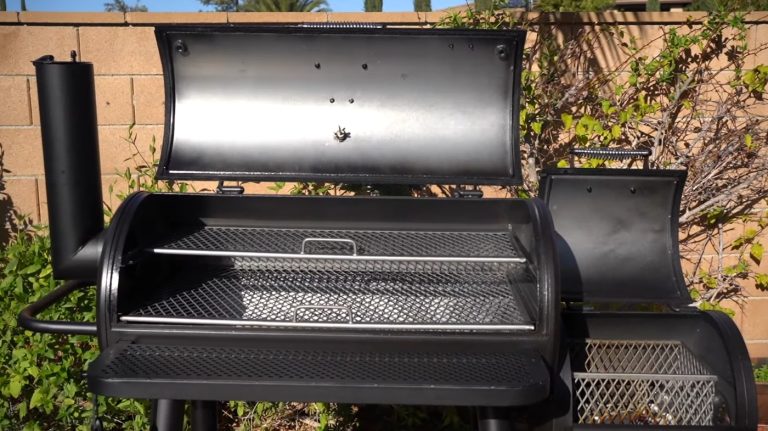
Before placing your marinated beef strips in the smoker, preheat it to a steady temperature between 170°F and 200°F. Adjust based on your smoker type.
Maintaining consistent heat guarantees even drying and flavor absorption. Arrange the strips carefully to optimize airflow and prevent sticking or uneven smoking.
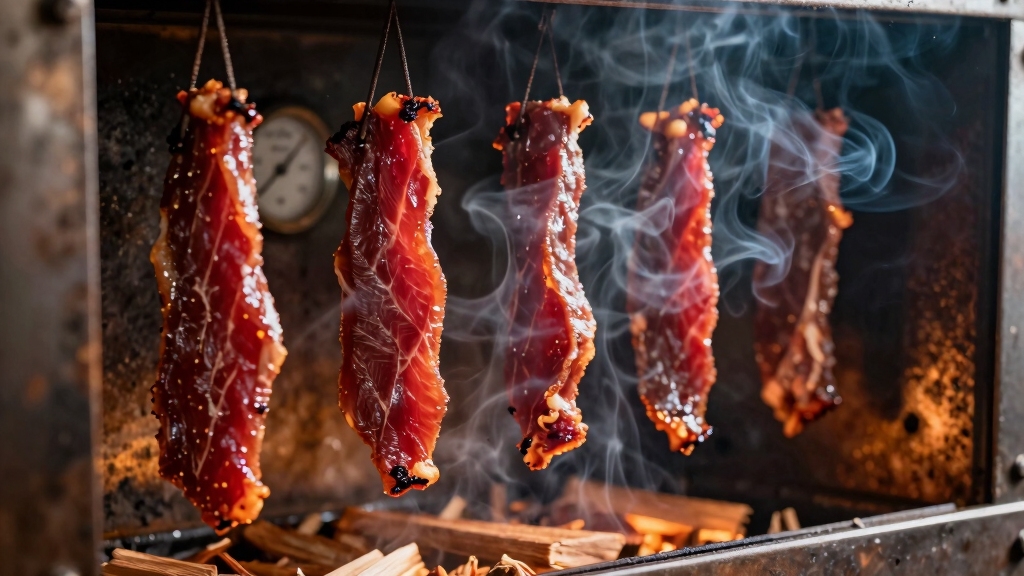
Lay strips in a single layer without overlapping to allow uniform heat exposure. Use the top rack or hang strips vertically if your smoker design permits, enhancing circulation.
Fully open vents to maintain airflow and avoid using a water pan if your beef is wet-marinated. This prevents excess moisture buildup.
These steps create an ideal environment for your jerky, enabling precise control over texture and drying rate.
For best results, position your smoke tube near a steady air source to ensure consistent smoke flow during smoking.
Smoke Jerky to Ideal Texture and Store It Safely
Typically, you’ll begin smoking your jerky at 170°F for 1.5 to 2 hours to gently dry the meat. After this, increase the temperature to between 180°F and 200°F. This initial phase removes surface moisture, preventing case hardening.
Maintain airflow and monitor temperature carefully to ensure even drying. Flip strips if necessary to promote uniform smoke penetration. Continue smoking until jerky bends without breaking and reaches an internal temperature of 160°F, indicating safe dehydration and pathogen reduction.
Once done, cool the jerky inside a sealed plastic bag to soften texture without adding moisture. Store your jerky in airtight containers; keep it at room temperature for up to a week or refrigerate or freeze for extended shelf life.
Proper smoking and storage safeguard flavor, texture, and food safety. Using curing salt in your jerky mixture also helps preserve safety and enhance flavor during smoking.
Frequently Asked Questions
Can I Use Other Types of Meat Besides Beef for Jerky?
Yes, you can use other meats for jerky, like turkey, venison, meat, or chicken.
Choose lean cuts with minimal fat to prevent spoilage and ensure proper drying. Slice uniformly and marinate similarly to beef.
Keep in mind, different meats may require adjusted smoking times and temperatures due to varying moisture content and texture.
Always check for an internal temperature of 160°F to confirm safety and peak jerky quality.
How Long Can Homemade Jerky Be Stored at Room Temperature?
You can store homemade jerky at room temperature for about one week if it’s properly dried and kept in an airtight container.
Beyond that, moisture and bacteria risk spoilage. To extend shelf life, refrigerate or freeze it.
Always make certain jerky’s fully cooled and stored in a cool, dry place away from direct sunlight.
For best safety and quality, avoid keeping jerky unrefrigerated longer than seven days.
What Are the Best Wood Chips for Smoking Different Flavors?
You want oak for a balanced, medium smoke, neither too strong nor too mild.
Hickory delivers bold, meat-like richness, perfect if you crave intensity.
Pecan offers a sweeter, nutty flavor, softer than hickory yet deeper than fruitwoods.
For a lighter touch, fruitwoods like apple or cherry bring subtle sweetness and a hint of tartness.
Each wood shifts your jerky’s profile, so choose based on how pronounced or delicate you want your smoky notes.
Is It Safe to Eat Jerky Without Cooking After Marinating?
You shouldn’t eat jerky right after marinating because the marinade doesn’t kill harmful bacteria.
Raw meat can carry pathogens that only heat can neutralize.
To guarantee safety, you need to cook or smoke the jerky until it reaches an internal temperature of 160°F.
This drying and heating process eliminates bacteria, making it safe to eat.
Skipping cooking risks foodborne illness, so always complete the smoking step before consumption.
Can I Make Jerky Without a Smoker, Like in an Oven?
You can absolutely make jerky in an oven; it’s like painting with a different brush but achieving the same masterpiece.
Set your oven to the lowest temperature, around 160-175°F. Arrange the thin, marinated meat strips on wire racks for air circulation.
Keep the door slightly ajar to let moisture escape. It takes 4-6 hours, flipping occasionally, until the jerky bends without breaking.
This ensures safe dehydration and flavorful results.
Every Bite Tells a Story of Skill and Care
As you finish smoking your beef jerky, remember it’s more than just food. It’s a transformation. Thin slices of meat become preserved treasures, symbolizing patience and care.
Each strip holds the story of your attention to detail, from choosing the right cut to perfect smoking time. By mastering this process, you create not only a snack but a lasting craft.
You capture flavor and tradition in every bite. Your jerky is now ready to be savored.