Fish Substitute for Halibut: Perfect for Every Cooking Style
If you need a halibut substitute, choose firm, mild-flavored fish like cod, haddock, sea bass, or swordfish.
Cod and haddock offer a flaky, delicate texture ideal for gentle cooking methods.
Swordfish and sea bass hold up well to grilling or baking due to their dense flesh.
Salmon works too if you want richer flavor but requires careful cooking to avoid dryness.
Understanding these options helps you match texture and taste effectively; more details can guide your selection for any recipe.
Key Takeaways
- Swordfish and sea bass are excellent halibut substitutes for grilling or baking due to their firm, flaky texture and mild flavor.
- Cod and haddock offer a mild flavor and flaky white texture, ideal for pan-searing or delicate preparations as halibut alternatives.
- Salmon varieties, like Alaskan sockeye or Coho, provide richer flavor and firmer texture but require careful cooking to avoid dryness.
- Striped bass serves well as a steak-style halibut substitute, combining firm flesh and mild flavor suitable for grilling.
- Choose substitutes based on cooking method: firm fish for grilling/baking, milder, flaky fish for gentle cooking and subtle flavor.
Best Halibut Substitutes for Flavor and Texture
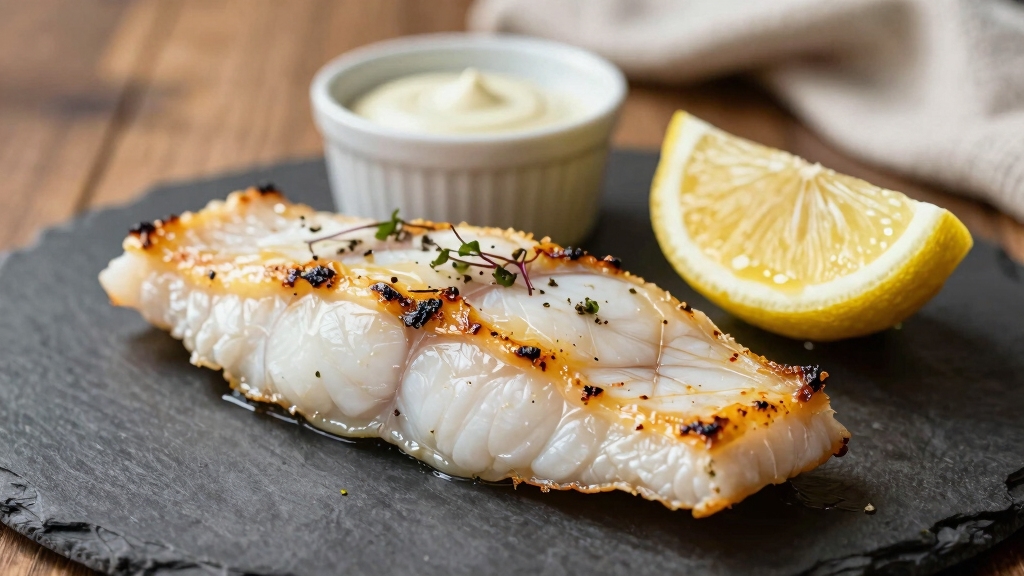
When you’re looking to swap out halibut in a recipe, focusing on substitutes that closely match its mild flavor and flaky white texture is key.
Fish like swordfish and sea bass serve well due to their firm flesh and ability to maintain structure during cooking, similar to halibut.
Swordfish offers a denser texture and a more pronounced flavor, making it ideal for recipes requiring a robust profile.
Sea bass has a mild taste and firm texture that bake or grill comparably to halibut.
Salmon provides a firmer, flaky option with a richer flavor, beneficial if you want added taste complexity.
These choices make certain your dish retains desired sensory qualities without compromising preparation methods or texture integrity.
For added smoky flavor, pairing these fish with mesquite wood smoke can enhance the dish with bold, earthy notes without overwhelming the delicate texture.
Cod and Haddock as Mild White Fish Alternatives
While firmer fish like swordfish and sea bass offer excellent structure for certain recipes, you might prefer milder, more tender options that replicate halibut’s delicate flavor and flaky texture more closely.
Cod and haddock both provide mild flavors and white flaky flesh, making them ideal halibut substitutes. Cod is widely available, affordable, and versatile, though its tender texture requires careful grilling.
Haddock shares a similar delicate taste but has lower oil content, limiting grilling suitability. When preparing these fish, consider proper temperature control to maintain moistness and prevent dryness.
| Feature | Cod | Haddock |
|---|---|---|
| Flavor | Mild, neutral | Mild, delicate |
| Texture | White, flaky, tender | White, flaky, medium-dense |
| Cooking Methods | Grilling, baking | Baking, pan-searing |
Swordfish and Sea Bass for Grilling and Baking Halibut Substitutes
Explore swordfish and sea bass as firm, reliable alternatives to halibut for grilling and baking.
Swordfish offers a dense, meat-like texture that withstands high heat, maintaining structural integrity during cooking. Its moderate seafood flavor is bolder than halibut’s but complements robust seasonings well.
Swordfish’s dense, meat-like texture holds up to high heat, pairing perfectly with bold, robust seasonings.
Sea bass, including black sea bass, provides a mild flavor and firm flesh, closely matching halibut’s texture and cooking properties. Both species fall into the medium-dense light meat category, making them suitable for recipes requiring stable, flaky fish.
When choosing between them, consider swordfish for heartier dishes needing substantial texture, while sea bass suits those favoring a subtler taste.
Using these fish guarantees consistent results in grilling and baking, replicating halibut’s culinary versatility with precision. Maintaining proper temperature control during cooking is essential to preserve moisture and achieve the ideal texture, as emphasized in temperature control techniques.
Salmon and Other Whitefish: Flavorful Halibut Replacement Options
Beyond the firm textures of swordfish and sea bass, salmon and various whitefish offer distinct flavor profiles that can enrich your halibut dishes.
Salmon’s firm, flaky texture suits grilling, baking, and broiling. Alaskan sockeye provides a bold, lean flavor, while coho’s higher fat content reduces dryness risk.
These traits add depth compared to halibut’s mildness. Other whitefish, including flounder, sole, grouper, and pollock, present mild to delicate flavors with varying textures that closely mimic halibut’s flaky white flesh.
For example, sole and plaice offer subtle taste and texture similarity, while striped bass can replace halibut steaks effectively.
How to Choose the Right Halibut Substitute for Your Recipe?
When selecting a halibut substitute, consider the cooking method and desired flavor profile to guarantee the best match. For grilling or baking, choose firmer fish like swordfish or sea bass.
If you prefer a mild flavor and flaky texture, cod or haddock works well. Richer taste options like salmon suit recipes needing more flavor depth but require careful cooking to avoid drying.
| Cooking Method | Recommended Substitute | Flavor Profile |
|---|---|---|
| Grilling/Baking | Swordfish, Sea Bass | Firm, moderate to mild |
| Pan-Searing | Haddock, Cod | Mild, flaky |
| Delicate Flavor | Cod, Haddock | Mild, neutral |
| Rich Flavor | Salmon | Bold, richer |
Match texture and oil content to your recipe for best results. Maintaining proper temperature and moisture during cooking is crucial to preserve the fish’s flavor and texture, similar to the care taken when preparing and handling salmon.
Frequently Asked Questions
How Should I Store Halibut Substitutes for Maximum Freshness?
You should store halibut substitutes in the coldest part of your refrigerator at 32°F to 38°F (0°C to 3°C).
Keep the fish in airtight containers or tightly wrapped in plastic wrap to prevent exposure to air and moisture. Use them within one to two days for peak freshness.
For longer storage, freeze the fish vacuum-sealed or wrapped in moisture-proof foil at 0°F (-18°C) to maintain quality and prevent freezer burn.
Are Halibut Substitutes Safe for Children and Pregnant Women?
Yes, halibut substitutes like cod, haddock, and sea bass are generally safe for children and pregnant women when cooked properly. They offer mild flavors and low mercury levels, making them suitable choices.
However, you should avoid high-mercury fish like swordfish. Always make sure fish is fully cooked to eliminate pathogens.
Consult local advisories for specific fish safety guidelines, especially during pregnancy, to protect your child’s health effectively.
Can Halibut Substitutes Be Used in Sushi or Raw Dishes?
You can use some halibut substitutes in sushi or raw dishes, but you need to make sure they’re sushi-grade and safe for raw consumption.
Fish like swordfish and sea bass are sometimes served raw, provided they’re properly handled and frozen to kill parasites.
However, cod, haddock, and most whitefish are typically cooked due to texture and safety concerns.
Always verify freshness and sourcing before using any substitute raw to prevent foodborne illness.
What Are the Environmental Impacts of Fishing These Substitutes?
Curiously, many halibut substitutes share similar environmental concerns.
When you fish cod or haddock, you risk overfishing due to their commercial popularity.
Swordfish and sea bass often face habitat disruption from longline fishing methods.
Salmon farming can lead to pollution and disease spread.
To minimize impact, you should choose sustainably certified options and support fisheries using eco-friendly practices.
This ensures the marine ecosystem remains balanced while enjoying your seafood.
How Do Cooking Times Vary Among Different Halibut Substitutes?
You’ll notice that cooking times vary due to differences in thickness, density, and fat content among substitutes.
For example, cod and haddock cook slightly faster than halibut because they’re more tender and thinner.
Swordfish and sea bass, with firmer, denser flesh, require longer grilling or baking times.
Salmon, higher in fat, cooks evenly but needs careful timing to avoid dryness.
Adjust cooking based on thickness and texture for best results.
Wrap-Up: The Key to a Successful Halibut Swap
When choosing a halibut substitute, you’re steering a sea of options, each with unique flavor and texture profiles.
Mild white fish like cod or haddock offer a gentle, flaky alternative, while swordfish and sea bass bring firmer flesh ideal for grilling or baking.
Salmon and other flavorful whitefish add a bolder taste. Match your substitute carefully to your recipe’s needs, ensuring your dish maintains its intended balance and culinary integrity.