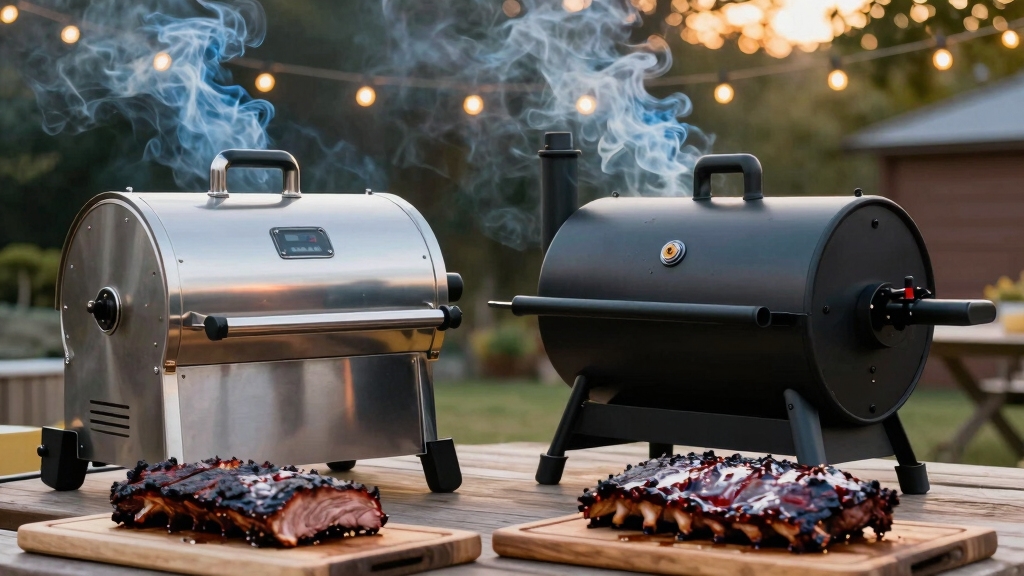
Electric Smoker vs Propane Smoker: Which One Is Better?
If you want steady, precise temperature control with minimal monitoring, an electric smoker fits best. It’s especially suited for delicate foods needing gentle heat.
Propane smokers reach higher temperatures faster, offering richer flavor and traditional smoke rings. However, they demand active flame management and pose gas risks.
Electric units need power outlets, which limits placement, while propane offers portability and independence.
Choosing depends on your cooking style, hands-on comfort, and outdoor setup preferences. Exploring these differences can guide your ideal smoker choice.
Key Takeaways
- Electric smokers offer precise, steady temperature control with set-and-forget operation, ideal for beginners and delicate foods.
- Propane smokers reach higher temperatures faster but require active monitoring and manual flame adjustments.
- Propane smokers provide portability and independence from electrical outlets, suitable for remote or mobile use.
- Propane imparts richer, robust smoky flavors with a characteristic smoke ring and deeper bark compared to electric smokers.
- Electric smokers need nearby power and covered setups, limiting outdoor placement compared to propane smokers.
Electric Smoker or Propane: Quick Comparison Table
| Feature | Electric Smoker | Propane Smoker |
|---|---|---|
| Temperature Control | Precise dial or digital control with steady heat | Manual flame adjustment required |
| Heat Consistency | Very stable with minimal fluctuation | Can vary due to weather and flame changes |
| Maximum Temperature | Lower maximum heat output | Higher temperatures and faster heating |
| Ease of Use | Beginner-friendly with set-and-forget operation | Requires more monitoring and experience |
| Preheating Time | Slower preheating | Heats up faster |
| Portability | Limited by need for electrical outlet | Highly portable with propane tanks |
| Outdoor Placement | Must be near power and protected from moisture | Can be placed almost anywhere outdoors |
| Flavor Profile | Mild, subtle smoke flavor | Richer smoky flavor with deeper bark |
| Smoke Ring Formation | Typically no visible smoke ring | Produces traditional pink smoke ring |
| Best For Foods | Fish, cheese, vegetables, jerky | Brisket, ribs, and other meats |
| Running Cost | Uses electricity | Uses propane fuel |
| Purchase Price | Usually higher upfront cost | Often around $200 or less |
| Maintenance | More complex due to electronics | Simpler with fewer components |
| Safety Considerations | No gas leaks; electrical safety required | Potential gas leaks and flare-ups |
| Ideal Users | Beginners and those wanting convenience | Experienced users wanting traditional BBQ flavor |
Choosing the Right Smoker for Your Cooking Style

When choosing the right smoker for your cooking style, you’ll need to take into account how much control and convenience you want over temperature management.
Electric smokers excel in delivering precise, steady temperatures with minimal intervention. They’re ideal if you prefer set-and-forget operation.
Their consistent heat output suits delicate foods requiring gentle, unwavering warmth. Conversely, propane smokers offer higher maximum temperatures but demand active monitoring and adjustment, especially under fluctuating weather conditions.
If you value portability and the ability to operate independently of electrical outlets, propane units offer a clear advantage. However, electric smokers require reliable power access and slower preheating times.
Assess your cooking preferences, the environment where you’ll smoke, and your tolerance for hands-on management to select the smoker that best aligns with your technique and desired convenience.
Additionally, propane’s higher combustion temperature allows for more intense heat output, making it suitable for applications requiring focused and efficient heating.
Temperature Control Differences in Electric vs Propane Smokers
Although propane smokers can reach higher maximum temperatures, electric smokers offer superior temperature control through precise dial adjustments and consistent heat output.
When you use an electric smoker, you benefit from a true set-and-forget operation that maintains steady temperatures. This minimizes fluctuations common with propane models.
Propane smokers require active monitoring due to weather impacts and more variable heat retention.
| Feature | Electric Smoker |
|---|---|
| Temperature Adjustment | Precise dial or digital control |
| Heat Consistency | Stable, steady at set temps |
| Max Temperature | Lower than propane |
| Weather Sensitivity | Minimal |
This precision makes electric smokers ideal for delicate temperature-dependent smoking tasks. Unlike propane smokers, electric smokers often have a temperature controller that adjusts heat within a narrow range, reducing the impact of external factors like wind and cold.
Ease of Use: Which Smoker Is Better for Beginners?
Typically, electric smokers offer greater ease of use for beginners due to their simple button controls and digital or analog interfaces that allow set-and-forget operation.
Electric smokers simplify smoking for beginners with easy controls and set-it-and-forget-it operation.
You just set your desired temperature, and the smoker maintains it precisely, minimizing monitoring.
Though electric units require preheating and a power source, their consistent temperature control reduces guesswork.
In contrast, propane smokers demand more attention to temperature adjustments, as weather fluctuations affect heat output.
You’ll need to manually regulate the flame, requiring some experience to maintain steady cooking conditions.
While propane heats faster, its temperature variability can challenge novices.
Overall, if you prefer a straightforward, low-maintenance smoking process, electric smokers are better suited for beginners.
They provide reliable and consistent results with minimal intervention.
Additionally, choosing equipment with standardized sizes and features can help streamline setup and improve operational efficiency.
Portability and Setup: Electric vs Propane Smokers
When you’re deciding between electric and propane smokers, it’s essential to think about power needs and where you’ll be using them. Electric smokers require a nearby power source, which can really limit your options for outdoor setup.
You might find yourself tied to a specific spot, and that can be a hassle if you want to move around.
On the flip side, propane smokers are a lot more flexible. Since they don’t rely on electricity, you can take them just about anywhere.
This makes setting up in different environments a breeze! So, if portability is high on your list, propane might just be the way to go.
Remember to always operate propane smokers outdoors in a well-ventilated area to ensure safety during use.
Power Requirements
Since electric smokers rely on a continuous power source, you must position them near accessible electrical outlets. This limits placement options in your backyard or outdoor space.
You’ll need a stable power supply to maintain consistent heating elements. Interruptions can cause temperature fluctuations and risk undercooking.
Electric smokers also require protection from moisture due to electrical components. Therefore, setup under a covered area is essential.
In contrast, propane smokers operate independently of electricity and are fueled by portable propane tanks. This allows unrestricted placement.
This autonomy makes propane smokers reliable during power outages and in locations without power access.
When considering power requirements, electric smokers demand more infrastructure. Propane smokers offer flexible and self-contained operation, which are critical factors affecting your setup and usability.
Additionally, propane’s portability advantage enables use in remote or mobile settings where electricity is unavailable.
Outdoor Placement Flexibility
Although electric smokers require access to power outlets, propane smokers let you position them anywhere outdoors without worrying about electricity.
This flexibility makes propane smokers ideal for varied outdoor settings, including remote areas or during power outages.
When planning your smoker’s location, consider these factors:
- Power availability: Electric smokers need a stable outlet, limiting placement.
- Weather exposure: Electric units require covered spots to prevent electrical hazards.
- Mobility: Propane smokers are portable and function independently from electrical infrastructure.
You’ll find propane smokers enable greater versatility for outdoor placement, adapting easily to backyard layouts or camping trips.
Electric smokers demand proximity to power sources, constraining your options.
This intrinsic difference impacts how and where you can operate each smoker effectively, especially in environments without reliable electricity.
Additionally, maintaining consistent temperature control can be more challenging outdoors due to external conditions like wind and cold, which may affect both electric and propane smokers differently.
Setup Convenience
You’ll want to factor in setup convenience when choosing between electric and propane smokers, as each demands different logistical considerations.
Electric smokers require access to a reliable power source, limiting your setup locations to areas near outlets or extension cords. This dependence restricts portability and necessitates a covered area during rain to mitigate electrical hazards.
In contrast, propane smokers operate independently of electricity, allowing placement anywhere outdoors—even during power outages or remote locations. Propane units offer greater flexibility and quicker setup since you don’t need to manage cords or power supply.
However, electric smokers provide a more controlled environment once set, albeit with setup constraints. Ultimately, if portability and ease of outdoor setup are priorities, propane smokers have a clear advantage over electric models. Additionally, managing temperature control is crucial regardless of power source to ensure optimal smoking results.
Flavor Profiles of Electric and Propane Smokers
When you compare electric and propane smokers, you’ll find that the smoked flavor really varies. Propane tends to deliver results that are much closer to what you get with traditional charcoal smokers. It’s pretty interesting! You might notice that propane smokers can create a distinct smoke ring and give your meat a deeper color.
On the other hand, electric smokers usually produce a nice bronze hue but don’t develop that pronounced smoke ring. Additionally, propane smokers typically require more frequent adjustments to maintain temperature stability compared to electric smokers.
Authenticity of Smoked Flavor
Since flavor is the cornerstone of smoking, understanding how electric and propane smokers influence taste is essential.
Electric smokers offer controlled, consistent heat but often lack the depth of authentic smoke flavor. They produce milder profiles ideal for delicate foods.
Propane smokers, by contrast, generate a flavor closer to traditional charcoal. They’re favored by BBQ enthusiasts for richer, more robust notes.
Consider these factors affecting authenticity:
Propane emits water vapor, which can affect dryness and flavor intensity.
Electric smokers create minimal smoke, limiting complex flavor compounds.
Propane’s higher temperatures enable more pronounced Maillard reactions and smoke penetration.
When you seek genuine smoked flavor, propane provides a closer approximation to traditional methods. Electric prioritizes precision and subtlety over intensity.
Additionally, the type of fuel used can significantly alter smoke profile and heat consistency, with fuel differences playing a critical role in flavor outcomes.
Smoke Ring and Appearance
Although both electric and propane smokers aim to produce flavorful meat, their impact on smoke ring formation and overall appearance differs markedly.
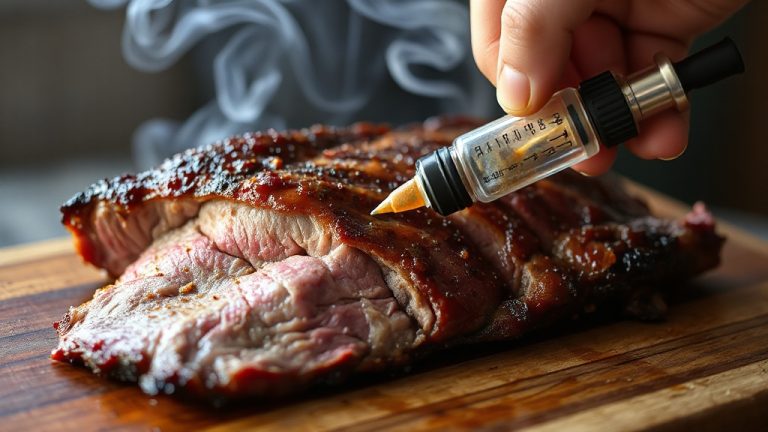
Propane smokers generate combustion gases rich in nitrogen dioxide, which combine with moisture to form nitric oxide. This penetrates meat and creates the characteristic pink smoke ring.
Electric smokers, lacking direct combustion, fail to produce this chemical reaction, resulting in meat with a bronze surface and no visible smoke ring.
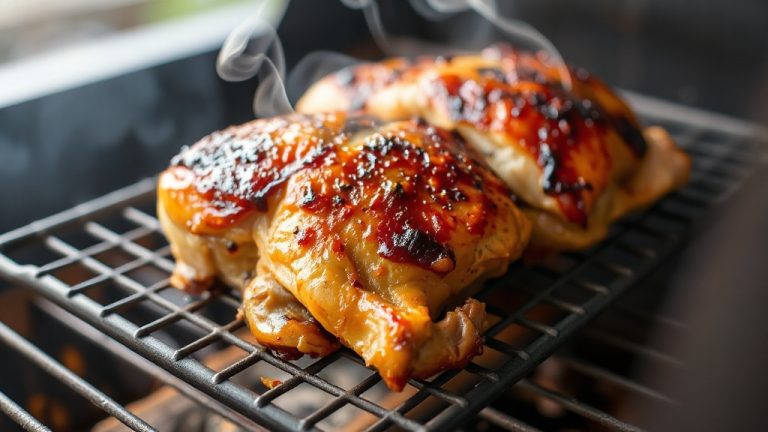
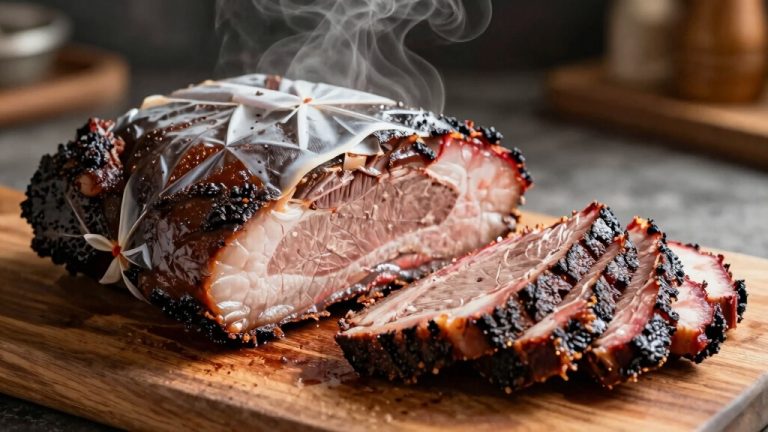
Visually, propane-smoked meat exhibits a deeper bark with slight charring, enhancing texture and appeal.
Electric-smoked meat tends to have a more uniform, paler crust.
If you prioritize the traditional smoke ring and bark, propane smokers deliver a more authentic appearance.
Conversely, electric smokers provide consistent coloration but lack this hallmark visual cue prized by barbecue enthusiasts.
However, it is important to avoid using woods like pine in either smoker due to their toxic chemical emissions that can negatively affect both flavor and health safety.
Ideal Food Compatibility
Because each smoker type imparts different flavor profiles, choosing the right one depends on the foods you intend to cook. Electric smokers excel in controlled, subtle smoke infusion, ideal for delicate foods. Propane smokers generate a stronger, more robust flavor, closer to traditional charcoal smoking.
Consider these compatibilities:
Electric smokers: Perfect for fish, cheese, and slow-cooked vegetables requiring precision and mild smoke.
Propane smokers: Best for meats like brisket and ribs where intense smoky flavor and smoke rings are desired.
Dry products (e.g., jerky): Prefer electric smokers to avoid excess water vapor from propane that can affect texture.
Understanding these profiles helps you match your smoker to specific culinary goals, enhancing flavor accuracy and cooking outcomes.
Cost and Maintenance: Which Smoker Saves Money
When comparing costs, propane smokers generally save you money upfront due to their lower purchase price, often around $200 or less. Electric smokers tend to be pricier for comparable quality.
Maintenance on propane units is simpler and cheaper because of fewer mechanical parts. However, electric smokers can increase your electricity bill during long cooks, which adds to operational costs.
Here’s a cost and maintenance comparison:
| Aspect | Propane Smoker | Electric Smoker |
|---|---|---|
| Purchase Price | ~$200 or less | Higher, varies |
| Repair Complexity | Simple, fewer parts | Complex, electronics |
| Running Costs | Propane fuel | Electricity |
| Maintenance Cost | Lower | Higher |
| Longevity | Good with upkeep | Moderate |
Choosing propane helps you save initially and on repairs. Electric costs more to buy and maintain.
Safety and Reliability: Which Smoker Is Safer for You?
Since safety is paramount in any cooking environment, understanding the risks and reliability factors of propane and electric smokers is essential.
Safety is crucial when choosing between propane and electric smokers, considering their unique risks and reliability.
You’ll find electric smokers inherently safer due to the absence of combustible gases, minimizing fire hazards. However, electric heating elements can malfunction, potentially interrupting cooking.
Propane smokers, while reliable during power outages and offering quicker heat recovery, pose risks associated with gas leaks and require careful adjustment to avoid flare-ups.
Consider these points when evaluating safety and reliability:
Electric smokers maintain consistent temperatures and eliminate combustion risks.
Propane smokers heat faster but need vigilant monitoring to prevent gas-related hazards.
Both systems demand proper maintenance to guarantee dependable performance.
Choosing the right smoker hinges on balancing your safety priorities with operational reliability.
Frequently Asked Questions
Can Electric Smokers Be Used Indoors Safely?
You shouldn’t use electric smokers indoors due to ventilation concerns.
Although electric smokers don’t produce combustible gases, they still emit smoke and moisture. This can accumulate indoors and cause health hazards or damage.
Proper airflow is vital to preventing smoke buildup and potential fire risks.
You should operate electric smokers in well-ventilated outdoor spaces or covered patios designed for such use to guarantee safety and peak performance.
How Long Does It Take to Clean Each Smoker Type?
Cleaning an electric smoker typically takes about 30 to 45 minutes, thanks to fewer grease and soot residues.
Propane smokers demand closer to 45 to 60 minutes because combustion produces more grime and ash buildup.
You’ll spend extra time scrubbing burner areas and grease traps with propane units.
Electric models’ smooth heating elements simplify wipe-downs, but both require thorough cleaning to maintain temperature accuracy and avoid corrosion over time.
Are Propane Smokers Compatible With Natural Gas Lines?
Propane smokers typically aren’t compatible with natural gas lines out of the box because they’re designed for propane’s higher pressure and energy content.
You’d need a professional conversion kit to safely connect a propane smoker to a natural gas supply.
Without proper adjustments to the burner and regulator, you risk inefficient combustion or safety hazards.
Always consult manufacturer guidelines and a qualified technician before attempting any conversion.
What Is the Typical Lifespan of Electric Smoker Heating Elements?
Heating elements in electric smokers typically last between 3 to 5 years, depending on usage frequency and maintenance.
Frequent firing and poor upkeep can prompt premature performance problems, while proper preservation prolongs their productive period.
You should routinely review resistance and replace elements showing corrosion or inconsistent heating.
Consistent care curtails costly component changes, ensuring steady smoker service.
Do Electric Smokers Require Special Wood Chips or Pellets?
You don’t need special wood chips or pellets for electric smokers, but selecting the right type is essential.
Most electric smokers use standard wood chips, soaked or dry, to generate smoke. Some models accommodate wood pellets, but only if designed for pellet use.
Avoid oversized chunks that won’t smolder properly. Using appropriate, moisture-controlled chips guarantees consistent smoke production and flavor without clogging or overheating the heating element.
Your Perfect Smoker: Precision, Portability, or Both?
When choosing between electric and propane smokers, consider control and convenience. Electric smokers offer precise temperature regulation, with 85% of users reporting consistent results.
They are ideal for beginners focused on ease and safety. Propane smokers excel in portability and faster heat-up times, but require more monitoring.
Your choice hinges on whether you prioritize accuracy and simplicity or mobility and quick cooking. Analyze your cooking style and environment to select the smoker that fits your needs best.