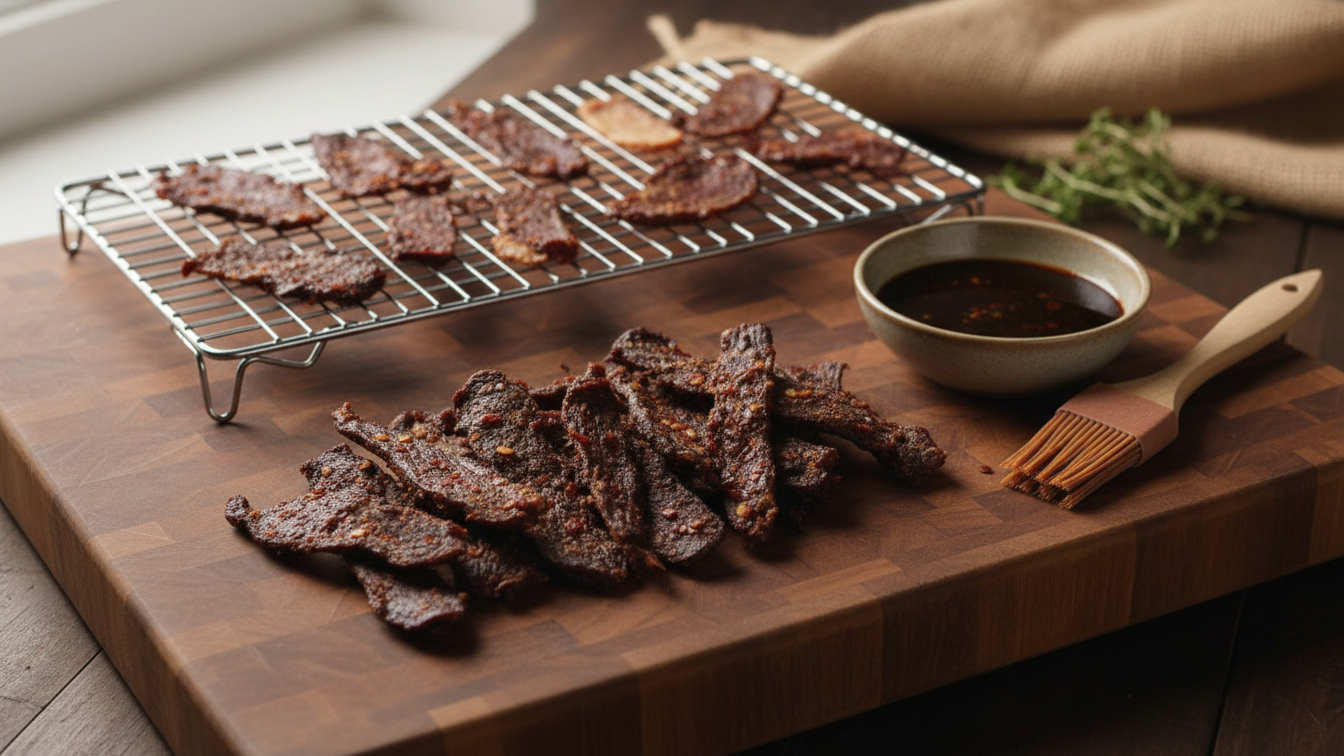
Duck Jerky Recipe: Easy Steps for Tender, Flavorful Jerky
Choose fresh, lean duck breast, trim all skin and fat, then slice evenly across the grain about ¼ inch thick.
Marinate your strips for 24–48 hours in a balanced mix of soy sauce, brown sugar, garlic, and a touch of Worcestershire for deep flavor. Dry or smoke the jerky at 160–180°F until it’s firm yet pliable with no tackiness.
Proper storage keeps it fresh and tasty. Keep exploring to master each step and flavor tweak.
Key Takeaways
- Select fresh, lean duck breasts, trim skin and fat, and slice evenly into 1/4-inch strips for uniform drying and tenderness.
- Marinate duck strips at least 24 hours in a balanced mix of kosher salt, soy or Worcestershire sauce, brown sugar, garlic, and spices.
- Use about 2 tablespoons kosher salt per 3 pounds of meat to draw moisture and preserve jerky during drying.
- Partially freeze duck breasts before slicing to ensure consistent thickness and slice across the muscle grain for tender jerky.
- Dry or smoke duck jerky at low temperatures until firm but not brittle, checking moisture and texture to prevent spoilage.
Quick Duck Jerky Guide for Beginners
| Ingredients / Tools | Steps / Actions |
|---|---|
| Fresh lean duck breast | Trim all skin and fat, slice ¼-inch across the grain. |
| Kosher salt (2 tbsp per 3 lbs meat) | Sprinkle evenly or mix into marinade for moisture control. |
| Soy sauce & Worcestershire sauce | Combine as base for umami depth in the marinade. |
| Brown sugar / honey / maple syrup | Add to balance saltiness and promote caramelization. |
| Garlic & onion powder | Incorporate into marinade for savory layers. |
| Black pepper / cayenne / red pepper flakes | Adjust spice level according to preference. |
| Liquid smoke or mushroom powder (optional) | Enhance smoky or umami flavor subtly. |
| Dehydrator, smoker, or oven | Set 160–180°F; arrange strips on racks with airflow. |
| Thermometer | Ensure internal temperature reaches at least 165°F. |
| Airtight containers / vacuum-sealed bags | Store cooled jerky in a cool, dark, dry place. |
Choosing the Best Duck Breast for Jerky
When choosing the best duck breast for jerky, you’ll want to take into account several key factors that affect flavor, texture, and overall quality.
First, decide between wild and domestic duck: wild offers leaner meat with a bold, gamey taste, while domestic breeds like Pekin provide milder flavor and more fat, ensuring a subtler jerky. To enhance the flavor further, consider brining techniques to tenderize and infuse the meat before drying.
Consider the bird’s age and condition. Young ducks yield tender meat that dries softer, whereas older birds produce chewier jerky with stronger flavor.
Freshness matters too; fresh or properly frozen breasts keep texture intact, but repeated freeze-thaw cycles can spoil the final product.
Look for firm, deep-red breasts without discoloration or bruising, and avoid any sour or fishy odors.
To prepare the meat best, trim skin and excess fat before freezing for an hour to ease slicing into uniform strips.
These choices set the stage for delicious, high-quality duck jerky.
How to Trim and Slice Duck for Even Drying?
Start by thoroughly trimming your duck breast to guarantee every strip dries evenly and tastes clean. Remove all skin and aggressively trim surface fat, especially in wild duck, to prevent rancid flavors and slow drying. Properly drying the meat also helps prevent mold and mildew, which can affect flavor and safety.
Thoroughly trim duck breast, removing skin and fat to ensure even drying and a clean, fresh taste.
Peel off silverskin and heavy membranes to avoid chewiness and make certain moisture escapes uniformly. Square off ragged edges so strips share similar width and thickness.
Next, identify the muscle grain and slice consistently across for tenderness or with for chewiness, avoiding mixed muscle strands in one piece. Partially freeze breasts until firm but not frozen solid; this helps you slice uniform 1/4-inch strips with a sharp knife.
To further improve drying and flavor absorption, flatten the slices to about 3 mm thickness by placing them between cling film and gently tapping with a rolling pin, which increases surface area for marinade penetration and faster drying flattening slices.
After slicing, consider flattening or pounding pieces evenly to promote consistent dehydration. Keeping your slices uniform in size and thickness guarantees each strip dries safely and tastes perfect.
Crafting the Perfect Marinade for Duck Jerky
Although trimming and slicing set the stage, crafting the perfect marinade truly defines your duck jerky’s flavor and texture.
Start by balancing salt, around 2 tablespoons kosher salt per 3 pounds of meat, to draw out moisture and firm up the jerky.
Use soy or Worcestershire sauce for rich umami depth and a touch of acidity that brightens flavor and tames any gamey notes. Including Worcestershire sauce is important because it adds salt and vinegar, which are key for preservation.
Add brown sugar to balance saltiness and encourage a glossy, caramelized finish during drying. Incorporating aromatics and spices enhances the overall complexity of the jerky’s taste profile.
Don’t forget aromatics like garlic and onion powder, plus black pepper or cayenne for heat that suits your taste.
A splash of liquid smoke or a hint of mushroom powder can add complexity without overwhelming.
This carefully crafted marinade sets your duck jerky apart with savory, balanced, and layered flavors.
Optimal Marinating Time for Duck Jerky Flavor
Consistently marinating your duck jerky for at least 24 hours releases the full depth of flavor and guarantees the salt penetrates beyond the surface, seasoning the meat thoroughly. Proper refrigeration and sanitation during marination are crucial to prevent cross-contamination and ensure safety.
Shorter marinating times only season the exterior, while extended marination up to 72 hours intensifies saltiness without harming texture if your marinade lacks acidic ingredients.
It’s important to note that marination times under 8 hours typically result in mostly surface-level seasoning, which is less effective for flavor penetration.
Remember to keep the duck fully submerged and refrigerated, massaging occasionally to maximize flavor absorption.
How to Safely Dry and Smoke Duck Jerky?
To make safe and delicious duck jerky, you’ve got to keep a close eye on your smoker’s temperature. Aim to keep it between 160 and 180°F. This range is perfect for drying and smoking the meat without actually cooking it.
Plus, using mild woods like cherry or maple will give your jerky a lovely flavor without overshadowing that rich taste of duck. Make sure to arrange the jerky strips on racks with enough space between pieces for proper air and smoke circulation.
Now, here’s the most important part: you need to ensure that the jerky hits an internal temperature of at least 165°F at some point during the process. This step is crucial because it helps eliminate any harmful bacteria, keeping your snack safe to enjoy.
Temperature Control Guidelines
When you dry or smoke duck jerky, maintaining precise temperature control is crucial to guarantee safety and quality. To make certain your jerky turns out perfectly:
- Set your dehydrator or smoker between 160°F and 180°F (71-82°C), maintaining steady heat for 6 to 8 hours. This consistent temperature gently removes moisture without toughening the meat. It is important to read machine instructions for time and temperature recommendations specific to your dehydrator model. Monitoring the water activity level during drying helps prevent bacterial growth and ensures safe preservation.
- If using an oven, keep it below 170°F, propping the door open for airflow. Arrange strips in a single layer and rotate them regularly for even drying. Proper airflow management is critical to maintaining consistent temperature and moisture removal.
- For extra safety, especially with thicker strips, finish by heating jerky at 275°F (135°C) for 10-15 minutes to eliminate pathogens and lock in quality. Ensuring the internal meat temperature reaches at least 160°F is essential for food safety.
Smoking Techniques Overview
Although smoking duck jerky requires patience and attention, mastering the right techniques guarantees a flavorful, safe, and perfectly dried product.
Start by choosing mild fruit woods like cherry or apple to enhance the rich duck flavor without overpowering it. Using a water pan can help maintain optimal humidity for drying without sogging the jerky.
Use a short, intense smoke for 30–60 minutes, then switch to low-smoke drying to avoid acrid bitterness.
Preheat your smoker to jerky-range temperatures and arrange strips in a single layer on mesh racks, leaving space for even airflow and moisture escape. It is important to pat duck strips dry with paper towels before smoking or dehydrating to ensure proper drying.
Keep vents partially open to prevent sogginess, and rotate racks regularly to ensure uniform drying.
Monitor jerky after 1–3 hours, aiming for a dry, leathery texture that bends but doesn’t snap. Adjust methods based on your smoker type for best results.
Ensuring Food Safety
Because duck is prone to harboring pathogens like Salmonella and Campylobacter, you must handle and prepare it carefully to guarantee your jerky is safe to eat.
Start by choosing USDA-inspected duck and keep it refrigerated below 40°F to limit bacterial growth. Then, marinate at cold temperatures and avoid cross-contamination by sanitizing surfaces thoroughly. It is also important to maintain record keeping of temperatures and processes to ensure consistent safety. Rapid cooling to ≤40°F within two hours after heating helps reduce bacteria proliferation during processing.
Finally, apply a critical heat step reaching at least 165°F before drying to reliably kill harmful bacteria.
Follow these safety steps to protect your jerky:
- Thaw and marinate duck in the refrigerator (≤40°F), never at room temperature, to prevent pathogen growth.
- Sanitize all tools and surfaces before and after contact with raw duck.
- Heat duck strips to 165°F before drying, then dry until water activity falls below 0.75 to guarantee microbial safety.
Checking When Your Duck Jerky Is Perfectly Done
You’ll often find that perfectly done duck jerky reveals itself through a combination of visual, textural, and sensory clues.
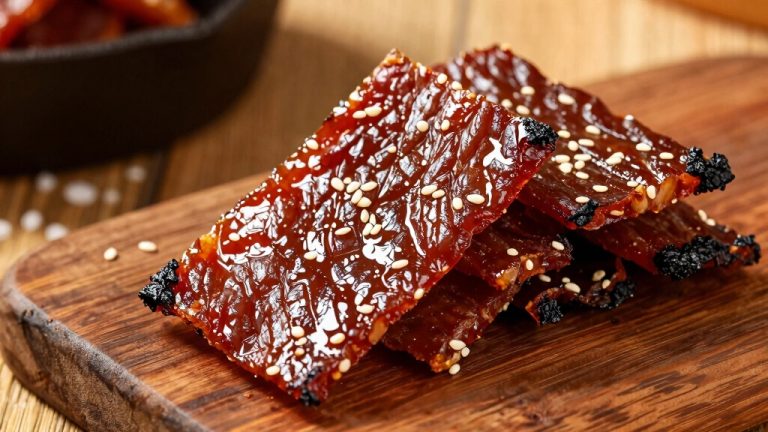
Look for a dry, matte to slightly glossy surface with firm, leathery texture, and no wet or tacky spots.
Aim for a dry, matte to slightly glossy surface with a firm, leathery texture free of wet or tacky areas.
The muscle fibers should be visible, edges darker but not scorched, and any fat rendered to a deep golden brown.
When cooled, bend a strip to about 90°; it should crack finely without snapping cleanly.
A clean snap means over-drying, while limp folding signals under-drying.
Internally, check for slight moisture but no raw or spongy center.
The aroma should be deeply meaty and roasted, with no off-odors. This meaty aroma is a result of the Maillard reaction developing during cooking.
Using oak wood can enhance the smoky flavor and add depth to the aroma during the drying process.
Taste a cooled piece; it must be savory and clearly dried, not mushy or watery.
Storing Duck Jerky to Keep It Fresh Longer
Properly storing your duck jerky is essential to preserving its rich flavor and chewy texture for as long as possible.
First, cool your jerky completely before sealing it to avoid moisture buildup, which can lead to mold.
Second, use airtight containers like glass jars or vacuum-sealed bags to limit oxygen exposure, slowing oxidation and rancidity. Reducing oxygen exposure is critical because it also minimizes microbial growth that can spoil the jerky.
Third, store your jerky in a cool, dry, and dark place. Avoid sunlight and temperature fluctuations that accelerate spoilage. Using desiccant packs can help absorb residual moisture to maintain texture.
For short-term storage, room temperature works for about two weeks. Beyond that, refrigeration or freezing extends freshness substantially.
Remember to blot excess surface oil before storing, as this reduces off-flavors and rancidity.
Duck Jerky Marinade Variations and Spice Levels
You can really make your duck jerky marinade your own by balancing those sweet and salty notes. It’s all about enhancing that rich flavor of the meat! Using different liquids can also influence the final taste and texture, much like how spritz liquids affect brisket bark and flavor.
If you’re a fan of a little heat, why not experiment with some spicy ingredients? A dash of cayenne or some fresh chiles can really give your jerky a bold kick that you’ll love.
And if you’re feeling adventurous, there are some unique twists you can try.
Sweet And Salty
Often, the magic of duck jerky lies in its sweet and salty marinade, where soy sauce and a touch of sugar or honey create a harmonious balance that complements the rich flavor of the meat.
To perfect this profile, keep these tips in mind:
- Use about 2/3 to 1 cup of salty liquid (soy, Worcestershire, or hoisin) paired with 1/2 cup of sweetener (brown sugar, honey, or maple syrup) per 2–3 pounds of meat for ideal flavor and preservation.
- Choose sweeteners carefully: brown sugar adds caramel depth, honey offers floral smoothness, and maple syrup delivers clean, distinctive sweetness.
- Enhance without heat by adding garlic, onion powder, thyme, or smoked paprika to create savory layers that complement the sweet-salty base without overpowering it. This recipe uses fewer than 10 common ingredients, making it accessible and easy to prepare with pantry staples.
This balance yields a mildly sweet, savory jerky that appeals to broad tastes and showcases duck’s rich character.
Spicy Heat Options
Balancing sweet and salty flavors sets a solid foundation for duck jerky, but adding spicy heat can elevate it to a thrilling new level.
You can customize spice by mixing crushed red pepper flakes (1–2 tbsp per 2 lb duck) with cayenne (1 tsp per 3 lb) for layered heat.
Black pepper adds a tongue tingle, red pepper brings lingering burn, and cayenne hits sharp and fast.
Fresh chiles or a dash of hot sauce infuse fresh chili flavor and tang without changing texture. For best results, marinate the duck strips in a mixture that includes Worcestershire sauce as flavoring liquid to help distribute the spices evenly.
Use soy sauce or Worcestershire as a base to evenly spread spices.
Don’t forget garlic and onion powder to balance intense heat and adjust marinating time to control spice intensity.
Unique Flavor Twists
Plunge into unique flavor twists to transform your duck jerky from simple snack to gourmet delight. You can experiment with various marinades and spice levels to suit your taste buds. Try these:
- Sweet & Savory Teriyaki: Combine soy sauce, teriyaki, and brown sugar or honey for a classic umami blend. Add Worcestershire sauce for tangy depth; marinate 12–72 hours for full flavor.
- Smoky & Barbecue: Use liquid hickory smoke and a splash of BBQ sauce to introduce smoky, tomato-molasses notes.
- Herb & Umami-Rich: Infuse garlic, onion powder, thyme, or porcini mushroom powder for aromatic complexity. Add sherry for a nutty, sweet finish that complements gamey duck.
These twists elevate your jerky, making each bite a flavorful adventure.
Enjoying Duck Jerky as a High-Protein Snack
You’ll find that duck jerky stands out as a high-protein snack that satisfies hunger while fueling your body efficiently. With 18–23 grams of protein per 100 grams of cooked meat, dehydration concentrates this value, delivering about 9–12 grams of protein per ounce. The Duck Air Dried Jerky Dog Treats from Canada highlight how air drying preserves nutrients and flavor without additives.
This complete protein provides all essential amino acids, supporting muscle repair and maintenance, especially if you’re active or strength training. Beyond protein, duck jerky offers essential nutrients like vitamin B12, iron, and zinc, enhancing energy and immune function.
Its higher thermic effect boosts metabolism, while its satiety helps control appetite. Compared to high-carb snacks, duck jerky keeps you fuller longer and supports lean mass. Plus, it’s portable, low in added sugars, and nutrient dense—a smart choice for your snacking routine.
Frequently Asked Questions
Can I Use Frozen Duck Breast Directly for Jerky Preparation?
No, you shouldn’t use frozen duck breast directly for jerky. You need to thaw it fully first to guarantee even marinating and drying.
Thawing in the fridge keeps it safe and lets seasonings penetrate properly. Partially freezing can help with slicing, but fully frozen meat resists marinade absorption and dries unevenly, risking food safety.
Always drain excess moisture after thawing to avoid steaming during drying, guaranteeing tasty, safe jerky.
What Is the Best Wood Type for Smoking Duck Jerky?
You’ll want to use fruity hardwoods like apple or cherry for smoking duck jerky. They provide a mild, sweet smoke that complements duck’s rich, gamey flavor without overpowering it.
Cherry adds a slightly tart note and beautiful color, while apple offers gentle sweetness. Blending these with pecan or a bit of oak can add depth, balancing smoke intensity and enhancing tenderness for a perfectly nuanced, flavorful jerky.
How Do I Prevent Mold Growth During Jerky Storage?
To keep your jerky in its prime and avoid unwelcome guests like mold, you’ll want to store it in a cool, dark, and dry spot.
Use airtight, high-barrier packaging or vacuum seal to limit oxygen exposure.
Make sure your jerky’s fully cooled and dried before sealing.
Adding oxygen absorbers or a light anti-mold spray can help too.
Regularly check your stash and enjoy fresh, flavorful jerky every time!
Is It Safe to Make Duck Jerky Without Curing Agents?
Yes, you can make duck jerky without curing agents, but you must be extra careful.
Make sure the internal temperature reaches 165°F during cooking and dehydrate at 145-155°F for at least 6 hours to destroy harmful bacteria.
Use strict temperature control, keep moisture low, and package anaerobically to prevent mold.
Without curing salts, you’re relying solely on heat and drying, so don’t skip any safety steps to avoid risks like Salmonella.
Can Duck Jerky Be Made Using a Microwave Dehydrator?
You can’t rely on a microwave dehydrator to make duck jerky. The moisture escapes unpredictably, leaving you with uneven drying and a chewy mess.
Instead, picture your oven door cracked open, warm air gently coaxing moisture away as the duck strips slowly transform into tender, smoky bites. Traditional dehydrators or ovens keep temperatures steady, ensuring safety and texture.
Skip the microwave; your jerky deserves a slow, patient touch for perfection.
Take Your Duck Jerky Creations to the Next Level
So, you’ve turned humble duck breast into a chewy masterpiece fit for snack royalty. Congratulations, you culinary wizard.
If drying meat was an Olympic sport, you’d be gold medal material by now. Remember, patience is key, unless you want jerky that doubles as a chew toy.
Store it right, savor every bite, and don’t be surprised if your friends start questioning their snack choices. Duck jerky: the snack that’s serious about protein and sass.