Chopped vs Sliced Brisket: Which Style Matches Your Meal?
You’ll find that chopped brisket comes from the fattier point cut, offering rich, juicy bites perfect for casual dishes like sandwiches.
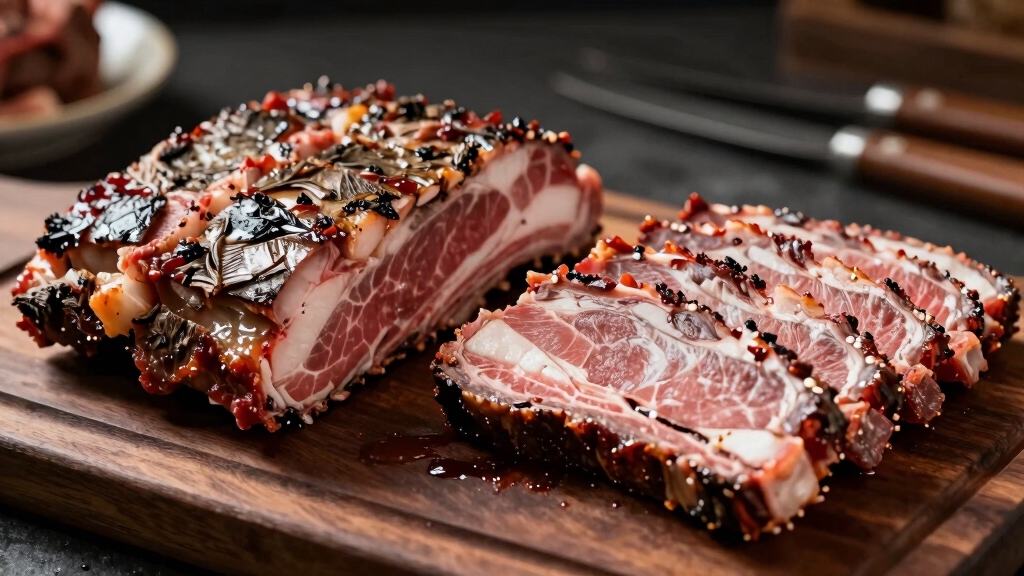
Sliced brisket uses the leaner flat cut, delivering clean, firm slices ideal for elegant presentation.
Smoking temperature and internal doneness also shape texture. Chopped brisket shines at higher fat-rendering temps, while sliced holds moisture better at lower temps.
Understanding these differences means you’ll appreciate the story behind every cut and serving style.
Key Takeaways
- Sliced brisket comes from the leaner flat cut, offering uniform, firm slices ideal for elegant presentation.
- Chopped brisket uses the fattier point cut, delivering rich, juicy, and tender meat perfect for casual dishes like sandwiches.
- Smoking at 225–250°F preserves sliced brisket’s moisture and texture, while higher temperatures break down point cut collagen for chopping.
- Sliced brisket provides a cleaner, subtler beef flavor; chopped brisket offers robust, intense flavor from abundant marbling and rendered fat.
- Portion sizes differ: chopped brisket yields nearly twice the volume and suits rustic serving, while sliced brisket requires larger portions for plating.
Quick Comparison of Chopped and Sliced Brisket
| Aspect | Chopped Brisket | Sliced Brisket |
|---|---|---|
| Cut Source | Point (high fat marbling) | Flat (leaner, uniform) |
| Fat Content | High, well-distributed | Lower, visible fat layers |
| Texture | Juicy, tender, less uniform | Firmer, consistent slices |
| Presentation | Casual, rustic, mixed fat & meat | Neat, visually appealing, elegant |
| Flavor Profile | Robust, rich, intense beef flavor | Clean, subtle, delicate beef flavor |
| Portion Size | Generous chunks, fills sandwiches or tacos | Smaller portions, ideal for plated servings |
| Cooking Temperature Impact | Higher temps render fat, enhance juiciness | Moderate temps preserve moisture and firmness |
Cuts Best Suited for Slicing vs Chopping Brisket

When choosing how to prepare brisket, understanding which cut suits slicing or chopping is essential for both flavor and presentation.
You’ll find the flat cut ideal for slicing. It boasts a uniform shape and a leaner profile that holds together beautifully on the plate. Its firmer texture allows for clean, attractive slices, making it perfect for showcasing the meat’s integrity.
On the other hand, the point cut excels when chopped. Its irregular shape and abundant marbling infuse each bite with rich flavor, but it doesn’t slice neatly.
After cooking to 185-188°F internal, you separate the point from the flat. This step guarantees you handle each cut appropriately.
Knowing these distinctions empowers you to deliver brisket that’s both visually appealing and bursting with taste. For optimal tenderness, it’s best to pull the brisket when it reaches around 203°F internal temperature to ensure the perfect balance of collagen breakdown and juiciness.
Fat and Connective Tissue Differences in Sliced vs Chopped Brisket
Understanding the distinct fat and connective tissue profiles between sliced and chopped brisket shapes how you approach cooking and serving.
When you slice brisket, you’re mostly working with the leaner flat cut, which contains more connective tissue but less intramuscular fat.
This connective tissue creates a firmer texture and a clean, attractive slice, showcasing visible fat layers that enhance moisture without overwhelming richness.
In contrast, chopped brisket typically includes the point cut, loaded with dense marbling and a higher fat content.
This fat melts into the meat, delivering intense flavor and juiciness but masking connective tissues and resulting in a more irregular texture.
Knowing these differences lets you tailor your preparation, ensuring sliced brisket highlights structure and lean flavor, while chopped brisket emphasizes richness and a tender, fatty bite.
For best cooking results, placing a temperature probe in the thickest part of the flat muscle allows accurate monitoring of doneness and tenderness development during the cook, helping you achieve ideal texture.
Impact of Cooking Methods on Slicing and Chopping Brisket
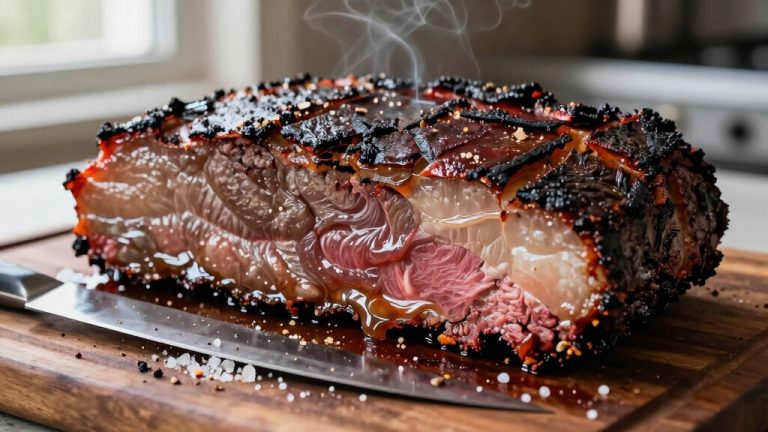
When you smoke brisket, the firm texture of the meat really shines through, making it perfect for slicing. You get those clean, attractive cuts that everyone loves.
But if you decide to braise or slow-cook it, that’s a whole different ballgame. The meat becomes nice and tender, which is great for chopping or shredding. Plus, it stays super moist, so you won’t have to worry about dryness.
Now, a little tip: keep that internal temperature between 185-188°F. That sweet spot helps you achieve the perfect balance of tenderness and juiciness. Just be careful not to go too high, or you might end up drying out those beautiful slices you worked so hard for. Happy cooking!
Wrapping the brisket during cooking can help accelerate tenderness and maintain moisture by pushing it through the stall phase.
Smoking Effects on Texture
Because smoking brisket firms up the meat, it markedly influences how you approach slicing versus chopping. The smoke’s low, slow heat tightens the muscle fibers, creating a denser texture that holds together well when sliced.
This firmness lets you cut clean, uniform slices, especially from the flat cut, preserving the brisket’s structure and visual appeal. In contrast, chopping suits the point cut’s fattier, more irregular texture, which softens under smoke but remains substantial enough to hold shape in chunks.
The rendered fat from smoking enhances moisture, preventing dryness despite the firm texture. So, when you smoke brisket, you get a balance—firm enough for neat slices, yet tender and juicy enough for flavorful chopped portions.
Understanding this lets you maximize both presentation and taste based on your chosen cut and serving style. Maintaining a steady smoker temperature between 225°F and 250°F is critical to achieving the perfect texture and flavor in smoked brisket.
Braising and Chopping Suitability
Choosing braising as your cooking method transforms brisket’s texture, making it ideal for chopping rather than slicing.
Braising breaks down connective tissue and renders fat thoroughly, resulting in tender, moist meat that lacks the firmness needed for clean slices.
When you braise brisket, especially the point cut with its high marbling, the meat becomes soft and succulent, perfect for chopping or shredding.
This method enhances flavor by integrating fat throughout, but it sacrifices the structural integrity required for neat, uniform slices.
If you want visually appealing slices, smoking or roasting to maintain firmness is better.
However, braised brisket shines in casual dishes, such as sandwiches or tacos, where chopped brisket’s rich texture and flavor truly stand out.
Understanding this lets you tailor your cooking approach to your serving style, especially since the target internal temperature differs significantly between braised and smoked brisket.
Temperature’s Role in Preparation
Although various cooking methods impact brisket’s texture, controlling internal temperature remains the key factor in determining whether you’ll achieve perfect slices or tender chopped meat.
When the internal temperature hits 185-188°F, the connective tissue breaks down, allowing you to separate the point from the flat and decide your cut style confidently.
If you’re aiming for slices, staying just below 188°F preserves moisture and firmness, especially in the leaner flat cut.
Push beyond that, and you risk drying out those visually appealing slices. For chopped brisket, hitting that 185-188°F range guarantees the fattier point cut becomes tender enough to shred effortlessly, delivering rich flavor and juicy bite.
Mastering this temperature window empowers you to tailor your brisket’s texture precisely, whether you slice it for elegance or chop it for robust, casual servings.
Maintaining temperature consistency throughout the cook is essential to ensure even breakdown of collagen and optimal tenderness.
Flavor Differences Between Chopped and Sliced Brisket
When you dig into some chopped brisket, you’re really savoring that rich, fatty marbling from the point cut. It packs a punch with those deep, robust flavors that just hit the spot.
On the flip side, when you go for sliced brisket—typically from the leaner flat—you’ll notice a cleaner, more delicate taste. It really lets the meat’s natural texture and subtle smokiness shine through.
The different marbling levels between the point and flat cuts directly impact tenderness and flavor, making the choice ideal depending on your preferred USDA quality grade.
Fat Content Impact
In understanding brisket’s flavor profile, fat content plays a pivotal role that distinguishes chopped from sliced preparations.
When you choose chopped brisket, you’re embracing the richer, fattier point cut loaded with marbling, which infuses each bite with luscious juiciness.
Sliced brisket, drawn from the leaner flat, showcases visible fat layers but offers a firmer texture and cleaner presentation.
Recognizing these differences helps you select based on preference or dish style.
| Aspect | Chopped Brisket |
|---|---|
| Cut Source | Point (high fat marbling) |
| Fat Content | High, well-distributed fat |
| Texture | Juicy, tender, less uniform |
| Presentation | Casual, mixed fat & meat |
| Aspect | Sliced Brisket |
| Cut Source | Flat (leaner, uniform) |
| Fat Content | Lower, visible fat layers |
| Texture | Firmer, consistent slices |
| Presentation | Neat, visually appealing |
The higher fat content in chopped brisket contributes to exceptional juiciness and a more intense beef flavor compared to the leaner sliced brisket.
Flavor Profile Contrast
Because the cut of brisket you choose directly shapes its flavor, understanding the contrast between chopped and sliced brisket is essential for true barbecue appreciation.
When you slice brisket, you’re tasting the leaner flat cut—clean, firm, and showcasing subtle beefy notes with visible fat layers that add delicate richness.
In contrast, chopped brisket incorporates the point cut’s marbled fat and deckle, which infuse every bite with a robust, succulent intensity.
This higher fat content not only amplifies flavor but often masks imperfections, especially when paired with barbecue sauce.
So, when you savor sliced brisket, you experience purity and texture; when you dig into chopped, you embrace bold, fatty complexity.
Both have merit, but your flavor preference hinges on this fundamental difference in meat composition.
Additionally, selecting cuts like the Teres Major from the shoulder can offer a tender alternative with a leaner yet flavorful profile that contrasts with traditional brisket textures.
Portion Size and Presentation Differences
Although chopped brisket yields nearly twice the volume of sliced, you’ll find that each style serves different needs in portion size and presentation.
When you opt for sliced brisket, you’re presenting uniform, visually appealing cuts from the lean flat, ideal for showcasing the meat’s texture and marbling.
These slices demand larger portions to fill the plate and impress diners with their neatness.
Conversely, chopped brisket, primarily from the fattier point, offers a more generous volume perfect for sandwiches or tacos, where irregular chunks meld flavors and fat.
Its casual, rustic presentation suits informal dining but sacrifices the refined appearance of slices.
Understanding these distinctions helps you tailor your serving style to the dining context, balancing abundance with elegance.
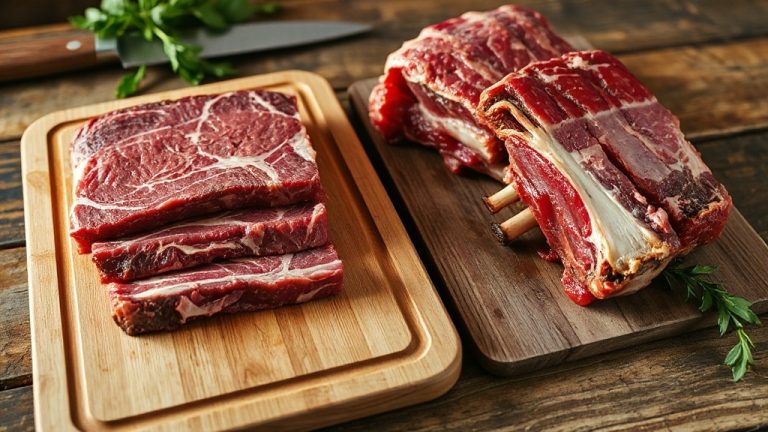
The choice between cuts like brisket and ribs also hinges on fat content and texture, which influence cooking methods and flavor profiles.
How Restaurant Practices Shape Brisket Servings
Restaurants often shape brisket servings based on regional preferences and operational efficiency, influencing whether you receive chopped or sliced meat.
Regional tastes and kitchen workflow often dictate if brisket is served chopped or sliced.
In regions favoring chopped brisket, eateries maximize yield by using the point cut’s fatty, irregular sections. They often serve it with barbecue sauce to enhance flavor and mask imperfections.
Chopped brisket is common in casual spots focused on sandwiches and tacos, where volume and richness matter most.
Conversely, restaurants emphasizing sliced brisket prioritize the leaner, uniform flat cut. They offer a visually appealing, authentic presentation that showcases meat integrity.
When you order, know that chopped brisket may come by default in some areas, while sliced often requires a specific request.
Frequently Asked Questions
Can Chopped Brisket Be Used in Recipes Calling for Sliced Brisket?
You can use chopped brisket in recipes calling for sliced brisket, but be aware it changes texture and presentation.
Chopped brisket is fattier and less uniform, so it suits casual dishes like sandwiches or tacos better than elegant platters.
If your recipe relies on neat, lean slices for appearance or texture, chopped brisket won’t deliver that same experience.
Choose chopped brisket for richness and volume, but sliced for visual appeal and refined bites.
How Does Slicing Vs Chopping Affect Brisket Storage and Reheating?
You might think slicing or chopping brisket doesn’t impact storage or reheating much, but it does.
Sliced brisket holds together better, reheating evenly without falling apart. This makes it ideal for neat plates.
Chopped brisket’s loose texture means it can dry out faster when reheated, so you’ll want to add moisture or sauce.
Store both tightly wrapped, but remember, sliced brisket generally retains juiciness and presentation longer during reheating.
What Tools Are Best for Slicing Brisket Evenly?
You’ll want a long, sharp slicing knife with a thin blade to cut brisket evenly. Think 10 to 14 inches. A carving knife or a dedicated brisket slicer works great, letting you glide through the meat without tearing.
Keep your blade steady and slice against the grain for uniform pieces. A sharpening steel handy guarantees your knife stays razor-sharp, making those clean, attractive slices every time you serve.
Is One Method Healthier or Lower in Calories Than the Other?
When it comes to health, slicing brisket is your leaner path.
Since slices come from the flat cut, they hold less fat and connective tissue, meaning fewer calories and less grease on your plate.
Chopped brisket usually includes the point cut, rich in marbling and fat, which bumps up calories.
If you’re watching your intake, stick to sliced—it’s the heart-healthy choice that doesn’t sacrifice flavor or texture.
How Do Regional Preferences Influence Brisket Chopping or Slicing Traditions?
You’ll notice regional preferences shape brisket traditions deeply.
In Texas, for example, slicing the lean flat cut honors purity and presentation, reflecting BBQ culture valuing authenticity.
Elsewhere, like parts of Kansas City, chopping the fattier point cut suits casual, sauce-heavy styles, maximizing flavor and servings.
Knowing this, you can appreciate how geography influences whether brisket is chopped or sliced. Each method echoes local tastes and culinary history passionately.
Maximize Flavor With the Right Cut
When you slice brisket, imagine tender, ribbon-like cuts revealing marbled layers that melt on your tongue.
Chopping, however, breaks the meat into chunky, juicy morsels bursting with smoky flavor in every bite.
Knowing which cut suits your cooking style and presentation lets you master brisket’s rich texture and taste.
Whether you’re crafting elegant slices or hearty chopped piles, you hold the key to transforming this iconic cut into a mouthwatering masterpiece.