Can You Use Pellets in a Charcoal Grill: Step-by-Step Guide
You can’t effectively use pellets in a charcoal grill because these grills lack the necessary components like augers and burn pots to regulate pellet combustion.
Pellets tend to smolder rather than burn consistently, causing uneven heat, unpredictable cooking, and weak smoke.
Charcoal grills are designed for lump charcoal or briquettes and won’t maintain the precise airflow pellets need.
If you want the best results and flavor, understanding these differences becomes essential for choosing the right grill and fuel.
Key Takeaways
- Pellets are incompatible with charcoal grills due to missing augers and burn pots needed for proper pellet combustion.
- Using pellets in a charcoal grill causes smoldering, uneven burning, and poor heat control.
- Charcoal grills lack airflow management essential for consistent pellet burning and temperature stability.
- Pellets in charcoal grills produce weak, inconsistent smoke and leave unburned residue.
- For reliable cooking and flavor, pellets should only be used in pellet grills designed for them.
Pellet vs. Charcoal Grills: Heat and Flavor Differences

Although both pellet and charcoal grills bring unique qualities to outdoor cooking, they differ substantially in heat output and flavor profiles.
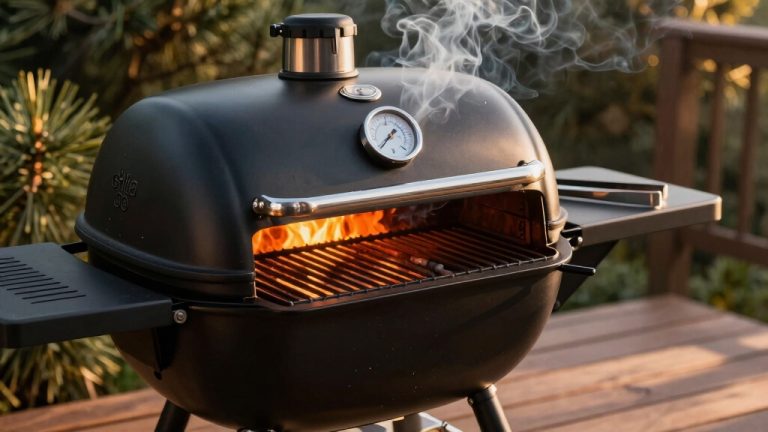
When you use a charcoal grill, you get intense heat, often reaching 600-700°F, perfect for searing and creating a caramelized crust on your meat. The smoky flavor from charcoal is bold and pronounced, delivering that classic outdoor taste.
Pellet grills, on the other hand, max out around 450-500°F, which suits low-and-slow cooking like smoking or roasting. Their smoke is more refined and subtle, offering wood varieties like apple, cherry, or oak but lacking charcoal’s strong edge.
If you’re after powerful searing and robust smoke, charcoal is your go-to. For delicate wood flavors and steady heat, pellets perform well. Pellet grills also provide automated pellet feeding that helps maintain consistent temperatures and smoke levels.
Pellet and Charcoal Grill Compatibility Issues
When you try to use pellets designed for pellet grills in a charcoal grill, you’ll quickly notice compatibility problems arise.
Using pellet grill pellets in a charcoal grill causes immediate compatibility and performance issues.
Charcoal grills lack the augers and burn pots that pellet grills use to feed and ignite pellets automatically. Without these mechanisms, pellets don’t burn evenly, causing inconsistent heat and poor temperature control.
Pellet grills rely on food-grade wood pellets fed through a hopper, a system charcoal grills simply don’t have.
Additionally, charcoal grills are built for lump charcoal or briquettes, which burn differently than compressed wood pellets.
Since no standard adaptations exist to integrate pellets into charcoal grill designs, using pellets directly can lead to inefficient cooking and potential damage.
For peak performance, each grill type requires its intended fuel and feeding system.
Moreover, unlike lump charcoal and briquettes, pellets require precise airflow management to ensure consistent combustion and temperature control, which charcoal grills are not equipped to handle without proper ventilation techniques.
What Happens If You Use Pellets in a Charcoal Grill?
Using pellets in a charcoal grill often results in uneven burning and poor heat control. The grill lacks the specialized mechanisms needed to feed and ignite pellets properly.
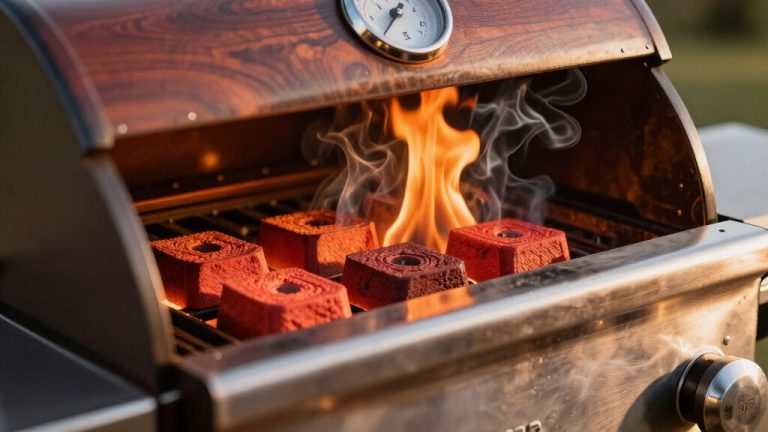
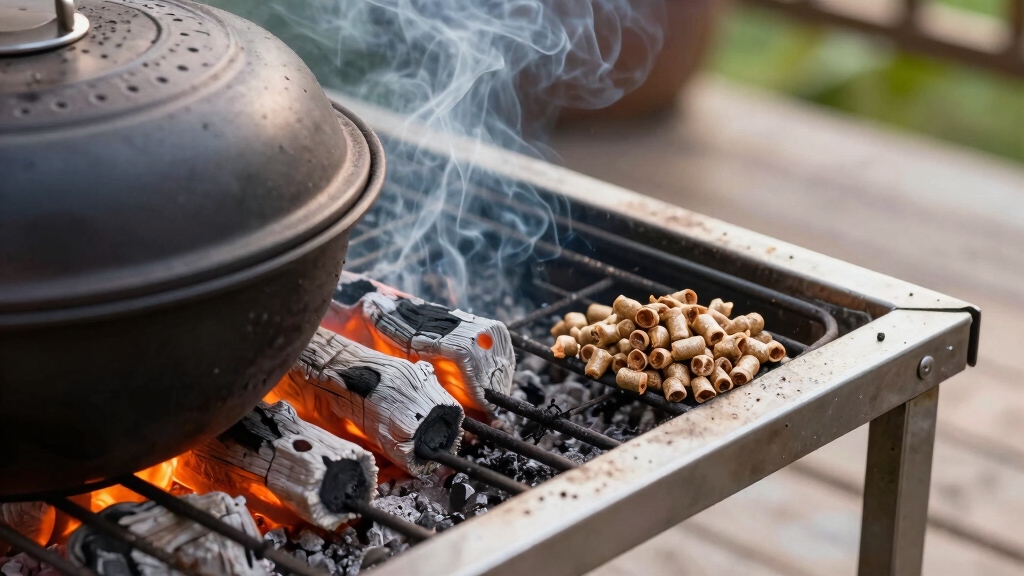
When you place pellets directly into a charcoal grill, they tend to smolder rather than burn consistently. This produces less heat and more smoke than expected.
You’ll find it challenging to maintain stable temperatures, as pellets require an auger and burn pot to regulate airflow and combustion. Without these, pellets burn unpredictably, often leaving unburned residue and generating weak, inconsistent smoke.
This means your cooking results won’t be reliable, and you might struggle to achieve the desired flavor or doneness. For effective pellet use, a dedicated pellet grill’s design is essential. Additionally, proper airflow management is crucial to balance temperature and burn efficiency when using pellets.
Comparing Costs and Maintenance of Pellet and Charcoal Grills
If you’re weighing your options between pellet and charcoal grills, understanding their costs and maintenance demands is essential.
Charcoal grills come with a lower upfront price, usually between $50 and $300. Their fuel is cheaper per pound.
Charcoal grills offer an affordable entry point, typically costing $50 to $300, with lower-priced fuel per pound.
They’re durable and simple, requiring minimal maintenance aside from regular ash disposal and scraping charred residue.
Pellet grills cost more initially due to mechanical parts like augers and hoppers, which can fail and need repairs.
Although pellets are pricier, their efficiency helps offset long-term costs.
Maintenance is easier with pellet grills since they produce less ash and often feature removable trays. However, you’ll need to keep an eye on mechanical components.
Pellet grills offer precise temperature control, making them ideal for cooks who prioritize consistency and convenience.
Weighing these factors helps you make a practical choice based on budget and upkeep preferences.
When to Choose a Pellet Grill or a Charcoal Grill?
Although both pellet and charcoal grills have their strengths, your choice depends largely on how you prefer to cook and the flavors you want to achieve.
If you crave bold, intense smoky flavors and high-heat searing for burgers or steaks, a charcoal grill is your best bet. It heats quickly and lets you manage the fire hands-on.
On the other hand, if you favor low-and-slow cooking with subtle wood smoke and consistent temperatures up to 500°F, a pellet grill suits you better.
Pellet grills excel at smoking, roasting, and baking with less fuss and cleaner maintenance.
Keep in mind that pellets won’t perform well in charcoal grills due to compatibility and heat control issues.
Choose your grill based on technique and flavor priorities for the best results.
For those considering features and cooking capacity, comparing models like the Traeger Ironwood and Timberline can help identify the best pellet grill for your needs.
Frequently Asked Questions
Can I Convert a Charcoal Grill to Use Pellets?
You can’t effectively convert a charcoal grill to use pellets because charcoal grills lack the necessary components like augers and burn pots to feed and ignite pellets properly.
Trying it leads to uneven burning and poor heat control.
Instead, consider investing in a pellet grill designed for pellets to enjoy consistent temperature and smoke.
Modifying a charcoal grill won’t give you reliable performance or flavor from pellets.
Are Wood Pellets Safe for Cooking Without a Pellet Grill?
You can cook with wood pellets without a pellet grill, but it’s tricky.
Unlike pellet grills that feed pellets steadily and burn them cleanly, using pellets directly in a charcoal grill leads to uneven burning and unpredictable heat.
They’re food-safe, but without proper mechanisms, pellets smolder rather than ignite consistently, producing less control and flavor.
For safe, effective cooking, stick to equipment designed for pellets to get the best taste and heat.
How Do Pellet Grill Augers Work to Feed Fuel?
Pellet grill augers work by slowly rotating a spiral-shaped metal shaft that moves wood pellets from the hopper into the burn pot.
You can control the auger’s speed to regulate fuel flow, which adjusts the grill’s temperature.
This automated feeding guarantees consistent combustion and steady heat, letting you maintain precise cooking conditions.
Without this mechanism, pellets would burn unevenly, making temperature control difficult.
Can I Mix Charcoal and Pellets in the Same Grill?
You shouldn’t mix charcoal and pellets in the same grill because they burn differently and require distinct feeding systems.
Charcoal grills lack the mechanisms to feed pellets properly, leading to uneven heat and poor control.
Combining them can cause inconsistent temperatures and flavor issues.
Instead, stick to one fuel type per grill to maintain peak performance and safety.
If you want pellet flavor, consider a dedicated pellet grill or use pellet smoke tubes in your charcoal setup.
What Pellet Brands Are Recommended for Pellet Grills?
You’ll want to go with trusted pellet brands like Traeger, Lumber Jack, or CookinPellets for your pellet grill. These brands offer consistent, food-grade hardwood pellets that burn evenly and deliver great flavor.
Traeger is popular for its wide variety of flavors, while Lumber Jack provides excellent value and quality.
Always choose 100% hardwood pellets without fillers or additives to guarantee peak performance and clean burning in your pellet grill.
Perfect BBQ Starts with the Right Choice
While you can certainly experiment with pellets in a charcoal grill, it’s not the smoothest ride for your equipment or taste buds.
Charcoal grills shine with their smoky charm, while pellet grills offer convenience and consistency. Mixing the two might leave you juggling unexpected heat and flavor notes.
Knowing when to stick with each grill type will keep your BBQ adventures running like a well-oiled machine, ensuring every cookout hits just the right note.