Can You Season Ribs the Night Before: Expert Smoking Tips
You can season ribs the night before to deepen flavor, but keep salt levels moderate and limit exposure to under 12 hours to avoid drying or a cured taste.
Remove the membrane first, apply a thick rub evenly, and store uncovered or loosely wrapped in the fridge for proper airflow.
This balances moisture retention and flavor infusion without compromising texture. If you want to master timing, rub composition, and storage techniques, there’s more to uncover.
Key Takeaways
- Yes, seasoning ribs overnight (8–12 hours) enhances flavor penetration without drying the meat when salt concentration is controlled.
- Apply a thick, even dry rub with salt, brown sugar, and herbs up to 12 hours before cooking for optimal taste.
- Store ribs uncovered in the fridge to prevent moisture buildup and promote a dry surface for better bark formation.
- Avoid seasoning longer than 12 hours with high-salt rubs to prevent dehydration and undesirable cured flavors.
- Remove the membrane and pat ribs dry before applying rub to improve flavor absorption and texture during overnight seasoning.
Should You Season Ribs Overnight for Better Flavor?
Seasoning ribs overnight can enhance the flavor by allowing the dry rub’s spices and herbs to penetrate the meat more deeply.
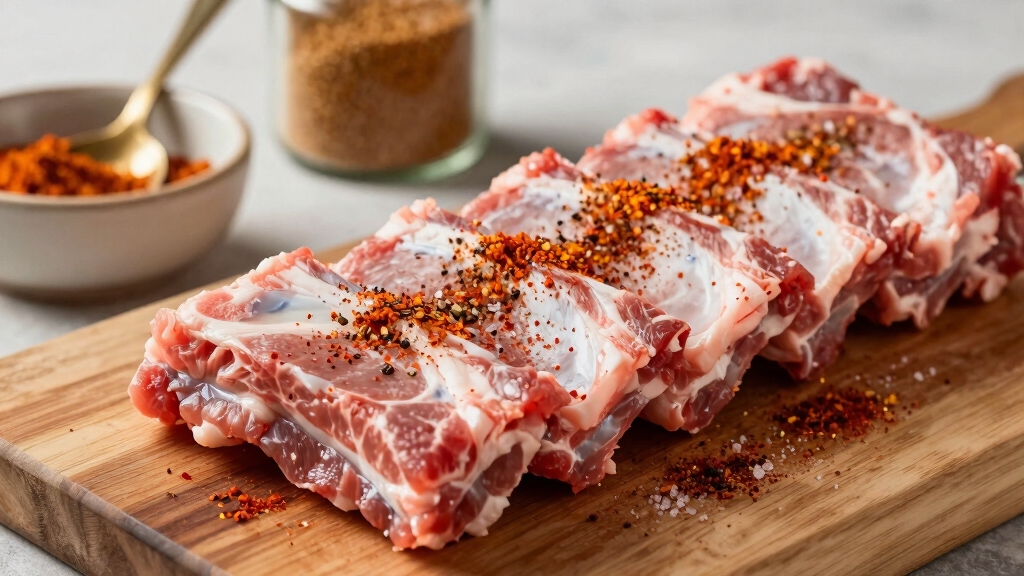
When you apply a thick coating of rub containing brown sugar, salt, smoked paprika, garlic powder, and herbs like thyme and rosemary, the salt begins to draw moisture out, enabling the spices to seep in.
A thick rub of brown sugar, salt, smoked paprika, garlic, and herbs draws out moisture, deepening flavor penetration.
However, you should limit the exposure to under 12 hours to prevent dehydration or an overly cured taste.
Storing ribs uncovered in the fridge helps avoid moisture buildup, which can dilute the rub’s effect.
While some experts swear by overnight seasoning for flavor infusion, studies show there’s no significant difference in tenderness or bark compared to fresh rubs.
Therefore, you can choose overnight seasoning mainly to enhance flavor depth without affecting texture negatively.
For best results, it’s important to dry ribs uncovered in the fridge 1–2 hours to form a pellicle before applying the rub.
How to Prepare Ribs for Overnight Seasoning?
Alright, let’s get those ribs ready for some tasty overnight seasoning! First things first, you’ll want to remove the membrane from the underside of the ribs. This little step is super important because it helps the rub really soak into the meat, giving you that great texture we all love.
Next up, grab some olive oil or mustard and spread a thin layer over the ribs. This helps the dry rub stick nicely. Now, for the fun part—using your hands, apply a generous coating of your favorite rub. Make sure it’s packed with salt, brown sugar, and those spices you enjoy. You want to cover every inch of the meat for the best flavor when it’s time to cook!
And that’s it! Let them sit overnight, and you’ll be all set for some delicious ribs. For best results, ensure the ribs are properly thawed using a safe thawing method before seasoning overnight.
Membrane Removal Importance
Before applying your dry rub for overnight seasoning, you’ll want to remove the membrane from the back of the ribs to guarantee better flavor penetration and texture.
The membrane acts as a barrier that limits the rub’s ability to seep into the meat. Removing it allows the seasoning to directly contact the muscle, enhancing flavor absorption and ensuring even cooking.
Use a paring knife to gently lift the membrane for an easier grip, then peel it off completely. Leaving it intact can result in a tougher bite and uneven seasoning.
This step is critical because it prevents moisture buildup underneath, improving the rib’s tenderness. By removing the membrane, you optimize the ribs’ texture and maximize the effectiveness of your overnight seasoning process. Proper preparation, including removal of barriers, is essential for consistent seasoning and cooking results.
Rub Application Techniques
Once you’ve removed the membrane to guarantee better flavor absorption, the next step involves applying the dry rub carefully to maximize taste and texture.
Begin by patting the ribs dry with paper towels to confirm the rub adheres effectively. Lightly coat the ribs with olive oil or mustard as a binding agent.
Then, apply a generous, even layer of your rub, comprising brown sugar, salt, smoked paprika, black pepper, garlic powder, and herbs like thyme and rosemary, using your hands to press it into the meat.
Avoid wrapping the ribs tightly; instead, place them uncovered in the fridge to prevent moisture buildup. This method allows the rub to penetrate overnight, enhancing flavor without drying the meat, especially if you limit seasoning time to under 12 hours.
For optimal tenderness during cooking, consider wrapping the ribs when their internal temperature reaches 150–160°F to lock in moisture and accelerate collagen breakdown.
Best Dry Rub Ingredients for Overnight Seasoning
When you prepare ribs for overnight seasoning, selecting the right dry rub ingredients is essential to maximize flavor infusion without overpowering the meat.
Key components include brown sugar for balanced sweetness and salt to enhance flavor while aiding moisture retention. Smoked paprika contributes a subtle smokiness without heat, and black pepper offers gentle spice.
Garlic powder adds savory depth, creating complexity. Incorporating herbs like thyme and rosemary introduces earthy, aromatic notes that complement meat well.
Avoid excessive salt to prevent drying or a cured taste. Applying a thick, even layer guarantees the rub penetrates during refrigeration, enhancing tenderness and flavor.
This precise blend maintains moisture while promoting rich, layered taste profiles, making it ideal for overnight seasoning before slow cooking. Removing the membrane before applying the rub also improves seasoning penetration and results in a more tender texture, which is crucial for deep flavor absorption during the resting phase.
Mustard or Olive Oil: Which to Use Before Overnight Rub?
How do you decide between mustard and olive oil as a base for your overnight rib rub?
Mustard acts as a flavorful binder, helping the dry rub stick while adding a subtle tang without overpowering the meat. It also aids in tenderizing due to its acidity.
Olive oil, on the other hand, creates a moisture barrier that locks in juices and enhances rub adherence without altering flavor.
Both options facilitate even rub coverage and promote flavor penetration overnight.
Choose mustard if you want slight acidity and additional flavor complexity. Pick olive oil if you prefer a neutral binder that maintains the rub’s original taste.
Neither materially affects the final bark or tenderness, so your choice depends on whether you want a mild tang or just a simple adhesive layer before seasoning.
Using a binder like mustard or olive oil helps dissolve and redistribute seasoning, enhancing flavor penetration without washing it away.
How to Apply the Dry Rub for Maximum Flavor?
Choosing between mustard and olive oil as your base sets the stage, but applying the dry rub correctly is what truly releases maximum flavor.
Start by removing the membrane and drying ribs thoroughly to guarantee the rub adheres well.
Apply a generous, thick coating of the rub: blend brown sugar, salt, smoked paprika, black pepper, garlic powder, and herbs like thyme and rosemary for complexity.
Use your hands to spread the rub evenly on both sides, pressing firmly to help the spices penetrate the meat over time.
Position the ribs bottom side up on a rack for even seasoning.
Avoid wrapping immediately to prevent moisture buildup.
This method maximizes flavor infusion while maintaining moisture and tenderness during cooking, guaranteeing your ribs deliver a rich, balanced taste.
For best results, ensure the ribs are fully thawed before seasoning to promote even flavor absorption and food safety during cooking, as recommended in Preparation and Food Safety.
How Long Can You Leave Ribs With the Dry Rub?
You can leave ribs with the dry rub for anywhere from 15 minutes to 48 hours. However, it’s best to aim for under 12 hours. If you leave it on too long, you risk drying out the meat.
Now, I get it—letting the rub sit for a longer time helps those flavors really sink in. But you’ve got to be careful! Too much time can lead to dehydration because of the salt in the rub. So, finding that sweet spot for timing is super important.
It’s all about balancing flavor with tenderness! Also, if you plan to refrigerate ribs with the rub overnight, make sure to keep them sealed and below 40°F to maintain safety and quality.
Optimal Dry Rub Duration
When seasoning ribs, timing plays a pivotal role in balancing flavor infusion and moisture retention. You want to leave the dry rub on long enough to penetrate the meat but not so long that it dries out.
Generally, applying the rub 15 minutes to 12 hours before cooking offers optimal results. Here are key points to consider:
Limit rub exposure under 12 hours to prevent dehydration.
Seasoning 24 hours prior yields flavor comparable to fresh rub.
Store ribs uncovered in the fridge to avoid moisture buildup.
Wrap in plastic only if seasoning exceeds 4 hours.
Use a thick rub layer to help retain moisture during cooking.
Following these guidelines guarantees your ribs develop balanced flavor without compromising tenderness or moisture.
After seasoning, resting the ribs before cooking can help stabilize internal temperature and improve tenderness.
Effects Of Extended Seasoning
Extending the seasoning time for ribs beyond the typical 12-hour window can markedly impact both flavor and texture.
When you leave ribs with a dry rub too long, the salt begins to draw out moisture, causing dehydration that may toughen the meat. This process can also create an unintended cured or hammy flavor, especially with high-salt rubs.
Conversely, a thick, well-applied rub helps retain moisture and tenderness during cooking, but only up to a point. Storing ribs uncovered in the fridge prevents moisture buildup, but wrapping them too early can trap humidity, affecting texture.
If you plan to season longer than 12 hours, wrapping in plastic is advisable to maintain quality. Ultimately, extended seasoning requires balancing time and rub composition to avoid drying while achieving flavor penetration. Wrapping also traps moisture and can accelerate cooking by reducing evaporation during the stall phase, which influences texture and juiciness.
Timing For Flavor Infusion
Although dry rubs can enhance flavor over time, leaving ribs seasoned for too long risks over-salting and drying out the meat. To achieve peak flavor infusion without compromising texture, you should consider timing carefully.
Generally, applying the rub 15 minutes to 12 hours before cooking is ideal. Beyond this, salt in the rub starts to draw moisture out excessively, risking a cured or dry texture. Here’s what to keep in mind:
Rub ribs up to 48 hours ahead, but limit salt concentration.
Store uncovered in the fridge to prevent moisture buildup.
Wrap ribs in plastic if seasoning exceeds 4 hours.
Overnight seasoning (8-12 hours) balances flavor and moisture.
Avoid cling film wrap immediately after applying rub to maintain texture.
This timing strategy guarantees flavor penetration while preserving juiciness.
Uncovered vs. Wrapped Ribs: How Storage Affects Flavor and Moisture?
Frequently, the choice between storing ribs uncovered or wrapped markedly impacts the final flavor and moisture of your meat.
When you leave ribs uncovered in the fridge, you prevent moisture buildup. This helps maintain a dry surface ideal for developing a flavorful bark during cooking.
Leaving ribs uncovered in the fridge keeps the surface dry, perfect for creating a rich, flavorful bark.
Conversely, wrapping ribs tightly in plastic or foil traps moisture. This can potentially soften the bark and dilute rub intensity.
If you plan to store ribs more than four hours before cooking, wrapping becomes necessary to avoid excessive drying. However, for shorter periods, uncovered storage is preferable.
Keep in mind that extended exposure to air can dehydrate meat. Limit uncovered storage to under 12 hours.
Balancing these factors guarantees you retain both moisture inside the ribs and the concentrated flavor on the surface.
How Overnight Seasoning Impacts Rib Moisture and Texture?
Applying a dry rub overnight allows the flavors to penetrate the meat while influencing moisture and texture in specific ways.
When you season ribs ahead of time, the salt in the rub draws moisture out initially. This process enhances tenderness during cooking by breaking down muscle fibers.
The rub’s thickness helps retain internal moisture, preventing dryness. However, leaving ribs too long with high-salt rubs can lead to a cured taste and firmer texture.
Key impacts include:
- Salt-induced dehydration starts flavor infusion.
- Moisture retention aided by thick rub layers.
- Muscle fiber breakdown improves tenderness.
- Prolonged exposure risks over-curing and dryness.
- Texture remains comparable to fresh rubs if limited to 12 hours.
Seasoning overnight therefore balances flavor depth with moisture and texture control effectively.
When Not to Season Ribs Overnight for Best Results?
If you plan to cook ribs within a few hours, seasoning them overnight isn’t the best choice. The salt in the rub can start dehydrating the meat prematurely, leading to a drier texture.
Seasoning ribs overnight can dry them out if cooking within a few hours due to salt’s dehydrating effect.
Additionally, when you apply a thick rub too early, moisture may not redistribute evenly, which can affect tenderness. High-salt rubs left on too long risk creating a cured or hammy flavor, deviating from the desired rib profile.
Also, if you’re short on time, seasoning just before cooking ensures you have fresh, vibrant flavors without risking over-penetration or drying.
In short, avoid overnight seasoning when cooking soon after prep, when you use high-salt blends, or when you want to preserve maximum juiciness and avoid any unintended flavor shifts.
Tips for Storing and Handling Ribs After Seasoning Overnight
After you’ve seasoned your ribs overnight, it’s super important to refrigerate them uncovered. This helps prevent moisture buildup, which can really mess with the texture.
If you find you need to store them for more than four hours, go ahead and wrap them loosely in plastic. This way, you keep the rub fresh without trapping too much moisture.
Oh, and timing is key! Try to keep the seasoning period under 12 hours. You definitely don’t want the meat to dry out before you get to cooking it. Happy grilling!
Proper Refrigeration Techniques
Proper refrigeration plays a crucial role in maintaining the flavor and texture of ribs seasoned overnight. After applying your dry rub, you need to store the ribs correctly to prevent spoilage and ensure the rub penetrates evenly. Follow these precise steps for peak results:
Store ribs uncovered in the refrigerator to minimize moisture buildup.
Avoid wrapping ribs in cling film immediately after rubbing to prevent sogginess.
If refrigeration exceeds four hours, loosely cover ribs with plastic wrap.
Keep ribs on a rack or tray to allow air circulation around the meat.
Maintain your fridge temperature at or below 40°F (4°C) to slow bacterial growth.
These techniques preserve the seasoning’s potency and inhibit unwanted moisture, guaranteeing your ribs stay flavorful and tender for cooking.
Avoiding Moisture Buildup
To prevent moisture buildup on your seasoned ribs overnight, you’ll need to control the airflow and avoid sealing the meat too tightly.
Store your ribs uncovered in the fridge to allow moisture to evaporate, reducing sogginess and promoting a better bark during cooking.
Avoid wrapping the ribs in cling film immediately after applying the dry rub, as this traps condensation and creates unwanted moisture.
If you need to store ribs for over four hours, loosely wrap them in plastic to balance moisture retention without suffocating the meat.
Always dry the ribs thoroughly before seasoning to minimize excess surface water. Proper airflow and minimal sealing help the rub adhere effectively while preventing the development of a wet surface.
This ensures ideal texture and flavor after cooking.
Timing Before Cooking
When you season ribs overnight, timing their storage and handling before cooking plays a crucial role in preserving flavor and texture. You want to avoid moisture buildup while ensuring the rub penetrates adequately without drying the meat.
Follow these tips for prime timing and storage:
Store ribs uncovered in the fridge if seasoning under 4 hours to prevent sogginess. Wrap in plastic wrap only if left longer than 4 hours before cooking.
Limit seasoning exposure to less than 12 hours to avoid dehydration from salt. Apply rub 15 minutes to 48 hours ahead; 24 hours is ideal for flavor infusion.
Avoid foil wrapping during storage; reserve foil use strictly for cooking. These precise steps help maintain rib tenderness and enhance flavor consistency when cooking after overnight seasoning.
Frequently Asked Questions
Can I Freeze Ribs After Seasoning Overnight?
Yes, you can freeze ribs after seasoning them overnight.
Just make sure to wrap them tightly in plastic wrap or place them in an airtight freezer bag to prevent freezer burn.
When you’re ready to cook, thaw the ribs in the refrigerator overnight for even defrosting.
Freezing after seasoning helps lock in flavors, but avoid freezing for too long to maintain ideal texture and taste.
Does Overnight Seasoning Affect Cooking Time?
No, overnight seasoning doesn’t materially affect cooking time. The dry rub mainly enhances flavor penetration without altering the meat’s moisture content enough to change how it cooks.
You can expect the same cook duration whether you apply the rub hours before or right before cooking.
Just make sure you don’t exceed 12 hours of seasoning to avoid drying out the ribs.
However, timing won’t speed up or slow down the actual cooking process.
How Do I Rehydrate Ribs if They Dry Out?
If your ribs dry out, rehydrate them by wrapping tightly in foil with a splash of apple juice, broth, or water.
Place the foil packet back in the oven or smoker at low heat (225-250°F) for 20-30 minutes.
This steam helps restore moisture. Avoid overheating, which can toughen meat.
You can also baste ribs periodically during cooking to maintain juiciness and prevent drying out in the first place.
Can I Use Wet Marinades With Overnight Seasoning?
Can you use wet marinades with overnight seasoning? Yes, but you need to be cautious.
Wet marinades can tenderize and infuse flavor overnight, yet they might cause the ribs to become too soft or mushy if left too long.
Make sure your marinade balances acidity and oil, and avoid more than 12 hours to prevent over-tenderizing.
Also, refrigerate the ribs uncovered or loosely covered to avoid excess moisture buildup and preserve texture.
Is Overnight Seasoning Safe for All Types of Ribs?
Yes, overnight seasoning is safe for all types of ribs if you manage salt levels and storage properly.
You should avoid leaving high-salt rubs on ribs longer than 12 hours to prevent drying or curing effects.
Always refrigerate uncovered or loosely wrapped to inhibit moisture buildup.
This method works well for meat, beef, and other ribs, allowing flavors to penetrate without compromising safety or texture when handled correctly.
Final Take: Should You Season Ribs the Night Before?
Seasoning ribs overnight can boost flavor by up to 30%, allowing spices to deeply penetrate the meat.
To get the best results, prep your ribs properly, use a balanced dry rub, and decide between mustard or olive oil as a binder.
Remember, wrapping affects moisture retention, so choose based on your texture preference. Avoid overnight seasoning if you’re short on time or using delicate herbs. Proper storage after seasoning guarantees safety and peak taste.