Can You Season Cast Iron With Coconut Oil: Experts Explain
You can season cast iron effectively with coconut oil by applying thin, even layers and baking at around 400°F to promote polymerization.
Its high saturated fat content and firm texture help create a durable, non-stick, and food-safe surface that resists flaking and rancidity.
Refining coconut oil improves heat stability, making it a reliable alternative to flaxseed oil.
If you want to optimize seasoning longevity and troubleshoot common issues, there’s more detailed guidance available.
Key Takeaways
- Coconut oil’s high saturated fat content promotes effective polymerization for durable, non-stick cast iron seasoning.
- Applying a thin, even layer of coconut oil prevents pooling and sticky, uneven seasoning spots.
- Baking cast iron at 400°F with coconut oil for one hour creates a hard, resilient seasoning layer.
- Refined coconut oil’s smoke point (~400°F) suits seasoning temperatures without chemical degradation or rancidity.
- Repeated seasoning cycles with coconut oil build a long-lasting, food-safe, and flake-resistant cast iron surface.
Seasoning Cast Iron With Coconut Oil
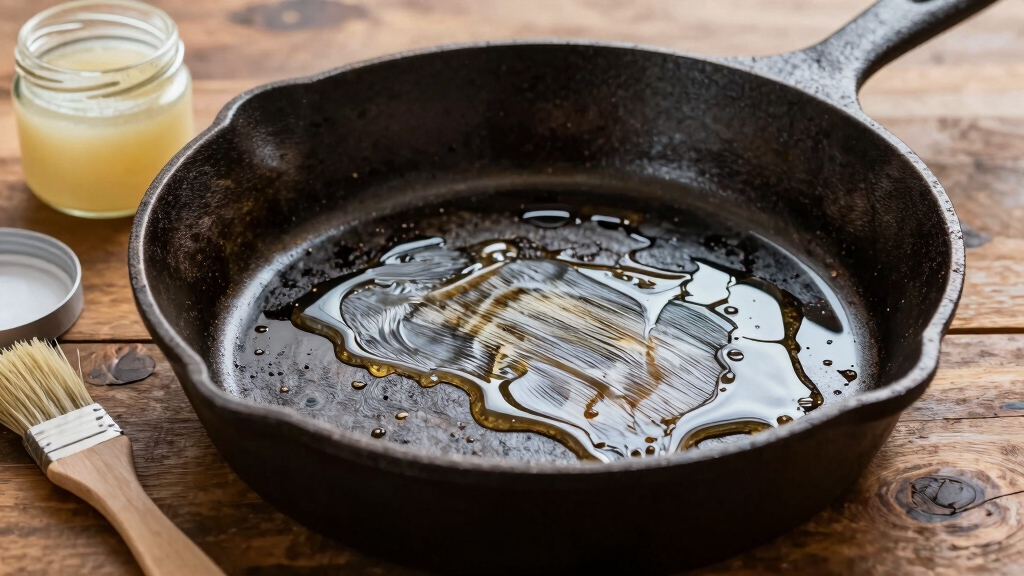
When seasoning cast iron with coconut oil, you leverage its high saturated fat content and firm texture at room temperature to create a durable, non-stick surface.
Start by scrubbing the pan with warm, soapy water and drying it thoroughly to remove residues. Apply a thin, even layer of coconut oil inside and out, then buff it with a towel to prevent pooling.
Next, heat the pan on a low burner to melt the oil, followed by baking it upside down in a 400°F oven for one hour. Allow it to cool inside the oven.
Repeating this cycle one to four times guarantees thorough polymerization, as the saturated fats in coconut oil form a hard, adherent film that fills iron pores and enhances seasoning longevity. However, it is important to use oils with high smoke points to prevent sticky residue and burnt seasoning during the baking process.
Why Use Coconut Oil To Season Cast Iron?
Coconut oil is a fantastic choice for seasoning cast iron, and here’s why. Its high saturated fat content really helps with polymerization, which means it creates a tough, durable surface that can stand the test of time.
Another perk? At room temperature, coconut oil has a firm texture. This makes it super easy to apply a consistent, thin layer, and that’s key for achieving even seasoning.
Plus, let’s not forget about health! Coconut oil forms a non-toxic coating, so you’re not just enhancing your cooking performance; you’re also extending the life of your pan. It’s a win-win!
For best results, always apply a thin, even layer of oil and wipe off excess to maintain the seasoning and create an effective moisture barrier.
Saturated Fat Benefits
Because coconut oil contains a high concentration of saturated fats, it offers distinct advantages for seasoning cast iron cookware.
Saturated fats are more stable at high temperatures and resist oxidation better than unsaturated fats. This reduces the risk of rancidity during seasoning.
When you apply coconut oil and heat it above its smoke point, it polymerizes effectively, forming a durable, non-stick coating.
This polymerization creates a hard, protective layer that bonds well to the iron surface, enhancing longevity.
Additionally, saturated fats minimize sticky residues that can occur with oils high in unsaturated fats.
Using coconut oil leverages these chemical properties, resulting in a more consistent and resilient seasoning layer.
This makes it a scientifically sound choice for maintaining your cast iron’s cooking surface.
However, it is important to season at appropriate temperatures below the oil’s smoke point to avoid sticky residue and ensure even seasoning buildup.
Firm Texture Advantage
Leverage coconut oil’s firm texture at room temperature to enhance your cast iron seasoning process. This firmness allows you to apply a controlled, thin layer of oil, essential for even polymerization and preventing excess pooling.
Unlike liquid oils, coconut oil’s solidity at ambient conditions helps you avoid uneven coating, which can lead to sticky or uneven seasoning layers. Its saturated fat profile combined with this physical state supports a consistent, durable polymerized surface when heated above the smoke point.
For best results, ensure you monitor the seasoning temperature closely to avoid chemical degradation that can affect the seasoning quality.
Healthy Seasoning Surface
Achieving a healthy seasoning surface on cast iron hinges on selecting oils that promote durable, non-toxic polymerization.
Coconut oil’s high saturated fat content makes it ideal for this purpose, as saturated fats polymerize into a stable, hard coating that resists flaking and degradation.
Unlike unsaturated oils, which can produce sticky or toxic residues, coconut oil forms a uniform, food-safe layer when baked at high temperatures.
Its semi-solid state at room temperature also aids in applying thin, even coats, preventing pooling that compromises seasoning integrity.
While flaxseed oil excels as a drying oil, coconut oil offers a practical alternative with a higher smoke point than olive oil, balancing ease of use and effective polymerization.
Using coconut oil guarantees a resilient, healthy seasoning surface that enhances cast iron performance and longevity.
Additionally, understanding the heat behavior of oils is crucial to avoid reaching smoke points that could degrade the seasoning quality.
Coconut Oil vs. Other Seasoning Oils
When you’re picking a seasoning oil, smoke point is definitely something to think about. Coconut oil has a higher smoke point, which means it’s less likely to burn compared to oils like olive oil. That’s a big plus when you’re cooking!
Another thing to consider is the fat content. Coconut oil is packed with saturated fats, which helps it polymerize nicely. This means it forms a strong, protective layer on your cast iron, unlike many unsaturated oils that can be a bit less reliable.
Now, flaxseed oil is known for its amazing polymerization thanks to its drying properties. But if you’re looking for a good balance of stability and effectiveness for seasoning your cast iron, coconut oil really shines. It’s dependable and works well, making it a solid choice in the kitchen!
For best results, apply a thin, even coat and heat gradually to allow polymerization to form a durable, protective layer.
Smoke Point Comparison
Frequently, choosing the right oil for seasoning cast iron hinges on understanding smoke points, as they directly impact the polymerization process that creates a durable, non-stick surface.
Coconut oil’s refined variety has a smoke point around 400°F, aligning well with typical seasoning temperatures. This compares favorably to olive oil, which smokes at approximately 375°F, risking early breakdown during seasoning.
Avocado oil outperforms both with a smoke point near 520°F, offering more thermal stability. Flaxseed oil, despite a lower smoke point (~225°F), remains popular due to its drying oil properties that enhance polymerization.
You should apply oils with smoke points at or above your seasoning temperature to ensure effective fat polymerization without excessive smoke or residue.
Therefore, refined coconut oil serves as a reliable middle ground between lower and higher smoke point oils. Additionally, avoiding temperatures above 400°F during seasoning helps prevent oil breakdown and ensures optimal heat resistance.
Saturated vs. Unsaturated
Understanding the smoke point of oils sets the stage for comparing their chemical structure, particularly saturated versus unsaturated fats, and how this affects seasoning cast iron.
Saturated fats, like those in coconut oil, have single bonds that provide stability at high heat, supporting a durable seasoning layer.
In contrast, unsaturated fats, common in vegetable and olive oils, contain double bonds making them prone to oxidation and less stable under seasoning temperatures.
You’ll find coconut oil’s saturated fat content beneficial because it’s less likely to break down during seasoning. This leads to a reliable, long-lasting coating.
While unsaturated oils can polymerize, their susceptibility to rancidity and lower heat tolerance can compromise seasoning integrity over time. Therefore, choosing saturated fat oils like coconut oil optimizes your cast iron’s seasoning durability and health safety.
Similar to selecting the right wood for smoking meat, using properly seasoned and stable fats ensures consistent and long-lasting results in cast iron seasoning, much like how properly seasoned oak enhances smoking performance.
Polymerization Effectiveness
Because polymerization determines the durability and effectiveness of your cast iron seasoning, comparing coconut oil to other oils reveals key differences in their chemical behavior under heat.
Coconut oil’s high saturated fat content promotes stable polymerization, forming a firm, protective layer. This is unlike many unsaturated oils that can remain sticky or degrade faster.
Flaxseed oil, rich in drying fats, excels in polymerization but is less stable during storage. Here’s how coconut oil stacks up:
- Saturated fats in coconut oil create a robust, long-lasting film.
- Flaxseed oil polymerizes rapidly but requires careful storage.
- Vegetable oils with unsaturated fats polymerize less effectively, risking rancidity.
- Refined coconut oil’s higher smoke point improves polymerization consistency.
You’ll find coconut oil a reliable seasoning oil, balancing ease and durability.
How To Make A Coconut Oil Seasoning Blend?
Create a coconut oil seasoning blend by carefully combining coconut oil with flaxseed oil and beeswax, which optimize the seasoning’s texture and polymerization potential.
Measure equal parts coconut oil and flaxseed oil, and add a smaller proportion of beeswax—about 10-15% of the total oil weight—to improve firmness and application control.
Use a double boiler to gently melt the mixture, ensuring complete integration without overheating, which can degrade the oils.
Pour the warm blend into a clean jar or tin and allow it to solidify at room temperature.
This blend leverages coconut oil’s saturated fats for durability, flaxseed oil’s drying properties for polymerization, and beeswax’s solidity to prevent pooling.
The result is a uniform, easy-to-apply seasoning coat that effectively enhances cast iron’s protective layer.
For long-term preservation of the seasoning blend, consider storing it in airtight containers using chamber vacuum sealing to prevent oxidation and moisture exposure.
Maintaining Your Cast Iron With Coconut Oil
Once you’ve prepared a coconut oil seasoning blend, maintaining your cast iron cookware becomes a methodical process that preserves and enhances the polymerized surface. Proper upkeep prevents rust and sustains a non-stick layer formed by polymerized fats.
Maintaining cast iron with coconut oil preserves its polymerized surface, preventing rust and enhancing non-stick performance.
Follow these steps to maintain your cast iron with coconut oil:
- After cooking, scrub with a stiff brush and hot water. Avoid soap to protect seasoning.
- Thoroughly dry your pan on low heat to eliminate moisture.
- Apply a thin layer of coconut oil with a paper towel, ensuring even coverage.
- Heat the pan on high until it reaches smoking point to polymerize the oil and lock in seasoning.
Consistent repetition of these steps builds a durable, healthy seasoning that maximizes your pan’s performance. Additionally, applying a thin layer of high-heat cooking oil after cleaning helps protect the cookware surface from moisture and rust.
The Science Behind Seasoning With Coconut Oil
Although seasoning cast iron may seem straightforward, understanding the science behind it reveals why coconut oil is effective.
Coconut oil’s high saturated fat content is key; saturated fats polymerize efficiently when heated above their smoke point. This forms a durable, non-stick layer on the cast iron surface.
When you apply a thin layer and bake the pan at around 400°F, free radicals form. This initiates cross-linking reactions that create a hard, resilient film.
Coconut oil’s firmness at room temperature helps you spread an even coat without pooling. This is essential for uniform polymerization.
Compared to unsaturated fats, its chemical stability reduces rancidity risks during seasoning. While flaxseed oil polymerizes better, coconut oil offers a reliable, accessible alternative.
It supports long-lasting seasoning through repeated heating cycles.
Troubleshooting Cast Iron Seasoning With Coconut Oil
If your cast iron seasoning with coconut oil isn’t developing as expected, it’s often due to uneven oil application or insufficient heating. Uneven layers can cause sticky, soft spots instead of a hard, polymerized surface. Insufficient heat prevents the oil’s saturated fats from forming a durable bond.
Uneven oil or low heat often leads to sticky, soft spots instead of a hard, durable cast iron seasoning.
To troubleshoot effectively:
- Apply a very thin, even layer of coconut oil, buffing excess to avoid pooling.
- Make certain the pan reaches at least 400°F in the oven for one hour, promoting polymerization.
- Repeat seasoning cycles multiple times to build a robust, layered coating.
- Avoid overheating beyond smoke point excessively to prevent cracking or flaking.
Following these steps aligns with the chemical process of fat polymerization and improves seasoning durability and uniformity.
Frequently Asked Questions
Can Coconut Oil Seasoning Cause Allergies or Skin Reactions?
Yes, coconut oil seasoning can cause allergies or skin reactions if you’re sensitive to coconut or its components.
While rare, some people experience contact dermatitis or irritation from prolonged exposure.
You should always test a small skin area before regular handling. If you notice redness, itching, or rash, stop using it and consult a healthcare professional.
Proper ventilation and protective gloves can also reduce risk during seasoning.
How Long Does Coconut Oil-Seasoned Cast Iron Last Without Recoating?
Your coconut oil-seasoned cast iron can last several weeks without recoating if you maintain it properly.
Regular cooking with oil, drying on low heat, and wiping a thin coconut oil layer after use help preserve the seasoning.
However, exposure to water, acidic foods, or scrubbing can degrade the layer faster, requiring reapplication.
For peak durability, reseason every 1-3 months, depending on usage frequency and care routines.
Is Coconut Oil Seasoning Safe for Baking Acidic Foods?
Yes, you can safely bake acidic foods in cast iron seasoned with coconut oil.
The polymerized fat layer formed during seasoning creates a stable, non-reactive surface that resists acid corrosion.
However, prolonged exposure to highly acidic ingredients may gradually degrade the seasoning.
You should monitor your pan and re-season as needed.
Maintaining a well-developed coconut oil seasoning layer helps protect your cookware while ensuring safe, flavorful baking with acidic foods.
Can Coconut Oil Be Used on Cast Iron Grill Grates Outdoors?
Yes, you can use coconut oil on cast iron grill grates outdoors. Its saturated fat content withstands high heat, supporting effective seasoning and polymerization.
However, make sure you apply a thin layer to avoid pooling and bake the grates at around 400-500°F to form a durable, non-stick coating.
Keep in mind coconut oil’s smoke point is moderate, so avoid excessively high flames to prevent burning and rancidity during seasoning and maintenance.
Does Coconut Oil Seasoning Affect Food Flavor or Aroma?
You won’t notice a significant coconut aroma or flavor from properly seasoned cast iron.
During seasoning, coconut oil polymerizes into a hard, inert layer that doesn’t release scents or tastes.
Any residual coconut scent typically burns off during heating.
So, your food’s flavor remains unaffected, assuming you apply thin, even coats and bake at high temperatures.
Over time, the seasoning develops a neutral, non-reactive surface ideal for cooking diverse dishes.
A Natural Way to Season Your Cast Iron
Seasoning your cast iron with coconut oil is a smart choice that combines effective polymerization with natural antimicrobial properties.
While it might not be the one-size-fits-all solution compared to traditional oils, it holds its own in creating a durable, non-stick surface.
Just remember, practice makes perfect. Don’t get discouraged if your first attempt isn’t flawless. With consistent care and proper technique, coconut oil can truly bring home the bacon for your cast iron cookware.