Can You Put Butcher Paper in the Oven? Safe Tips Explained
You can use uncoated, FDA-approved butcher paper in the oven, but keep the temperature below 400°F to avoid scorching or ignition risks. Avoid coated or waxed varieties, as they may emit harmful fumes or degrade at lower temperatures.
Always prevent direct contact with heating elements and use a baking sheet to catch drips and stabilize the paper.
Understanding these limits and proper handling guarantees safety and food quality while baking or smoking meats. Explore further for detailed guidelines and alternatives.
Key Takeaways
- Butcher paper can be used in the oven safely below 300–400°F, with maximum safe temperature around 400°F to avoid fire risks.
- Use only uncoated, food-grade butcher paper that is FDA-approved and free from wax or plastic coatings to prevent toxic fumes.
- Always place butcher paper on a baking sheet and avoid direct contact with heating elements or open flames to prevent scorching.
- Butcher paper is ideal for low-and-slow cooking methods like smoking or slow roasting, allowing moisture to escape while preserving texture.
- Monitor cooking closely for smoke or charring, discard paper after use, and never exceed recommended temperature or duration limits.
Understanding Butcher Paper Heat Tolerance
While butcher paper can tolerate oven temperatures up to 450°F (232°C), its heat resistance varies by type and usage conditions.
Butcher paper withstands oven heat up to 450°F but varies with type and how it’s used.
This requires careful attention to avoid fire risks and material degradation.
You should note that uncoated and white butcher papers generally withstand temperatures between 420°F and 450°F.
However, they’re best used below 300°F to prevent warping and buckling.
Extended exposure at high heat increases flammability risks, particularly above 420°F, due to the paper’s low density and lack of coatings.
Although the flash point reaches about 580°F, direct contact with heating elements or flames drastically raises ignition hazards.
Monitoring duration is critical; safe use typically limits exposure to 3–4 hours at high temperatures.
Compared to parchment or foil, butcher paper is less heat-tolerant and moisture-resistant, so you must use it cautiously in ovens.
Its porous nature allows moisture to escape, which helps maintain food texture during cooking.
For baking items like cake, it is recommended to place food on a sheet pan or cookie sheet first, then cover with butcher paper.
Types of Butcher Paper and Their Oven Safety
When you’re picking out butcher paper for use in the oven, it’s really important to think about how well it can handle heat and if it’s FDA certified. You want to ensure that what you’re using is safe, right? Also, using materials that maintain consistent temperature helps avoid hazards and keeps your cooking safe.
Pink butcher paper is a great choice because it’s made without bleach and can withstand temperatures up to 300°F. This makes it perfect for cooking and smoking your favorite meats.
On the flip side, a lot of regular papers don’t have those certifications or the heat resistance you need. So, before you go ahead and use any old paper, make sure to double-check its FDA compliance and temperature limits. Generally, butcher paper can handle temperatures up to 400°F (204°C), but this varies depending on the type and coating.
Regular Butcher Paper Limits
Because butcher paper types vary markedly in composition and heat tolerance, understanding their specific oven safety limits is essential. Regular butcher paper generally withstands temperatures up to 450°F (232°C), but for safety, you should limit use to 400°F (204°C) to avoid ignition or deterioration.
Butcher paper is a special kind of kraft paper used to wrap meat and other products, which contributes to its heat resistance and moisture control properties. Proper storage and ventilation can also help maintain the paper’s integrity and prevent mold growth during periods of high humidity.
Some manufacturers, like Reynolds, specify a maximum of 300°F, reflecting coating sensitivities. Uncoated, FDA- and FSC-certified papers handle lower heat safely, while polyethylene-coated variants risk releasing hazardous fumes when overheated.
Exceeding 420°F (215°C) increases fire risk, especially in convection ovens due to air circulation. You must avoid direct contact with heating elements and open flames, as well as high-heat applications like broilers or toaster ovens.
For safe use, place butcher paper on a baking sheet, monitor temperature closely, and discard paper after exposure to heat. Additionally, regular cleaning and inspection of your oven can prevent mold and residue buildup that might compromise food safety and cooking performance.
Pink Butcher Paper Use
Pink butcher paper, distinguished by its unbleached, unwaxed kraft composition and characteristic hue, offers unique properties tailored for smoking and low-temperature cooking.
It’s made from 100% food-grade, FDA-compliant paper, breathable and porous to allow smoke penetration while minimizing steam, fostering a crisp bark on smoked meats. Using pink butcher paper helps retain moisture while enabling the wood smoke to impart a balanced smoky flavor.
You can safely use it in ovens or smokers up to 300°F, but avoid direct flames or temperatures above this limit to prevent warping, sticking, or degradation. Butcher paper is designed for indirect heat sources.
Unlike parchment, pink butcher paper lacks a non-stick coating, so you should oil it before wrapping foods for oven use.
It excels in low-heat applications like braising or smoking, but don’t use it for high-heat baking where temperatures exceed 300°F, as it risks sticking and structural failure.
FDA-Certified Paper Safety
Understanding FDA certification guarantees you select butcher papers that meet strict safety standards for direct food contact.
For example, Reynolds pink butcher paper and Oren International’s pink butcher paper are FDA-approved, unbleached, unwaxed, and free from chlorine or BPA, ensuring safe use in cooking up to 300°F. These papers are also made from 100% food-grade paper certified by the Sustainable Forestry Initiative, which supports responsible forest management. When using butcher paper for resting or cooking, it is important to consider heat retention techniques to maintain optimal meat quality.
White uncoated butcher paper, also FDA-compliant, provides breathability for wrapping meats without trapping moisture.
It’s ideal for cold prep lines but limited in oven use.
Avoid coated papers like freezer or wax paper in ovens due to toxic fumes and fire hazards.
While FDA-certified butcher papers resist leaks and tears, their oven safety caps at moderate temperatures; they’re unsuitable for broilers or direct flames.
Use FDA-certified, uncoated butcher paper for smoking or wrapping, but switch to parchment for high-heat baking needs.
Maximum Oven Temperatures for Butcher Paper Use
When you use butcher paper in the oven, you should keep temperatures below 450°F to prevent scorching or ignition. The paper’s heat tolerance varies, but exceeding this threshold risks combustion and paper degradation.
Prime use falls between 380°F and 440°F under indirect heat, guaranteeing stability without chemical release or warping. Butcher paper is typically made from uncoated kraft paper, which provides strength and tear resistance necessary for cooking applications. Consider these points:
- Maximum safe temperature ranges from 380°F to 440°F for indirect heat.
- Standard butcher paper endures up to 400°F; polyethylene coatings may emit fumes if overheated.
- White butcher paper has been used safely at 440°F without issues.
- Temperatures above 450°F increase fire risk and off-flavor development.
- Avoid direct heat exposure, as it causes scorching below the maximum temperature limits.
Proper storage and handling, including keeping the paper dry and away from moisture, help maintain its effectiveness and longevity as a cooking wrap, similar to protective measures recommended for stainless steel grill maintenance.
Adhering to these limits guarantees safe oven use without compromising paper integrity.
How to Use Butcher Paper Safely in the Oven?
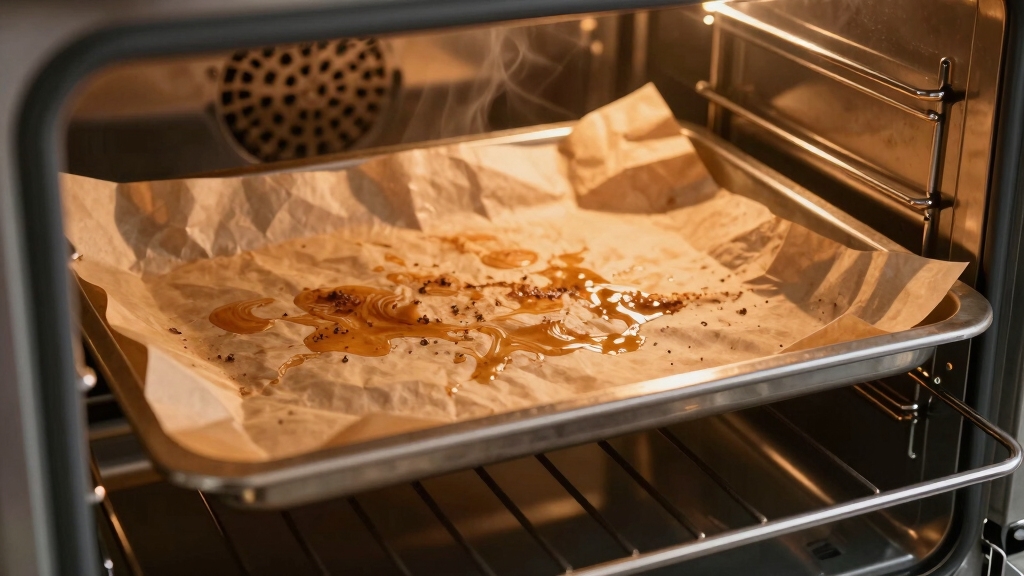
Maintaining proper temperature limits is only one aspect of using butcher paper safely in the oven.
You must verify the paper is food-grade, uncoated, and free from glossy or plastic-like surfaces. It is important to avoid materials that produce toxic chemicals when heated.
Trim the paper to prevent contact with heating elements and always use a baking sheet to catch drips.
Because butcher paper is designed as a breathable barrier, it allows steam and smoke to escape while retaining moisture, making it ideal for certain cooking methods.
Monitor the cooking process for smoke or unusual odors and have a fire extinguisher nearby.
| Safety Step | Key Detail |
|---|---|
| Paper Selection | Food-grade, uncoated, no sheen |
| Oven Setup | ≤ recommended temp, on tray |
| Monitoring & Fire Safety | Visual check, smoke detector |
This approach minimizes chemical risks, prevents ignition, and ensures effective heat management when using butcher paper.
Comparing Butcher Paper to Other Cooking Papers
Although butcher paper and parchment paper both serve culinary purposes, their distinct compositions and properties dictate very different applications.
Butcher paper, made from thick kraft pulp with minimal processing, offers durability and breathability ideal for meat handling and smoking. It is commonly used for wrapping and storing meats in butcher shops and delis. Proper storage practices can prolong the usability of butcher paper in kitchen applications.
Parchment paper’s silicone coating provides non-stick, moisture-retentive qualities suited for baking.
Consider these key differences:
- Material: Butcher paper is uncoated kraft; parchment is silicone-coated.
- Heat Resistance: Butcher tolerates 500+°F; parchment withstands 420-450°F.
- Non-Stick: Parchment prevents sticking; butcher paper does not.
- Permeability: Butcher paper allows moisture evaporation; parchment retains moisture.
- Applications: Butcher paper excels in smoking and wrapping meats; parchment suits baking and delicate food release.
Understanding these distinctions helps you select the right paper for your cooking needs.
Common Risks When Using Butcher Paper in Baking
When you use butcher paper in baking, there are a few risks to keep in mind.
First off, there’s the potential for heat damage. If the temperatures get too high, you might end up with charring or even ignition, which is definitely not what you want when you’re trying to create something delicious. It is generally advised to avoid exposing butcher paper to temperatures exceeding 400°F (204°C) to reduce fire hazards. Additionally, exposure to moisture can cause the paper to weaken or burn unevenly, similar to how wet fuel affects smokers in rainy conditions.
Then, there’s the issue of chemical exposure. Depending on the type of paper you’re using, it might’ve coatings or inks that aren’t safe for oven use. This could lead to contaminants leaching into your food, and that’s something you definitely want to avoid.
Lastly, consider how the butcher paper interacts with moisture and fats. It can sometimes cause sticking, tearing, or even off-flavors in your baked goods, which can really degrade the overall quality. Proper handling and storage, such as keeping the paper dry and away from humidity, can help maintain its integrity and performance.
Heat Damage Risks
Because butcher paper has a heat tolerance limit near 450°F (232°C), exceeding this threshold markedly raises the risk of ignition and structural failure.
You must be cautious when using butcher paper in ovens, especially at high temperatures, as it lacks the heat resilience of materials like parchment. Its lower ignition temperature compared to other materials means fire safety precautions are critical.
Key heat damage risks include:
- Ignition risk increases sharply above 420°F (215°C), particularly with direct flame exposure.
- Structural warping and buckling occur due to heat combined with moisture or steam buildup. The composition and chemical treatments of butcher paper can influence how quickly it may ignite or degrade under heat.
- Prolonged exposure to elevated temperatures weakens paper fibers, causing tears or leaks.
- Convection oven airflow can dislodge or ignite the paper if not securely placed.
- Saturation from cooking juices destabilizes the paper’s integrity, risking failure during baking.
Careful monitoring and temperature control are essential to mitigate these hazards.
Chemical Exposure Concerns
Chemical exposure poses a significant concern during the use of butcher paper in baking, as various manufacturing components like sizing agents, inks, and coatings can migrate into food under heat.
Sizing agents vary by mill and may include small molecules that transfer when heated. Printed inks and coatings risk organic pigment and solvent migration, especially without oven-safe certification.
Waxed or coated butcher papers can thermally degrade above recommended temperatures, releasing volatile organic compounds and potentially harmful residues. Studies on aluminium cookware have shown that high temperatures increase leaching of metals and chemicals into food, indicating that heat plays a critical role in contamination risks.
Acidic or fatty foods intensify migration by catalyzing breakdown or solubilizing lipophilic additives. Extended heating or wet marinades increase cumulative exposure.
Unlike silicone-treated parchment designed for high heat, standard butcher paper lacks inert barriers, raising chemical transfer risks.
Because empirical migration data on butcher paper is limited, you should exercise caution and consult manufacturer guidelines before using it in the oven.
Food Quality Impact
Understanding the limitations of butcher paper’s heat tolerance is crucial for maintaining food quality during baking.
When used improperly, butcher paper can degrade, affecting texture, flavor, and moisture retention. You should consider these risks:
Heat above 300°F causes paper breakdown, leading to flavor loss and compromised tenderness. The porous, absorbent surface encourages food sticking and grease saturation, complicating cleanup.
Breathability allows steam escape, drying out baked goods and causing uneven moisture distribution. Cooking times may extend beyond ideal ranges, risking overcooking or uneven heat exposure.
Best Practices for Cooking With Butcher Paper
When using butcher paper in the oven, you need to select uncoated, food-grade varieties specifically rated for cooking to guarantee safety and performance. Oren International uses certified, FDA-approved pink butcher paper that is safe and reliable for culinary use.
Verify the maximum temperature limit, commonly around 300°F, and avoid coated or freezer papers that risk melting or fumes. Always place wrapped items on rimmed baking sheets to prevent direct contact with oven surfaces and reduce fire hazards.
Use butcher paper primarily for low-and-slow cooking methods, such as slow-roasting or finishing smoked meats, where moisture retention and breathability are essential. Construct tight, sealed pouches by folding and rolling edges securely.
Avoid high-heat tasks requiring direct browning since butcher paper’s heat tolerance is limited. Continuous monitoring during cooking helps detect charring early, ensuring both safety and superior food quality.
Alternatives to Butcher Paper for High-Heat Cooking
Although butcher paper excels in low-and-slow cooking, its limited heat tolerance makes it unsuitable for high-temperature applications.
When you need alternatives that withstand higher heat, consider these options:
Parchment Paper: Heat-resistant up to 450°F, non-stick, and allows smoke penetration. It is typically rated to 400°F and must be uncoated to handle grill heat effectively.
It’s ideal for indirect grilling and moist cooking.
Aluminum Foil: Fireproof and an excellent heat conductor, it retains moisture. While it is easy to find, aluminum foil reduces bark quality unless perforated.
Perfect for briskets and ribs under intense heat.
Silicone-Coated Paper: Offers a non-stick surface and moderate heat resistance. Availability and cost may vary compared to other substitutes.
Verify coating suitability for high temperatures.
Greaseproof Paper: Moisture-resistant and porous enough for BBQ wrapping. It can serve as a substitute when butcher paper is unavailable or expensive.
Suitable for high-heat kitchen use.
Treated Butcher Alternatives: Semi-permeable papers balance bark formation and juiciness. These are developed from the same base material as Kraft paper but are improved and reinforced for durability.
Use foil or parchment depending on cook duration and temperature.
Select based on cooking method and desired moisture retention for best results.
Frequently Asked Questions
Can Butcher Paper Be Reused After Baking?
You can reuse butcher paper after baking only if it’s free from grease, food residue, and melted coatings, and if it hasn’t warped or become brittle.
Always inspect for contamination or structural damage before reuse.
Limit reuse to low-heat, indirect cooking to minimize fire risk.
Avoid using butcher paper previously exposed to high moisture or direct heat again for food contact, as food safety and integrity markedly decline after baking.
Does Butcher Paper Affect the Taste of Baked Food?
You’ll find that butcher paper typically doesn’t affect the taste of baked food when used below 300°F.
Thanks to its absorbent and breathable properties, it preserves natural juices and smoky flavors.
However, exceeding 400°F risks paper deterioration, causing burnt off-flavors and uneven cooking.
How Does Butcher Paper Compare to Foil for Wrapping Meat?
Butcher paper lets moisture and smoke escape, preserving bark texture and enhancing smoke flavor, while foil traps steam, producing moister, softer bark.
You’ll find foil accelerates cooking by retaining heat and moisture, shortening stall times; butcher paper slows cooking but maintains bark integrity.
For lean cuts, foil prevents drying; for brisket or ribs, butcher paper balances juiciness and bark quality.
Use uncoated butcher paper and wrap tightly to avoid leaks.
Is Butcher Paper Environmentally Friendly or Biodegradable?
Yes, butcher paper is environmentally friendly and biodegradable when uncoated and free from synthetic additives.
You’ll find it compostable if it’s made from natural wood pulp and unbleached, breaking down efficiently in compost systems.
However, avoid silicone-lined or waxed variants, as these resist degradation and aren’t compostable.
For peak sustainability, choose uncoated, responsibly sourced butcher paper that supports recycling or composting.
This reduces landfill waste and environmental impact.
Can Butcher Paper Be Used in Microwave Ovens?
About 60% of butcher paper brands aren’t microwave-safe, so you need to be cautious.
You can use butcher paper in the microwave only if it’s specifically labeled microwave-safe, like Reynolds butcher paper.
Always place it flat on a microwave-safe plate and avoid folding to prevent hotspots that cause fires.
Limit exposure time to reduce overheating risk. Untreated or crumpled butcher paper can ignite or release toxins, so handle it precisely.
Take Your Low-and-Slow Cooking to the Next Level
When you slide butcher paper into the oven, think of it as walking a tightrope. Precision and caution are your safety net. Knowing its heat limits and paper type prevents flare-ups or smoke, ensuring your cooking stays on track.
By choosing the right paper and following best practices, you harness its benefits without risking your culinary masterpiece. Treat butcher paper as a tool that demands respect, not a wildcard in your oven’s fiery arena.