Can You Freeze Ribs: Frozen to Perfection
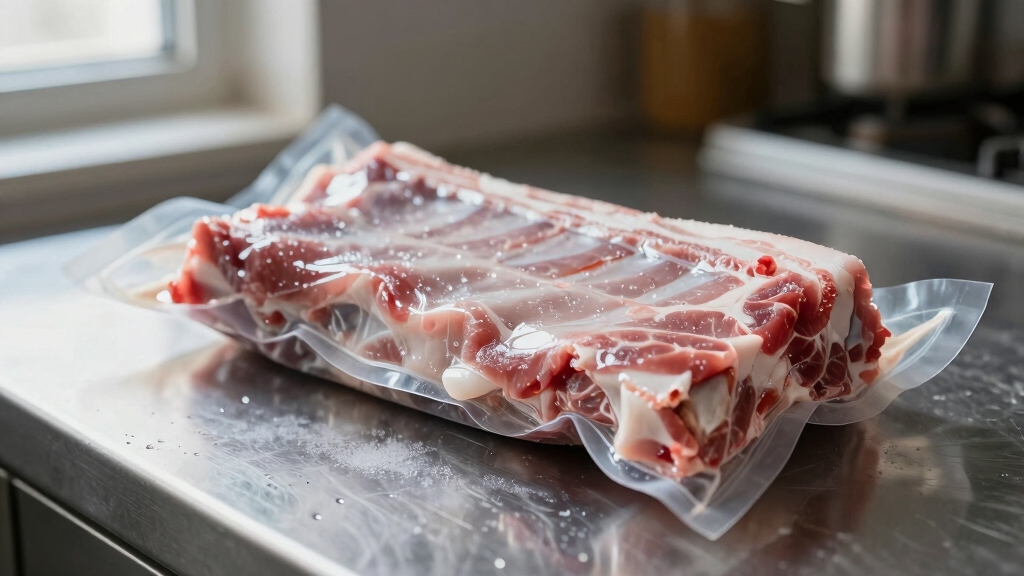
You can freeze ribs by first cooling them to room temperature on a wire rack to prevent ice crystal damage and bacterial growth. Wrap them tightly using heavy-duty foil or vacuum seal to remove air and avoid freezer burn.
Maintain your freezer below 0°F (-18°C) for up to 2–3 months for cooked ribs. Thaw safely in the fridge at ≤40°F and reheat with low heat to retain juiciness.
Proper steps preserve quality and flavor; more insights on handling and usage follow.
Key Takeaways
- Cool ribs to room temperature on a wire rack before freezing to preserve texture and prevent ice crystal damage.
- Wrap ribs tightly with heavy-duty foil or vacuum-seal to remove air and prevent freezer burn.
- Freeze ribs at or below 0°F (-18°C) to maintain quality for 2–3 months cooked, up to 12 months uncooked.
- Thaw ribs safely in the refrigerator at ≤40°F and cook within 3–5 days for best safety and flavor.
- Reheat ribs slowly at 250°F, wrapped in foil with added liquid, ensuring internal temperature reaches 165°F.
Cooling Your Ribs the Right Way Before Freezing

When preparing ribs for freezing, you need to cool them to room temperature first to prevent ice crystals from forming and damaging the meat’s texture.
Place the ribs on a wire rack positioned over a baking sheet to allow air circulation around the meat, which inhibits moisture accumulation and bacterial growth.
Elevate ribs on a wire rack over a baking sheet to promote air flow and prevent moisture buildup.
Avoid placing hot or warm ribs directly into the freezer, as this accelerates ice crystal development within muscle fibers, compromising juiciness and structural integrity.
Evidence shows that adequate cooling preserves tenderness and overall quality by stabilizing water molecules inside the meat.
Cooling should continue until the ribs reach ambient temperature, ensuring proper thermal equilibration before freezing.
This step is critical for maintaining prime texture and flavor during storage and eventual reheating.
Proper cooling and storage at ≤40°F (4°C) before freezing help inhibit bacterial growth and extend the smoked meat shelf life.
Wrapping and Packaging Ribs to Keep Them Fresh
To keep your ribs fresh while freezing, you really want to wrap them tightly.
You can use aluminum foil or plastic wrap; just make sure to remove as much air as you can to avoid that pesky freezer burn.
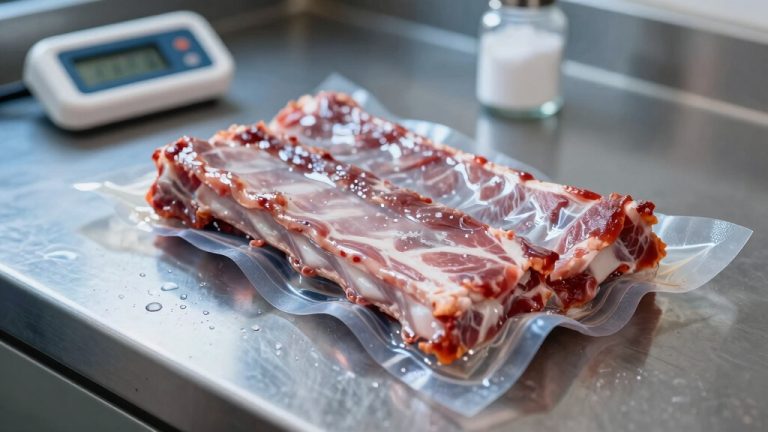
If you’re looking for the best way to store them long-term, vacuum-sealing is your go-to method. It keeps everything nice and airtight!
Oh, and here’s a little tip: adding an extra layer of a freezer-safe bag can give your ribs some added protection. It’s like a cozy little blanket for your meat!
And don’t forget to label each package with what’s inside and the date.
This way, you can keep track of everything and know just how fresh your ribs are whenever you’re ready to cook them up!
Freezing your ribs promptly and removing air from the packaging helps preserve their texture and flavor during storage.
Effective Wrapping Techniques
Wrapping up ribs properly plays a critical role in preserving their freshness and preventing freezer burn during storage.
To achieve this, you should first remove as much air as possible when wrapping, since trapped air accelerates dehydration and oxidation.
Use heavy-duty aluminum foil or plastic wrap, applying it tightly to create a secure barrier.
For ideal preservation, vacuum-sealing is recommended, as it removes air entirely, markedly extending shelf life.
After wrapping, place ribs in a freezer-safe bag to provide a secondary protective layer against moisture intrusion and odors.
Avoid loosely wrapped packages, which increase the risk of freezer burn and quality degradation.
These techniques maintain the meat’s juiciness and texture by minimizing ice crystal formation and moisture loss during freezing.
When freezing ribs long-term, consider using freezer paper’s polyethylene coating as an additional moisture barrier to further prevent freezer burn.
Labeling And Storage
Properly labeling and storing your ribs after sealing them guarantees you maintain their quality and manage inventory effectively.
Use freezer-safe bags or vacuum-sealed packaging to minimize air exposure and prevent freezer burn.
After tightly wrapping ribs in plastic wrap or aluminum foil, place them into these bags, squeezing out excess air.
Clearly mark each package with the date of freezing and rib type using a permanent marker to track storage duration.
Store ribs at a consistent temperature of 0°F (-18°C) or below to preserve texture and safety.
Proper labeling prevents confusion during thawing and guarantees you consume ribs within recommended periods, typically 4-12 months for peak quality.
This systematic approach minimizes waste and maintains rib tenderness and juiciness throughout freezing and storage.
Freezing halts bacterial growth but does not kill bacteria, so safe handling practices before freezing are essential to ensure food safety.
Freezing Time Limits for Cooked and Uncooked Ribs
You can definitely freeze cooked ribs for several months, especially if you vacuum-seal them properly. This really helps to keep their texture and flavor intact.
Now, when it comes to uncooked ribs, if you store them at a steady 0°F, they can maintain peak quality for about 4 to 12 months, according to USDA guidelines.
Understanding these time limits is super important because it ensures food safety and helps you keep your ribs tasting great during storage. So, whether you’re prepping for a big barbecue or just stocking up your freezer, knowing how long you can keep those ribs makes all the difference!
It’s also important to note that ribs thawed in the refrigerator and kept at 40°F or below can be safely refrozen within 1–2 days, preserving quality and safety through proper refreezing guidance.
Cooked Ribs Storage
Understand that freezing times differ markedly between cooked and uncooked ribs due to variations in moisture content and structural integrity.
Cooked ribs, having lower moisture and altered muscle fibers, generally maintain quality when frozen for up to 2-3 months at 0°F (-18°C) if properly wrapped.
Use airtight packaging; vacuum sealing is ideal to minimize freezer burn and moisture loss.
Before freezing, cool ribs to room temperature on a wire rack to prevent ice crystal formation that degrades texture.
Label packages with freezing dates to track storage duration.
While ribs remain safe beyond this period, prolonged freezing risks dryness and flavor deterioration.
Maintaining a constant freezer temperature at or below 0°F is critical to inhibit bacterial growth and preserve cooked rib quality during storage.
For best results, wrapping ribs tightly and using proper insulation techniques can help retain moisture and flavor before freezing, similar to the wrapping techniques used in resting brisket.
Uncooked Ribs Duration
While cooked ribs typically maintain quality for 2-3 months in the freezer, uncooked ribs have a substantially longer recommended storage duration.
According to USDA guidelines, you can safely store uncooked ribs at 0°F for 4-12 months without significant loss of quality.
To maximize preservation, make certain ribs are properly cooled and tightly wrapped in aluminum foil or vacuum-sealed to prevent freezer burn and moisture loss.
Consistent freezing temperatures below 0°F are critical to maintaining safety and texture over time.
Improper packaging or temperature fluctuations can lead to freezer burn, negatively impacting taste and tenderness.
By adhering to these protocols, you’ll retain the uncooked ribs’ freshness, flavor, and structural integrity throughout extended storage periods.
This allows you to plan meals well in advance without compromising quality.
For best results, thaw frozen ribs in the refrigerator at or below 40°F to ensure safe and even defrosting within recommended time frames, avoiding the USDA danger zone.
What’s the Safest Way to Thaw Frozen Ribs?
Because maintaining controlled temperatures is essential for food safety, the safest way to thaw frozen ribs is in the refrigerator.
Place the ribs on a shallow dish or tray to catch any juices that might drip, preventing cross-contamination.
Thawing in the fridge keeps the ribs consistently below 40°F, inhibiting bacterial growth.
Allow approximately 24 hours for every 4-5 pounds of ribs to thaw completely.
Avoid thawing at room temperature or using warm water, as these methods elevate the surface temperature, risking pathogen proliferation.
Refrigerator thawing preserves meat texture and quality by enabling gradual temperature increase.
After thawing, cook the ribs within 3-5 days to maintain safety and flavor.
This method aligns with USDA guidelines for safe thawing of frozen meat products.
For best results, use a digital leave-in probe to monitor internal temperature accurately during cooking after thawing.
Reheating Frozen Ribs Without Drying Them Out
Maintaining moisture is critical when reheating frozen ribs to prevent them from drying out and losing their tender texture. Use low, controlled heat and wrap ribs tightly in foil to trap steam and preserve juiciness.
Avoid high temperatures that cause rapid moisture loss. Reheating in a 250°F oven or sous-vide method guarantees even warming without drying. Adding a splash of liquid, like broth or apple juice, inside the foil also aids moisture retention.
Always verify the internal temperature reaches at least 165°F to ensure both safety and optimal moisture retention.
| Method | Temperature | Moisture Preservation Mechanism |
|---|---|---|
| Oven | 250°F (121°C) | Slow heat, foil wrap traps steam |
| Sous-vide | 140°F (60°C) | Water bath gently reheats, prevents drying |
| Foil + Liquid | Variable | Liquid inside foil creates humid environment |
These techniques optimize reheating quality and texture.
How to Use Frozen Rib Meat Creatively?
After reheating frozen ribs properly, you might find that the texture or flavor doesn’t match freshly cooked ribs.
To optimize your rib meat’s utility, consider repurposing it rather than serving it as a standalone dish. Shredded rib meat integrates well into ramen, salads, or fried rice, where its smoky flavor complements diverse textures.
You can also create sandwiches, which allow you to control portion size and add moisture through sauces, counteracting any drying from freezing.
Cutting rib racks before freezing facilitates portion management and quicker thawing. Employing these alternative methods leverages the preserved juiciness and tenderness from correct freezing and thawing.
This approach guarantees efficient use of bulk-cooked ribs and introduces variety, which is beneficial for meal planning and reducing food waste.
For best results, ensure proper moisture retention during reheating by using wrapping techniques that balance heat and humidity.
Common Freezing Ribs Mistakes to Avoid
When freezing ribs, you must avoid placing them in the freezer while still warm. This leads to ice crystal formation that damages meat texture and quality.
To preserve juiciness and tenderness, cool ribs to room temperature on a wire rack before packaging. Don’t neglect airtight wrapping; exposure to air causes freezer burn and dryness.
Label packages with dates to track storage duration, ensuring ribs stay within recommended freezing times. Avoid thawing at room temperature, which risks bacterial growth and spoils safety.
Common freezing mistakes to avoid include:
- Freezing hot ribs that develop damaging ice crystals
- Using loose or non-airtight wrapping allowing freezer burn
- Failing to cool ribs properly before freezing
- Ignoring package labeling, risking prolonged improper storage
- Thawing ribs outside the refrigerator, compromising safety
Frequently Asked Questions
Can You Freeze Ribs With Sauce Already Applied?
Yes, you can freeze ribs with sauce already applied, but it’s best to apply sauce after thawing for ideal texture.
Sauces, especially sugary or acidic ones, can alter meat texture during freezing. If you freeze them with sauce, wrap ribs tightly in plastic wrap or foil, then vacuum-seal to prevent freezer burn.
Label the package with date and contents, and thaw ribs slowly in the refrigerator before reheating to preserve flavor and juiciness.
Is It Safe to Refreeze Thawed Ribs?
You shouldn’t refreeze thawed ribs if they’ve been left at room temperature over two hours, as bacteria can multiply rapidly.
Studies show that food held between 40°F and 140°F can double bacteria count in as little as 20 minutes.
If you’ve thawed ribs safely in the refrigerator and kept them below 40°F, you can refreeze them.
However, expect some quality loss due to moisture loss and texture changes from ice crystal formation.
How Does Freezing Affect the Flavor of Ribs?
Freezing ribs can slightly alter their flavor due to moisture loss and ice crystal formation, which may impact juiciness and tenderness.
However, if you cool ribs properly before freezing and wrap them tightly using vacuum-sealed bags or foil, you’ll minimize freezer burn and flavor degradation.
Maintaining a consistent 0°F storage temperature preserves taste best. When reheated carefully, ribs can retain much of their original flavor, especially if you add sauce during warming.
Can You Freeze Ribs Cooked on a Smoker?
Imagine you’ve smoked ribs for a weekend cookout and want to save leftovers. Yes, you can freeze ribs smoked on a smoker, but cool them to room temperature on a wire rack first to avoid texture damage.
Wrap them tightly in foil or vacuum-seal for freshness, then freeze at 0°F. Proper cooling and airtight packaging preserve juiciness and flavor, ensuring your smoked ribs maintain quality during long-term storage.
What’s the Best Way to Freeze Ribs for a Barbecue Party?
To freeze ribs for a barbecue party, let them cool to room temperature on a wire rack to prevent moisture buildup.
Wrap ribs tightly in plastic wrap or aluminum foil, squeezing out air to avoid freezer burn. For best results, use vacuum-sealed bags and label with date.
Store at 0°F or below. Thaw ribs safely in the refrigerator for 24 hours per 4-5 pounds before reheating for peak juiciness and texture.
Ribs That Survive the Freeze and Thrill Your Taste Buds
You can safely freeze ribs for up to six months without losing quality, preserving both flavor and texture when done correctly.
Studies show that properly wrapped ribs retain over 90% of their moisture during freezing, ensuring juicy results after reheating.
By cooling ribs thoroughly, wrapping them airtight, and thawing them in the fridge, you minimize bacterial risks and prevent freezer burn.
Following these precise steps guarantees your ribs stay fresh and delicious every time you freeze them.