Can You Freeze Raw Brisket: Safe Storage & Freezing Tips
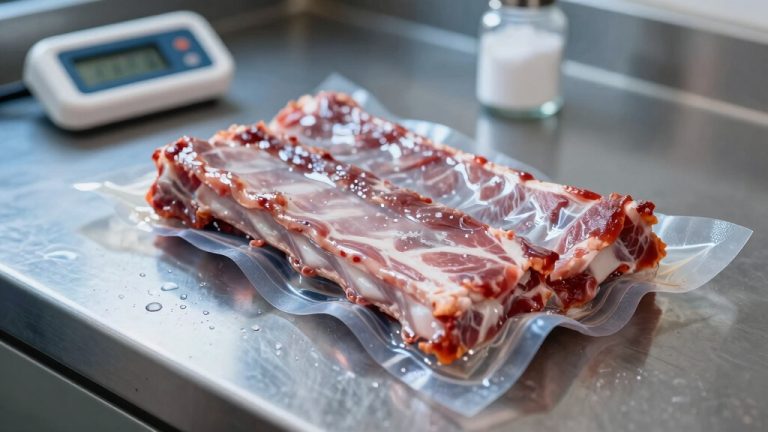
Yes, you can freeze raw brisket by maintaining your freezer at 0°F (-18°C) or lower to prevent spoilage. Wrap it tightly using vacuum sealing for best results or multiple layers of plastic wrap plus freezer paper to avoid freezer burn.
Portion the brisket into meal-sized cuts and label them with dates to manage storage efficiently. Thaw safely in the refrigerator to retain moisture and texture.
Following these methods guarantees your brisket stays fresh and flavorful longer; further details cover peak freezing and thawing practices.
Key Takeaways
- Yes, raw brisket can be frozen at 0°F (-18°C) or lower to preserve freshness and inhibit spoilage.
- Vacuum sealing raw brisket is the best method to prevent freezer burn and extend freezer life up to 12 months.
- Portion raw brisket into meal-sized cuts before freezing for easier thawing and reduced waste.
- Wrap brisket tightly in multiple layers or use airtight packaging to minimize air exposure and moisture loss.
- Label packages with cut type and freeze date, then organize for first-in, first-out use to maintain quality.
Can You Freeze Raw Brisket? Here’s How?

You can freeze raw brisket effectively if you take the right precautions to preserve its quality.
Maintaining your freezer at 0°F (-18°C) or lower guarantees the brisket stays safely frozen, minimizing bacterial growth and enzymatic activity.
Keep your freezer at 0°F (-18°C) or below to safely preserve brisket and inhibit spoilage.
When freezing, avoid exposing the meat to air to reduce oxidation and freezer burn, which can degrade texture and flavor.
Although minor moisture loss occurs due to capillary rupture during freezing, prompt freezing limits this effect.
You can freeze whole brisket cuts or portion them into meal-sized pieces for convenience.
Always freeze brisket as soon as possible after purchase or preparation to lock in freshness.
While vacuum sealing offers the best protection, freezing raw brisket without vacuum sealing is still viable if wrapped tightly and stored properly.
Properly wrapped brisket can maintain peak quality for up to 4–12 months when stored at the right temperature.
Best Wrapping Methods to Protect Raw Brisket
When aiming to preserve raw brisket during freezing, selecting the appropriate wrapping method is essential to prevent air exposure and moisture loss.
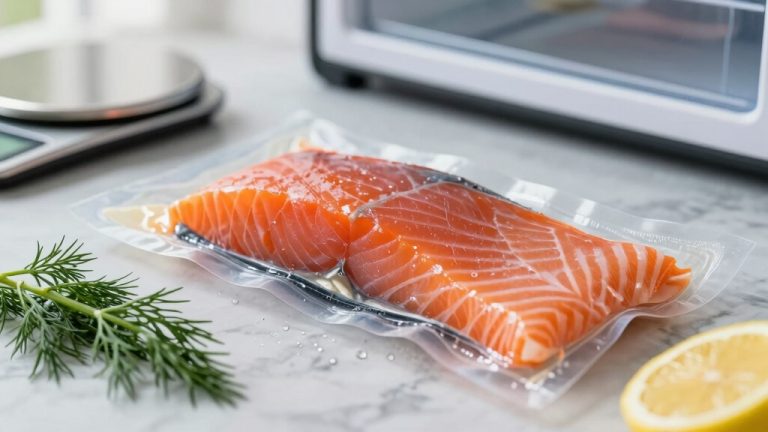
Vacuum sealing offers the most effective barrier against oxygen, extending freezer life up to 12 months by eliminating air pockets. If vacuum sealing isn’t an option, wrap the brisket tightly in 3-4 layers of plastic wrap, ensuring no gaps or folds remain.
Follow this with a layer of waxed butcher paper or freezer paper to add moisture resistance and physical protection. Label the package clearly with the cut type and freeze date for inventory management.
Avoid using only plastic wrap or foil alone, as these offer insufficient protection, increasing the risk of freezer burn and quality degradation. Proper wrapping maintains brisket integrity through freezing and thawing cycles.
For long-term freezing, freezer paper’s polyethylene coating provides a superior moisture and vapor barrier that helps prevent freezer burn.
Freezer Temperature and Storage Tips for Raw Brisket
Maintaining a consistent freezer temperature at 0°F (-18°C) or lower is essential for preserving raw brisket quality during storage. Fluctuations above this threshold accelerate enzymatic activity and moisture loss, degrading texture and flavor.
You should freeze brisket promptly to limit bacterial growth and capillary rupture, which causes minor moisture loss. Use airtight packaging; vacuum sealing is preferable to eliminate air exposure and prevent freezer burn.
If vacuum sealing isn’t available, wrap brisket tightly in 3–4 layers of plastic wrap followed by waxed butcher paper. Label each package with cut type and freezing date.
Then place new items at the bottom or back of the freezer to maintain consistent temperature. Regularly check your freezer’s thermostat to make certain it holds steady at or below 0°F for maximum shelf stability.
Freezing raw brisket in portion-sized packages and thawing slowly in the refrigerator helps maintain texture and safety.
How Long Does Frozen Raw Brisket Stay Good?
Frozen raw brisket can hold up well for varying lengths of time depending on how it’s packaged and stored. If vacuum-sealed, it can maintain quality for up to 12 months at 0°F (-18°C).
Standard plastic wrap and freezer paper reduce shelf life to about 6 months. When using just freezer paper or non-airtight methods, expect 3-5 months before quality degrades due to moisture loss and freezer burn.
| Packaging Method | Storage Duration |
|---|---|
| Vacuum-sealed | Up to 12 months |
| Plastic wrap + freezer paper | 6 months |
| Freezer paper only | 3-5 months |
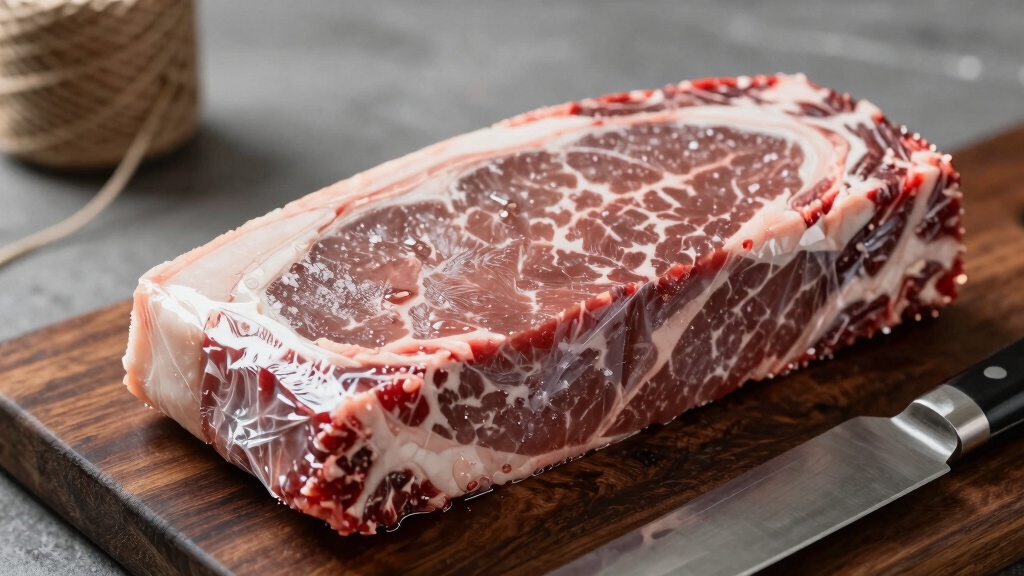
| Cryo-pack (original wrap) | Varies, often 6-12 months |
Proper sealing and stable freezing temperatures are essential to maximize frozen brisket’s shelf life. Freezing slows enzymatic and microbial activity but does not eliminate bacteria, so proper handling before freezing is still crucial.
Portioning and Labeling Your Brisket Before Freezing
When you’re getting ready to freeze your brisket, it’s a good idea to cut it into meal-sized portions. This way, it’ll freeze evenly and be a lot easier to thaw later on. Plus, nobody wants to deal with a giant hunk of meat when they’re just trying to make dinner!
Don’t forget to label each package clearly! Just jot down the cut type and the date you froze it. This little step helps you keep track of how long it’s been in there. Trust me, it makes a difference when you’re digging around in the freezer.
And while you’re organizing, remember to put the new items at the bottom. This helps keep a first-in, first-out system in place, so you can enjoy your brisket at its freshest. Happy freezing!
For best results, make sure to freeze your portions quickly to minimize ice crystal damage and maintain quality.
Benefits Of Portioning
Portioning your brisket before freezing offers several practical advantages that streamline storage and usage.
By dividing the brisket into meal-sized pieces, you reduce the risk of repeatedly thawing and refreezing the entire cut. This preserves quality and minimizes moisture loss caused by capillary rupture.
Smaller portions fit more efficiently within your freezer space, enabling better air circulation and consistent freezing temperatures at or below 0°F (-18°C).
This also facilitates quicker freezing times, reducing ice crystal formation that can degrade texture.
Additionally, portioning allows you to vacuum seal or wrap each piece tightly with plastic wrap and freezer paper. This ensures an airtight barrier that extends shelf life.
Maintaining a consistent freezer temperature helps prevent the brisket from becoming rock-hard frozen, which can affect thawing times and texture.
Proper Labeling Techniques
A clear and accurate labeling system plays a vital role in managing your brisket portions before freezing.
After portioning, immediately label each package with the cut type, such as flat or point, and the exact freeze date.
Use waterproof markers on freezer-safe labels or directly write on the wrapping to guarantee legibility.
This prevents confusion during storage and helps track freshness, minimizing waste.
Include any additional relevant details, like weight or intended use, to optimize meal planning.
Proper labeling also aids in rotating stock efficiently, allowing you to use older portions first.
Avoid vague descriptions; specificity guarantees you know precisely what’s inside each package without unwrapping.
This technical approach maintains order in your freezer and supports optimal quality control throughout the storage period.
Additionally, following proper vacuum-sealing techniques can extend the quality of your brisket for up to 12 months in the freezer.
Organizing Freezer Storage
Getting your brisket ready for the freezer means carefully dividing it into manageable portions and labeling each package clearly.
Start by unwrapping the brisket if it’s already cryo-packed.
Then cut it into meal-sized pieces to simplify thawing and cooking later.
Wrap each portion tightly with 3-4 layers of plastic wrap, followed by a layer of waxed butcher paper to minimize air exposure.
Use a permanent marker to label each package with the cut type and freezing date, ensuring quick identification and rotation.
Place newly wrapped portions at the bottom of your freezer stack to use older packages first.
Proper portioning and labeling reduce waste, prevent freezer burn, and maintain brisket quality throughout storage.
This is especially important when combined with a consistent freezer temperature at 0°F (-18°C).
For best results, leave some headspace for expansion in packaging materials to prevent damage during freezing.
How to Thaw Frozen Brisket Safely?
When it comes to thawing frozen brisket, the best way to do it’s in the refrigerator. This method keeps the meat at a consistent, safe temperature, which helps prevent any bacterial growth.
You definitely want to avoid letting your brisket sit in the danger zone—between 40°F and 140°F—because that’s where pathogens can multiply quickly.
Refrigerator Thawing Method
Thawing frozen brisket in the refrigerator guarantees a controlled, safe temperature that preserves meat quality and prevents bacterial growth.
To thaw brisket properly, keep it sealed in its original airtight packaging or vacuum-sealed wrap to retain moisture and prevent contamination.
Place the brisket on a tray or shallow pan to catch any drips, then position it on the lowest refrigerator shelf.
Allow 24 hours of thawing time for every 4-5 pounds of meat; larger cuts may require 48 hours or more.
This slow thawing method maintains the brisket’s texture and minimizes moisture loss by preventing temperature fluctuations.
Avoid thawing at room temperature to reduce microbial risks.
Once fully thawed, cook the brisket within 3-5 days to guarantee peak safety and quality.
For best results and food safety, avoid leaving meat in the USDA danger zone for more than two hours during thawing and preparation.
Avoiding Temperature Danger Zones
Although thawing frozen brisket is necessary before cooking, careful temperature control is essential to prevent bacterial growth. You need to avoid the temperature danger zone, between 40°F and 140°F (4°C to 60°C), where bacteria multiply rapidly.
To thaw your brisket safely, follow these guidelines:
Always thaw in the refrigerator at or below 40°F (4°C).
Never thaw brisket at room temperature.
Use cold water thawing only when brisket is in a sealed bag, changing water every 30 minutes.
Cook immediately after thawing in cold water.
Avoid refreezing thawed brisket unless cooked first.
For best results, use a calibrated, reliable thermometer to monitor temperatures during thawing and reheating processes.
Managing Thawing Time
When managing thawing time, controlling temperature and duration is essential to preserve brisket quality and safety.
Always thaw frozen brisket in the refrigerator at 40°F (4°C) or below to inhibit bacterial growth.
Depending on size, allow 24 hours per 5 pounds for complete thawing.
Avoid thawing at room temperature or in warm water, as this promotes rapid bacterial proliferation and compromises meat integrity.
If you need faster thawing, use a sealed plastic bag submerged in cold water, changing the water every 30 minutes; cook immediately afterward.
Never refreeze raw brisket once thawed unless you cook it first.
Maintaining consistent low temperature during thawing prevents moisture loss and preserves the brisket’s texture and flavor, ensuring ideal results when you proceed to cooking.
How to Keep Your Brisket Tasty When Freezing and Thawing?
Consistently maintaining brisket’s flavor and texture during freezing and thawing hinges on airtight packaging and controlled temperature management.
Preserving brisket flavor and texture requires airtight packaging and precise temperature control during freezing and thawing.
To keep your brisket tasty, make certain the brisket is vacuum-sealed or tightly wrapped with multiple layers of plastic wrap and butcher paper. Freeze promptly at 0°F (-18°C) to minimize degradation.
When thawing, always use the refrigerator method to prevent bacterial growth and preserve moisture.
Key steps to preserve taste and texture:
- Vacuum seal to eliminate air and lock in moisture.
- Freeze portions quickly to prevent ice crystal formation.
- Label packages with date and cut type for rotation.
- Avoid thawing and refreezing cycles.
- Thaw in refrigerator to maintain consistent temperature.
Following these practices will minimize moisture loss and freezer burn, assuring optimal brisket quality.
Frequently Asked Questions
Can Freezing Raw Brisket Affect Its Nutritional Value?
Freezing raw brisket won’t markedly affect its nutritional value if you freeze it promptly and properly.
While slight moisture loss from capillary rupture can occur, proteins, fats, and minerals remain largely intact.
Vacuum sealing minimizes nutrient degradation by preventing air exposure.
To preserve nutrition, avoid repeated freeze-thaw cycles and maintain a consistent freezer temperature.
When thawed correctly, the brisket retains its essential nutrients and remains suitable for cooking.
Is It Safe to Refreeze Thawed Brisket?
You shouldn’t refreeze thawed brisket unless you thawed it in the refrigerator and kept it below 40°F (4°C) the entire time.
Refreezing meat that’s been left out or thawed improperly increases bacterial growth risk, compromising safety.
If you thawed it properly and didn’t leave it at room temperature, you can safely refreeze it.
However, repeated freeze-thaw cycles may reduce moisture and texture quality slightly.
Does Freezing Impact the Tenderness of Brisket When Cooked?
Freezing brisket preserves texture but may slightly affect tenderness due to moisture loss from ruptured capillaries.
When you freeze brisket promptly and vacuum-seal it tightly, you maintain juiciness and minimize cell damage.
You’ll notice a minor firmness difference, but proper thawing in the refrigerator restores much of its original tenderness.
Ultimately, freezing impacts tenderness minimally if you handle storage and thawing carefully, preserving the brisket’s quality for cooking.
Can You Freeze Brisket That Has Already Been Cooked?
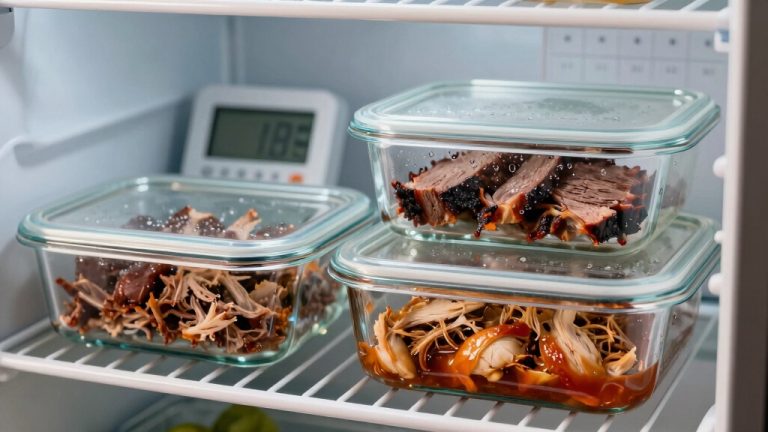
Yes, you can freeze cooked brisket effectively. To preserve its texture and flavor, wrap it tightly in plastic wrap followed by foil or place it in airtight containers.
Cool it completely before freezing to prevent moisture loss and freezer burn.
Label with the freeze date and consume within 2-3 months for peak quality.
Thaw cooked brisket slowly in the refrigerator to maintain tenderness and avoid reheating issues.
What Signs Indicate Freezer Burn on Frozen Brisket?
Don’t worry, freezer burn isn’t always obvious at first.
You’ll notice dry, grayish or whitish spots on your brisket’s surface. These indicate moisture loss.
The texture feels tough or leathery, and the meat may smell off or stale. These signs result from air exposure damaging the meat’s cells.
To prevent this, always vacuum seal or wrap tightly in multiple layers before freezing to protect your brisket’s quality and flavor.
Freeze Today, Enjoy Flavor Tomorrow
You can definitely freeze raw brisket without sacrificing quality if you wrap it tightly in airtight materials. Keep your freezer at 0°F (-18°C) or lower.
Contrary to popular belief, freezing doesn’t kill bacteria but simply halts their growth. Proper thawing is vital to food safety.
Label and portion your brisket before freezing for convenience. By following these precise steps, you’ll maintain flavor and texture. This ensures your brisket tastes just as good after thawing as fresh.