Can You Freeze a Prime Rib: Expert Tips for Maximum Flavor
Yes, you can freeze prime rib and keep it delicious by following key steps. Freeze raw prime rib quickly at 0°F (-18°C) or below.
Remove bones and apply oil and seasoning before tight wrapping to prevent freezer burn. Cooked prime rib can also be frozen but should be portioned and sealed well to avoid drying.
Label with the freeze date and consume within months for best quality. Proper thawing and cooking tips help maintain flavor and texture.
Explore techniques to guarantee your roast stays perfect.
Key Takeaways
- Yes, prime rib can be frozen raw or cooked, but raw freezing preserves the best flavor and texture.
- Freeze prime rib at 0°F (-18°C) or below to maintain quality and minimize texture damage.
- Wrap tightly in multiple plastic layers, then place in a heavy-duty freezer bag to prevent freezer burn.
- Label the package with the freeze date and consume raw prime rib within 3 to 6 months for optimal quality.
- Thaw frozen prime rib slowly in the refrigerator or use a cold water bath for faster thawing safely.
Can You Freeze Prime Rib and Keep It Delicious?

You can absolutely freeze prime rib and still keep it delicious, as long as you follow some key storage steps.
First, remove the bones if you have a bone-in cut to guarantee a tighter seal around the meat. Avoid leaving it in the original styrofoam tray; instead, repackage the roast by wrapping it tightly in multiple layers of plastic wrap or saran wrap.
For extra protection, place the wrapped prime rib into a zipper-lock freezer bag, squeezing out as much air as possible to prevent freezer burn. Applying a thin layer of oil before wrapping helps seasoning stick and reduces moisture loss.
Label the package with the freeze date and store it at 0°F (-18°C) or below for peak freshness. This method preserves the prime rib’s texture and flavor effectively. It’s best to consume frozen prime rib within 3 months to enjoy optimal taste and texture.
Should You Freeze Prime Rib Raw or Cooked?
If you’re wondering whether to freeze prime rib raw or cooked, here’s the scoop. Freezing it raw usually gives you the best quality.
Why? Well, it tends to keep its flavor and texture better, especially if you wrap it up nicely and season it before tossing it in the freezer.
On the other hand, cooked prime rib can be super convenient for quick meals. Just keep in mind that it’s important to portion it out carefully and store it in airtight containers.
This way, you’ll preserve the moisture and prevent it from drying out.
For best results, freeze prime rib promptly at 0°F (-18°C) or lower to maintain quality and safety through stable freezing temperatures.
Raw Prime Rib Benefits
Preserving the quality of prime rib hinges largely on whether you freeze it raw or cooked.
Freezing raw prime rib offers distinct advantages, especially if you want to maintain maximum freshness and control over seasoning.
When you freeze it raw, you can remove the bones for a tighter seal, then wrap the meat tightly in multiple layers of plastic wrap and place it in a freezer bag to prevent freezer burn.
Applying a thin coat of oil before seasoning helps the flavors adhere during freezing.
This method locks in moisture and flavor, allowing you to thaw and cook the prime rib later with ideal texture.
Plus, portioning raw roasts before freezing makes meal prep flexible and efficient, ideal for special occasions or holiday cooking.
For best results, ensure you freeze the prime rib promptly and use airtight packaging to minimize ice crystal damage and maintain quality.
Cooked Prime Rib Considerations
Although freezing raw prime rib often preserves freshness best, freezing cooked prime rib can be a practical choice when managing leftovers or preparing meals in advance.
When freezing cooked prime rib, slice or portion it before packing to make reheating easier and more efficient. Use airtight containers or heavy-duty freezer bags to lock in moisture and prevent freezer burn.
Avoid refreezing once fully thawed, as this diminishes texture and flavor. Label packages with dates to track storage time, and aim to consume cooked prime rib within 3-6 months for peak quality.
When reheating, do so gently to avoid drying out the meat. Ultimately, freezing cooked prime rib suits convenience but won’t match the quality retention of freezing it raw.
For best results, store the prime rib in the coldest part of the freezer at or below 0°F to ensure rapid freezing and maintain texture and flavor.
How to Prepare Raw Prime Rib for Freezing?
Sure! Here’s a more conversational version of your text:
—
Before you toss that raw prime rib in the freezer, let’s make sure it’s ready to go. First off, consider removing the bones. This little trick helps create a tighter seal and keeps those pesky air pockets at bay.
Once you’ve done that, wrap the meat tightly in several layers of plastic wrap. Don’t skimp on this step! It’s super important for keeping the freshness intact.
After that, pop it into a zipper-lock freezer bag. This extra layer acts as a shield against freezer burn.
Using a vacuum sealer before freezing can further preserve flavor and texture by removing excess air.
Following these steps won’t only help maintain the quality of your prime rib but also make it way easier to season when you thaw it out later. Happy freezing!
Removing Bones Before Freezing
When prepping raw prime rib for freezing, you’ll want to take the bones off first to guarantee a tighter, more secure seal around the meat.
Removing the bones reduces bulk and creates a flatter surface, making it easier to wrap the roast snugly, which helps prevent freezer burn.
Use a sharp boning knife to carefully separate the bones from the meat, trimming excess fat if necessary.
Once deboned, you can portion the roast if desired for easier thawing and cooking later.
This step also allows better seasoning distribution before wrapping.
Remember, removing the bones doesn’t just save space; it improves preservation by minimizing air pockets that compromise quality during freezing.
Proper deboning is a key step in maintaining your prime rib’s flavor and texture.
For long-term storage, wrapping the deboned prime rib in freezer paper is recommended to protect against moisture loss and freezer burn.
Wrapping Techniques for Preservation
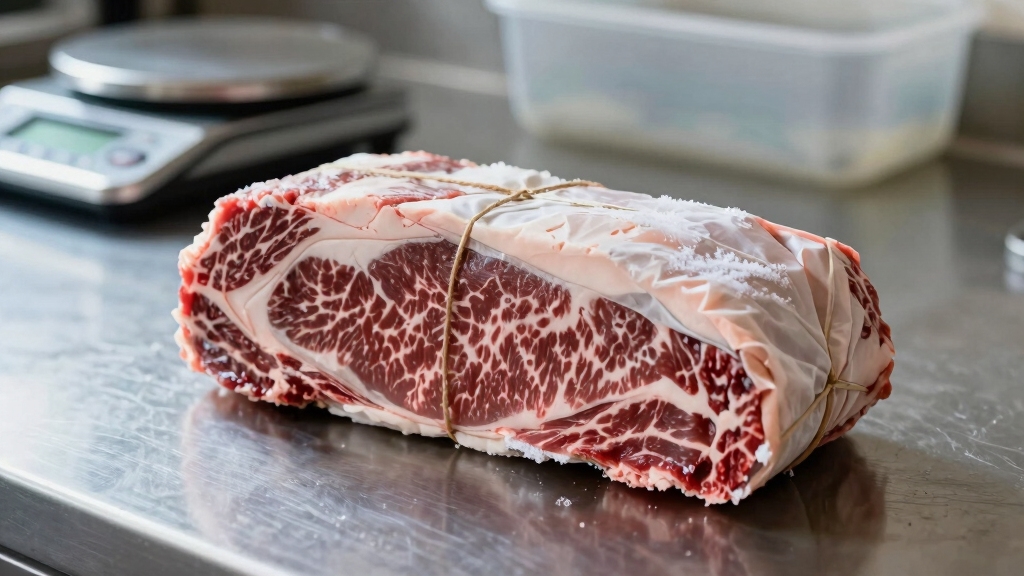
To lock in freshness and prevent freezer burn, start by wrapping your raw prime rib tightly with multiple layers of plastic wrap or saran wrap. This creates a solid barrier against air exposure.
Next, place the wrapped roast in a sturdy freezer bag or ziplock to add an extra layer of protection. Before wrapping, you can lightly coat the meat with oil to help retain moisture and improve seasoning adherence.
Keep these in mind for effective wrapping:
- Remove bones if present for a tighter, uniform wrap.
- Squeeze out as much air as possible from packaging.
- Label your package with the freeze date for easy tracking.
These steps make certain your prime rib stays fresh and flavorful during freezing. For best preservation, ensure your freezer maintains a consistent 0°F (-18°C) temperature to prevent quality degradation.
How to Freeze Cooked Prime Rib Properly?
Freezing cooked prime rib properly locks in its flavor and moisture, ensuring you enjoy tender, juicy leftovers later.
Start by slicing or portioning the meat to make thawing and serving easier. Use airtight containers or heavy-duty freezer bags to prevent moisture loss and freezer burn.
Remove as much air as possible before sealing to maintain texture and taste. Lay packages flat to freeze quickly and evenly, then stack once solid.
Label each package with the freeze date to track storage time. Store at a consistent 0°F (-18°C) or below, and consume within 3-6 months for best quality.
Avoid refreezing thawed prime rib, as it compromises texture. When ready, thaw slowly in the refrigerator to preserve moisture and flavor.
Vacuum sealing is recommended to extend the shelf life and preserve the prime rib’s quality and moisture.
How to Season Prime Rib Before Freezing?
Enhance your prime rib’s flavor by seasoning it before freezing, which allows the spices to penetrate deeply during storage. Start by applying a thin layer of oil to the meat’s surface; this helps the seasoning stick and creates a protective barrier.
Season prime rib with oil and spices before freezing to deepen flavor as it thaws.
Use your favorite rub or a simple blend of salt, pepper, and garlic powder evenly across the roast. Seasoning before freezing means the flavors will meld during thawing, giving you a more savory result when cooked.
Lightly coat the prime rib with oil to lock in moisture and seasoning. Sprinkle spices evenly, massaging them into the meat’s surface. Freeze immediately after seasoning to preserve flavor integrity.
This method guarantees your prime rib is flavorful and ready to cook after thawing. For best results, be sure to freeze within 2 hours of cooking to maintain quality and safety.
How to Wrap Prime Rib to Prevent Freezer Burn?
When wrapping prime rib for freezing, you’ll want to create multiple layers that block air from reaching the meat, which is key to preventing freezer burn.
Start by tightly wrapping the roast in plastic wrap, applying a thin layer of oil beforehand to help seal moisture and hold seasoning.
Add at least two more layers of plastic wrap or saran wrap to guarantee an airtight seal.
Next, place the wrapped prime rib into a heavy-duty freezer bag, squeezing out as much air as possible before sealing.
Avoid using the original styrofoam tray or store packaging, as they don’t protect well.
Label the package with the freeze date and store it flat in the freezer to maintain shape and quality.
This method effectively locks in moisture and flavor.
For best results, freeze prime rib at 0°F (-18°C) or below to preserve quality for up to 6–12 months and minimize texture damage through rapid freezing.
Freezing Prime Rib Without a Vacuum Sealer
When you want to freeze prime rib but don’t have a vacuum sealer handy, there’s a pretty straightforward method you can use.
Start by tightly wrapping your roast in plastic wrap. It’s important to get it snug, so the meat stays protected.
After that, pop it into a freezer bag. Now, here’s the key part: make sure to squeeze out as much air as you can.
Reducing oxygen exposure helps to prevent that pesky freezer burn, which can ruin the quality of your meat.
With this simple technique, you can keep your prime rib tasting great and extend its freezer life effectively.
Happy freezing!
Effective Double Wrapping
For freezing prime rib without a vacuum sealer, effective double wrapping is essential to prevent freezer burn and preserve quality. Start by wrapping the meat tightly in multiple layers of plastic wrap or saran wrap to seal in moisture and block air.
Then, place the wrapped roast into a heavy-duty freezer bag or zip-top bag for added protection. This double barrier helps maintain freshness and prevents ice crystals from forming on the surface.
To guarantee the best results, focus on:
- Wrapping snugly to eliminate gaps where air can enter
- Using thick plastic wrap followed by a sturdy freezer bag
- Labeling the package with the freeze date for easy tracking
This method keeps your prime rib fresh and flavorful until you’re ready to cook.
Air Removal Techniques
To lock in freshness without a vacuum sealer, you’ll want to push out as much air as possible from the packaging before sealing.
Start by wrapping your prime rib tightly in multiple layers of plastic wrap to create a snug barrier. Next, transfer it to a heavy-duty freezer bag.
When sealing the bag, press down firmly to expel air, using your hands to smooth the bag around the meat. For an extra air removal step, slowly lower the bag into a bowl of water, letting water pressure push out air before sealing completely at the top.
This water displacement method mimics vacuum sealing by minimizing oxygen exposure, reducing freezer burn risk, and preserving texture and flavor.
Label your package with the freeze date to track freshness.
How Long Can You Store Prime Rib in the Freezer?
Although freezing prime rib extends its shelf life markedly, you shouldn’t store it indefinitely if you want to preserve its quality. For the best texture and flavor, aim to use your prime rib within a reasonable timeframe.
Typically, raw prime rib maintains peak quality for up to 6 months in the freezer. Cooked prime rib leftovers should ideally be consumed within 2 to 3 months to avoid dryness and flavor loss.
Keep these storage tips in mind:
Wrap tightly in multiple layers to prevent freezer burn. Store at a consistent 0°F (-18°C) or lower. Label packages with the freeze date for easy tracking.
Following these guidelines guarantees your prime rib stays fresh and delicious when you’re ready to enjoy it.
How to Thaw Frozen Prime Rib Safely?
When thawing frozen prime rib, plan ahead to make certain it defrosts evenly and safely.
The best method is to thaw it slowly in the refrigerator, allowing 24 to 48 hours per 5 pounds.
This gradual thaw keeps the meat at a safe temperature, minimizing bacterial growth.
Place the wrapped roast on a tray to catch any drips and avoid cross-contamination.
Always set the wrapped roast on a tray to catch drips and prevent cross-contamination.
If you’re short on time, you can use a cold water bath by sealing the roast tightly in a leak-proof bag and submerging it in cold water, changing the water every 30 minutes.
Avoid thawing at room temperature, as uneven warming can encourage bacterial development.
Once thawed, cook the prime rib promptly for peak flavor and safety.
Can You Cook or Reheat Prime Rib From Frozen?
Once your prime rib has thawed properly, you might wonder if cooking or reheating it directly from frozen is feasible. While cooking a raw prime rib from frozen is possible, it requires a longer cooking time and careful temperature control to guarantee even doneness.
Reheating cooked prime rib from frozen demands gentle warming to prevent dryness. Consider these tips for cooking or reheating from frozen:
Cook raw frozen prime rib by increasing time by 50%, using low oven temperatures to avoid uneven cooking. Reheat cooked frozen prime rib slowly at 250°F (120°C), covered with foil to retain moisture.
Avoid refreezing after thawing to maintain quality and texture. Planning ahead and thawing in the fridge remains the best approach for prime rib preparation.
Frequently Asked Questions
Can You Freeze Prime Rib Bones Separately for Broth Later?
Just like a wizard stashing rare ingredients for future potions, you can definitely freeze prime rib bones separately to brew rich broth later.
Wrap them tightly to block air, preventing freezer burn, and store at 0°F or below.
Label with the date, and use within 3-6 months for best flavor.
When ready, thaw in the fridge and simmer slowly to reveal deep, savory goodness for soups and sauces.
Is It Safe to Freeze Prime Rib Marinade With the Meat?
Yes, you can safely freeze prime rib with the marinade. Just make sure to seal the meat and marinade tightly in multiple layers of plastic wrap.
Then place it in a freezer bag to prevent freezer burn. The marinade helps protect the meat’s surface and keeps flavors intact during freezing.
Thaw in the refrigerator to maintain seasoning integrity, and cook promptly after thawing for the best taste and safety.
How Does Freezing Affect the Texture of Prime Rib Fat?
Freezing prime rib fat can feel like turning butter into concrete. Yes, it firms up and stiffens dramatically!
When you thaw it, the fat can lose some of its silky, melt-in-your-mouth texture, becoming slightly grainy or waxy.
To keep it as tender as possible, wrap the meat tightly, freeze quickly, and thaw slowly in the fridge. This way, you preserve the fat’s luscious quality and avoid that unpleasant, chalky mouthfeel.
Can You Freeze Prime Rib in Dry Brine Before Cooking?
Yes, you can freeze prime rib in dry brine before cooking.
Just apply the salt and seasoning evenly, then wrap the roast tightly in plastic wrap followed by a freezer bag to prevent freezer burn.
The dry brine continues to work during freezing, enhancing flavor and tenderness.
When ready, thaw it slowly in the refrigerator to preserve the seasoning’s effect and cook as planned for a juicy, well-seasoned prime rib.
What’s the Best Way to Freeze Prime Rib for Sous Vide Cooking?
The best way to freeze prime rib for sous vide is to season it first.
Then apply a thin oil layer to help seasoning stick.
Vacuum seal the roast tightly, removing as much air as possible to prevent freezer burn.
Freeze it flat for even freezing and label with the date.
When ready, thaw in the refrigerator fully for 24-48 hours before sous vide cooking to maintain texture and flavor.
Freeze It Right, Feast Anytime: Mastering Prime Rib Storage
You can freeze prime rib to save time, preserve flavor, and reduce waste. Whether raw or cooked, prepare it properly, seal it tightly, and store it at the right temperature.
Thaw it safely, reheat it carefully, and enjoy every tender, juicy bite as if freshly made. By following these steps, you protect quality, maintain taste, and guarantee safety. Freeze smart, thaw right, and savor prime rib whenever you want.