Brisket Cooked Too Fast? Here’s How to Fix It
If you cook your brisket too fast, you’ll lose essential moisture as muscle fibers contract tightly, leaving the meat dry and tough. High heat causes uneven collagen breakdown, resulting in a stringy, hard texture with a burnt exterior and bland flavor.
To avoid this, maintain a steady smoker temperature around 225°F and monitor internal temperatures near 203°F for perfect tenderness. Use proper resting and moisture techniques to rescue if needed.
Keep exploring ways to master brisket cooking for the best results.
Key Takeaways
- Cooking brisket too fast causes rapid moisture loss, resulting in dry, tough, and stringy meat with squeezed-out juices.
- High heat prevents proper collagen breakdown, yielding uneven tenderization and a less silky texture.
- Overcooking above 205°F toughens the brisket, creating a burnt crust and bland flavor from fat loss.
- Maintaining smoker temperature around 225°F–250°F ensures gradual cooking and better moisture retention.
- Wrapping brisket during the stall and spritzing can help mitigate drying from fast cooking.
Why Fast Cooking Ruins Brisket Flavor and Texture?

When you cook brisket too fast, you risk drying out the meat and ruining its texture. The high heat causes moisture to evaporate rapidly and muscle fibers to contract, squeezing out precious juices.
Cooking brisket too fast dries out the meat by squeezing out its vital juices.
This rapid moisture loss leaves you with a dry, stringy brisket that lacks the tenderness you want. The fat cap also melts too quickly, preventing proper breakdown of connective tissues.
This means collagen doesn’t convert smoothly into gelatin. Instead, you get uneven rendering, resulting in tough, chewy bites and a pot-roasty texture.
Cooking faster at temperatures above 225°F accelerates these effects. It causes the exterior to burn while the interior fails to cook evenly.
To preserve flavor and texture, maintain low, steady heat and monitor internal temperature closely during the cook. Maintaining a stable smoker temperature around 225°F also helps reduce evaporative cooling and prevents the stall from prolonging the cooking process.
How Overcooking Makes Brisket Dry and Tough?
When you overcook brisket, things can go downhill fast. The moisture evaporates quickly, and before you know it, the meat ends up dry and tough.
It’s all about those muscle fibers—they contract and squeeze out the juices we’re craving.
And let’s not forget about the heat. When it’s too high, it messes with collagen. Instead of breaking down slowly into that glorious gelatin we love, it just toughens up.
The result? You miss out on that melt-in-your-mouth tenderness. So, if you’re not keeping a close eye on the temperature, you might find yourself with dry, stringy brisket instead of the juicy, tender bite you were hoping for.
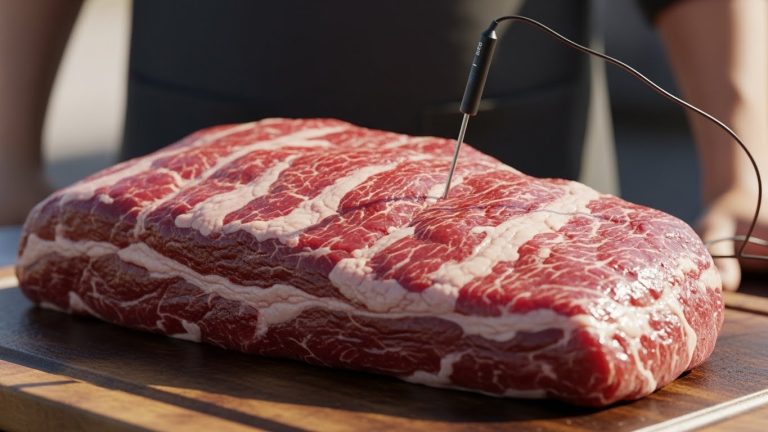
Using a properly placed temperature probe helps monitor internal heat to avoid overcooking and maintain moisture.
Moisture Loss Effects
Overcooking brisket almost always causes significant moisture loss, leaving you with a dry and tough final product.
When you cook brisket too fast or at excessively high temperatures, moisture evaporates rapidly, and muscle fibers contract tightly, squeezing out essential juices.
The fat cap melts prematurely, failing to protect and baste the meat during cooking.
Once the internal temperature surpasses about 205°F, the brisket’s texture shifts from tender to stringy and chewy.
Key moisture loss effects include:
- Rapid evaporation of water content at high heat
- Muscle fibers tightening and expelling juices
- Early melting of fat cap reducing natural basting
- Dry, bland texture despite fat rendering
- Tough, pot-roasty consistency from fiber contraction
To avoid this, keep your cooking temperature low and monitor internal temps closely. Wrapping the brisket during the stall can help retain moisture and prevent excessive drying by trapping steam and heat in a controlled environment, known as the Texas Crutch.
Collagen Breakdown Problems
Although high temperatures might seem like a shortcut to tender brisket, they actually hinder proper collagen conversion. This leaves your meat tough and dry. Collagen needs low and slow heat to break down gradually into gelatin, which gives brisket its prized tenderness.
When you cook too fast or exceed around 203°F internally, muscle fibers contract fiercely. This squeezes out moisture and prevents collagen from converting evenly. The result is a dry, stringy texture with tough, chewy bites instead of silky softness.
High heat also causes uneven rendering. Fat and connective tissues cook too quickly, leaving some parts dry and others greasy. To avoid these collagen breakdown problems, keep your smoker around 225°F, monitor internal temps carefully, and be patient. Only then will collagen fully transform, delivering moist, tender brisket every time. Maintaining an internal temperature near 203°F during the final cook stage ensures optimal collagen breakdown and juiciness.
Recognizing the Signs of an Overcooked Brisket
If you’ve ever bitten into a brisket that feels dry, tough, or stringy, you’re likely dealing with signs of overcooking.
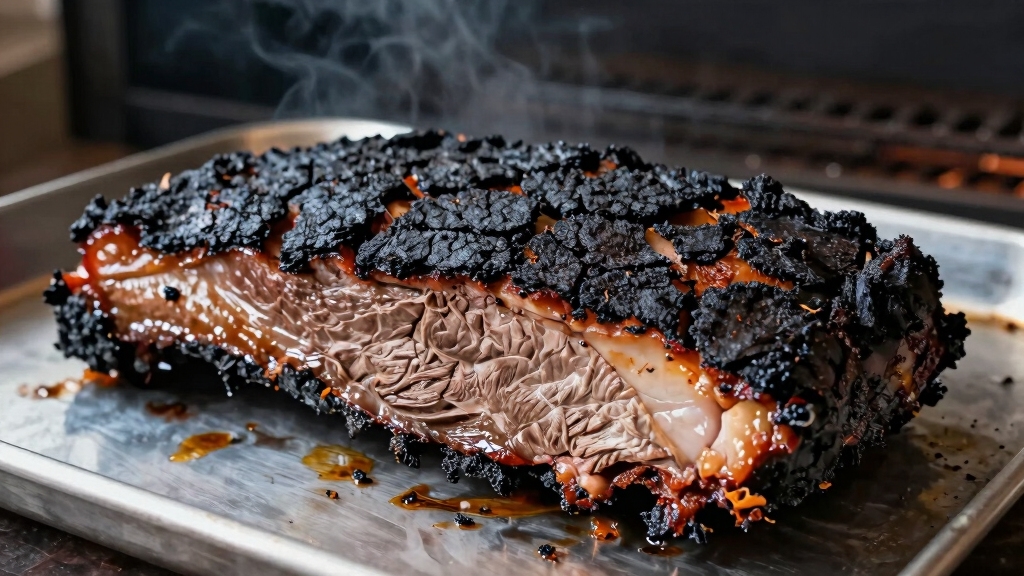
Overcooked brisket loses moisture rapidly, causing muscle fibers to contract and squeeze out juiciness, resulting in a tough texture. The fat cap melts too fast, preventing proper connective tissue breakdown. The outer layer often darkens excessively.
Recognizing these signs helps you adjust your cooking approach before it’s too late.
Look for these indicators:
- Dry, stringy texture that resists easy chewing
- Tough, hard-to-cut meat with a loss of tenderness
- Dark, overly crisp or burnt outer crust
- Lack of elasticity when pressing the meat
- Bland flavor due to moisture and fat loss
Spotting these symptoms early guarantees better control over your brisket’s finish. Maintaining a consistent smoker temperature between 300–325°F is crucial to avoid drying out the meat and preserve tenderness.
How Fast Cooking Breaks Down Brisket Collagen?
When you cook brisket too quickly at high temperatures, the collagen in the meat breaks down unevenly and inefficiently. Instead of slowly converting to gelatin, rapid heating causes collagen to degrade in minutes. Muscle fibers seize up, preventing full tenderization. This results in dry, tough brisket with a pot-roasty texture rather than the desired melt-in-your-mouth feel.
| Cooking Speed | Collagen Breakdown | Muscle Fiber Reaction | Resulting Texture |
|---|---|---|---|
| Slow (225°F) | Gradual to gelatin | Fibers relax | Tender, juicy |
| Fast (250°F+) | Rapid, uneven | Fibers contract tightly | Dry, tough, stringy |
| Slow + Rest | Complete conversion | Fibers reabsorb moisture | Moist, elastic |
| Fast + No Rest | Incomplete breakdown | Fibers stay tight | Hard, chewy, flavorless |
Avoid rushing the cook to preserve collagen’s tenderizing effect. Maintaining a steady smoker temperature between 225°F and 250°F is crucial to breaking down collagen properly and achieving optimal tenderness.
How to Set Your Smoker to Prevent Overcooked Brisket?
To keep your brisket from getting overcooked, aim to set your smoker at a steady 225°F. This temperature slows down moisture loss and helps break down the collagen properly.
While you’re smoking, it’s really important to keep an eye on the internal temperature. Try to pull the brisket off the heat before it hits 205°F; otherwise, you might end up with tough and dry meat.
Also, don’t forget about airflow! Managing it well can help ensure even heat distribution, which means your brisket will cook uniformly from edge to center. Happy smoking!
For optimal results, consider maintaining a steady temperature and using indirect heat to avoid direct exposure that can cause uneven cooking.
Ideal Smoker Temperature
Consistently maintaining your smoker temperature around 225°F is essential for preventing an overcooked brisket.
This steady, low heat guarantees the collagen breaks down slowly, yielding tender, juicy meat without drying out the fat cap or muscle fibers.
To set your smoker properly, focus on these key points:
- Calibrate your smoker thermometer for accurate readings.
- Avoid opening the smoker too often to maintain steady heat.
- Use water pans to stabilize internal smoker humidity and temperature.
- Adjust vents incrementally to control airflow and heat.
- Keep your firebox fueled with consistent, low-smoke wood for even heat.
Additionally, spritzing your brisket during the cook can help maintain surface moisture and enhance bark development without significantly affecting cooking time.
Monitoring Internal Temperature
Maintaining a steady smoker temperature around 225°F sets the stage. Keeping a close eye on your brisket’s internal temperature makes all the difference in preventing overcooking.
Use a reliable digital meat thermometer to track the brisket’s progress, aiming to pull it once the thickest part hits about 203-205°F. Going beyond this risks drying out the meat as muscle fibers contract and moisture evaporates rapidly.
Check temperatures regularly, especially after the stall phase near 160-170°F, to avoid surprises. To prevent overshoot, consider lowering your smoker’s heat if the internal temp climbs too quickly.
For best results, monitor the internal temperature continuously with a probe inserted into the thickest part, avoiding fat pockets, to maintain the ideal holding temperature range.
Enhancing Even Heat
When you set your smoker for even heat distribution, you prevent hot spots that cause uneven cooking and overcooked edges.
To enhance even heat, control the airflow and maintain a steady temperature around 225°F. Position your brisket away from direct heat sources and use heat deflectors when available.
Rotate the meat periodically to promote uniform exposure. Use a water pan to stabilize temperature and add moisture, preventing the outer layer from drying out too quickly.
- Maintain consistent smoker temperature near 225°F
- Use heat deflectors to disperse direct flames
- Position brisket away from firebox or vents
- Rotate brisket every 1-2 hours for even cooking
- Place a water pan inside to regulate humidity and heat
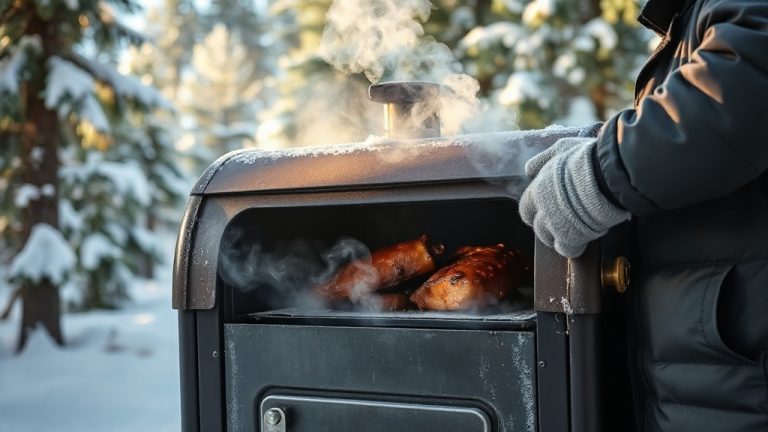
These steps help you avoid overcooked edges and ensure tender, juicy brisket. Additionally, using insulation techniques around your smoker helps retain heat and reduces temperature fluctuations in cold weather.
Tips to Rest and Rescue Overcooked Brisket
If you’ve cooked your brisket too fast and ended up with dryness or toughness, there are effective ways to bring it back to life.
Start by resting the brisket at room temperature, wrapped tightly in foil or butcher paper, to allow juices to redistribute evenly.
Hold it in a cooler or insulated container for several hours; this slows cooling and lets connective tissues relax.
To rescue dryness, gently reheat the brisket at a low temperature (around 170°F) and spritz it with a vinegar mixture to add moisture.
Slice against the grain thinly and serve with a rich sauce or au jus to mask dryness.
These steps help recover tenderness and juiciness, improving texture despite the initial fast, high-heat cook.
Frequently Asked Questions
What Type of Wood Smoke Best Complements Slow-Cooked Brisket?
You’ll want to choose mild hardwoods like oak, hickory, or pecan to complement slow-cooked brisket.
Oak provides a balanced, versatile smoke that enhances without overpowering.
Hickory adds a rich, slightly sweet flavor, while pecan offers a nutty, mellow profile.
Avoid strong woods like mesquite, which can dominate.
Stick to low, steady smoke during the long cook to develop deep, complex flavors that highlight the brisket’s tenderness and fat rendering.
Can Brining Improve Brisket Moisture Retention During Cooking?
Yes, brining can help improve brisket moisture retention during cooking by allowing the meat to absorb and hold onto water and salt.
This process enhances juiciness and flavor, especially when cooking low and slow.
However, you still need to manage your smoker temperature carefully to avoid excessive drying.
Combine brining with consistent low heat and proper wrapping to protect moisture, ensuring a tender, flavorful brisket every time.
How Long Should Brisket Be Wrapped During the Stall Phase?
You should wrap your brisket for about 1.5 to 3 hours during the stall phase.
Imagine the brisket wrapped tightly like a warm blanket, locking in moisture while collagen gently melts.
Wrapping reduces evaporative cooling, speeding through the stall without drying out the meat.
Keep an eye on internal temps. Once it hits around 165-170°F, unwrap to let the bark firm up and avoid sogginess, ensuring a tender, juicy finish.
What Is the Ideal Thickness for Slicing Brisket Flat vs. Point?
You’ll want to slice the brisket flat about ¼-inch thick to preserve tenderness and prevent dryness since it’s leaner.
For the point, slice a bit thicker—around ⅜-inch—because it’s fattier and more forgiving, helping retain moisture and flavor.
Remember to cut against the grain to maximize tenderness.
Adjust thickness slightly based on texture, but these measurements will give you a balanced bite between lean and rich parts.
Are There Specific Rub Ingredients That Resist Burning at High Temps?
You want rub ingredients that resist burning, enhance flavor, and complement your brisket’s natural taste.
Use coarser spices like cracked black pepper, kosher salt, garlic powder, and smoked paprika. They hold up well at higher temps.
Avoid fine sugars or powdered spices that can char quickly. Incorporate herbs like thyme or rosemary sparingly to prevent bitterness.
This balance helps you achieve a flavorful, non-burnt crust even if temperatures spike.
Rescue and Prevent a Brisket Cooked Too Fast
If you cook brisket too fast, you risk ruining its flavor and texture.
In fact, brisket needs low and slow heat at around 225°F to 250°F to properly break down collagen and stay tender.
Overcooking quickly dries it out, making it tough and chewy.
By setting your smoker correctly and resting the meat, you preserve juiciness and flavor.
Remember, patience isn’t just a virtue here; it’s the secret to perfect brisket every time.