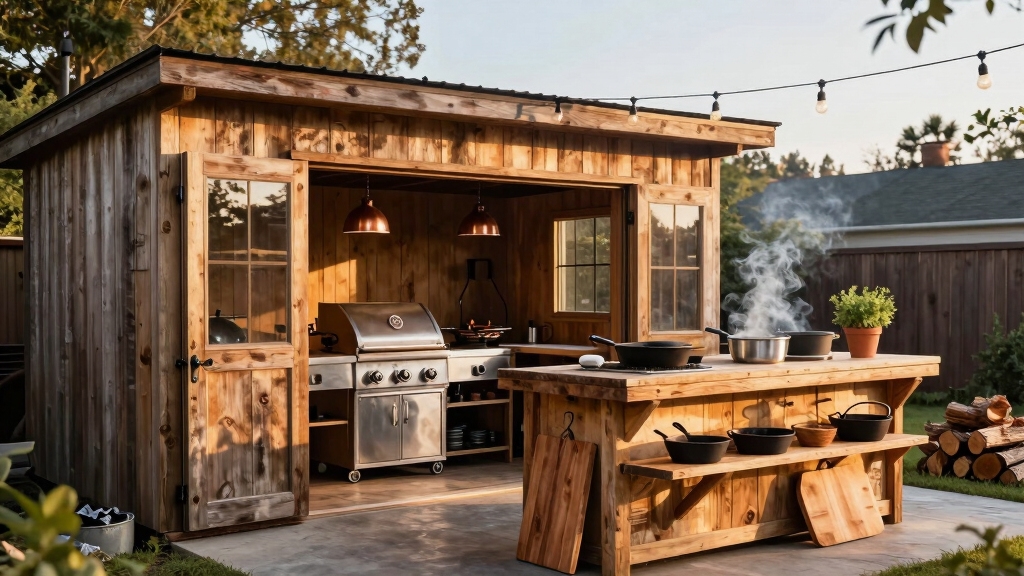
Barbeque Shed Ideas: Stylish Outdoor Cooking Spaces
You can create a barbeque shed that balances style and function by choosing between rustic, modern, or minimalist designs with durable, weather-resistant materials like pressure-treated wood or metal cladding.
Make certain safety with proper ventilation; install gable and roof vents and maintain minimum clearances from combustible surfaces. Incorporate utilities like GFCI outlets and gas shut-offs for convenience.
Finish with corrosion-resistant hardware and seamless outdoor integration using climate-friendly landscaping. Explore further to discover detailed construction tips and functional enhancements.
Key Takeaways
- Choose a design style like rustic, modern, or minimalist to complement your outdoor space and barbecue setup.
- Ensure proper ventilation with gable or roof vents and maintain safe clearances around grill areas to prevent fire hazards.
- Use durable, weather-resistant materials like pressure-treated wood, metal framing, and waterproof sealants for longevity.
- Incorporate corrosion-resistant hardware such as stainless steel or galvanized fasteners to reduce maintenance and rust.
- Add functional features like overhead vent hoods, multi-functional seating, and protective grill covers for convenience and safety.
Choosing the Right Design Style for Your Barbeque Shed

When selecting the right design style for your barbeque shed, you’ll want to take into account both functionality and aesthetic harmony with your outdoor space.
If you prefer timeless charm, rustic style employs weathered wood panels, natural stone, and oak countertops. It often features barn-inspired wooden siding and metal roofs. Additionally, rustic log cabin shelters often incorporate rustic logs or log siding for an authentic cabin aesthetic.
For a sleek, contemporary look, modern style offers crisp lines, foldable doors, and stone or brick walls on a concrete foundation. Finishes range from high-shine to smooth muted tones. Regular maintenance, including rust prevention techniques, can help preserve the shed’s clean appearance.
Minimalist designs focus on Scandinavian simplicity, using natural wood accents like cedar or birch and a neutral palette. These are complemented by corrugated metal roofing.
Open-air styles emphasize spaciousness with basic wooden frames and large service windows. This promotes an airy, versatile setup ideal for casual outdoor dining.
Essential Ventilation and Safety Features
Although ventilation often goes unnoticed, it plays a critical role in maintaining safety and functionality in your barbeque shed. Proper airflow prevents moisture buildup, reduces gas hazards, and guarantees efficient smoke clearance.
All buildings, including sheds, require healthy airflow to prevent moisture and heat build-up. Incorporate a mix of passive and mechanical ventilation to optimize performance and safety. Installing ventilation also helps control humidity levels, which improves smoke flavor absorption and prevents moisture-related issues.
Consider these essential features:
Gable and roof vents create cross-ventilation and allow warm air to escape. Low vents for propane and high vents for natural gas enable safe gas venting. Mesh-covered vents stop insects while preventing nests and block pests. Maintain minimum 6-inch clearances around grills and 60 inches overhead. Vent hoods under roofs effectively clear smoke clouds and improve air quality.
Step-by-Step Construction and DIY Tips
Alright, let’s get started on your project! First things first, you’ll want to set up some sturdy posts, right? You can go with 4×4 or 6×6 posts, but make sure one side is a bit taller. This will help with proper roof runoff later on, which is super important.
Choosing the right location is also key; pick a convenient and safe spot away from the house and wooden fences to ensure safety and neighbor-friendly setup. Also, consider airflow when selecting your location to prevent smoke buildup and ensure good ventilation.
Once those posts are in place, it’s time to assemble the rim rafters. Now, when you’re cutting those, aim for precise 75-degree angles and secure everything with some 2 1/2″ screws. Trust me, this step is crucial for a solid structure.
Next up, you’ll want to cover the entire frame with tar paper. This is going to act as a moisture barrier. After that, it’s time to get those asphalt shingles on! Start layering them from the bottom to the top, and don’t forget to finish with a ridge cap. This will really help ensure that everything stays waterproof.
Oh, and while you’re at it, don’t overlook ventilation! Integrate those openings strategically to maintain good airflow. And if you’re working near a BBQ pit, make sure to install some safety features like fire-resistant materials. Using fire-resistant materials is essential for safety around cooking areas. Better safe than sorry, right? Happy building!
Framing and Roofing Basics
Since a sturdy frame and reliable roofing form the backbone of your barbeque shed, you’ll want to meticulously assemble the bottom frame using treated lumber to resist moisture and guarantee longevity.
Start by squaring the base with the 3-4-5 method. Then, build walls on the ground before lifting them into place. Secure walls with nails and diagonal stainless steel wire bracing for stability. It is recommended to have a helper when standing and nailing walls to the bottom frame for safety and efficiency wall assembly. Proper seasoning techniques ensure your smoker components last longer and resist rust over time.
For roofing, pre-drill metal sheets for precise screw alignment. Staple roofing membrane with galvanized drip edges to protect against weather.
Ventilation and Safety Tips
When designing your barbeque shed, making sure proper ventilation and safety measures is crucial to prevent heat buildup, smoke accumulation, and fire hazards.
Maintain at least 60” clearance above the grill and 12” on all sides from protected combustible walls, which need a 1” ventilated space extending 15” from the countertop.
Position the shed 10 feet from structures and 60 cm from doors or windows to avoid fume entry.
Incorporate minimum ventilation openings: 5 sq inches at the bottom grill trim and 10 sq inches on exterior walls, placing vents according to gas type—higher for natural gas, floor-level for LP. It is important to have top and bottom vents on multiple sides of the island to ensure proper cross-ventilation and gas dissipation.
Install an overhead vent hood with baffle filters directly above the grill to extract heat and grease.
Include fire extinguishers, smoke detectors, and make sure flat, stable placement away from wooden structures for prime safety.
Incorporating Utilities and Functional Amenities
Although designing your barbeque shed’s layout is essential, incorporating utilities and functional amenities guarantees it operates efficiently and safely.
Plan electrical circuits with outdoor-rated GFCI outlets, ensuring dedicated lines for appliances like fridges and blenders. For gas grills, use certified stainless-steel connectors with accessible shut-off valves and gas detectors for safety. Additionally, consider temperature stabilization methods to maintain appliance performance in varying weather conditions.
Integrate cold and hot water lines with proper drainage, including grease traps and floor drains, ensuring frost protection where needed. Ventilation needs a commercial-grade range hood matched with makeup-air solutions to prevent smoke infiltration and maintain air balance. Proper ventilation is crucial to prevent smoke buildup and keep the cooking area comfortable.
- Dedicated GFCI-protected electrical circuits with weatherproof outlets
- Certified flexible gas connectors with accessible shut-offs and leak detectors
- Cold/hot water supply with grease trap and frost-proof plumbing
- Floor drains sloped with sealed penetrations for efficient drainage
- Commercial exhaust hoods paired with balanced makeup-air ventilation
Durable Materials and Finishing Touches

When you’re building a barbeque shed, it’s super important to pick out weatherproof treatments. These will help protect your shed from moisture and UV damage, keeping its structure solid for years to come. Applying a thin layer of high-heat cooking oil on metal surfaces can also help prevent rust and corrosion.
Choosing the right weatherproofing measures such as sealing gaps and using durable wood finishes can greatly extend the lifespan of your shed.
And don’t forget about the hardware! Using corrosion-resistant options like galvanized screws and stainless steel fasteners is a game changer. They not only prevent rust but also give your shed a clean and professional look.
Weatherproofing and Protection
Making sure your barbeque shed endures the elements starts with selecting durable materials and applying precise finishing touches. Use pressure-treated wood or metal for the structure, combined with shiplap cladding to block moisture. Choosing materials with proven water resistance enhances the shed’s longevity in harsh conditions.
Waterproof sealants like Flex Seal form a resilient barrier on walls and roofs, while caulking fills gaps to prevent water ingress. Roofing with EPDM rubber or mineral felt makes rain protection, and a concrete or plastic base keeps groundwater at bay. Cover your barbecue with a custom-fit, durable grill cover made from materials such as woven polyethene to provide 100% waterproof and UV-resistant protection.
For added versatility, consider retractable awnings or UV-resistant polyethene covers that extend beyond edges to direct runoff away.
- Pressure-treated wood resists decay in frames and shelters.
- Apply two coats of waterproof sealant, allowing proper drying time.
- Use shiplap cladding for tight interlocking weatherproofing.
- Seal gaps with silicone caulk and add weatherstripping on doors.
- Slanted roofs with polycarbonate panels enable runoff and natural light.
Corrosion-Resistant Hardware
Longevity in your barbeque shed depends on selecting corrosion-resistant hardware that combines strength with refined aesthetics. Welding gloves, known for their heat resistance and durability, demonstrate the importance of choosing materials that withstand harsh conditions.
Stainless steel, especially 316-grade, excels in coastal areas, resisting rust with its chromium and molybdenum content. Galvanized steel offers moisture protection via zinc coating but may develop white rust over time.
Aluminum’s natural oxide layer guarantees lightweight, low-maintenance durability. Powder coatings enhance steel hardware with decorative, protective polymer layers. For outdoor projects, black hardware is often preferred because its modern, architectural look complements natural wood tones while providing durable performance.
Red metals like copper and brass provide premium resistance without rust concerns, ideal for architectural accents.
| Material | Corrosion Resistance | Typical Uses |
|---|---|---|
| Stainless Steel | High (chromium, molybdenum) | Hinges, handles, fasteners |
| Galvanized Steel | Moderate (zinc coating) | Structural fixings |
| Aluminum | High (natural oxide) | Railings, roofing, furniture |
| Powder Coatings | Very high (polymer barrier) | Decorative hardware |
| Red Metals | High (no rust, durable) | Entrances, displays |
Enhancing Aesthetics and Outdoor Integration
When integrating a barbeque shed into your outdoor space, focusing on architectural style and landscaping is essential to achieve a seamless aesthetic.
Choose a style: rustic, modern, traditional, Spanish Mediterranean, or minimalist that complements your home and garden. Thoughtful landscaping enhances this integration, blending the shed naturally with its surroundings. Proper positioning to reduce wind exposure can also help maintain comfort and efficiency around the barbeque area.
Attention to lighting and finishing details completes the look, providing ambiance and functionality. Including essential features like electricity and lighting in your barbeque shed enhances usability and comfort during gatherings.
Consider these design elements to enhance aesthetics and outdoor integration:
- Use climate-thriving plants and flower beds for natural texture and color.
- Incorporate decorative stones and elevated structures with unique access.
- Install outdoor lighting like string lights or tiki torches for mood.
- Match paint and roof finishes for cohesive visual harmony.
- Select multi-functional seating with weather-resistant materials for versatility.
Frequently Asked Questions
How Do I Maintain My Barbeque Shed During Winter Months?
You should deep clean your grill, removing residue and grease, then dry everything thoroughly to prevent rust.
Apply a thin coat of high-heat oil on metal surfaces.
Elevate your grill off the floor and use weatherproof covers with ventilation to avoid condensation.
Place moisture absorbers inside the shed, inspect ventilation regularly, and check for snow buildup.
Store accessories indoors, keep fuel sealed and off the floor, and perform monthly inspections to catch rust or pests early.
What Are the Best Storage Solutions for Barbeque Tools?
You might think any container will do, but the best storage solutions for your barbeque tools combine function and style.
Consider heavy-duty plastic totes with epoxy-attached magnetic holders inside to organize utensils neatly.
Outdoor storage cabinets made of resin or stainless steel resist rust and fading. They offer multiple compartments for everything from tongs to propane tanks.
Rolling BBQ carts with side shelves and under-grill hooks keep your tools accessible and your setup sleek.
Can I Add a Smoker or Pizza Oven to My Barbeque Shed?
Yes, you can add a smoker or pizza oven to your shed, but you’ll need to make certain proper clearances, usually 24–36 inches from combustibles.
Install non-combustible barriers where the unit contacts the structure.
Provide dedicated vents for smoke and heat, and use heavy-duty hearth pads to protect floors.
Confirm your shed’s foundation can support the weight and check local codes for permits and safety compliance before installation to ensure a safe, functional setup.
How Do I Manage Pest Control Around My Barbeque Shed?
You know what they say: an ounce of prevention is worth a pound of cure.
To manage pests effectively, seal all gaps over 6 mm with exterior-grade caulk or metal flashing.
Fit door sweeps and use fine-mesh screens on vents.
Store food in rodent-proof containers, clean residue promptly, and maintain a clutter-free environment.
Trim vegetation near your shed, remove standing water, and use targeted traps or deterrents to keep pests at bay with precision and care.
What Landscaping Plants Complement a Barbeque Shed Area?
You’ll want fire-resistant plants like lavender and sedum near your barbecue shed for safety and aroma.
Incorporate herbs such as thyme and rosemary; they offer durability and practicality, even doubling as skewers.
Add fruiting vines like grape or kiwi on trellises to maximize space and shade.
Mix in edible greens like kale or chard for vibrant, functional color.
This blend creates a safe, aromatic, and visually appealing landscape around your shed.
Start Planning Today With Barbeque Shed Ideas Built to Last
When designing your barbeque shed, remember that 70% of outdoor cooking enthusiasts prioritize ventilation and safety above all.
You’ll want to choose materials that withstand heat and weather while integrating functional utilities seamlessly.
By following precise construction steps and enhancing aesthetics with durable finishes, you’ll create a space that’s both practical and visually striking.
Embrace these technical and design details to craft a barbeque shed that elevates your outdoor cooking experience effortlessly.