Back Ribs vs Short Ribs: Everything You Need to Know
If you want leaner ribs with longer, curved bones and a subtle beef flavor, go for back ribs. They’re tender and cook faster using dry heat like grilling or roasting.
Short ribs have thicker, fattier meat with rich marbling, ideal for low-and-slow methods like braising that transform collagen to gelatin for melt-in-your-mouth tenderness.
Each cut’s texture and fat content suit different recipes and cooking techniques. Keep exploring to uncover the best ways to maximize their flavor and juiciness.
Key Takeaways
- Back ribs are longer, curved bones from near the loin with leaner, smaller meat portions and less connective tissue.
- Short ribs come from the chuck or plate, featuring shorter, flatter bones with thick, fatty, and richly marbled meat.
- Back ribs are naturally tender and best cooked quickly with dry heat methods like grilling or roasting to avoid drying out.
- Short ribs require slow, moist cooking like braising or low-temperature smoking to break down collagen into tender gelatin.
- Short ribs offer a richer, juicier flavor due to higher fat and collagen, while back ribs have a lighter, cleaner beef taste.
Back Ribs vs Short Ribs: Side-by-Side Cut Comparison
| Feature | Back Ribs | Short Ribs |
|---|---|---|
| Cut Location | From the rib primal near the loin | From the chuck or plate primal |
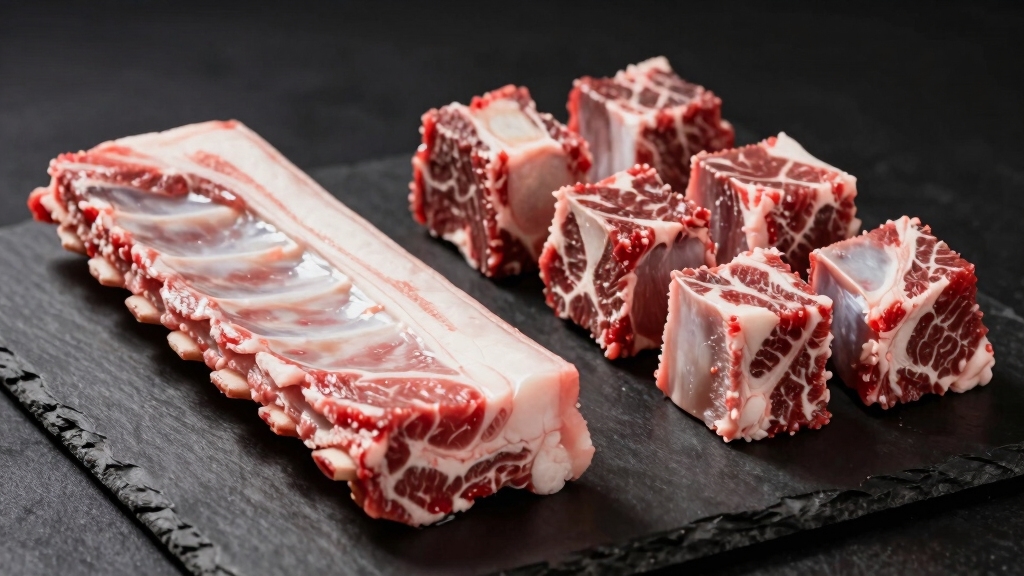
| Bone Structure | Longer, curved, narrower bones | Shorter, flatter, thicker bones |
| Meat Quantity | Less meat per bone | Thicker 1–2 inch meat layer |
| Fat Content | Leaner, minimal marbling | Higher fat & collagen content |
| Tenderness | Naturally tender, cooks faster | Tougher raw, ultra-tender when slow-cooked |
| Best Cooking Method | Grilling, roasting, smoking | Braising, low-and-slow smoking |
| Flavor Profile | Lighter, clean beef taste | Rich, deep, melt-in-mouth flavor |
| Cook Time | 1.5–2 hours (moderate heat) | 3–4 hours (low and slow) |
What Are Back Ribs?
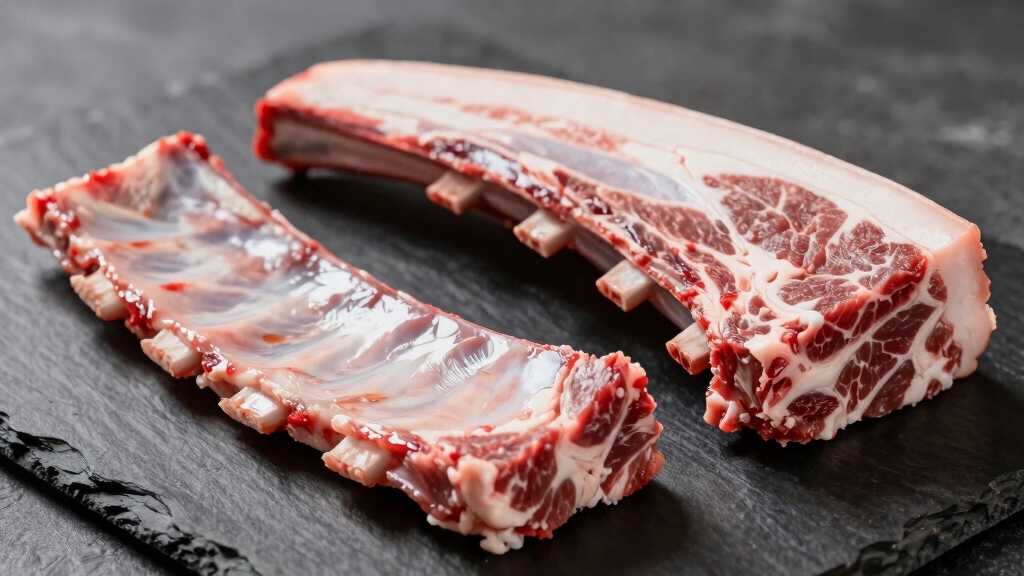
Back ribs come from the rib primal near the loin area, specifically from the upper ribcage where the ribs meet the spine.
Back ribs are cut from the upper ribcage near the loin where the ribs connect to the spine.
You’ll notice these ribs have longer, curved bones that are smaller and narrower compared to other rib cuts.
When you handle back ribs, you’ll see they’re typically cut into individual bones or slabs, offering a higher flesh-to-bone ratio but less meat per bone overall.
The meat on back ribs tends to be tender due to its proximity to the loin and contains less fat marbling, giving it a leaner profile.
You can expect a delicate, beefy flavor with a succulent texture.
When preparing back ribs, the focus is on methods that retain tenderness without requiring extended cooking times, often monitored using temperature probes to ensure optimal doneness.
What Are Short Ribs?
Short ribs come from the chuck primal at the shoulder or the plate section below the brisket, encompassing cuts from the front quarter above the brisket as well.
You’ll find that short ribs have shorter, flatter bones compared to back ribs, with a generous meat topping often an inch or more thick.
These cuts contain more connective tissue and fat, giving them a richer, collagen-heavy composition that benefits from slow, moist cooking methods like braising or smoking.
The chuck short ribs tend to have more connective tissue than plate short ribs, which retain moisture during cooking due to their fat content.
When you cook short ribs properly, their collagen breaks down, resulting in tender, flavorful meat with a deep, melt-in-your-mouth texture.
Short ribs are often cooked using the 3-2-1 method, which involves slow cooking to effectively soften the connective tissue and enhance tenderness.
Meat and Bone Differences Between Back and Short Ribs
Although both rib cuts come from adjacent sections of the beef carcass, they differ markedly in meat-to-bone ratio and bone structure.
Back ribs originate from the rib primal near the loin, featuring longer, curved, and narrower bones with a higher flesh-to-bone ratio but less meat per individual bone.
You’ll notice these ribs have smaller bones and typically come as individual bones or slabs.
In contrast, short ribs come from the chuck or plate primals near the shoulder or brisket, characterized by shorter, flatter bones topped with a generous 1-2 inch meat portion.
The meat-to-bone ratio favors short ribs, offering more substantial meat portions.
Understanding these structural differences helps you select the right rib cut based on your cooking method and desired meat yield.
Additionally, similar to how the shoulder clod and chuck roll differ in muscle composition and connective tissue, these rib cuts require different cooking approaches to optimize tenderness and flavor.
Fat and Tenderness Differences Between Back and Short Ribs
When it comes to back ribs, you’ll find they’ve less intramuscular fat and marbling. This actually gives them a naturally tender texture since they come from the loin area. Pretty neat, right?
On the other hand, short ribs are quite different. They pack in higher fat levels and have a lot of connective tissue, which can make them a bit tougher. But here’s the thing: that toughness is perfect for slow cooking!
It allows the collagen to break down beautifully, resulting in a deliciously rich and tender bite. This process is enhanced by the breakdown of collagen cross-linking during low-and-slow cooking, which transforms tougher cuts into tender, flavorful meat.
Fat Content Comparison
When comparing fat content and tenderness between back ribs and short ribs, you’ll notice that back ribs contain less marbling and connective tissue, resulting in a leaner, more tender cut.
Short ribs have higher fat content and collagen, which adds moisture and richness, especially when slow-cooked. This difference impacts cooking methods and flavor development noticeably.
| Feature | Back Ribs | Short Ribs |
|---|---|---|
| Fat Content | Low marbling, lean | High marbling, fatty |
| Connective Tissue | Minimal | Abundant collagen-rich |
| Moisture Retention | Lower | Higher due to fat |
| Cooking Impact | Cooks faster, less fat drip | Longer cook, fat melts in |
| Texture Influence | Tender, less fatty | Juicy, rich, more collagen |
Understanding fat content guides your selection for desired flavor and cooking style. Cuts with higher connective tissue like short ribs benefit greatly from slow cooking to break down collagen and enhance tenderness.
Tenderness And Texture
Since back ribs come from the loin area with minimal connective tissue and fat, they offer a naturally tender texture that cooks relatively quickly.
You’ll notice they’ve less marbling, which contributes to a delicate, smooth bite but requires careful cooking to avoid dryness.
In contrast, short ribs contain markedly more connective tissue and intramuscular fat, especially plate short ribs, which makes them tougher initially.
However, this collagen-rich content transforms during low-and-slow cooking into gelatin, yielding a luscious, melt-in-mouth texture.
When you braise or smoke short ribs, their fat helps retain moisture, enhancing juiciness and depth.
Achieving optimal tenderness in short ribs typically requires maintaining smoker temperatures between 225–250°F to ensure proper collagen breakdown and juiciness.
Choosing Back Ribs vs. Short Ribs for Your Recipe
When you’re picking ribs for your recipe, think about what you’re going for. Short ribs are great if you want a lot of meat and a rich, collagen-loaded texture. They’re perfect for slow cooking, whether you’re braising or smoking them.
On the other hand, back ribs are a bit different. They’ve longer, narrower bones and are leaner, which means they cook up quicker. They shine when you grill them or use dry heat methods in the oven. To achieve a flavorful and crunchy crust, it’s important to maintain a steady smoker temperature between 225°F and 250°F during smoking.
Meat Quantity Comparison
Choosing between back ribs and short ribs materially impacts the amount of meat you’ll get for your recipe. When quantity matters, understanding their differences is key.
Back ribs have a higher bone-to-meat ratio, offering less meat per bone despite being meatier in-house.
Short ribs present a generous meat portion, often topping the bone by an inch or more, providing more overall meat.
The meat-to-fat ratio in short ribs favors greater meat content, thanks to substantial marbling and fat retention.
Back ribs feature smaller, narrower bones with less total flesh, while short ribs’ flatter, shorter bones support thicker meat layers.
Additionally, the marbling and fat content in short ribs contribute to enhanced flavor and juiciness compared to back ribs.
Ideal Cooking Techniques
For recipes requiring quicker preparation and more delicate textures, back ribs excel due to their tender meat and lower fat content. This allows you to grill, bake, smoke, or roast them with relatively short cooking times.
You can confidently cook back ribs at medium heat for 1.5 to 2 hours, ensuring the meat remains juicy without excessive drying. In contrast, short ribs demand low and slow methods like braising or slow roasting to break down collagen-rich connective tissue and render fat.
Expect to cook short ribs for 3 to 4 hours at low temperatures, around 275°F, to achieve tender, melt-in-mouth results. Smoking both cuts works well, but short ribs particularly benefit from prolonged exposure to low heat to fully develop their rich flavor and tender texture.
For optimal tenderness, it’s important to monitor internal temperature and aim for collagen breakdown to ensure the meat becomes juicy and tender.
Best Cooking Methods for Back and Short Ribs
Although both back ribs and short ribs respond well to smoking and simple seasoning, their differing fat content and connective tissue require distinct cooking approaches to optimize tenderness and flavor.
You’ll want to adjust cooking times and methods based on these differences. Back ribs, being leaner and more tender, grill or roast at moderate heat for shorter periods, around 1.5 to 2 hours, preserving moisture without overcooking.
Short ribs, rich in collagen and fat, benefit from slow braising or low-temperature smoking for 3 to 4 hours, breaking down connective tissue for melt-in-mouth texture. Use indirect heat when smoking either cut to avoid drying out the meat.
For back ribs, quick baking after seasoning locks in juices; for short ribs, slow roasting with moisture retention techniques enhances tenderness. Tailor your method to the cut’s anatomy and fat profile for best results. Wrapping during cooking can help retain moisture and accelerate tenderness by managing the stall phase.
Flavor Profiles of Back Ribs and Short Ribs
When you explore the flavor profiles of back ribs and short ribs, you’ll notice distinct characteristics shaped by their fat content and connective tissue.
Back ribs offer a delicate, beefy flavor with a leaner, less marbled profile, resulting in a succulent but drier mouthfeel. Their lower fat content yields a cleaner taste, emphasizing the natural beef essence.
Short ribs, however, boast a richer, deeper flavor due to higher fat and collagen levels. This collagen, when slow-cooked, breaks down into gelatin, giving short ribs a melt-in-your-mouth texture and enhanced moisture retention.
The plate and chuck varieties contribute nuanced differences, with plate short ribs typically fattier, intensifying juiciness. Both cuts provide excellent beef flavor with minimal seasoning, but short ribs deliver a more robust, indulgent experience, while back ribs remain lighter and more subtle.
Tips for Maximizing Flavor and Tenderness
Since back ribs and short ribs differ markedly in fat content, connective tissue, and meat structure, you’ll need tailored techniques to maximize their flavor and tenderness.
For back ribs, focus on moderate heat and shorter cooking to preserve their delicate texture and prevent drying. Short ribs demand low and slow methods to break down collagen, rendering the meat tender and juicy.
To optimize both cuts, consider these tips:
- Use a dry rub with minimal sugar for back ribs to enhance beefy notes without burning.
- Braise short ribs in a flavorful liquid to dissolve connective tissue and infuse moisture.
- Apply a resting period post-cooking to redistribute juices in both cuts.
- Smoke back ribs briefly for subtle smokiness; extend smoking for short ribs to deepen flavor and tenderness.
Frequently Asked Questions
Can Back Ribs and Short Ribs Be Used Interchangeably in Recipes?
You can’t always swap back ribs and short ribs directly in recipes. Back ribs cook faster and have less meat, so they suit grilling or roasting with quicker methods.
Short ribs need slow, moist heat like braising to break down connective tissue and become tender.
Using back ribs in slow braises risks dryness, while short ribs on the grill might stay tough. Adjust cooking time and method carefully if you switch them.
How Do Back Ribs and Short Ribs Compare in Cost per Pound?
You’ll find back ribs cost less per pound. Short ribs cost more per pound. That’s because back ribs have less meat and are leaner, while short ribs carry more meat and richer fat content.
You’ll pay a premium for short ribs due to their thickness and collagen, which demand longer cooking but deliver deeper flavor.
Are There Regional Preferences for Back Ribs Versus Short Ribs?
You’ll find regional preferences shaping your choice between back ribs and short ribs.
In the Midwest and barbecue-centric South, short ribs are prized for their rich, collagen-heavy meat ideal for slow cooking.
Meanwhile, back ribs gain favor in regions valuing quicker grilling with tender, leaner cuts, like parts of the Northeast.
Understanding these preferences helps you tailor your cooking method and flavor profile to local tastes and culinary traditions.
What Are Common Side Dishes Paired With Back Ribs or Short Ribs?
When you serve ribs, think of classic Southern BBQ spreads. Coleslaw, baked beans, and cornbread complement their rich flavors perfectly.
For back ribs, lighter sides like grilled vegetables or a crisp salad balance their tender, lean meat.
With short ribs’ fattier, collagen-rich texture, you’ll want hearty sides like creamy mashed potatoes or slow-roasted root veggies to match their depth.
Both pair well with tangy sauces and smoky, robust accompaniments to enhance the experience.
How Should Leftover Cooked Back Ribs and Short Ribs Be Stored?
You should store leftover cooked ribs in airtight containers or tightly wrap them in aluminum foil or plastic wrap to prevent moisture loss.
Refrigerate within two hours of cooking at or below 40°F (4°C). For longer storage, freeze them, ideally vacuum-sealed, to maintain tenderness and flavor.
When reheating, use low and slow methods like oven warming or gentle steaming to preserve texture and avoid drying out the meat.
Your Rib Destiny: Bold Choices, Bigger Flavor
So, whether you’re seduced by the lean elegance of back ribs or the indulgent heft of short ribs, remember: it’s not just a meal, it’s a culinary showdown. Back ribs offer precision and subtlety, while short ribs flaunt rich, fatty bravado.
Pick your champion wisely because your taste buds deserve a well-engineered flavor assault, not a limp barbecue apology. Choose, cook, conquer—your ribs await their delicious destiny.