Are Ribs Supposed to Be Pink? Understanding Safe Doneness
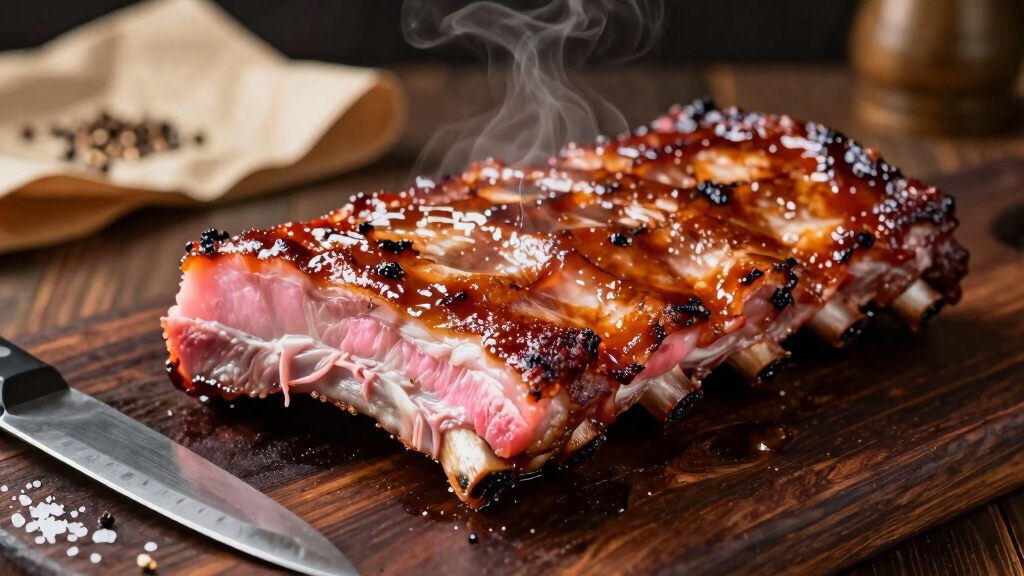
You might notice pork ribs with a pink hue even when cooked properly, due to chemical reactions between myoglobin and smoke gases forming heat-resistant pigments like carboxymyoglobin.
This pink color, especially near the surface, doesn’t reliably indicate undercooking.
The USDA sets 145°F minimum for safety, but ribs often need higher temps (190–205°F) for tenderness.
Color alone can mislead you on doneness or safety. Understanding these factors helps clarify why ribs stay pink post-cooking and what really guarantees they’re safe and tender.
Key Takeaways
- Pink color in cooked ribs often results from a smoke ring formed by carbon monoxide binding myoglobin, not undercooking.
- Smoke rings appear in the outer 8–10 mm of meat due to gases from wood combustion producing heat-resistant pink pigments.
- Ribs fully cooked to safe temperatures (145°F+ with rest) can still show pink hues due to stable pigments like carboxymyoglobin.
- Pink color alone is unreliable for doneness or safety; internal temperature measurement is essential to confirm proper cooking.
- Higher rib tenderness requires cooking beyond 190°F, which breaks down collagen despite any persistent pink coloration.
Understanding the Pink Color in Pork Ribs

Although you might expect pork ribs to lose their pink color when fully cooked, the persistent pink hue often seen is due to chemical reactions involving myoglobin and carbon monoxide during smoking.
Carbon monoxide, a product of incomplete wood combustion, binds with myoglobin in the outer 8-10 millimeters of the meat. This forms a stable reddish pigment resistant to heat denaturation. Meat packers have long utilized carbon monoxide treatment to maintain meat redness, demonstrating the pigment’s stability. The type of wood used for smoking, such as oak, can influence the intensity and quality of the smoke ring due to its medium smoky taste and steady smoke production.
This pink smoke ring is unique to smoked meats and doesn’t occur in oven-cooked pork, ruling out dry rubs as a cause.
Additionally, the high pH in pork can intensify pink coloration after cooking, especially upon air exposure.
Therefore, the pink color reflects complex biochemical interactions rather than undercooking. This challenges traditional visual indicators of doneness.
USDA Cooking Temperature Guidelines for Ribs
Understanding the pink color in pork ribs helps clarify why visual cues alone don’t guarantee safety. Proper cooking and handling are essential to minimize the risk of foodborne illness.
The USDA mandates cooking ribs to a minimum internal temperature of 145°F (63°C) with a three-minute rest to guarantee pathogens are eliminated.
However, tenderness requires higher temperatures (190–205°F) to break down collagen.
Use a digital thermometer inserted into the thickest meat, avoiding bone contact, for accurate readings.
Because collagen remains rigid below 190°F, ribs cooked only to the USDA minimum can be safe but still tough and chewy.
| Temperature Range | Safety Status | Texture Outcome |
|---|---|---|
| 145°F | Safe after 3-min rest | Tough, collagen intact |
| 180–195°F | Safe | More tender, partial gelatinization |
| 190–205°F | Safe | Fork-tender, collagen fully dissolved |
| 203°F+ | Safe | Peak tenderness |
Rely on temperature, not color, to assess doneness and safety.
How Smoke Rings Affect Rib Color?
When you’re smoking ribs low and slow, keep an eye out for a distinct pink layer right beneath the bark. That’s what we call the smoke ring.
It’s pretty cool how it forms; it happens when myoglobin in the meat binds with gases like nitric oxide and carbon monoxide that are released during wood combustion. These gases create heat-resistant pigments that give those ribs that signature look. Proper smoking temperature control between 225°F and 250°F helps ensure the smoke ring develops effectively without drying out the meat.
Now, while the smoke ring mightn’t change how your ribs taste or how tender they are, it definitely makes a difference in how they look. That pop of pink really enhances the visual appeal of your ribs, don’t you think? The smoke ring typically forms within the outer 1/8 to 1/2 inch of the meat due to limited gas penetration.
Formation of Smoke Ring
When wood combusts during smoking, it releases gases like nitric oxide (NO) and carbon monoxide (CO) that interact chemically with the myoglobin in ribs, producing the characteristic pink smoke ring.
NO primarily reacts with myoglobin in the meat’s surface layers, forming a thin pink layer limited by gas penetration depth of about 1/8″ to 1/2″. In pork ribs, their thinness allows the pink coloration to extend through full thickness. This outer pink layer, known as the smoke ring, is an indicator of smoke exposure but does not affect flavor.
This reaction occurs mainly during the initial cooking phase, at internal meat temperatures below 140°F to 170°F, before myoglobin denaturation halts gas binding. Using woods like hickory or mesquite influences the smoke composition and can affect the intensity and quality of the smoke ring formation due to their distinct smoking characteristics.
Maintaining surface moisture via spritzing and a humid smoker environment facilitates gas dissolution and penetration, optimizing smoke ring formation.
Faster, hotter cooking reduces the window for this chemical interaction, limiting smoke ring development, especially in thicker cuts.
Smoke Ring Color Impact
The formation of the smoke ring directly influences the visual characteristics of ribs, particularly their pink coloration near the surface. This pink zone, typically limited to about 1/4 inch or less beneath the bark, results from nitric oxide penetrating the meat before myoglobin denatures.
In pork ribs, this creates a distinct bright pink band about 8-10 millimeters thick. Unlike beef’s reddish-pink ring due to higher myoglobin, pork ribs’ ring appears brighter, partly from carboxymyoglobin and carbon monoxide binding during low-oxygen combustion.
Although prized for appearance, the smoke ring minimally affects flavor or tenderness, acting more like a cure in the outer layer. Factors like faster cooking, higher temperature, and moisture limit ring thickness, so you’ll see a thinner, well-defined pink ring on properly smoked ribs. Managing moisture retention during cooking also helps preserve the visual and textural quality of the smoke ring.
The Role of Myoglobin in Meat Color
Although meat color might seem straightforward, it hinges critically on myoglobin, an iron-rich heme protein that dictates the hue of muscle tissue.
Myoglobin stores oxygen in muscle cells and varies by species, muscle type, and animal age, directly influencing meat’s color intensity. Almost all blood removed from muscle at slaughter, myoglobin remains in the tissue and contributes to meat’s coloration. The presence of curing agents like sodium nitrite can chemically interact with myoglobin to preserve a stable pink color in cured meats.
Its iron exists primarily in the ferrous (Fe2+) state in fresh meat, shifting among chemical forms like deoxymyoglobin (purple-red), oxymyoglobin (bright red), and metmyoglobin (brown) depending on oxygen binding and oxidation.
You’ll notice that oxygen exposure blooms meat to oxymyoglobin’s vivid red, but low oxygen or oxidation leads to metmyoglobin’s brown tint.
Cooking denatures myoglobin, evolving color to dull brown, yet forms like carboxymyoglobin maintain pink hues in cured or smoked meats.
Understanding myoglobin’s chemistry is essential to interpreting meat color accurately, especially in relation to the effects of curing salts on color and safety.
Why Color Alone Is Not a Safe Indicator?
You really can’t just depend on color when it comes to judging rib doneness. I mean, those pink hues can stick around even when the meat has hit safe temperatures. It’s pretty interesting, right? One of the reasons for this is the smoke ring effect, which can create a pink band near the surface. But don’t be fooled—it doesn’t mean it’s undercooked.
The only reliable way to ensure safety is to use a food thermometer to check the internal temperature. Additionally, factors like smoke absorption and cooking method can influence surface color without affecting safety.
Color vs Temperature
When judging doneness, relying solely on meat color can lead you astray because premature browning and persistent pink hues occur independently of safe cooking temperatures.
Premature browning may appear at internal temperatures as low as 52.7°C (135°F), misleading you into undercooking. Conversely, meat from older animals or with higher pH can retain pink coloration even when fully cooked due to stable myoglobin forms like COMb. Maintaining a steady cooking temperature within the recommended range is essential to avoid uneven color changes and ensure proper doneness.
Additionally, factors such as nitrogen oxides from spices or combustion gases can induce surface pinking unrelated to temperature. Myoglobin denaturation varies with redox state, affecting color shifts inconsistently.
Studies have shown that visual doneness indicators are unreliable for determining safe internal temperature of ground beef patties, with premature browning often occurring well before pathogens are eliminated visual doneness indicators. Using a reliable thermometer is the only way to confirm that the internal temperature has reached a safe level.
Consequently, only internal temperature measurements, not visual cues, reliably confirm safety. Ground beef must reach 71.1°C (160°F) to guarantee pathogen elimination regardless of color.
You should always use a calibrated meat thermometer to avoid misjudging doneness.
Smoke Ring Effect
Since the smoke ring forms from nitric oxide and carbon monoxide reacting with myoglobin at the meat’s surface, its pink hue doesn’t reliably indicate doneness.
This reaction creates carboxymyoglobin, a heat-stable compound that retains pink color even after interior myoglobin denatures.
The ring develops only in the outer 1/8″ to 1/2″ of meat, limited by gas penetration and cooking temperature. Maintaining proper smoker temperature around 225°F to 250°F is essential for developing a good smoke ring.
Optimal smoker conditions of 225°F to 250°F with moist surfaces maximize ring depth, but internal temperatures between 140°F and 170°F halt formation as myoglobin loses oxygen-binding capacity.
Importantly, pink color from the ring can mislead you into thinking ribs are undercooked, despite safe internal temperatures.
Therefore, relying solely on the smoke ring for doneness assessment is inaccurate and potentially unsafe.
Use a thermometer rather than color to guarantee proper cooking.
The presence of a smoke ring actually indicates the meat has been exposed to nitrogen dioxide, which reacts to create the pink coloration rather than reflecting cooking progress smoke ring formation.
Risks of Undercooked Ribs Below 195°F
Although ribs cooked below 195°F may appear safe, they can harbor parasites like *Trichinella spiralis* and harmful bacteria such as *Escherichia coli* and *Salmonella*. These pathogens survive at temperatures under 145°F for pork cuts and 160°F for ground meat without adequate resting time, posing significant health risks. Cooking meat to the correct temperature is essential, as it prevents infections and reduces the risk of foodborne illness. Improper cooking temperatures can also lead to the accumulation of harmful bacteria that affect food safety.
Ribs under 195°F can contain parasites like Trichinella and bacteria such as E. coli and Salmonella.
Trichinella larvae can cause trichinosis, progressing from gastrointestinal symptoms to severe complications affecting the heart, lungs, and brain. Bacterial contamination risks increase with cross-contamination during processing. Wild game ribs are particularly hazardous, as resistant parasite strains withstand cooking below 195°F. Relying on color or texture is unreliable; only precise temperature measurement guarantees safety. Consequently, consuming ribs under 195°F internal temperature elevates infection risk. Adherence to USDA guidelines is necessary to mitigate parasitic and bacterial hazards effectively.
Achieving Perfect Rib Texture and Doneness
Mastering perfect rib texture and doneness requires precise temperature control and timing tailored to your cooking method.
When smoking, maintain 225-250°F, wrapping ribs halfway to avoid overcooking. Baby backs need about 5 hours, St. Louis cuts 6.5, targeting 180-190°F internal for collagen breakdown. This slow cooking process helps achieve the tenderness achieved by cooking to a juicy, near fall-off-the-bone texture.
On the grill, preheat to 300°F, cook 1.5-2 hours, spritz periodically to retain moisture, and monitor with a reliable thermometer.
Oven cooking calls for 275°F, 2.5-3 hours for baby backs, 3-4 for spares, ensuring internal temps exceed 145°F for safety, but aiming near 180°F for gelatin conversion.
Use probe tests to confirm meat pulls cleanly from bone. Achieve a firm yet juicy bite by balancing collagen dissolution and moisture retention, ensuring ribs are tender without drying out.
Common Misconceptions About Pink Ribs
When you see pink ribs, it’s a common mistake to assume they’re undercooked or unsafe.
However, color alone doesn’t reliably indicate doneness. Pink hues can result from smoke rings or myoglobin retention after proper cooking. Ribs contain dense connective tissue that only breaks down at temperatures between 195–203°F, which is essential for both texture and safety.
Relying on color leads to inconsistent safety judgments. Ribs require temperatures between 195-203°F to properly break down collagen, not the 145°F guideline used for other pork cuts.
Refrigeration does not eliminate pathogens in undercooked ribs, so only correct cooking temperature guarantees safety.
| Misconception | Reality | Risk |
|---|---|---|
| Pink = Undercooked | Smoke ring causes pink surface | Unnecessary reheating or discarding |
| 145°F is Adequate | Ribs need 195-203°F for safety | Foodborne illness risk |
| Refrigeration Kills | Cold does not kill pathogens | False safety assumptions |
| Pink Means Unsafe | Pink myoglobin can persist safely | Misjudged doneness |
| All Pork Same Temp | Different cuts require different temps | Texture and safety issues |
Frequently Asked Questions
Can Marinating Ribs Affect Their Final Color After Cooking?
Yes, marinating ribs can affect their final color after cooking. If your marinade contains curing salts or sodium nitrate, it will create a persistent pink hue regardless of temperature.
Salt-based rubs applied overnight can also cause pink meat throughout.
However, acidic marinades like apple cider or vinegar won’t inherently cause pink discoloration in properly cooked ribs.
How Does the Type of Wood Used for Smoking Influence Rib Color?
You know what they say: the proof is in the pudding, and with ribs, the wood you choose directly influences their color.
Hickory gives a rich mahogany hue, while oak produces a deep red tone.
Cherry wood adds a beautiful deep red with slight sweetness, and pecan provides a balanced brownish tint.
Each wood’s chemical smoke compounds interact differently with meat pigments, altering the rib’s final visual appeal and perceived doneness.
Does the Age or Breed of the Pig Impact Rib Color When Cooked?
Yes, the breed markedly impacts cooked rib color, with heritage breeds like Kurobuta displaying darker, richer hues due to higher myoglobin levels.
You’ll notice commercial white pork appears lighter in comparison.
While pig age isn’t directly linked to rib color, increased connective tissue from maturity affects tenderness rather than color.
Are There Specific Rubs That Enhance or Diminish the Pink Hue?
When it comes to rubs, you’ll find they can make or break the pink hue on ribs.
While no specific rub ingredients guarantee color changes, smoking with any rub enhances the smoke ring, preserving pink.
Conversely, high-heat methods with rubs diminish pink by cooking faster and breaking down myoglobin quicker.
How Should Leftover Ribs With Pink Color Be Safely Stored and Reheated?
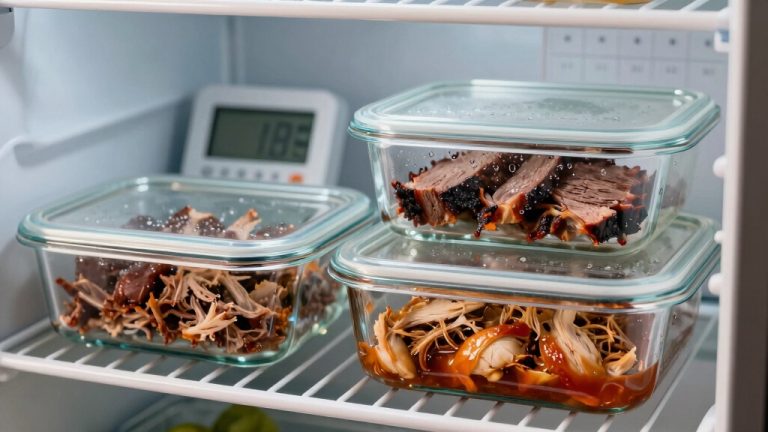
You should store leftover ribs below 40°F in airtight containers, separating them from raw foods to avoid cross-contamination.
Refrigerate leftovers within two hours, or one hour if above 90°F.
When reheating, heat ribs to at least 165°F using an oven at 250°F-300°F covered with foil or a microwave with moisture, checking temperature frequently.
Rest ribs 3-4 minutes to make certain of even heat; pink color may persist safely if proper temperature is met.
Trust Temperature, Not Pink Color, for Safe Ribs
You might see pink ribs and wonder if they’re undercooked, but color alone can deceive you like a mirage in the desert. Remember, the pink hue often results from myoglobin or smoke rings, not unsafe meat.
Trust the USDA’s temperature guidelines: 195°F is your safe haven for tender, fully cooked ribs. Don’t let appearances fool you; rely on precise internal temperature for both safety and perfect texture every time.